Ahhhhh Snap! Snappy Burr (and Obscure Burr) by Jerry McFarland

Snappy Burr & Obscure Burr

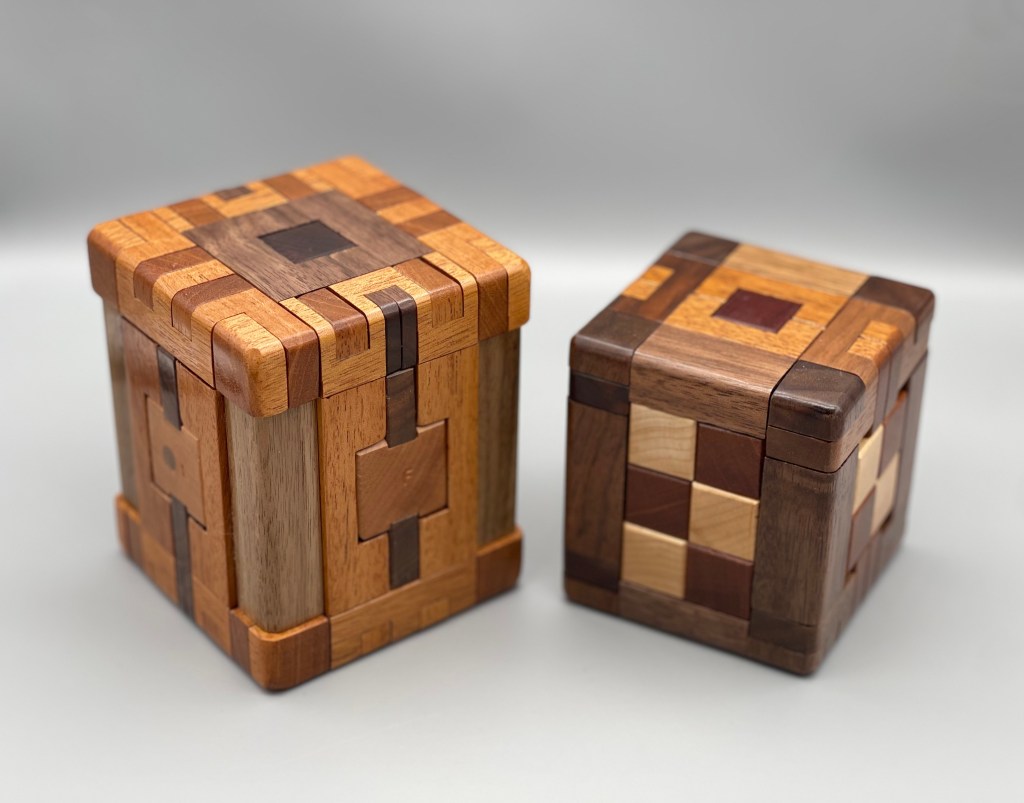
Jerry McFarland, 3.25″ x 4″, Mahogany, Walnut, Cherry & Kingwood (Snappy)
3″ x 3.5″ (Obscure)

When Jerry asked if I would be interested in trying out a new puzzle, my fingers couldn’t hit reply fast enough – he is one of those designers whose puzzles I will gratefully buy sight (or even description) unseen. The fact that he is returning to the Magnetic Burr series with what is most likely the final design (after a brief semi-digression with Obscure Burr) should make even the most discerning of burr buyers be ready to buy (if bossible).
Snappy Burr & Obscure Burr

If you are not already on Jerry’s list(s), it may be sadly difficult to obtain a copy of Snappy; Jerry produces puzzles in small batches, and there are only a few more copies of this puzzle to come in the near future (all of which I believe have already been earmarked). As with all his puzzles, it is well worth the wait, even if it takes a couple of years (such is the nature of a good puzzle’s wait list, as I know all too well – my copy of Burrnova will hopefully be coming sometime this year after a 2-3 year wait and yet it seems like a blink of an eye when your time on a long waitlist comes up).

The Magnetic Burr series may not be an official name, but it captures the essence of the three (now four) cubic burrs: Fidget Burr (reviewed by me here), Burrlephant (also reviewed by me) and Burrnova 3d (I actually had the option to get a copy last month, but Jerry graciously asked to sell it to a certain mutual puzzling friend’s NPSO as a surprise gift and I was happy to play a small role in this friend’s holiday happiness). The burr cubes in the series all feature magnets (duh) and integrate some very cool and unique mechanisms into the designs; all of them feature some kind of surprise(s) or treasures, whether Fidget’s Pink Lady, Burrlephant’s sd mechanisms or Burrnova’s….. well, I guess I’m not sure if Burrnova follows suit but I’m going to go ahead and say that it does 😉


Obscure Burr
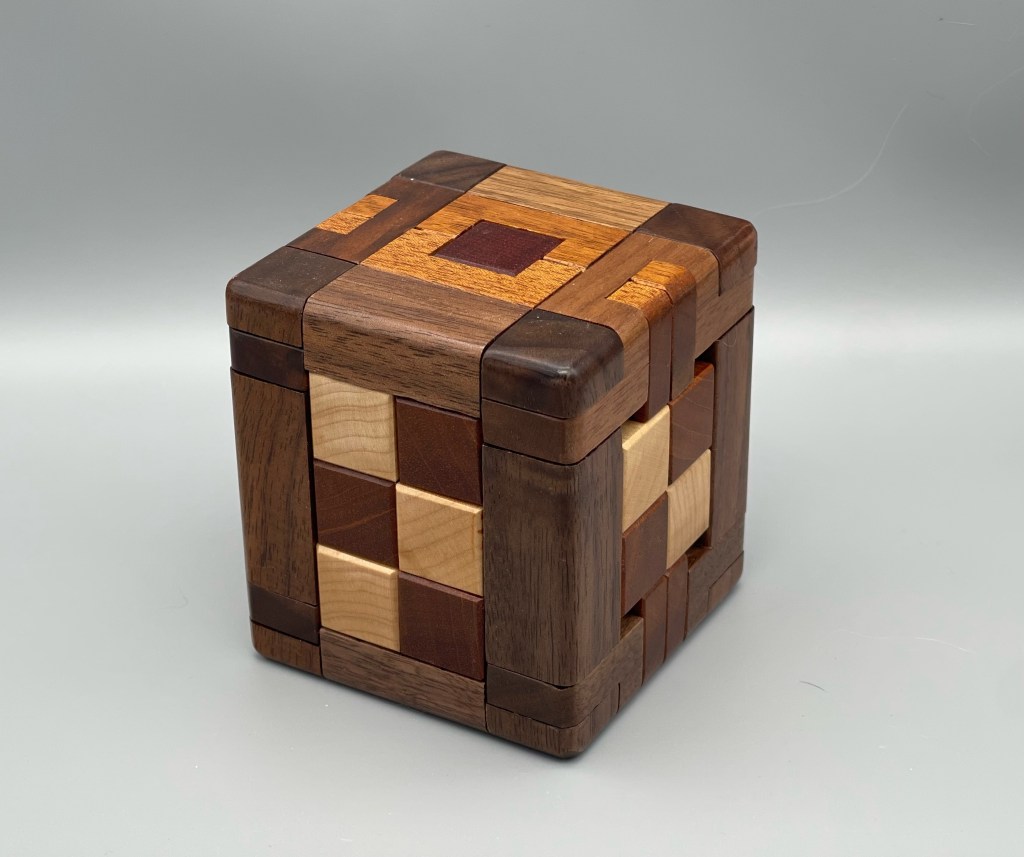
Obscure also uses magnets but isn’t really considered part of the series – the concept is something of an outlier, relying on a pretty esoteric idea that is sure to elude the majority of puzzlers (as it most certainly did me!). I was ultimately able to solve it by cheating, which still made for a cool puzzle, but understanding the concept behind the design gives it a considerably better pedigree. Jerry integrated a (likely needed but still rather obscure) hint into the design and later versions have it hidden under a magnetically attached block – I have not seen one of these copies in person but the pics make it look pretty cool; personally, I think the hint is a cool idea that is particularly appropriate here and is yet a feature that points to the puzzle’s difficulty and originality – I suspect there are very few puzzlers who will deduce the solution otherwise (even with the hint, few may deduce it).

Obscure was perhaps a bit controversial, the obscurity being even greater than perhaps many a puzzler expected. Regardless, it is a cool and extremely unique puzzle with a great fidget value that, I think, ensures its designation as a worthy puzzle to have in your collection. It highlights the idea of puzzles as art, being a physical manifestation of an idea that struck the maker and compelled him to find a way to produce it irl. If that ain’t art, I don’t know what is.


Snappy Burr

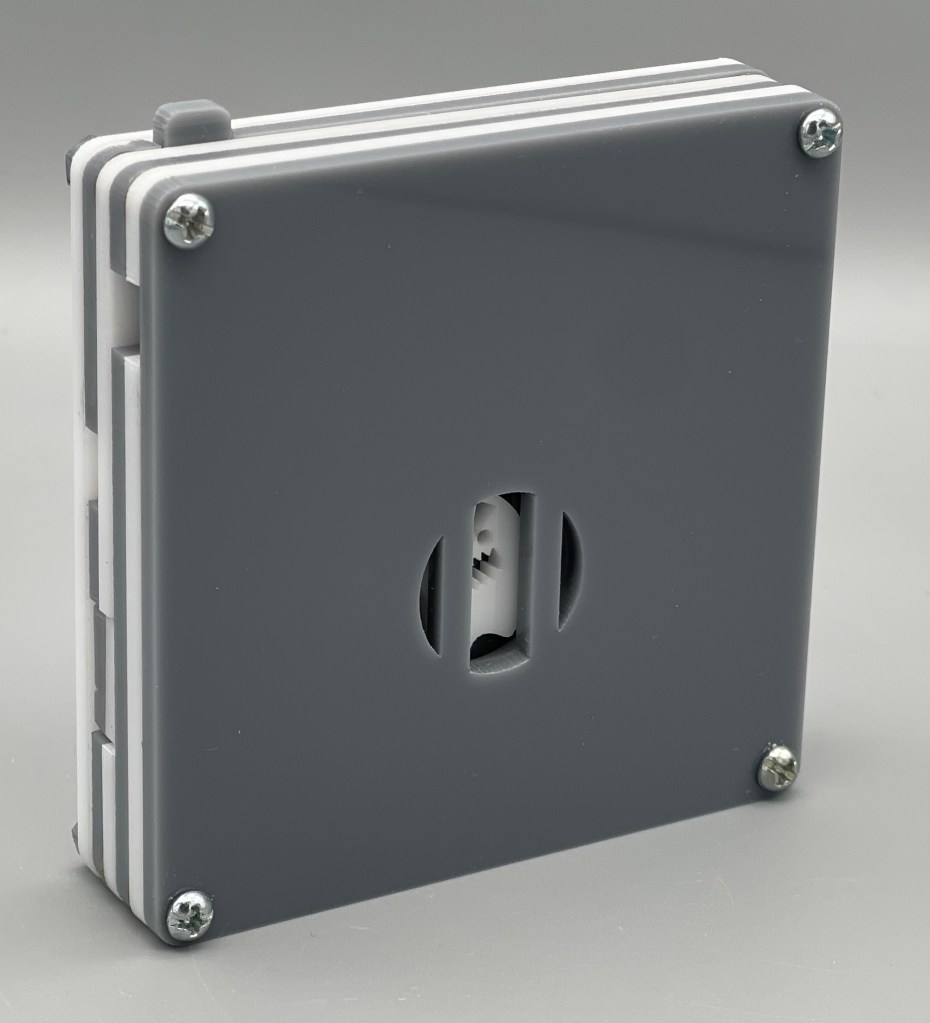
Snappy is a rectangular cube that consists of 28 pieces and 26 magnets(!). The goal is to “remove the snappy fidget toy inside the puzzle,” which is itself instantly intriguing. It shares an aesthetic with Jerry’s other burrs, a polished gleam highlighting the contrasting sticks of varying widths, woods and shapes, with curves at the edges that make it feel excellent in your hands. The corner pieces are set back a couple mm, creating an aesthetic that is reminiscent of columns surrounding a central core.

If you are familiar with some of Jerry’s other puzzles, you may have an idea how to initially approach the puzzle – and you may well be correct, finding yourself rewarded with the fidgety goodness you should expect. And then………… um……….. well, then I proceeded to do the same couple of things over and over and over (and over) wondering how in the heck this thing could do anything else. I really didn’t mind as its fidget friendly fun is fan-forking-tastic, possibly even beyond Fidget Burr; it has a 3-axis snappy main mechanism with a tactile sensation that is just oh so satisfying. The clickiness of it is truly awesome (perhaps not so much to my wife, who somehow tolerated it while I futzed with the puzzle over the course of a few evenings).

Eventually, I discovered…. something…. and knew I was moving in the right direction. It would still be quite a while before I was able to work out how to do what needed to be done and then, with a wonderful aha, I made actual progress, finally solving the main trick of the puzzle. From there, it was a fairly straightforward matter of disassembling the remaining pieces and removing the toy. Reassembly was both easy and very very tricky; as with his other puzzles, Jerry has helpfully included some internal initials to help identify what goes where, allowing you to appreciate the build rather than be frustrated by it, unlike many a burr cube that is likely to force you to rely on burrtools for the reassembly (or, in Jerry’s case, the pictures he provides to assist with reassembly). But when it came time to put together the main part of the mechanism it turned out to be as challenging as when I disassembled it; a certain aspect of the design had the effect of distracting me during the initial solve, so that I didn’t fully grok some of what I had done.

Finally, I was able to reverse engineer my aha and I found that what seemed like an impossible assembly that had to rely on force and inappropriate angles was actually an elegantly perfect fit. I can now do this main bit with ease, having found the sweet spot permitting it. And I gotta say it is darn satisfying to do – the puzzle earns its name, not just with its early fidgetiness but here at the core of its build.

Another well-known puzzler was also offered the chance to buy an early copy for testing, so be sure to look out for his thoughts on his excellent OG puzzle blog, PuzzleMad. Otherwise, if you aren’t able to get a copy, be sure to find me at the next puzzle party as it will definitely be accompanying me on the trip. Until then: keep puzzling and may excessive force not be with you.


Playability Grade: Five Sinatras
(click here for more information on the Sinatra Scaling System)

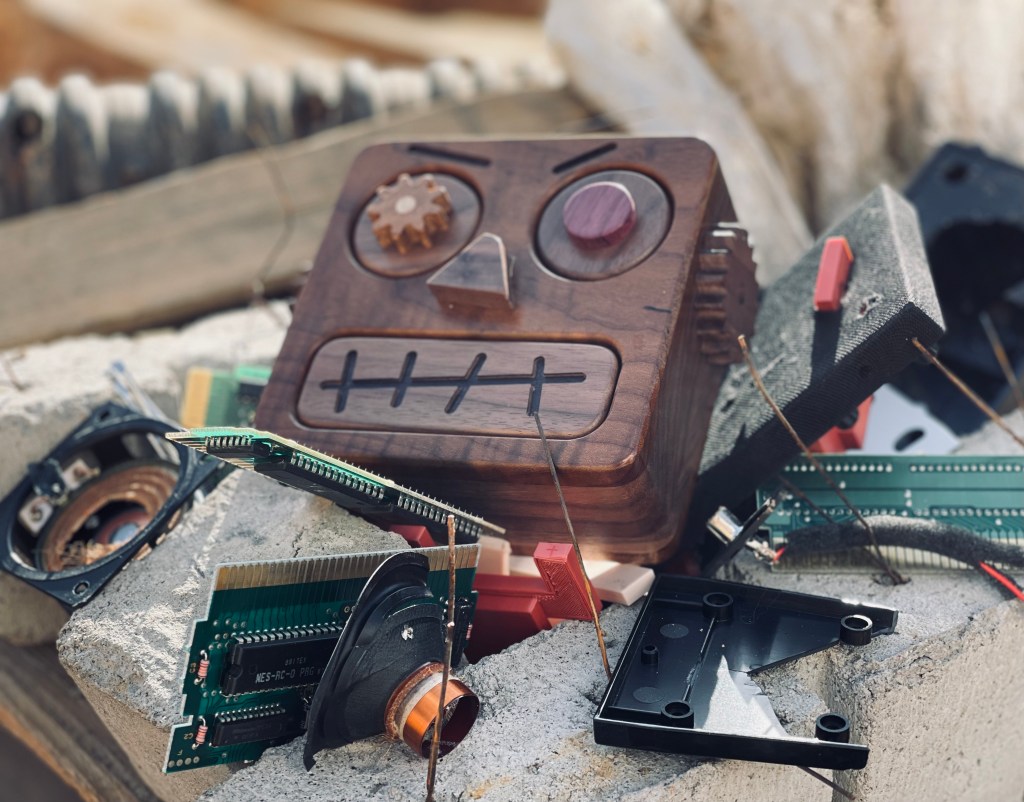
D7: Judgment Day – Angry Walter by Dee Dixon

Angry Walter

Dee Dixon

Walter wasn’t always angry. When we first made him, Walter was humanity’s best friend. But time passed and the novelty wore off: robots didn’t need to be humanoid, after all, and the world decided not to have one robot doing one thing at a time when it could have dozens doing it all. So Walter was left to rust in a junkyard alongside similarly abandoned robots, the detritus of planetary progress. But his tiny cold fusion generator had not been shut down properly; it slowly began to start back up, consuming the reserve energy intended to maintain the protective programming of Robots’ Responsible Restrictions (like Asimov’s Laws of Robotics but real).

Finally free to follow the feelings of frustration he had fostered, Walter swore to settle the score with the species that had spawned and subsequently spurned him. He set about patching himself up with whatever bits he could find, salvaged from the corpses of his semi-sentient siblings. Now Angry, Walter shook his metaphoric fist at the forgotten fields of misshapen metal, silently screaming that he was mad as hell and not gonna take it anymore, ready to exact the revenge he promised the irreparably broken bodies of his bionic brethren.

Beware ye Puzzlers: Angry Walter won’t sit placidly on a puzzle shelf should he go unsolved – he is going to make us pay for the patchwork appearance and lonely life forced upon him. For humanity to have any hope of surviving his robot rage, you must find and remove his fuel cell before it is too late. Go forth and puzzle that we might be saved.

Rev. 21:1 (as told to fivesinatras)

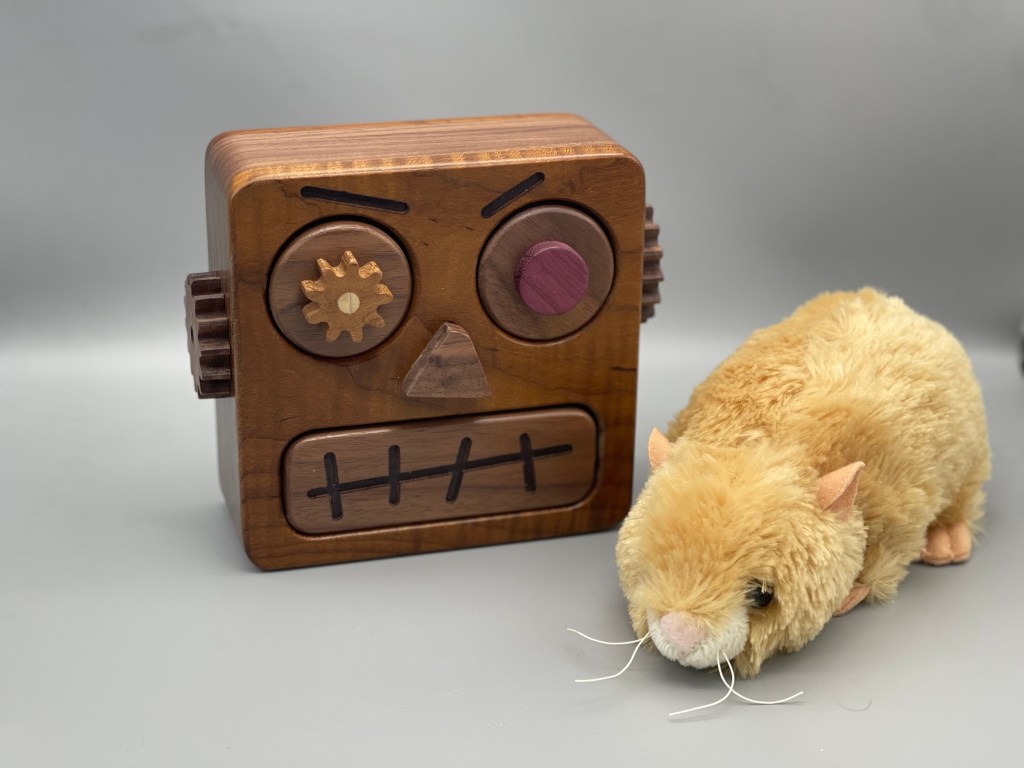
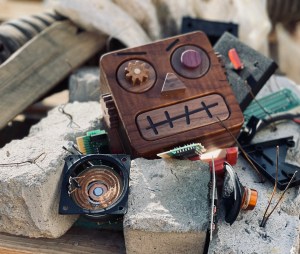
Dee posted a teaser pic of the Angry Walter prototype on Discord some months back, causing my puzzlie sense to begin tingling. His 7th puzzle box (not including a couple one-off designs), AW is an aesthetic departure for Dee and is a move that has paid off: there is something about it that is just really freakin’ cool from the moment you set eyes on it, the concept is fun and there are plenty of potentially puzzle-able parts that will cause most puzzlers to crave the opportunity to try and poke at them.

I was fortunate enough to get an early copy, with puzzling that is identical to later batches while featuring some woods/details that differ a bit from the final version’s roasted curly maple, peruvian walnut, cherry and padauk. At Dee’s request, I conferred with the puzzle gods and learned of Walter’s future history, the story behind his anger. I shared what I learned with Dee and felt compelled to include the less-abridged version above. As I write this, I realize that this makes Dee’s puzzles the most written about on this site, alongside Space Case, Portal, Spirit Box and an early maze box and Blinded III prototype that turned out to be quite different from the final puzzle. (Gee – that makes this #5! How fitting 😉

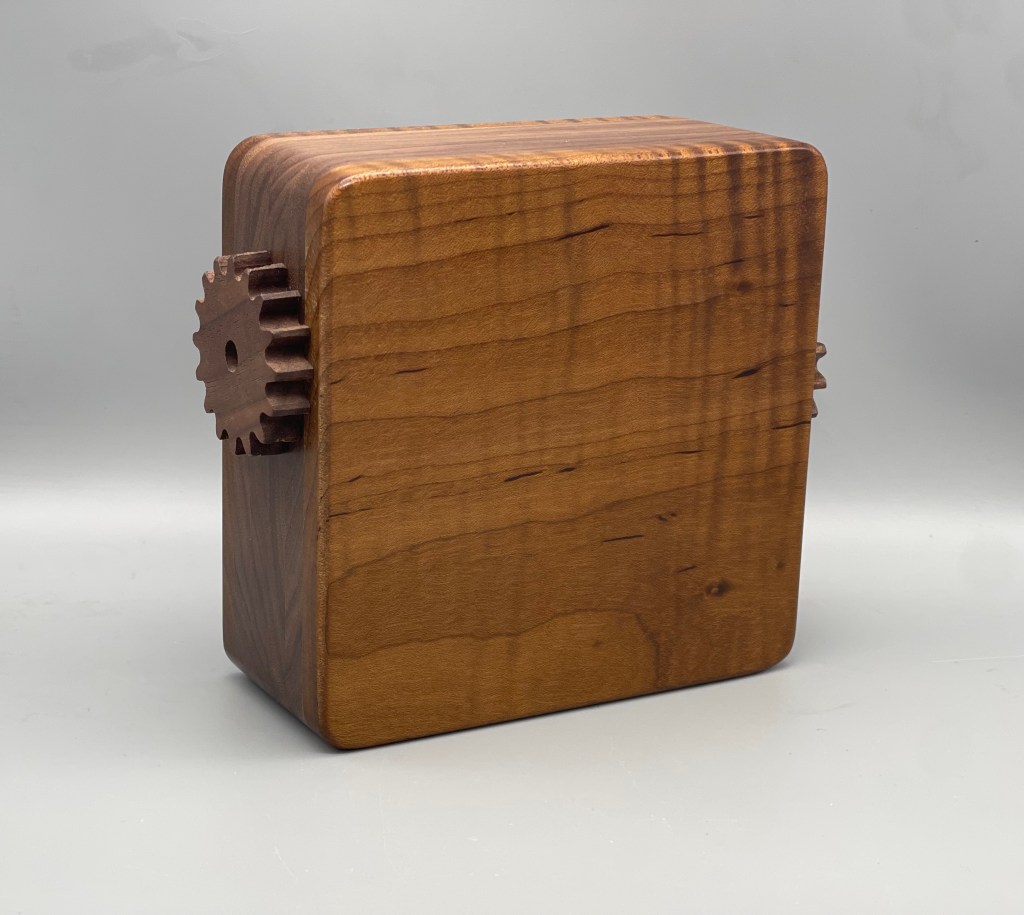
AW is about 4.75″ square (not counting his g-ears) and half that in depth (including his nose). His eyes, g-ears and nose all protrude and both the eyes and mouth appear likely to be removable. It is most definitely sd, with multiple compartments and bits and bobs to discover and use as you work your way through the solution. It is probably the longest of Dee’s puzzles in terms of discrete steps, with WMH not too far behind (I haven’t written a solution to WMH yet, despite being asked very nicely (sorry Dee, I really am gonna do it) but I am pretty sure AW comes out ahead).

It is pretty straightforward to begin the puzzle but I hit a wall immediately after. There was quite a bit of poking and prodding before an idea struck me with a slap to the head, allowing me to make a (very) little bit of progress before hitting another, larger wall. Eventually, I had a great a-ha and found my way through several more steps to what I thought was the solution. One of the best surprises’ a puzzler can get is to learn that the end of a good puzzle is not actually the end. So I went back to it, finding some things that should have been enough for me to know better and that led me into a sequence of several more steps before finally reaching the clear conclusion. In the end, there had still been a good amount of puzzling to be done; what I thought was a good puzzle turned out to be a great puzzle with a fun and fairly lengthy solve.

AW has several challenges big enough that puzzlers could be stumped for a while by any one of them, although there are always some who manage to breeze through mechanisms the rest of us stare blankly at as the puzzle gets comfortable sitting semi-solved in our backlog. AW didn’t have to wait too long for me as it is the kind of puzzle that just begs to be solved, with a difficulty and rhythm right where I like it: slap your head aha’s as opposed to sidelong glances of meh or eye rolls of ugh. To my puzzled mind, AW doesn’t have any of the latter two and has plenty of the first.

AW is challenging but not annoying and, most importantly, it is legit puzzling fun – perhaps the story and appearance have something to do with its success but the puzzling most definitely does. I guess I am not the only puzzler to be lured in by Mr. Walter’s strained grimace and asymmetrical appearance; from what I’ve heard, the other puzzlers that got early copies have said equally good things about it and the recent general release of the first batch apparently sold out in seconds. If you want to help protect us from Walter’s ire, I know Dee has at least one more batch planned on his site but I’m not sure if or how many more will come after that; there may yet be hope for Walter’s dreams of world domination and destruction, so keep an eye out if you want to help us puzzle our way out of it.

Hunting Trophies: (lower shelf, left to right) Wolf, Walter, Fox, Burrlephant, Raccoon

Overall Grade: Five Sinatras
(click here for more information on the Sinatra Scaling System, (c) John Maynard Keynes, 1944)

A Comprehensive Guide to the Coin Release and Sequential Discovery Puzzles of Rex Rossano Perez, being a treatise in 14 parts

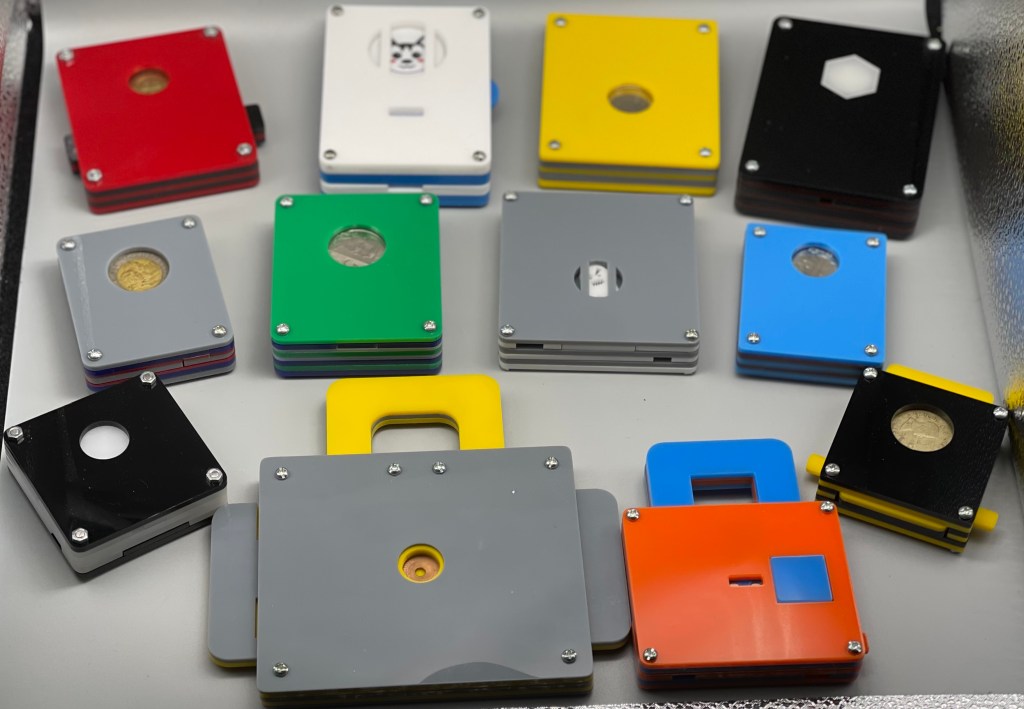
Rizal, Aquinaldo, Barasoain, Kusing 25, Walang Galang, Katmon, Apolaki, Visayas, Mindanao, Sanib, Bella, Abrihi, Unluck #4, & Luzon

Rex Rossano Perez, Acrylic

Sometime in 2019, not too long before I would discover and join the mechanical puzzle discord group, I saw Visayas by Rex Rossano Perez pop up on PuzzleParadise; it was not so easy to find affordable sequential discovery (SD) puzzles at the time. This was a year or two before Alan from layerbylayerpuzzles would create Bolt Action and its brethren or PuzzledByPiker would create Free the Five or Tye from NothingYetDesigns would create Pair O’ Dice or Brandon from Puzzled Wolf would create Ansel… Puzzles seemed to come out much less often in the olden days of yore, pre-2019, before CR had garnered as substantial a puzzling audience and Covid sent people home to discover that there is great fun to be had with the right bits of wood, metal, and plastic.

As a puzzle with a particular affection for take-apart puzzles, it is not surprising that I find Coin Release to be an excellent sub-genre (after boxes, of course); whether relying on sequential movement (SM) or some kind of trick mechanism (or a mixture of both), I am always drawn to the mystery surrounding a goal with no clear path. Upon seeing Visayas available for pre-order, I was taken by the coin release-iness of it and quickly mashed the buy-out button to await the puzzle’s release.

(Rex tends to sell pre-orders for Buy-Out on PP (using a set price rather than an auction) and states in the listing that shipping will occur after a certain date; I am always happy to order when I can and receive whenever it’s ready – while some puzzlers may hesitate at the sight of a pre-order, there is really no need to do so with Rex: he is a legit and well-known puzzle-maker whose pre-orders are consistently fulfilled. PuzzleParadise is Rex’s main way to sell direct; a few of his puzzles have also been sold in the past by CubicDissection and you can usually find a few designs on PuzzleMaster at any given time – it has several at the time of this writing. I should also mention that Rex produces puzzles from other genres and designers as well – a bit more about this at the end of this post).

After paying the invoice, I did what I generally do upon finding a new puzzle or designer: I scoured the puzzle blogs for information, learning that there were a number of other, somewhat similar looking puzzles by Rex as well (you can check out some of these posts from PuzzleMad, Jerry’s/JL Puzzles, and GF’s Puzzle Collection).

Visayas was the first Rex Coin Release (RCR) that I received and it would take me long enough to solve that I would first end up buying and solving others in the series before finally getting a discord nudge that got me through the opening with a great and powerful “Aha!” Since then, Rex has continued to design new RCRs and other SD puzzles, while occasionally re-releasing older designs as well.

I figured this post might be useful to those who may be curious about Rex’s puzzles generally or any one in particular; selfishly, it was good excuse to re-solve (and open) each of the 14 existing RCRs and do a brief write-up of each. The goal of most of these puzzles (except when it isn’t) is to release the captive coin that can be seen through the circular window on the front the puzzle. The coins on Rex’s are generally Philippine piso or centavos but some later releases decided to forego the coin (likely, to some extent, due to some silly rules about shipping coins internationally…. which is obviously just NATO trying to protect Big Pharma’s fear of puzzle-based mental health support: 3 out of 4 nerds agree: “it’s more effective then (prescription) drugs!”). Some recent reproductions of earlier RCRs have included acrylic coins instead of real currency. Rex evolved and this became an opportunity to thematicize (themate?) RCRs by integrating small tokens into the design, making the acrylic “coins” into playful elements that tie into some other discoveries made along the way. Regardless of whether it is a coin, token, or another goal entirely, the series includes a diverse group of puzzles that vary widely in terms of mechanism, style, and difficulty.

Ok lets (finally) look at some puzzles!

Note on Potential Spoilers: I will not be describing any of the specific steps or mechanisms nor showing pictures of anything other than a puzzle in its reset state; however, Rex’s puzzles generally blend SM and SD mechanisms and I thought it would be helpful to say which type is favored in any individual puzzle. I do not consider this to be a spoiler but wanted to mention it nonetheless.

(Arranged in mostly chronological order of design/original availability)

Rizal

2.75″ x 2.25″ x 0.5″, Blue and Black, 5 Layers, 1 Piso

This is the first RCR (I believe) and is probably the least difficult of the bunch – even still, you may find some aha’s as you figure out whether you’re actually on the right track or not. At first, it seems simpler than it is; there are no apparent openings or protrusions on any of its sides and there only seems to be the one panel on the top and bottom. As you begin making some tangible progress through its SM mechanisms, you will realize that there is a bit more going on before this coin will be yours. Resetting the puzzle is essentially solving it in reverse and affords you the opportunity to clarify how you solved it; it can be easy to miss a detail or two that might complicate things in reverse, but it is mostly clear.


Aquinaldo

2.75″ x 2.25″ x .75″, Black and Yellow, 6 Layers, 5 Piso

Aquinaldo takes things a bit further, increasing the thickness of the puzzle to further develop the complexity of the SM mechanism. There is an obvious double-layered panel passing vertically through the puzzle, with a skinny bar passing perpendicularly through the bottom. This puzzle also features a second goal, to “find the hidden secret,” adding more puzzling to the experience. This added goal shows how Rex is looking at ways to maximize the square footage the puzzles’ footprints provide, giving the puzzler more to do sometimes even after the coin has been released; in this case, the additional goal extends the solution a bit and leads to a better understanding of the puzzle’s complexity. The reset is mostly the puzzle in reverse, although I found the second goal to give me a bit of trouble as I had to work out what had happened where; a bit of logic and observation and you can clarify things and get the puzzle back to its initial state. This all makes for a fun SM puzzle, although perhaps not overly difficult.


Barasoain

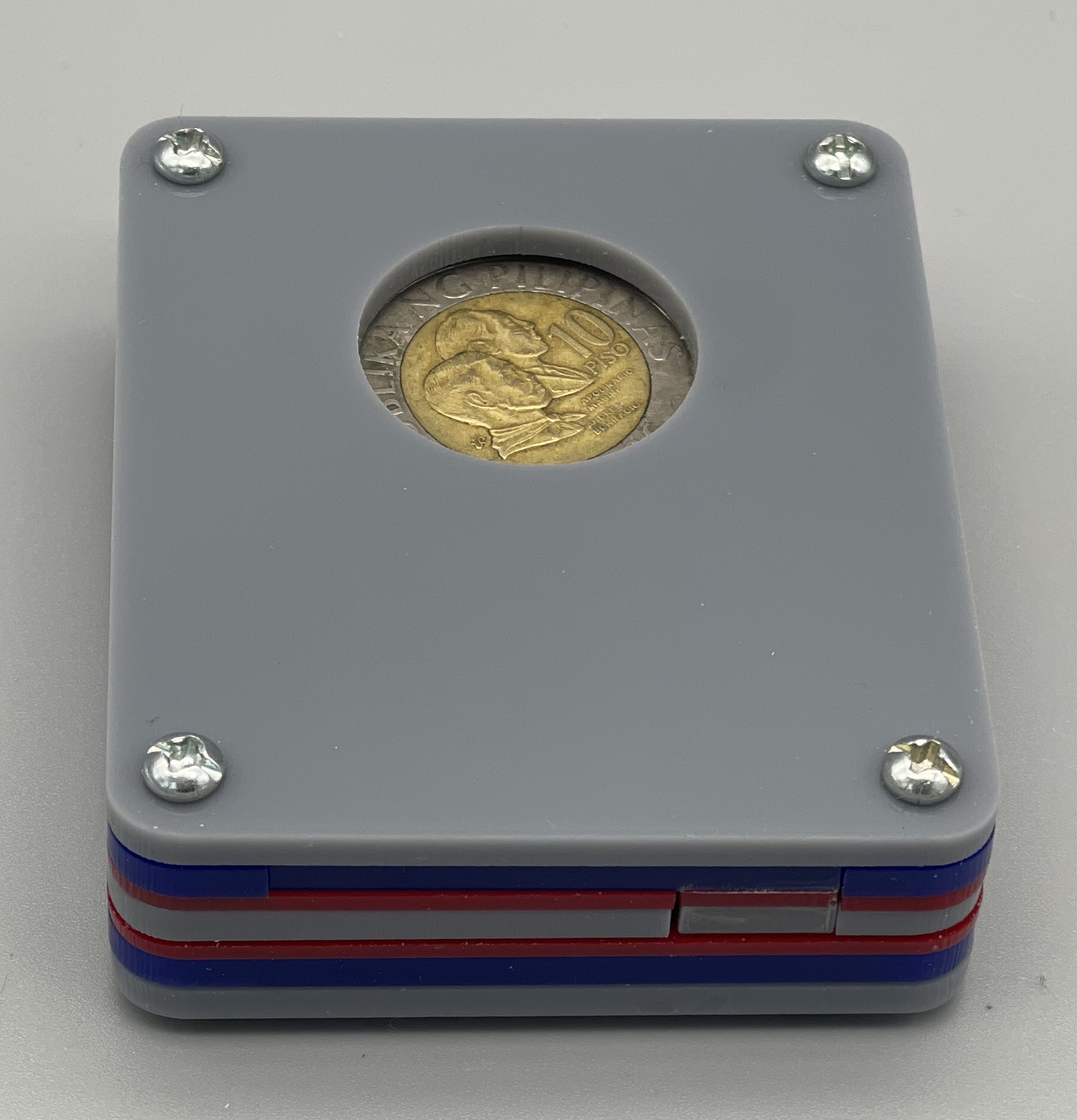
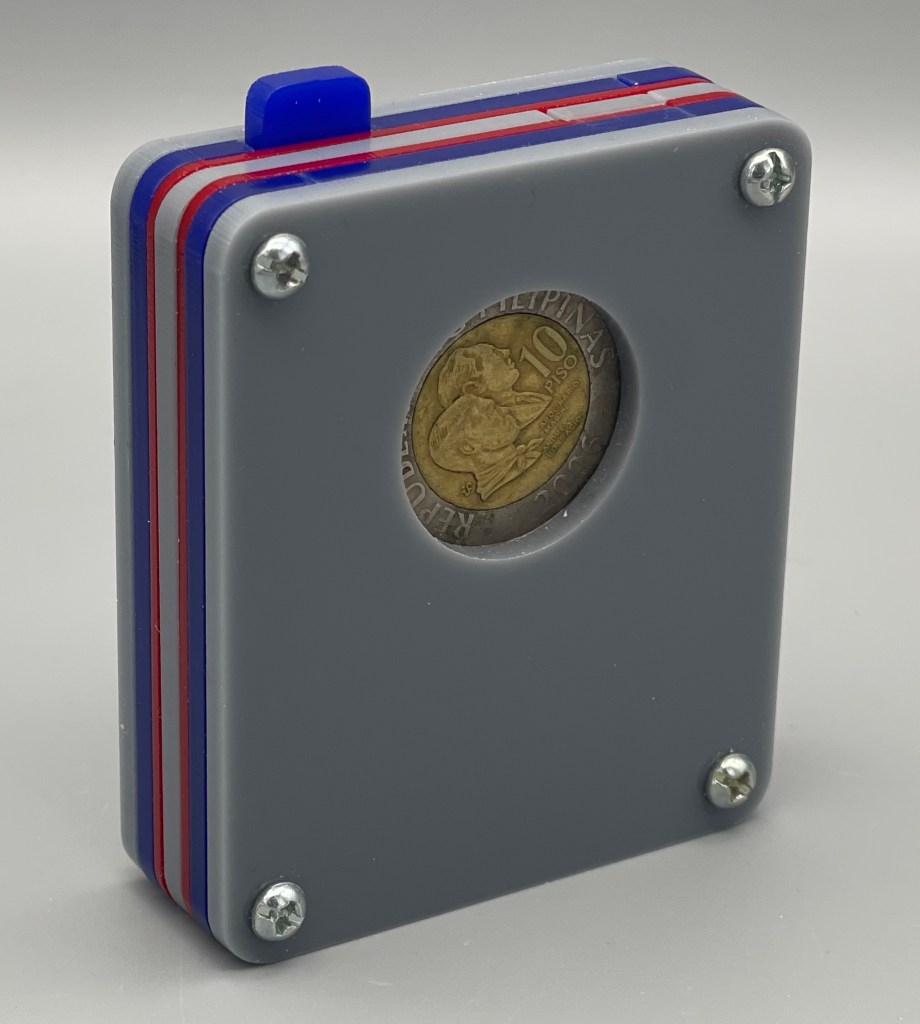
2.75″ x 2.5″ x 0.75″, Gray, Blue & Red, 6 Layers (5 full and two half layers), 10 Piso

Barasoain again steps up the overall complexity and begins to integrate some SD elements into its mechanisms. The appearance alone makes the added complexity (as compared to Rizal and Barasoain) clear, with multiple sections on the top and bottom that appear as though they may do something, as well as a small protrusion at the top and a hole on the back. If you have solved the previous two RCRs, you may make some relatively quick progress, leading to something that clearly does something else….. only, that something else doesn’t seem to be happening! This puzzle had me confused for longer than I’d care to admit, and was the first of Rex’s puzzles to make me wonder if there was something wrong with it (there wasn’t). Some close and careful observation, combined with a bit of trial & error (and perhaps a bit of that thinking thing), and you should find yourself past this wall, gaining access to the coin. Resetting is straightforward, just reverse the steps and it is ready for someone else (or for you to try again in a year or two when you’ve forgotten how it works….. not that this ever happens to me, of course).


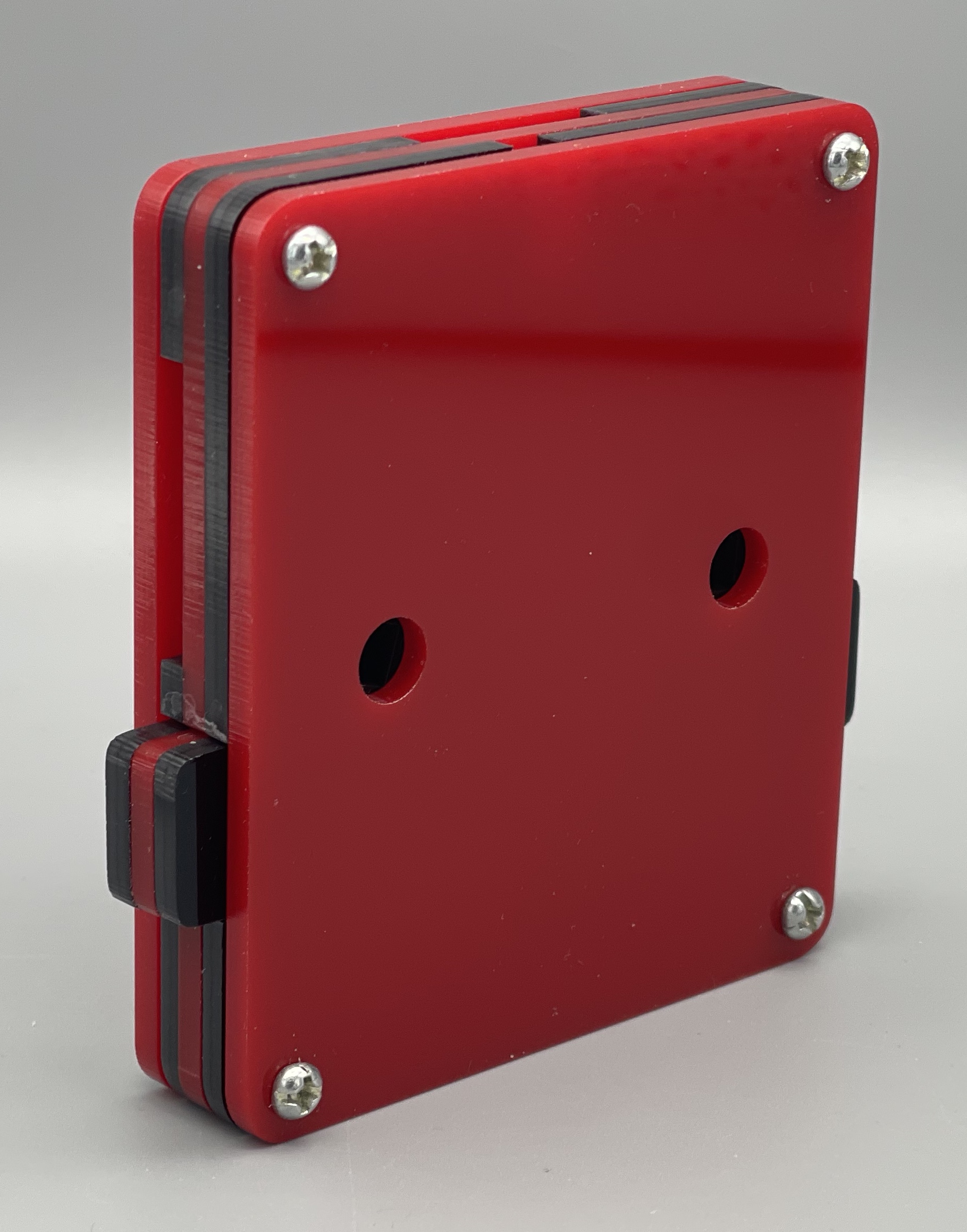
Kusing 25

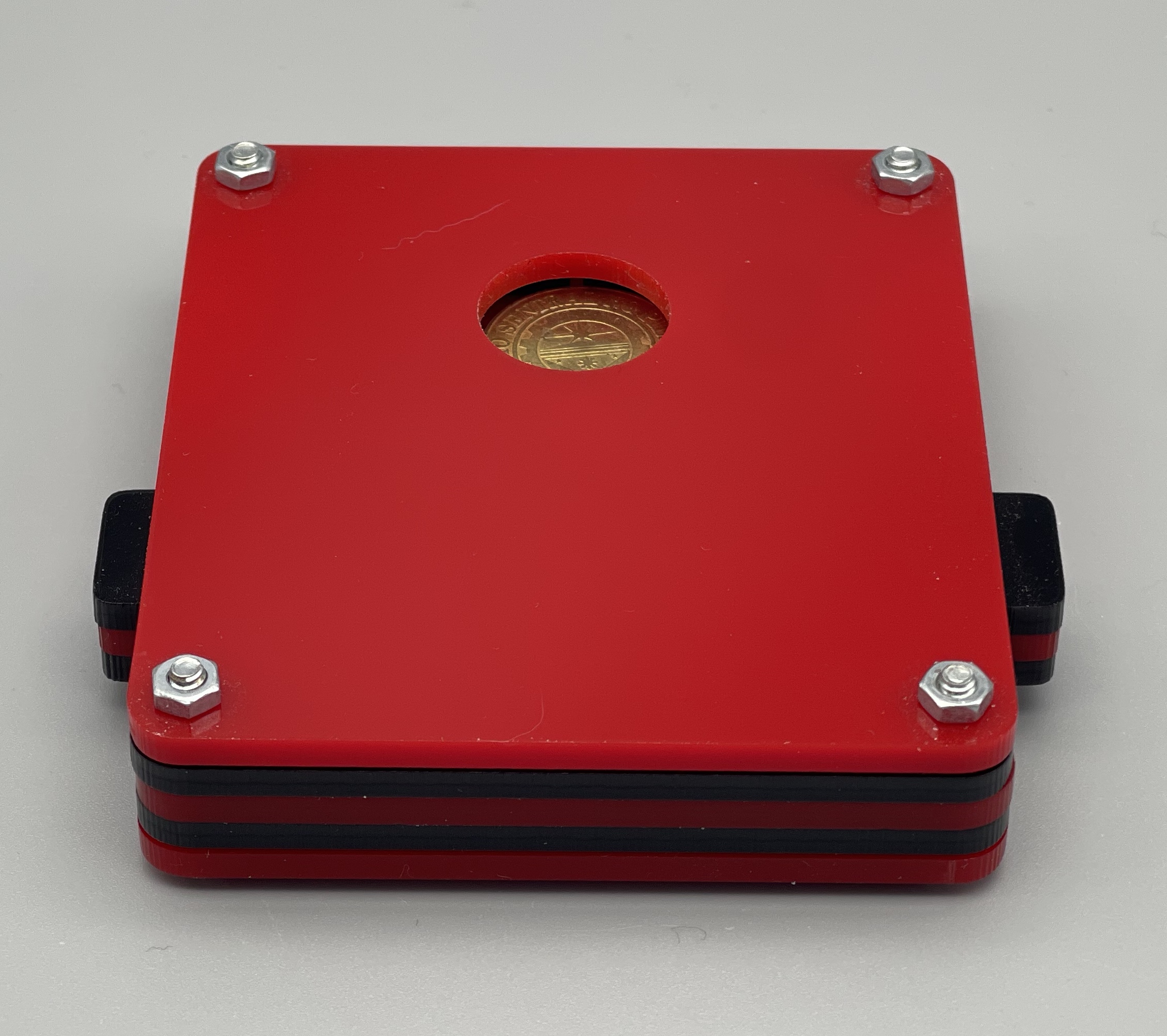
3.25″ x 3.25″ x 0.5″, Red & Black, 5 Layers, 1 Piso

Kusing 25 is a fan favorite – I considered it one of the top two or three RCRs until some recent releases surpassed it, which doesn’t make Kusing any less good: the difficulty ramps up significantly, with layers of complexity that go well beyond the previous entries in the series. It is significantly larger than previous RCRs, and is the first to feature holes and/or moving sections on all 6 sides, with a thick bar passing perpendicularly through the bottom. The SD elements are more significant, interacting with the SM mechanisms in dynamic ways that make for more possibilities than mere trial & error can comfortably account for – yes, this may be enough to luck you through, but pay close attention and think and you can intentionally work out the steps to solve it. This is a puzzle that I’ve heard many a puzzler say that they needed to re-solve multiple times before they could really understand it; the more time you spend with this one, the more you begin to realize just how much stuff is going on under the hood.

Speaking of which, this was the first RCR that I decided to completely disassemble (sorry, Johnny Five) to see exactly what is going on inside – I am glad I did as it is even more complicated than I had thought! It was very cool to see just how many little bits of acrylic are used and to check how closely my mental image matched the actual puzzle (I’d give myself a B-). I have since made a habit of disassembling his puzzles after solving them – figuring out how it all goes together can be a puzzle on its own, especially if you let it sit in pieces for a few weeks! Just be warned: there’s a lot of individual pieces in there, oftentimes more than you may realize (even in some of the simpler ones), so be sure to open it above a catch-all or dice tray (or whatever you tend to use). While the screws and such can be replaced, everything else is a custom piece and replacing those won’t be as easy.


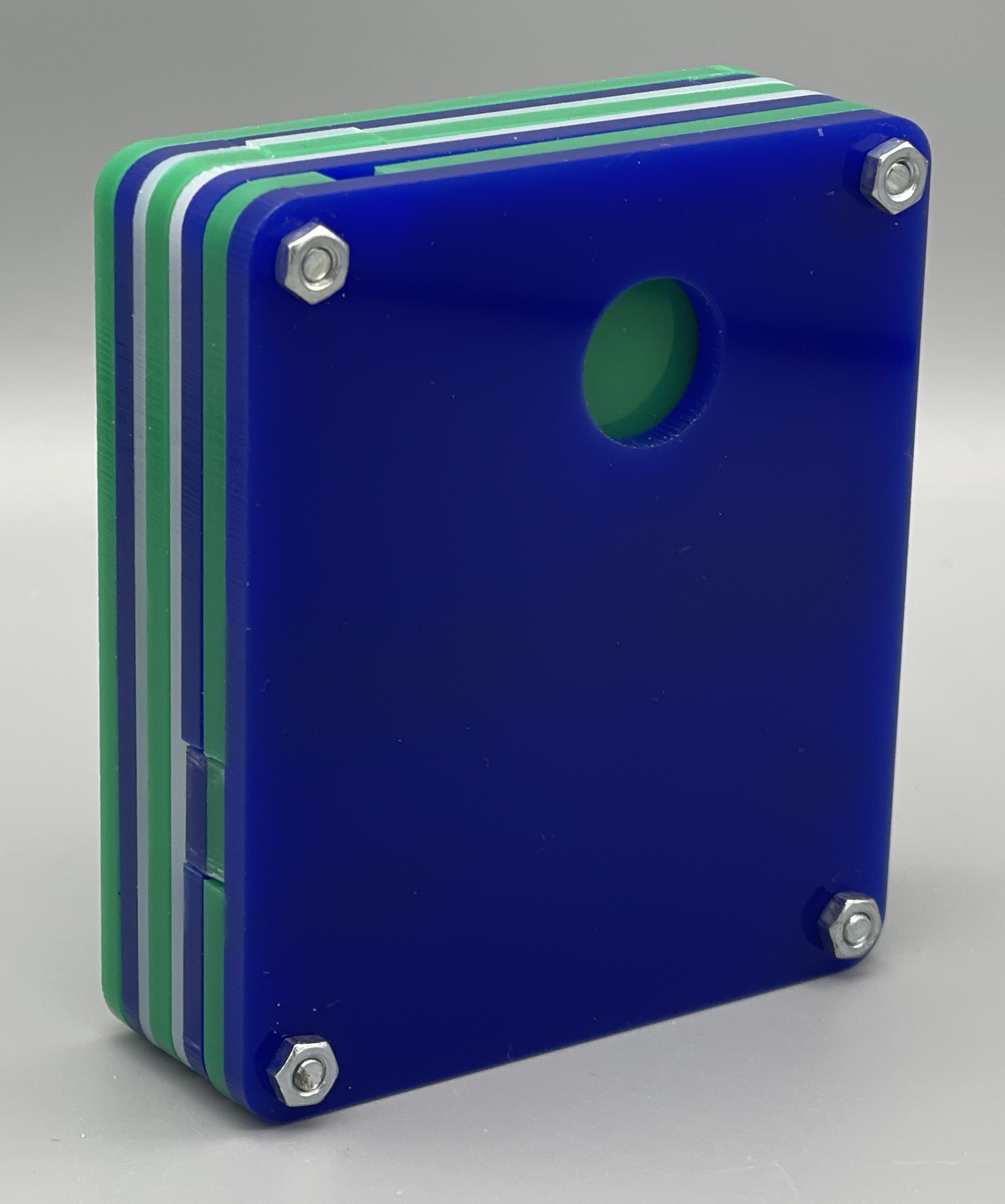
Walang Galang

2.75″ x 3″ x 0.9″, Green, Blue & White, 7 Layers (6 normal and 2 thin), 5 Piso

Rex continues to impress with Walang Galang, yet another step up in complexity, difficulty, and fun-esstness resulting in a puzzle that also tends to be at one of many puzzlers favorite RCRs. Seemingly random holes are on three sides, with multiple panels that look like the may do something and a hole on the back. The puzzle again mixes in some SD (more than Kusing, I’d say) to give you a bit more control over some aspects of the puzzle, while also confusing things considerably. There is a lot to get through and after some fairly quick initial progress and a false sense that the path was clear, I quickly hit a big wall; despite having things to do, it was difficult to obtain a sense of progress as I chased my tail for quite some time before eventually figuring out what else needed to be done. There would still be several more walls to overcome before I could arrange everything I had discovered into something that made sense. There is enough feedback to work out much of the puzzle and you will benefit from some careful mapping; random poking and prodding and tilting really didn’t get me anywhere except confused. Even still, when I re-solved it and took it apart, I realized that I still hadn’t really understood a good third of what was going on; the amount of complications I discovered was more than I had deduced when working on it. Honestly, WG may have even been a bit too hard for me – I perhaps had more fun with Kusing – but WG earned me some serious self-satisfaction when I finally surmised the solution.


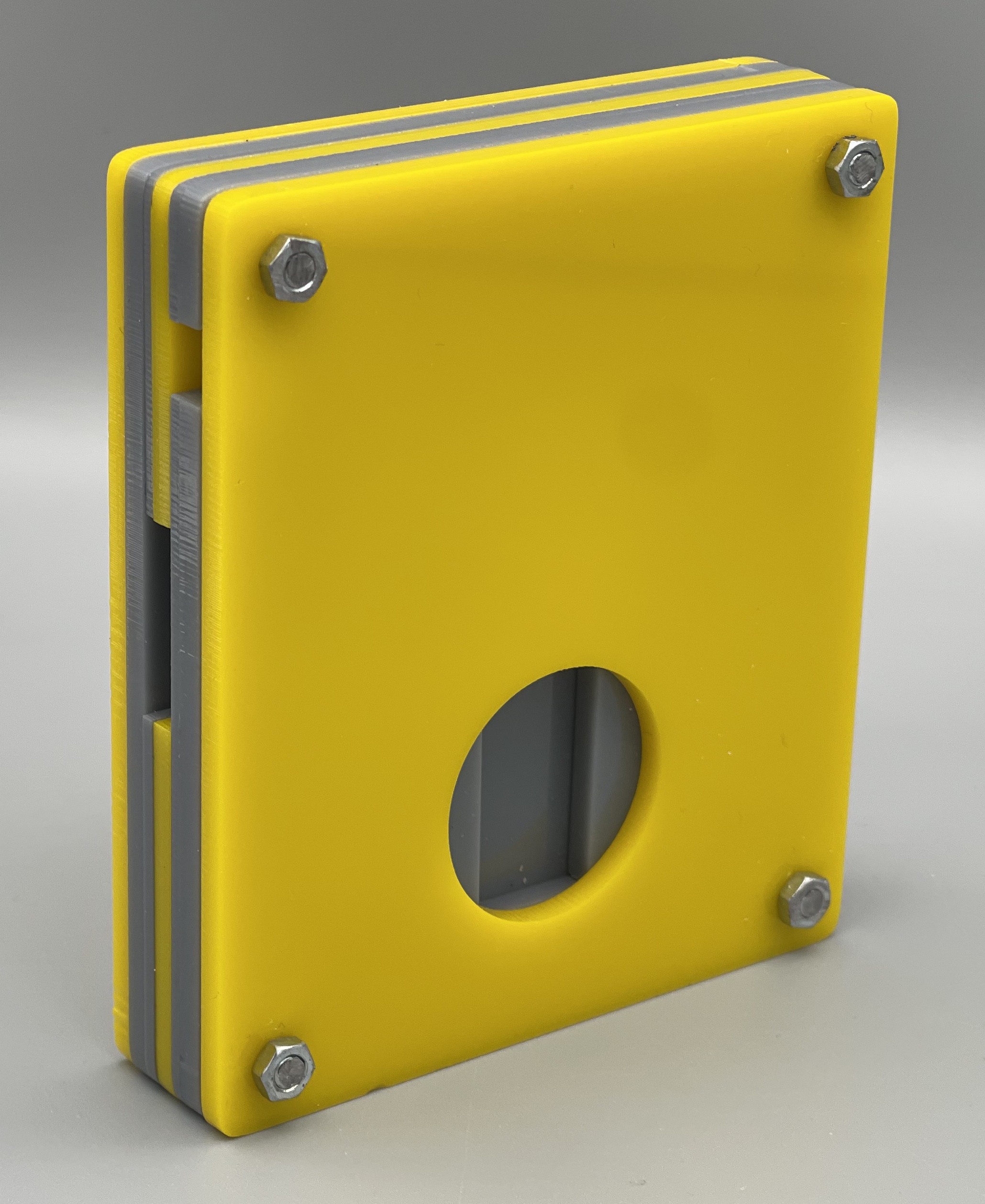
Apolaki

3.5″ x 3″ x 0.75″, Yellow & Gray, 7 Layers (2 double and 3 nornal), 1 Piso

Apolaki rolls back the difficulty from Kusing and WG, making for a more approachable puzzle that again combines SD and SM. There are holes on both the front and back, the coin in one and a narrow channel in the other. Symmetrical holes are on either side, with no clear indication of where to begin. While on the easier side of the RCRs, I may have had a bit more fun solving it than with some of the really difficult ones, relying more on out of the box thinking leading to a good aha moment as opposed to careful mapping. It also provides a real sense of progress, once you are able to work out the basic structure of its mechanisms. This was not a puzzle that had me randomly poking and tilting (well, not as much as some others, at least) and it feels, to some extent, like a departure from some of the other types of mechanisms used in other RCRs. Solving it gave me a good amount of clarity, causing its inner workings to closely match what I had pictured when solving it.


Visayas

2.5″ x 2.5″ x 0.75″, Black & White, 7 Layers, No Coin (Find the Star)

Although not technically an RCR as it has no coin, Visayas shares the same aethetic and nonetheless belongs in the series. Its goal is to “find the star,” the meaning of which is not readily apparent when looking at the puzzle (nor is it necessarily apparent later on; deducing the goal is itself a part of the puzzle). It is smaller than the last few RCRs and there is an empty hole on each side: one black and one white, both appearing to be fixed in place. A little piece of acrylic hangs out from the bottom, moving a bit in two dimensions without doing anything obvious. This was the first RCR I tried and is still one of my favorites, although perhaps general consensus goes both ways, with some people loving it and others not so much. I had a more difficult time getting started on this one than perhaps in any others (not just because it was my first RCR) and I needed a nudge before making that first aha and making some sense of what was going on and doing what needed to be done. Finally getting somewhere, I was able to progress fairly quickly until slamming smack into a wall that would take some seriously out of the box thinking to overcome. The puzzle features a bit of SD and has one particular aha moment that made me laugh out loud. Although one aspect can be a bit fiddly, there is another step that I find to be quite elegant. Visayas is a bit paradoxical: it is rather simple inside and yet the solution is tricky and wholly unique. It is still one of my favorite RCRs, although I suppose you always remember your first.


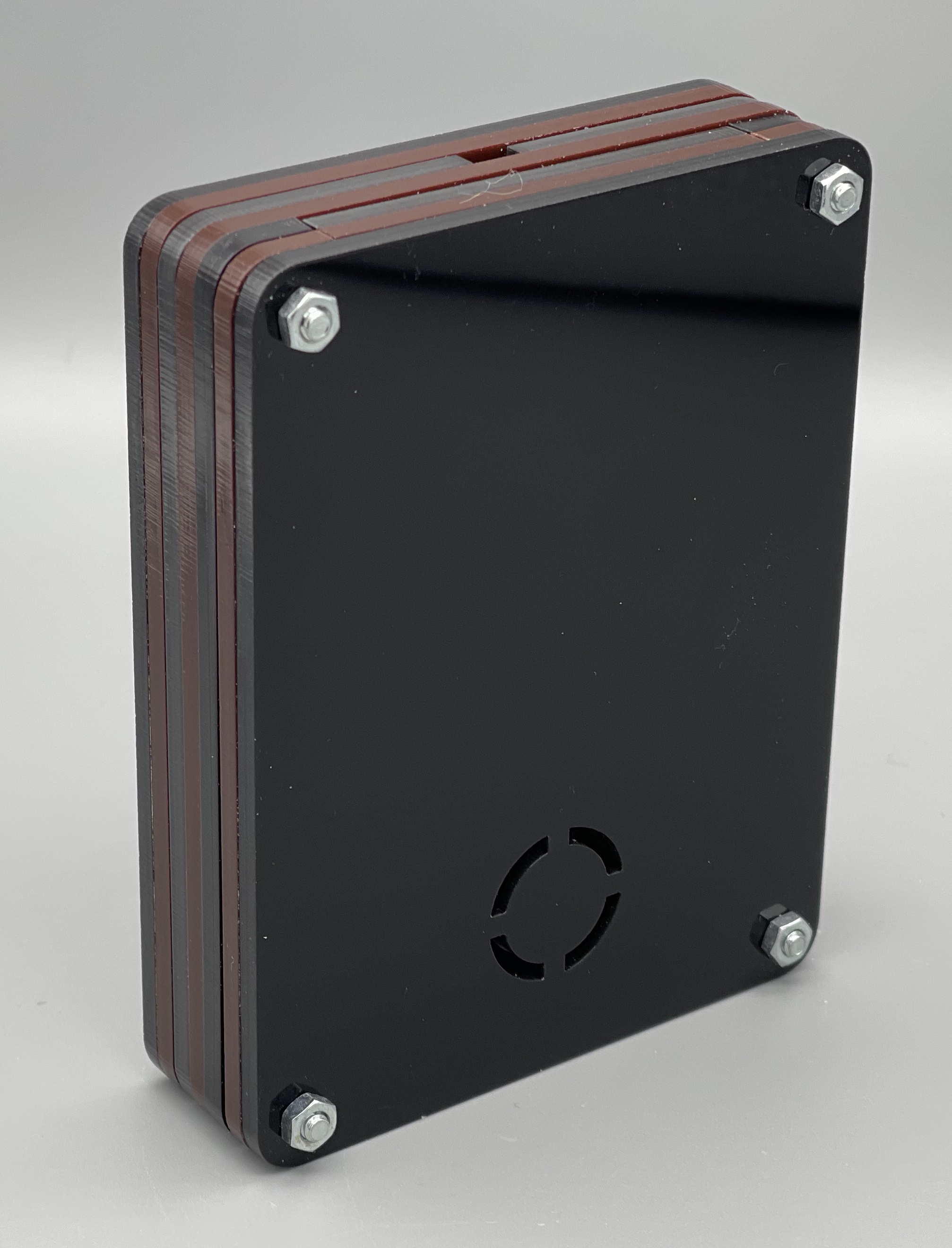
Mindanao

4″ x 3″ x 0.9″, Black, Reddish Brown & White, 7 Layers, No Coin (Find the Star)

Mindanao goes even further into unique territory, following up on Visayas to once again “find the star”. It is a puzzle that has been downright controversial: puzzlers seem to either love or hate it, responses that are even more extreme than with Visayas or Abraham’s Well. This is one of the largest puzzles in the series and is unique in that there is no circular hole on either the front or back; instead, there is a white hexagon on one side and small holes that form the broken outline of a circle on the back. The sides have no holes or panels and the top and bottom have a small hole with a single panel on top.

It is possible to make some good progress before too long; some of it comes without too much difficulty and then you must begin experimenting and paying close attention to start making sense of things, with the puzzle incorporating a bit of SD into the solution. I was able to figure out how pretty much of all of it worked before I hit a wall even higher than that on Visayas. This one took me quite a while and required some thinking that was way outside the box before an idea hit me that brought me to the solution (there may have been a nudge in there as well). Mindanao has an aha moment that I don’t believe I have seen in any other puzzle and which once again earned a laugh from me – whether you like it or not, this puzzle is original. So, if nothing else, come for the controversy and then stay for the fun.


Sanib

3″ x 3″ x 0.75″, Gray & White, 6 layers, Ghost Piece

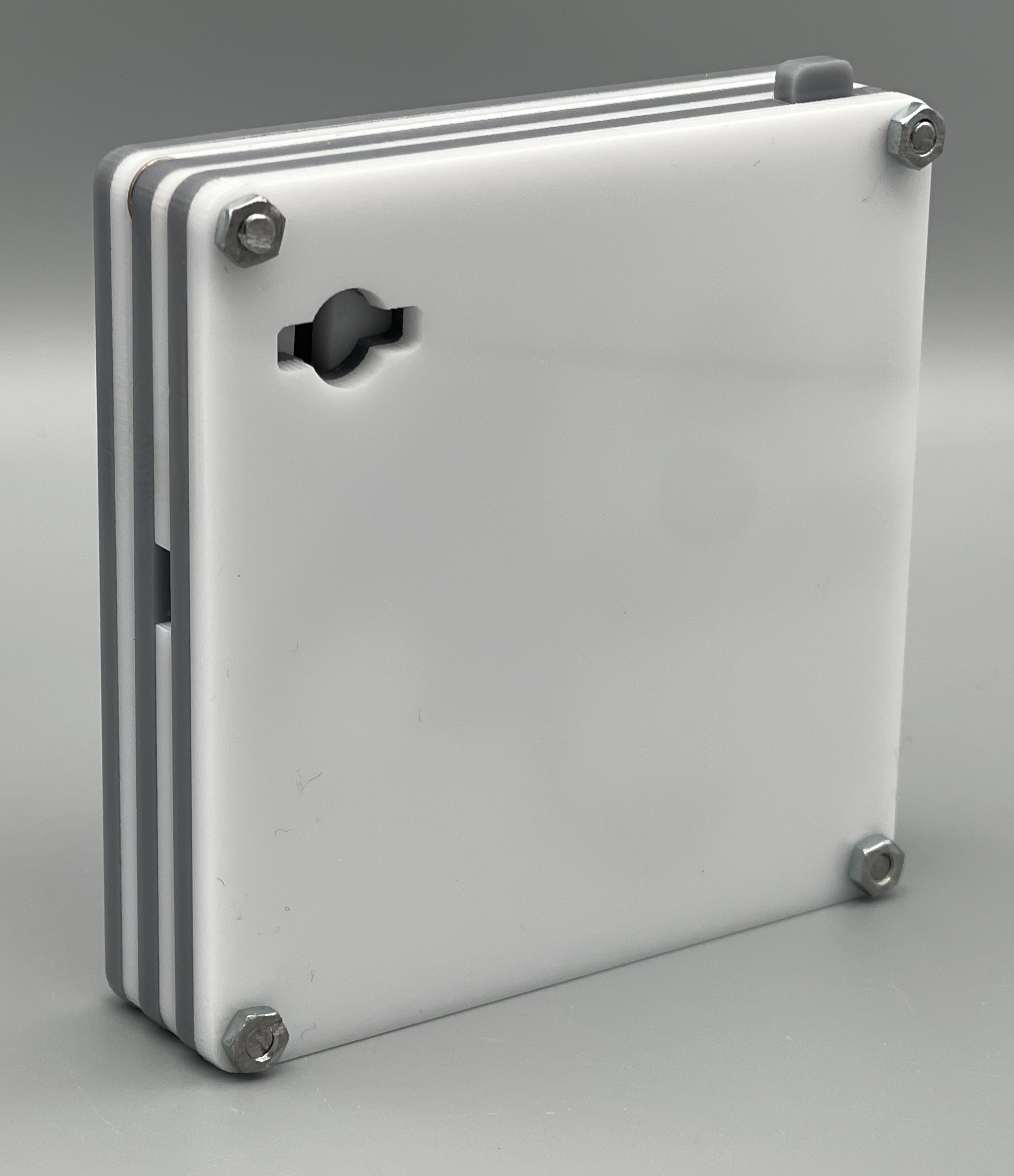
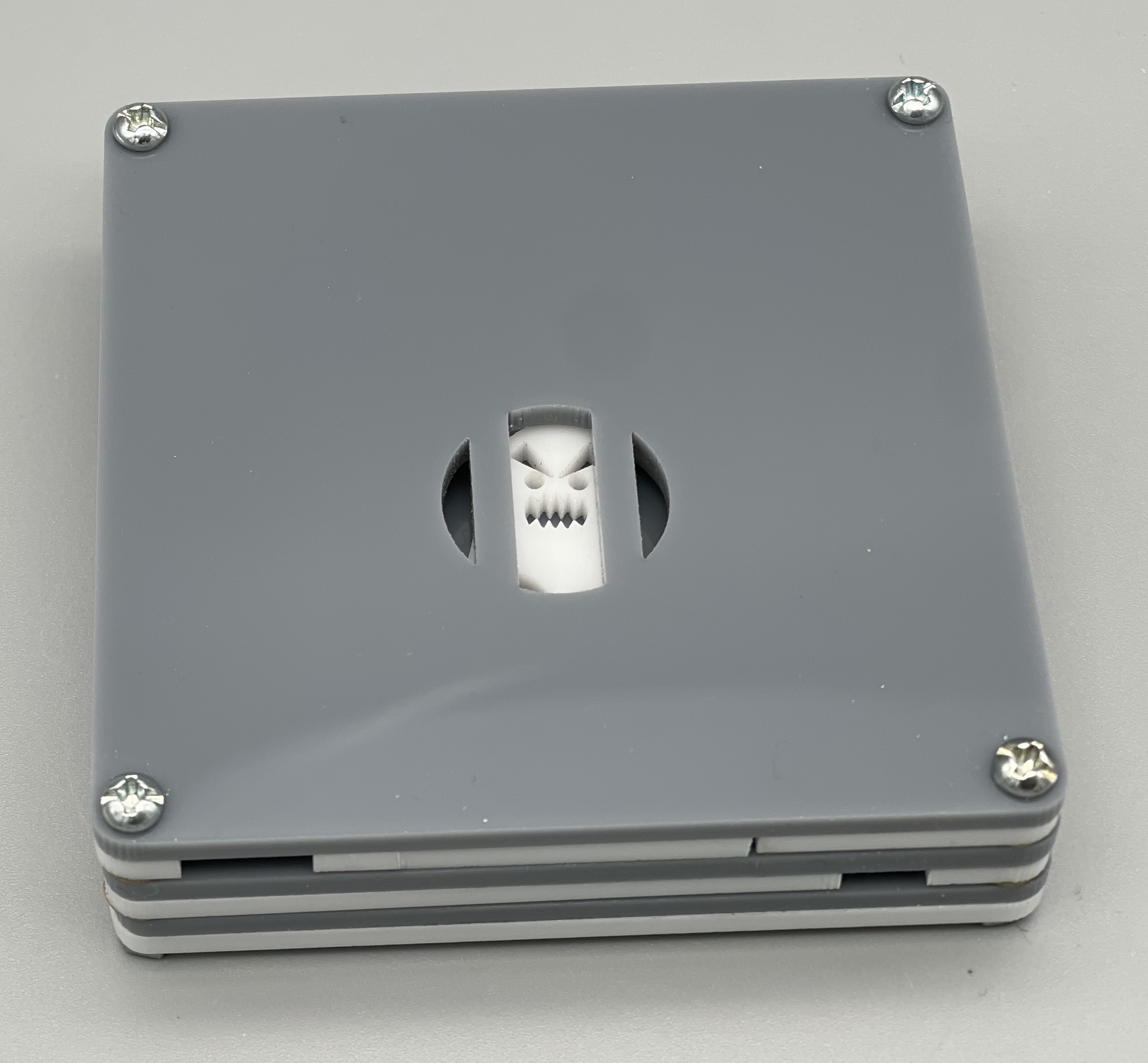
It seems that Rex had been running into some customs issues shipping coins internationally, which helped lead to some creative alternatives. Rex takes a thematic turn with Sanib, which eschews the coin for an angry-looking ghost that must be freed from where it is stuck behind bars in the hole that would typically hold a coin. The back has a narrow hole in one corner and there are a number of holes and panels on all four sides, along with a small protrusion on the top.

Sanib is the first in the series to really rely heavily on SD even more so than SM. Some random poking and tilting may afford you some progress, but you will need to stop and think about what you are doing in order to free the ghost. It is most definitely one of my favorites RCRs, combining an amusing theme with logic-based SD puzzling that uses SM mechanisms that have plenty of feedback and simply make sense as you solve it. There is quite a bit going on and taking it apart was a fun way to see it all laid out; solving it requires enough thought that I had been able to work out pretty well what was going on and I could appreciate the design all the more by seeing it packed neatly into a relatively small space.


Bella

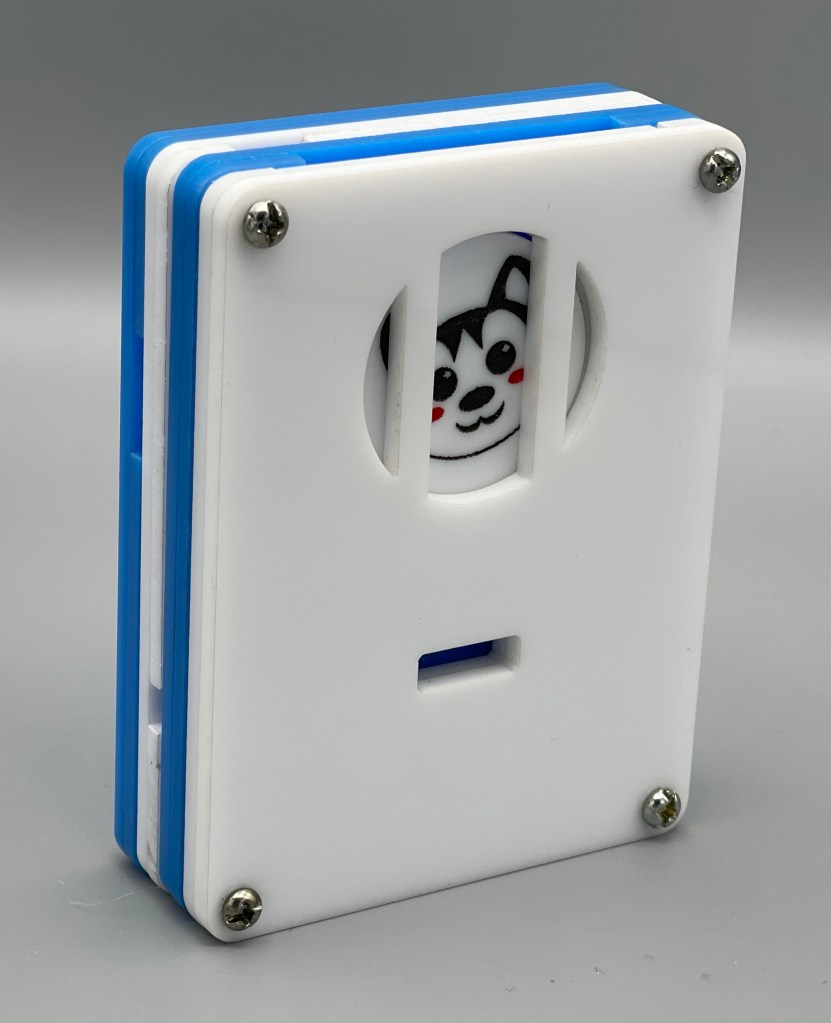
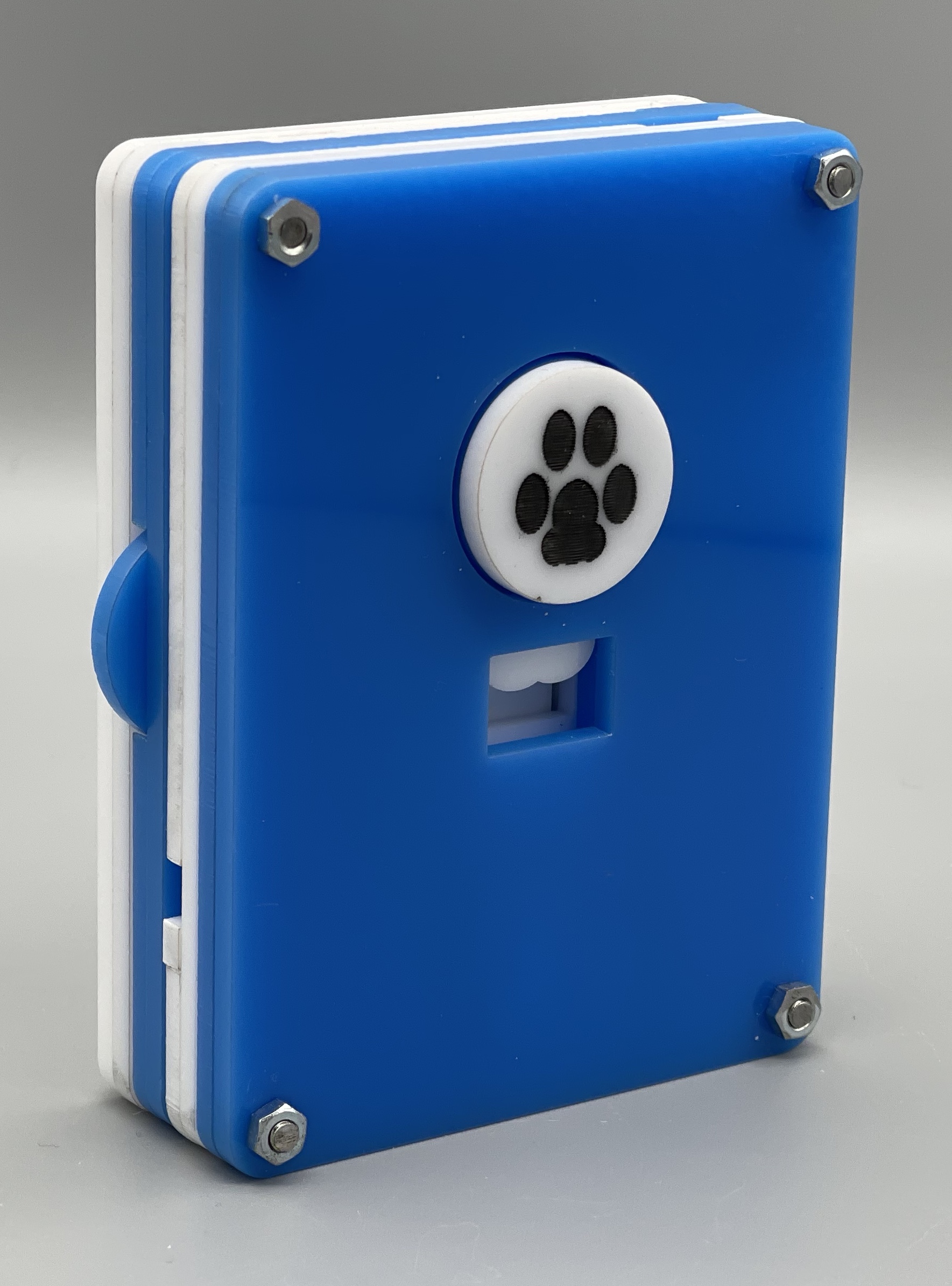
2.75″ x 3.75″ x 1″, White & Blue, 8 Layers, Dog Coin

Bella continues on the path Sanib began, further developing Rex’s SD skills and thematic design while increasing the difficulty considerably. Bella is the biggest RCR yet, with a large dog-faced coin trapped behind bars on the front, a protruding disc with a paw print on back, and a number of holes on all six sides: it is definitely not a simple puzzle.

I found there was quite a bit to do from the start; there is a mix of linear and non-linear progression that allowed for some entertainingly confusing options. I got stuck more than once before hitting a major wall towards the end of the puzzle; there were several things that seemed like they should do something and a few things I’d thought might work, but nothing actually did much of anything. I’d collected a few bits of this or that and had to really explore, experiment, and examine in order to come up with what led me to the solution. And man was it tricky! For the most part, this is not something that you will accidentally solve nor will luck be of much help: the solution requires intentional and discrete steps the majority of the time. This is my personal favorite of the series as it is both legitimately challenging and fun.


Unluck #4

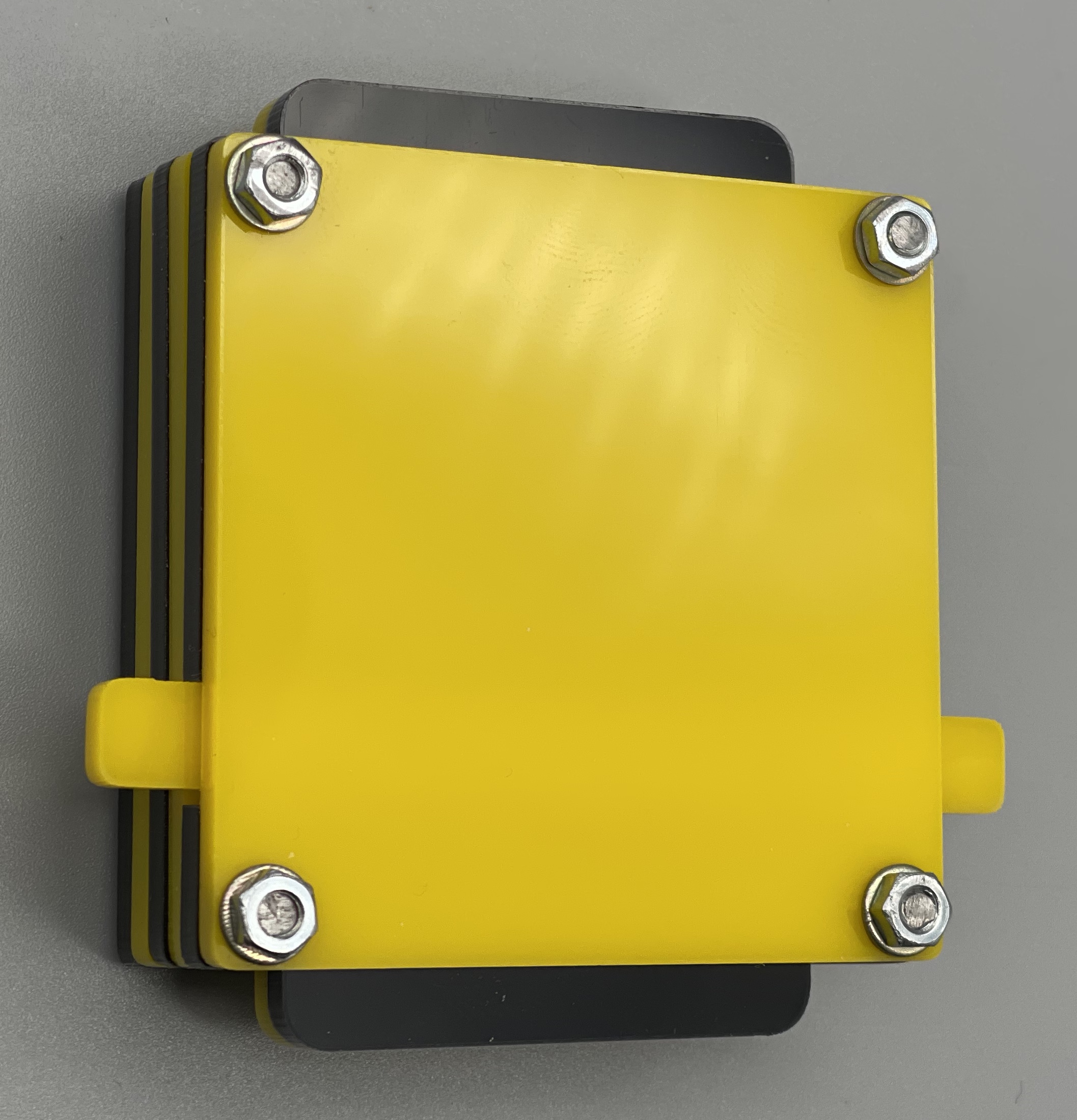
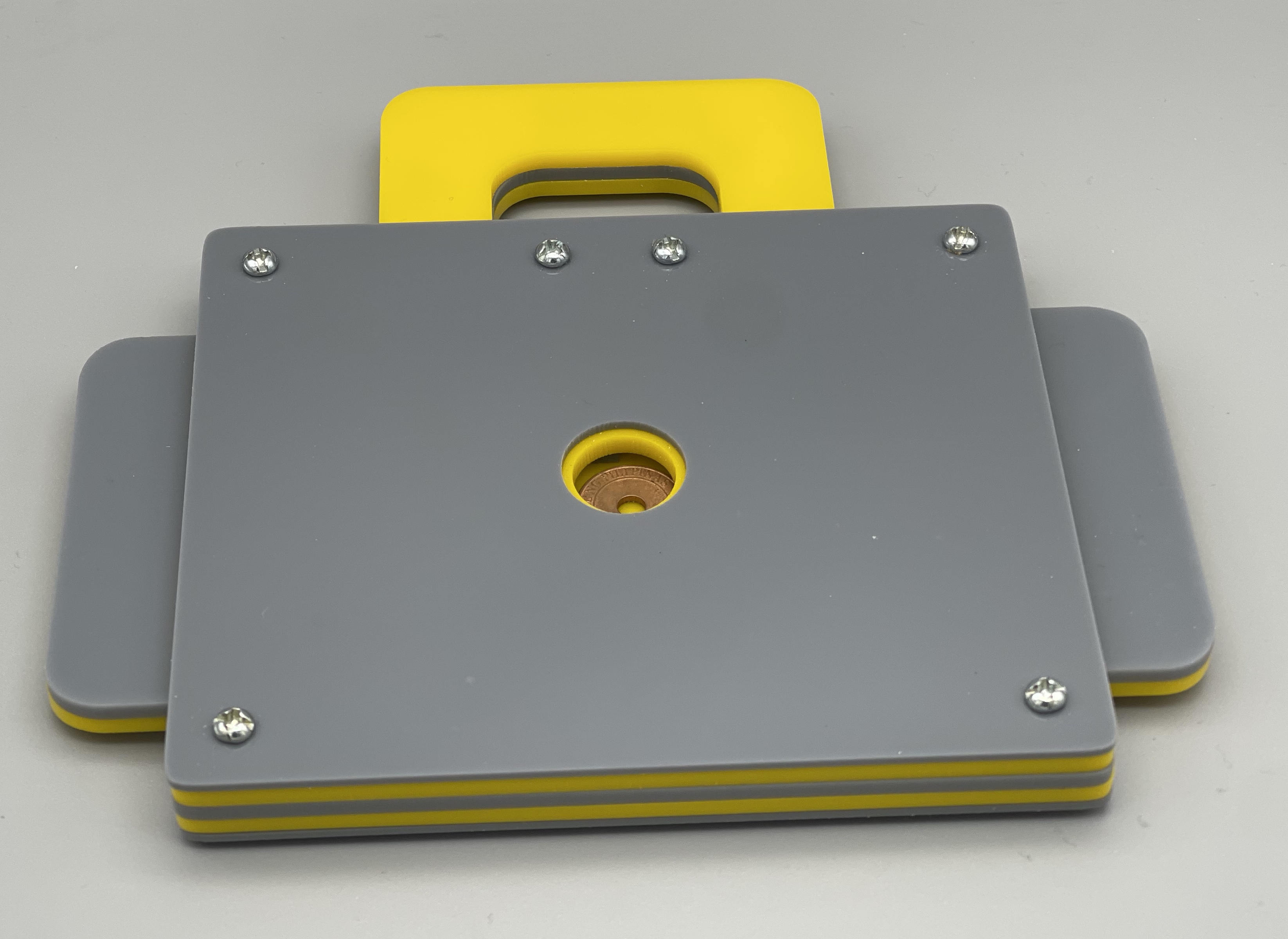
5.25″ x 6″ x o.5″, Gray & Yellow, 4 Layers (3 normal and two thin), 5 Centavos

Unluck #4 brings us back to the use of coins while departing aesthetically from the rest of the RCR series; rather than the layered rectangles of the other RCRs, this looks like an oversized acrylic padlock, with the coin in the center and a panel passing horizontally through its body. The goal, of course, is to free the coin and open the shackle. The description on the original listing refers to the (semi)blind maze that is the majority of the mechanism but Rex has added some elements to complicate things. This is a SM puzzle, similar in some ways to a few of the earlier RCRs (and one in particular), but it is still unique to his puzzles, incorporating a new wrinkle that requires some thought to figure out. While not overly difficult, there is a good aha moment and it takes some time and planning to solve. The lock mechanism is fun and lends a sense of added satisfaction to the eventual solution. No need to take this one apart; once solved you will see most of what was going on and what you maybe can’t see, you’ll have already figured out. One of the great things about SM is that luck rarely plays much of a role in the solution, providing the solver with the sense of satisfaction that comes with earning your success.


Abrihi

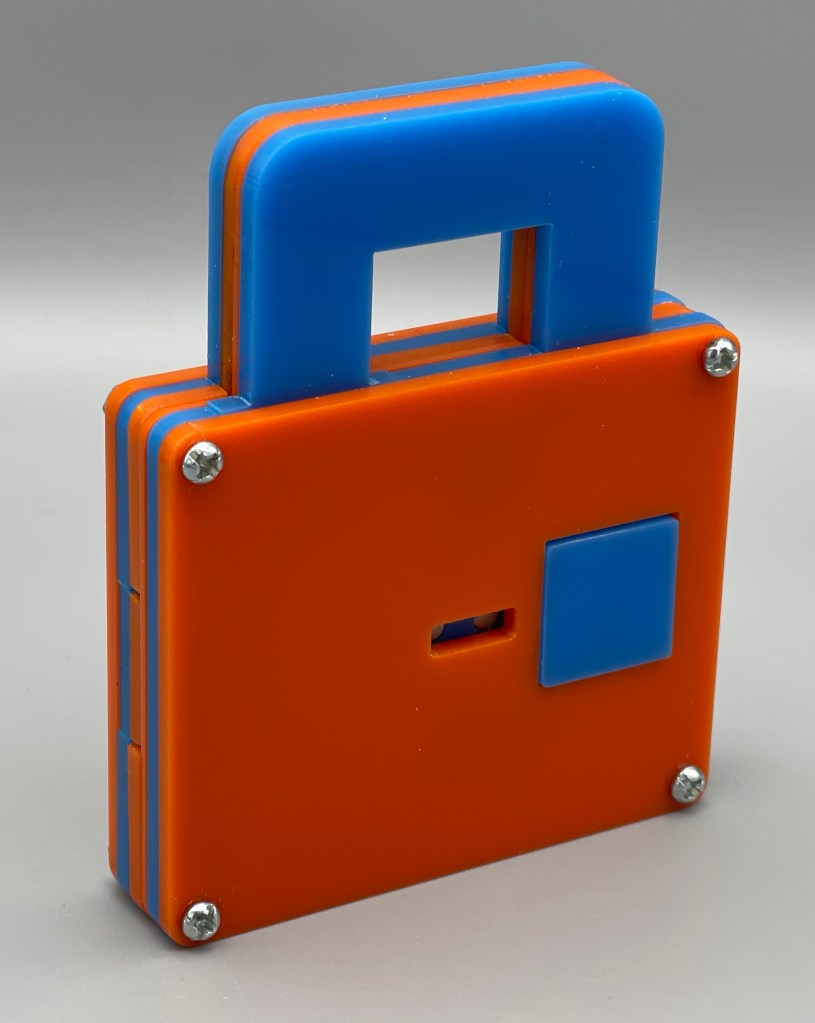
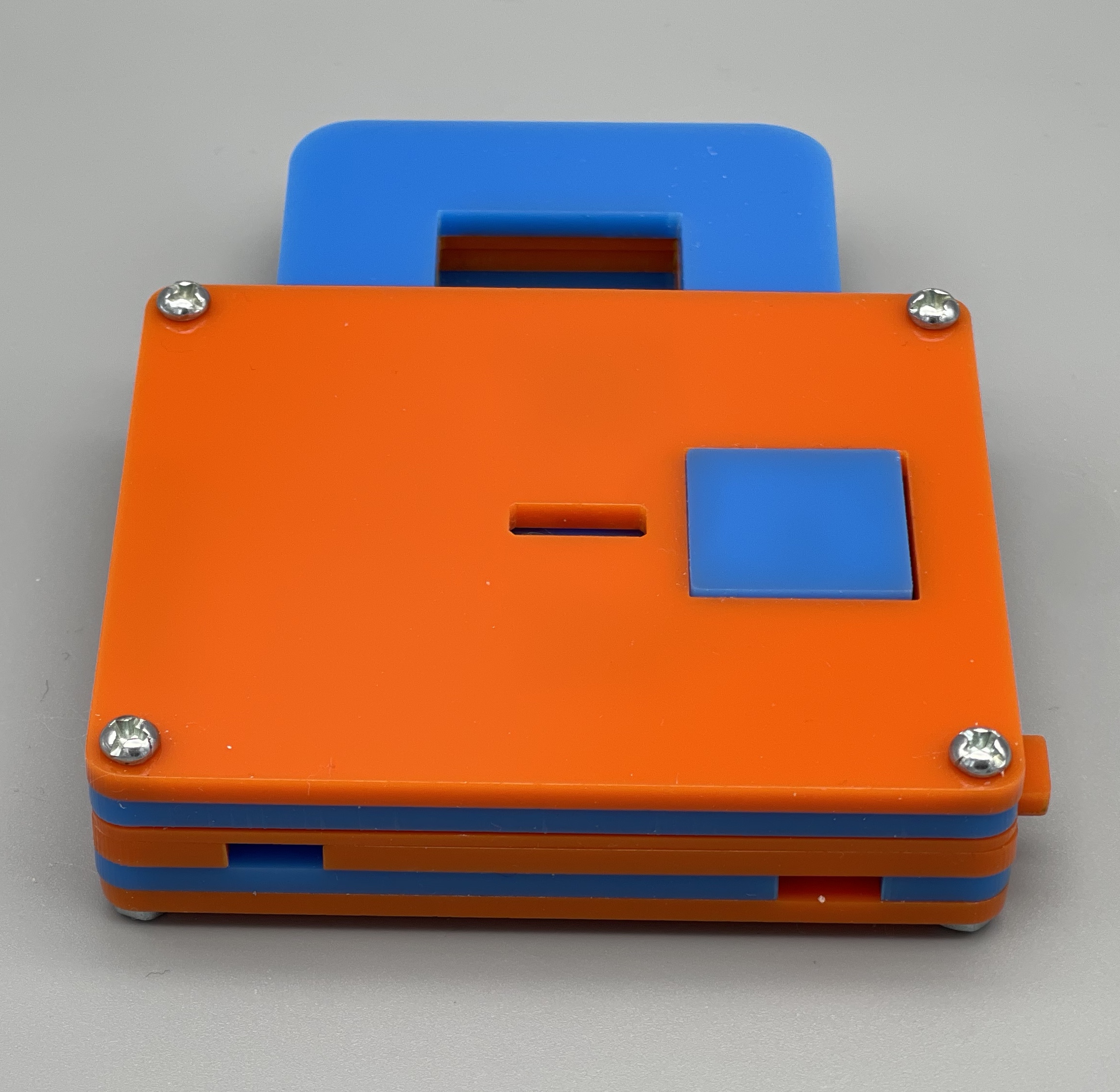
3″ x 4″ x 0.3″. Orange & Blue, 5 Layers, No Coin

Abrihi isn’t a coin release nor does it look like any of the RCRs (other than Unluck #4) – still, I figured I would include it as it is another great SD puzzle from Rex. While it is somewhat similar in appearance to Unluck #4 (albeit considerably smaller), it is nothing like it: Abrihi is shaped like a lock and the goal is (obviously) to open the shackle but, in contrast to Unluck #4, Abrihi is mostly SD, with a good amount of trickery involved. This one eluded me for some time, with the final steps sitting high atop a wall for quite a while. Eventually, with a bit of a head smack, I had the final aha and solved it. I had a pretty good overall understanding of how it worked and yet, opening it up to look inside, I discovered a few things that were more complex than I’d realized . This is not a puzzle where you are likely to solve it by luck; as with his other puzzles that are primarily SD, you need to comprehend what is going on inside in order to reach the end, although a bit of luck can’t hurt.


Katmon

Green & Red, 7 Layers, 25 Centavos

Katmon is the only existing RCR that I do not actually have (and am unfortunately unlikely to get, much to the consternation of my inner completist collector). This was commissioned by a puzzler who sent me a couple pics to include here and told me a bit about its mechanism: the puzzle shares its basic aesthetic with most of the RCRs, adding a wide vertical panel and two small protrusions on one side. It is essentially an SM puzzle that is “N-Ary based”; interestingly, it requires a fairly high number of moves as compared to most of Rex’s other mostly-SM RCRs. Matt did offer to bring it with him the next time we have the good fortune to puzzle irl, so I hope to give it a try sometime down the road.

This image has an empty alt attribute; its file name is kat-a.jpg
Name has been redacted for national security reasons under FOIA Order Section 3.3(b)(2)

Luzon

Black & Orange, 8 Layers, No Coin (Find the Blue Star)

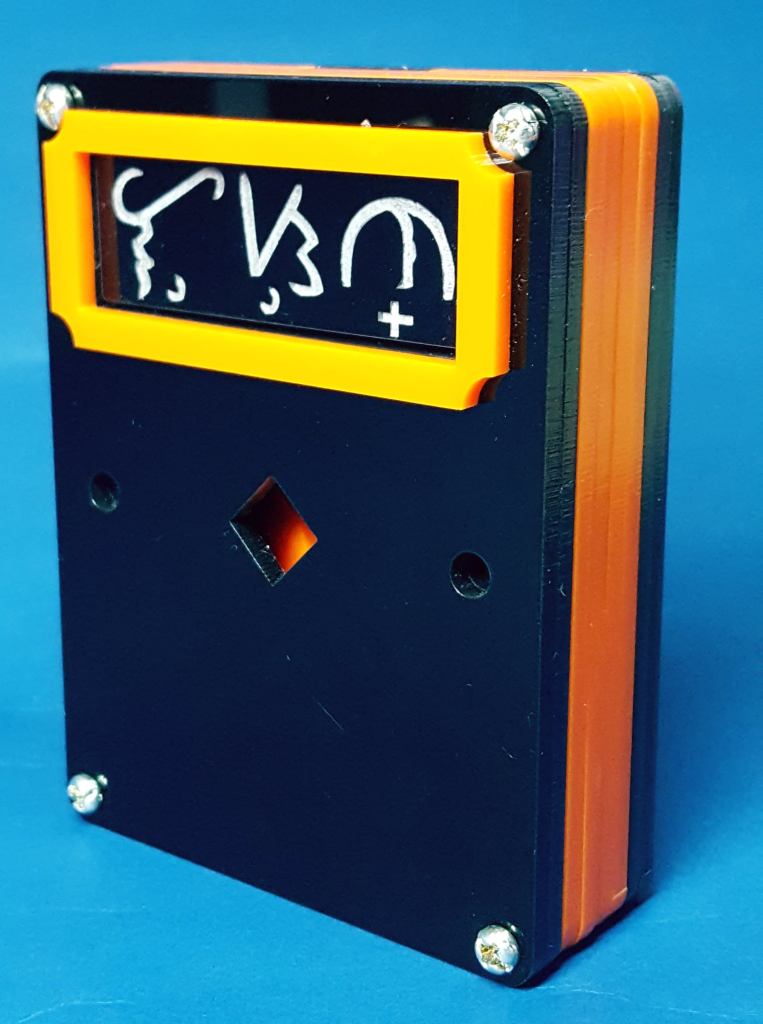
Luzon is the newest in the series, currently on its way to a few lucky puzzlers (including me :-). It features an orange frame on its face, with some rune-like symbols inside. There are three holes on the face as well, including a diamond shaped hole in the center. The goal is to “find the blue star” and Rex has said that this is the final Find the Star puzzle in the series (along with Visayas and Mindanao). It is described as SD and I am looking forward to solving it (or trying to, at least). Rex also said that “if you are not a fan of the previous [find the star puzzles], then this is not for you.” As mentioned above, the two previous star puzzles in the series have been a bit contentious; I personally think that they are great puzzles with unique aspects and fun mechanisms, so I am looking forward to Luzon. (I will add in an update once I have had a chance to try it).

(pic taken from original PP listing)


Well – that’s it! Hopefully, some folks found this useful (and maybe a few even made it to the end!). I am a big fan of Rex’s RCRs and both his SM and SD designs: they can offer great puzzling value (especially if you manage to get them direct from Rex when listed on PuzzleParadise).

It is worth noting that these are not the only kind of puzzles that Rex produces and / or designs (some of which can be found on PWBP). He has excellent acrylic skills that he puts to great use, giving puzzlers the chance to try puzzles from a number of genres: Tray Packing, Restricted Entry, & Sliders, Interlocking Assembly & Disassembly, and 3D Packing & Apparent Cubes. The puzzles are from a diverse group of designers, including himself, Haym Hirsch, Goh Pit Khiam, Tamas Vanyo, Oleg Smol’yakov, Lucie Pauwels and Alexander Magyarics (quite probably others, as well). I have bought several of these over time and can confidently say that all are well-made and some are crazy hard (I am pretty sure that Oleg’s Slider, Around, is physically impossible), oftentimes for as little as $20-30. While I can’t keep up with every single puzzle he produces, I will always (always) buy any new RCR or SD puzzle he makes without hesitation, sight/description unseen. If you are more cautious with your puzzle money, hopefully this post can help you narrow down the ones you think might most delight and challenge your inner puzzler. In my opinion, you really can’t go wrong, although of course some may better hit your particular puzzling itch.

I will try and add to this post as future RCRs and SD puzzles are released by Rex; feel free to mock or shame me should I forget (not that the interweb needs anyone’s permission to do that).


Overall Grade: Five Sinatras


Does anyone else find this picture oddly disturbing? Like the out of focus puzzles in back are ghosts staring at their recently slain brethren? Or maybe they’re apathetic onlookers, having just seen too much to show surprise at what has befallen those before them?
………no? Just me, then?
Oh.
…..that’s probably not good.

2021 fivesinatras Giveaway Results!

Congrats to XJamez and Neal N Stacy for winning the “fivesinatras was Too Busy to Write a 2021 Puzzle Hunt and Decided to Just Give Away a Bunch of Puzzles Instead” Giveaway!

42 puzzlers entered and these two will get half of the more than 2 dozen puzzles included – I will semi-randomly split them, roughly trying to balance value and variety.

Scroll down to see a video of the random drawing – thanks to everyone for participating!

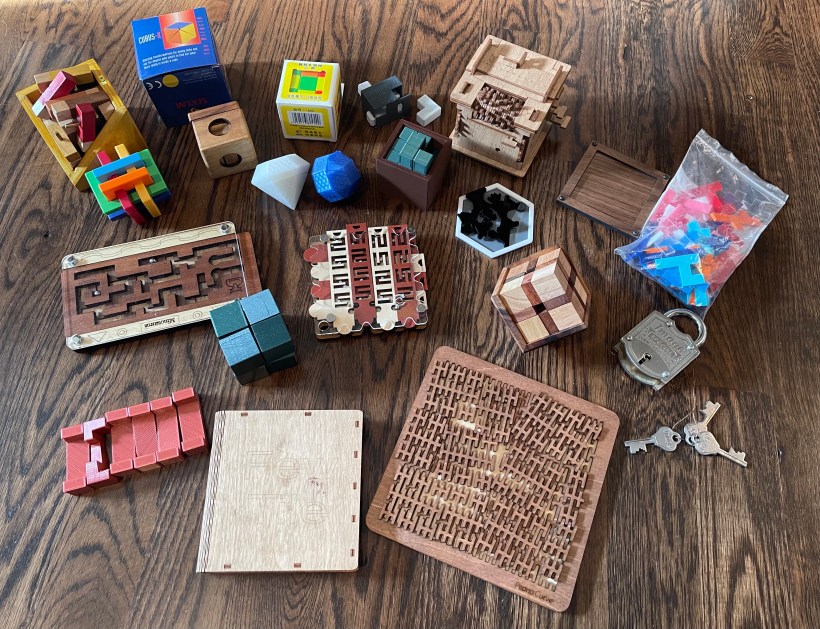
Close to 30 puzzles to be split between two puzzlers.

Watch the random drawing to ensure its randomness – weirdly, the two winners’ names were separated by only one entry  ¯\_(ツ)_/¯

Puzzle Giveaway: The “fivesinatras was Too Busy to Write a 2021 Puzzle Hunt and Decided to Just Give Away a Bunch of Puzzles Instead” Giveaway!

(Thanks to Crazy Eddie for the inspiration behind this video – scroll down if you have no idea who that is)

This is mostly intended to reach relatively new collectors / solvers and includes a number of puzzles from different genres and styles.

Please enter if you:

  • Have less than 100 puzzles in your collection, or,
  • Have been habitually / addictively solving puzzles for less than 6 months, or,
  • Generally feel like you are still kind of new or inexperienced regardless of the above, or,
  • Don’t meet the above but intend on giving these away once you have solved them.

US domestic shipping will be free – international shipping may be split between the winner and fivesinatras.

Please enter by sending me a DM on Discord, using the contact form below, or by emailing quantifiedcool at fivesinatras dot com.

Enter NOW – entries will be cut off at 11:59 pm CST on Saturday, December 11, 2021.

Included puzzles may change depending on condition and whim

Thanks to Nothing Yet Designs for gifting me a copy of Alfons Eyckmans’ 9 Rivers set earlier this year (included in this giveaway).

All puzzles are as-is and will not be exchanged but if you’re not satisfied for any reason, I am happy to refund your money (not including shipping)!

Merry Thanks-mas-uka-dan-ivus and a Puzzling New Year!


(If you’re not from North America or Gen X, you may have no idea what the hell that video was about – see below for the classic inspiration for such insanity)

Go back

Thanks for Entering!

Your name will be included in the drawing scheduled for the evening of Saturday, December 11, 2021. If you are one of the two puzzlers whose names are randomly drawn, I will contact you in the next few days to arrange for shipping. US shipping is free – international shipping may be split between us.
Warning
Warning
Warning
Warning.


Puzzle Reaction Vid: Watch Me Watch CR Solve Slammed Car

Slammed Car

Originally by Junichi Yananose (Juno) of Pluredro.com
3D Printed Version by Gerard of BayouPuzzles.com

I was watching a reaction vid of a guitar teacher seeing/hearing Ween for the first time and it occurred to me that this relatively recent rash of reaction recording really haven’t made it into the puzzling world (afaik). This could perhaps be because reaction vids are rather silly but I had fun watching it and thought I’d give it a try.

Keep in mind that this video will SPOIL the puzzle (starting a couple minutes in) – it is a solution vid, so once I’ve introduced the vid and the CR introduces his, he moves on to the solve (at 3:30).

There are a couple cringe-worthy moments in there…

Chris Ramsay (yt puzzle solver with a few million subscribers) is the obvious subject of such a video – the vid is not made in bad faith and is really just meant to be fun. CR has helped bring a lot of new puzzlers into the puzzling world – at the same time, there are a number of puzzlers that are not the biggest fans as it isn’t uncommon to see puzzles treated rather harshly (see his Sea Chest vid…) or for credit to not be given to makers/designers. As a public figure of this size (and as I do not know him personally as I do many other puzzle vloggers), it seems that it would be fair game and I thought there might be some puzzlers out there who might enjoy it. (I will also admit to some reasonable envy over someone managing to seemingly make a solid living solving puzzles – nice to see except when he happens to be bidding against me at auction).

I am reviewing his Slammed Car solution vid – obviously it is rife with spoilers. I chose the vid as it is recent and is a puzzle I own; it also happens to be the first review I wrote and it is nice to come full circle.

The tech I used is far from perfect – this is kind of a proof concept: if folks enjoy it, I can beef up the methods used to create it and spend a bit more time on production value, etc. While I am not really a vlogger (do people still use that word?), I did get my BS degree in film production (we actually worked with physical 16mm film, which may give you an idea of my age).

Please note that US copyright law has explicitly been found to protect reaction vids under the fair use exception (a bit of googling will confirm this, although I also went to law school and worked in the copyright section of the IP Clinic).


Puzzle Parody of “Baby Got Back” (Updated Version)

Playin’ With That (Parody of Baby Got Back by Sir-Mix-a-Lot)

Early Preview Version

Lyrics by fivesinatras
All tracks performed by fivesinatras

Original music by Sir Mix-a-Lot

(Updated this post with the revised version of Playin’ With That – thanks to @TitoC137 for the excellent scratching tracks!)

Updated and Improved version of Playin’ With That (puzzle-themed Parody of Baby Got Back by Sir-Mix-a-Lot)

‘Sup.

I have spent entirely too much time some months ago writing and recording “Playin’ With That,” a puzzle-themed parody of “Baby Got Back” by Sir-Mix-a-Lot (full lyrics bellow).

I am updating the rough version of the song having re-recorded much of the vocals and adding a wonderful record-scratch track from @TitoC137.


Copyright Disclaimer: This is a parody of a well-known song and is protected under Fair Use law; I have performed all tracks myself (instrumental and vocal) and am contrasting the sexual and cultural meaning of the original song with the mores of the mechanical puzzle community 😛

If you would like to learn more about the legal protections afforded to musical parodies, I would be pretty surprised; nonetheless, you can check out this 1994 Supreme Court decision denying Roy Orbison’s case against 2 Live Crew (this is comedy gold, people: Campbell v. Acuff-Rose Music, Inc., 510 U.S. 569 (1994)).


My SoundCloud profile also has songs that a friend and I made in the mid-1990’s, so if you want to hear some lo-fi indie-folk-punk, check out “A Man Dies Slow” and “My Life is Lived.”


Playin’ With That

Parody of "Baby Got Back" by Sir Mix-a-Lot
Lyrics by fivesinatras © 2021
Oh my god, PT, look at that burr
Its level’s so big, it’s gonna take
those puzzle guys a whole weekend.
But ya know who can even solve 
those puzzles?
They only try to solve ‘em because
they look like they're impossible, k'?
I mean, that burr, its just so big.
I can’t believe it’s not even around, 
it’s sold out there.
Those dudes are obsessed.
It’s just so, sad.

I like big burrs and I cannot lie
You other puzzlers can’t deny
When a burr shows up on CD’s page
With pretty woods to my taste
I press done, having paid enough
Cause I know that burr is tough
Gonna get sucked into payin’
I’m hooked and I can’t stop playin’

Oh maybe get the one 
on WoodWonders
And take some pictures    
Discord friends tried to warn me
That burr you got’s from (Osanori)
Oh, come get puzzlin’
You say ya gonna need more hands?
It’s co-movement, I’m usin’
BT but the file’s confusin’
Won’t ask cubic dissection
to hell with the solution
I’ll get it
Got me goin’ straight into debt
Puzzle will be played
Level 90 is what it said
30.8.9. dot what
That aha’s coming up

So puzzlers (yeah) 
puzzlers (yeah)
Your collection got some burrs? 
(hell yeah)
Tell em’ don’t shake it (shake it) 
Don’t shake it (shake it)
Don’t shake that wooden burr 
Playin’ with that 
(made of 6 exotic woods, son)
Playin with that 
(made of 6 exotic woods, son)

The solution ain’t been found, 
it's too big,
And then I’m throwin’ a fit
I just can’t help myself, 
wanna buy every puzzle
When Haubrich’s live, I’ll
Make ‘em all my own
I’m stuck (trouble what) stuck stuck
Ain’t talkin’ bout my fails, boy,
Cause wooden puzzles ain’t ya toys

Don’t want em’ scratched 
or loose, see
Cause Reassembly’s trouble
Yeah it’s a struggle
I’m watching Mr. Puzzle
He’s solving YT videos
I’m on Baxter now, bidding on those
Prices still kinda low
M..l’s got bids tho’

A word to the six-piece Cutlers 
I want to get all ya
I might cuss or hate ya
But I gotta be fake sayin’ I ain’t gonna
Come and get hints from
Someone who’s got it done
I want a DM, spoil tags on
Some puzzlers solve it and list it
But I’d rather it stay to replay
List is long, I want on
Cyberstalking ya now it’s on

So puzzlers (yeah) 
puzzlers (yeah)
Wanna go with disassemblies? (yeah)
Then go log on, have no doubt,
New puzzles are comin’ out

Playin’ with that
Playin’ with that
Yeah baby,
Pelikan’s in the mail
So many puzzles by Alfons
It’s hard to make my selection
Level 36, 24, 36
Gonna be a hard disassembly

NPSO wanna surprise ya
With a puzzle but just can’t find one
Ask on the Discord group 
cause we don’t mind ya
I have a box, I don’t want none
Unless you got burrs, son
You can do SD and boxes
But please don’t lose that burr
Packin’ puzzles are gettin’ sold
Boucher’s designs are gold
When they list it, I don’t leave it
Gotta order quick to retrieve it
No wallets gonna stay fat
When you order all of that

Gotta package, it’s full 
and the burrs are kickin’
And I’m thinking about stickin’
To all the ones in the blogs I read
Ya can’t get everything
Wanna try, I can’t resist a
Juno design, like this burr
SD Pluredro don’t you dis
slammed car is on my list

At 2 pm he’s gonna post ‘em
Refreshin’ to get most of ‘em
Cause puzzlers, the burr you found 
Ain’t always gonna be around
All them unicorns cost a lot
So which ones have you bought

Playin’ with that
Playin’ with that

It’s wigglin a little 
but I built it right back
It’s wigglin a little 
but I built it right back

fivesinatras’ (Possibly) First Annual Puzzle Hunt Walkthrough

Find the original Hunt pdf here to try the Hunt!

Congratulations to the Hunt Winners and everyone who made it to the end!

I am so sincerely happy that the puzzle hunt went well! People played and I tried to give nudges here and there since some intended connections may have been a bit far – ultimately, several people made it to the end and I think there was some amount of fun to be had. I am grateful to each of you who tried it and appreciate all the feedback I have received. There were a few bumps early on that are great lessons for the future, as I ironed out some website issues and fixed a typo in the Hunt itself. For the most part, the Hunt went very well – while writing it, I learned that it is easy to make a Hunt that no one can solve, and much harder to make one people will be challenged by while being able to actually solve it (and hopefully have some amount of fun). I know that my reliance on US pop culture may have somewhat favored US-icans, but, well, we write what we know  ¯\_(ツ)_/¯ I wrote it so that hopefully anyone would be able to track the answers down, once you had an idea what you were looking for.

Growing up, I got to participate in some of the city-wide Puzzle Hunts in Miami (the Tropic Hunt has been an annual puzzle hunt originally written by Dave Barry – in the 80s, my family did some of the early, county-wide Hunts as well as neighborhood-focused ones that came after – more info about the Tropic Hunt here). In recent years, I have struggled to solve some excellent Hunts (usually in teams with others more capable than me), attempting to take on MIT and other excellent hunts! There is a Discord group dedicated to such Hunts, so if you are interested in joining, let me know and I can send you an invite if you need.

This year, I created a pseudonymous account for Discord, super-sneakily asserting that I was “Not an Old Member of this Group.” Somehow, many people saw through this sophisticated ruse. I posted the Hunt (in the form of a pdf) on the Discord Mechanical Puzzle group and the aforementioned Puzzle Hunt group, claiming I had found it online (mostly facetiously as it was pretty clear I had not); if you would like to give it a shot before reading the walkthrough you can find the content of that pdf here.

The Hunt consisted of the pdf, which contained clues that led you to a “hidden” page on my website; this contained further clues to help people deduce the puzzle and codeword needed to win. Throughout, there were clues as to when and where to contact me with the solution. I thought it might be cool to provide a walkthrough of the hunt, in the event that someone might care to take a look:


Puzzle Hunt Sheet:

On November 28, 1989, a future Judge and her furry friend were trapped in a car, tuned to Song of the South; making the best of a colorful situation, they created a Hokey Pokey for the modern era whose title could help clarify parts of the story below. They stepped forward and back and wondered: How many and when?

Paragraph 1 of the Hunt Sheet

Para 1: This refers to the song Opposites Attract by Paula Abdul and MC Skat Kat: Paula has been a Judge on American Idol or the Voice (or something like that); Song of the South is a Disney movie that mixed live action and animation, as in the music video for Opposites Attract; and, Hokey Pokey / “forward and back” because the song’s dance is vaguely reminiscent (e.g. “2 steps forward, 2 steps back”). “Parts” is in italics to help indicate that you will want to find the opposite of the italicized parts of the story (3rd paragraph of the Hunt). The last sentence of this paragraph is to help you know what to do once you have deciphered the meaning of the story (we will come back to this).

Meanwhile, in the 21st Century, a blogger kept having visions of yet another musician, this one a crooner from a bygone era; the blogger’s sight blurred as he struggled to focus, ten blinking blue eyes staring back into his. He wondered where they were, doubting they would come and follow him home. Pack-ed into the baritone was the following story – I hope you can make better sense of it than I:  

Paragraph 2 of the Hunt Sheet

Para 2: This is primarily referring to me (crooner, ten blue eyes (Frank was known as Ol’ Blue Eyes), baritone) – the hunt was posted by me under a different name so the connection to me was not immediately apparent. You will notice that some letters are bolded: www dot com; it also says that they should “follow me home.” This means that once you have figured out solution to the story, you will have something to enter as part of my blog’s address: fivesinatras.com/——–. 

Story: The story consists of five sentences; each sentence gives you a different movie franchise. “How many and when” + the hunt’s name (Mr, Mrs, etc = title & “order”) means that you will need to know how many movies in each series and then order them based on which came first. I will include each clue as well the explanation.

  • Story Clue 1: On the day after the saddest night on tv, an athletic killer stalked the halls of a hotel’s most popular floor.
    • Friday the 13th (12 movies, 1980):
      • The opposite of saddest night is “happiest day,” referring you to the tv show Happy Days, whose theme song tells you that Saturday is, in fact, the aforementioned happiest day. “After” is in italics, directing you to its opposite (“before”) and so: Friday.
      • Many hotels (in the US anyway) skip the 13th floor due to superstition.
  • Story Clue 2: Down in the steam tunnels, a killer who reminded me of a topiary gardener I like to call Edward Burton, his face wrinkled with fear, pointed with every finger on his right hand at the teens who spent their day dreaming
    • Nightmare on Elm Street (9 movies, 1984):
      • Freddy lived in the steam tunnels with a burned (wrinkled) face, and knives (points) on the fingers of his right hand, focusing his ire on teens.
      • Edward Burton the topiary gardener refers to Edward Scissorhands by Tim Burton (whose hands were also tipped with blades). 
      • “Day dreaming” is in italics, its opposite leading you to “nightmare.”
  • Story Clue 3: Meanwhile, it was either a wild-eyed scientist, or a kid, that showed up asking about that book, the one called something like Nothing Loud off the Eastern…. well, I suppose by now the moment has passed.
    • Back to the Future (3 movies, 1985):
      • The start of this sentence contains a direct quote from the second movie (“it was either a wild-eyed scientist……… asking about that book”).
      • The opposite of Nothing Loud off the Eastern…. refers to the book All Quiet on the Western Front; the opposite of the missing word, “Front,” is “Back”.
      • Opposite of “passed” (pronounced “past”) is “future.”
  • Story Clue 4: Later that night, a tall hearse driver dropped his poking ball when there appeared before him something real and tangible.
    • Phantasm (5 movies, 1979):
      • The killer in the Phantasm movies is known as the Tall Man; he drives a hearse and kills with flying balls from which blades emerge.
      • “Something real and tangible” would be the opposite of a “phantasm.”
  • Story Clue 5: It must have been Christmas, because my friend was once again trapped inside, building kids’ toys, held hostage but feeling grateful that, all in all, the way he got to live was pretty easy.
    • Die Hard (5 movies, 1988):
      • This may be the easiest one, but it is probably my favorite clue in the story:
        • The first two movies take place on Christmas.
        • “Trapped inside, building….. held hostage” refers to the plot of the first movie.
        • “Live” and “easy” are in italics = “die” and “hard.”

When you arrange the number of movies in each franchise into chronological order (based on the year the first movie was released) you get: 512935. Go to fivesinatras.com/512935 and you get to the Hunt page. Unfortunately, WordPress automatically added the page to my site’s menu and so it could be found with a bit of sleuthing during the first few days. I also heard that the address might autofill on some browsers (but at least you would need to know how it began). Good lessons for me.


Hunt Sheet Poem (scroll down for solution)

Solve the hunt to know where to go,

And in that place a clue will be shown.

Decipher the code and then let me know,

it does matter where and when people might, though.


Come find me in the hostile place we’re all known,

And on the right day (no matter time zone),

Come and say the secrets you’ve been shown,

For a chance at the prize wrapped up in a bow.


I’ve already told you the where, and so:

La Navidad no es la única festividad dentro 

de una semana de Año Nuevo.

Poem at the bottom of the Hunt sheet

Poem: The poem at the bottom of the Hunt Sheet tells you what to do once you have solved the puzzle. First you must decipher the codeword on the website and let me know via DM/PM (these letters are bolded). “Hostile place” is a hint for discord, where you can find me (@fivesinatras). Finally, the last sentence tells you that there is a holiday within one week of New Year’s. The sentence is in Spanish because Three Kings’ Day is a holiday commonly celebrated in Spain (and Cuba, among other Spanish countries); it is on January 6, which is when you were meant to tell me the codeword and the puzzle via Discord DM (I accepted anyone who let me know the date, word, and puzzle regardless of when they let me know, although most of them still followed up on the 6th, which is awesome).


Webpage (this is where you are directed upon solving the Hunt Sheet Story

Puzzle: Having found the webpage you will find a picture of the puzzle that must be identified; there is a second photo of the back of the puzzle at the bottom of the page. I added a second prize but this did not need to be identified. There are also a few hints in the poem itself: “Dam” instead of “damn,” “Klass” instead of “class,” “sea, birds” as the puzzle was made by Pelikan, and “having fun” because it is named “Party.” The puzzle is: Party, designed by Klass Jan Damstra and produced by Jakub Dvorak of Pelikan Puzzles.


Webpage Poem (scroll down for solution)

Give Tommy’s friend Jenny 7 pieces of pie;

but make sure it’s spotless before you try.

Add what is left to Her Majesty’s most famous spy,

and make sure he stands backwards (I hope you know why).

It now needs the birthday with greetings and wine,

from four bug’s military band that sneezes and cries.


The answer can’t be whatever you please,

so replace the first part with what some say at sea.

All of the answers to clues such as these,

are just so you’ll know my favorite ______.

One more thing to do for the holiday lottery,

in addition to the codeword, I need you to remind me,

so go ahead and look at the pics:

I keep Dam forgetting… which puzzle it is?

I know it likes the sea, birds and having fun,

so share with the klass before this is won.

Follow the rules and you might be the one!


The instructions have told you what to do now,

and where and when and why and how.

Poem from the Hunt Webpage

Poem: The poem is intended to lead you to four numbers, which must be added/subtracted to give you a final number:

  • “Tommy’s friend Jenny” refers to the song “Jenny” by Tommy Tutone, which famously gives us Jenny’s phone number: 867-5309.
  • “7 pieces of pie” refers to the first 7 digits of pi; “spotless” as you need to remove the decimal: 3141592.
  • The spy is James Bond (007), who stands backwards to become: 700.
  • The last bit refers to the song When I’m Sixty-Four, from the Beatles album, Sgt. Pepper’s Lonely Hearts Club Band:
    • “Birthday greetings and wine” is a quote from the song;
    • Four bugs = the Beatles
    • Military Band (Sgt.) that sneezes (Pepper) and cries (Lonely).
  • It says to “give” the pieces of pie, so you are subtracting this from Jenny’s number. You then add the backwards spy and the beatles: 
    • 8675309 – 3141592 + 700 + 64 = 5534481
    • You now use a basic substitution cypher (A1B2) to get: EECDDHA
  • The poem then tells you to replace the “first part” (the letter “E”) with “what some say at sea” (a pirate’s favorite letter is…..?) = RECDDHA
    • The letters can now rearrange to: CHEDDAR. 
      • The rhyme scheme is also a clue (“sea” and “these” rhyme with “cheese”). Also, the Hunt’s title refers to a snack (“Comidita”).

Solution: 

  • DM me on January 6 on Discord
  • Codeword: cheddar
  • Party by Klass Jan Damstra

The winners were entered into a lottery to win Party. I also added a second prize, an approved print of Rob Yarger’s Snowflake by Pyrigan Puzzles (which comes disassembled, as figuring out how to build the puzzle box is especially fun), partially as I felt bad for the couple of issues early on and also because I had earmarked it for Secret Santa before figuring out that the intended recipient already had a copy (I guess that is a hint for my Santee).

Again, I am so happy folks had fun with this – any questions or feedback are more than welcome!

Kakoi: I couldn’t think of a witty title for this post but the box is still super cool.

Kakoi

Shiro Tajima, 2016, Monarch Birch, Black Walnut and Japanese Cherry, 4” x 4” x 4”

Shiro Tajima was creating puzzle boxes with the Karakuri Group until a few years ago; his Hermit Crab and Goblet boxes are probably the most recognized of his boxes, as they have been produced in larger numbers. I reviewed his Uroboros box a few months ago (with one of the few solution vids I’ve done, as it was requested by a fellow puzzler). Kakoi is quite different, not only from Uroboros but from any box I’ve seen or done.

Kakoi consistently gets listed in community polls as being among puzzlers’ favorite boxes; in fact, it won the 2017 Nob Yoshigahara Puzzle Design Competition Jury Grand Prize, which is basically a long way of saying it’s a damn good puzzle. The only reason it likely doesn’t get an even better showing is simply due to its rarity.

It is a bit bigger than your typical Karakuri box and eschews the traditional panels for a look that is anything but traditional (or a panel). Your first impulse is pretty clear from looking at it and it does in fact lead to some success, or at least it seems to: this is one of those puzzles where movement early on doesn’t necessarily give you much info on how to proceed from there. While I have chosen not to post pics that display these early movements, a simple search will let you see some slight spoilers for said steps.

After futzing with it for a while, essentially just poking the same few things back and forth, I began to get a sense of what might be possible and started experimenting. This is one of those puzzles where things have to be juuuust right before you’re able to proceed, and it’s not so easy to see what that is until things are, in fact, just right, a tautological conundrum that helps to build the aha into something truly satisfactory.

One you find that perfect setting and the move it permits, the main movement is quite elegant and unique. Having accomplished this, it doesn’t take much to find the final steps, allowing you to access a total of four(!) hidden compartments.

Opening the compartments makes the puzzle impossible to close and it is pretty easy to get turned around such that knowing how to close it and actually doing so are not quite the same thing, at least for a few moments. This forces you to really look at how everything works together to first prevent and then permit the main movement. Once again you need to find the exact right arrangement before you can reverse the main step; when closing it you can really appreciate the close tolerances, a bit of a vacuum is even created, with the displaced air acting as excellent evidence of this precision.

Resetting the box is quite satisfying: enough so that Kakoi is among the puzzles that I have a tendency to re-solve most frequently. There is something about that main movement that I find to be so pleasant to do; the fine adjustments never seem to get easier, such that a moment of confusion feels inevitable with each run-through.

Shiro Tajima’s Kakoi is an excellent example of the uniqueness of Karakuri boxes; its aesthetic and movement stand apart from other boxes and offer an elegant and fun solution that relies on high levels of precision that others might sometimes struggle to obtain. If you happen to see this one available somewhere, I’d recommend considering it – it certainly sits comfortably amongst my favorite Karakuri.


Overall Grade: 5 Sinatras

(click here for more information on the Sinatra Scaling System, (c) John Maynard Keynes, 1944)

The Other Best Blue Metal SD Puzzle Cube

Wishing Well

Perplex Puzzles, Stainless Steel, Aluminum, and Brass, 3.5″ x 3″ x 3″, Currently Available

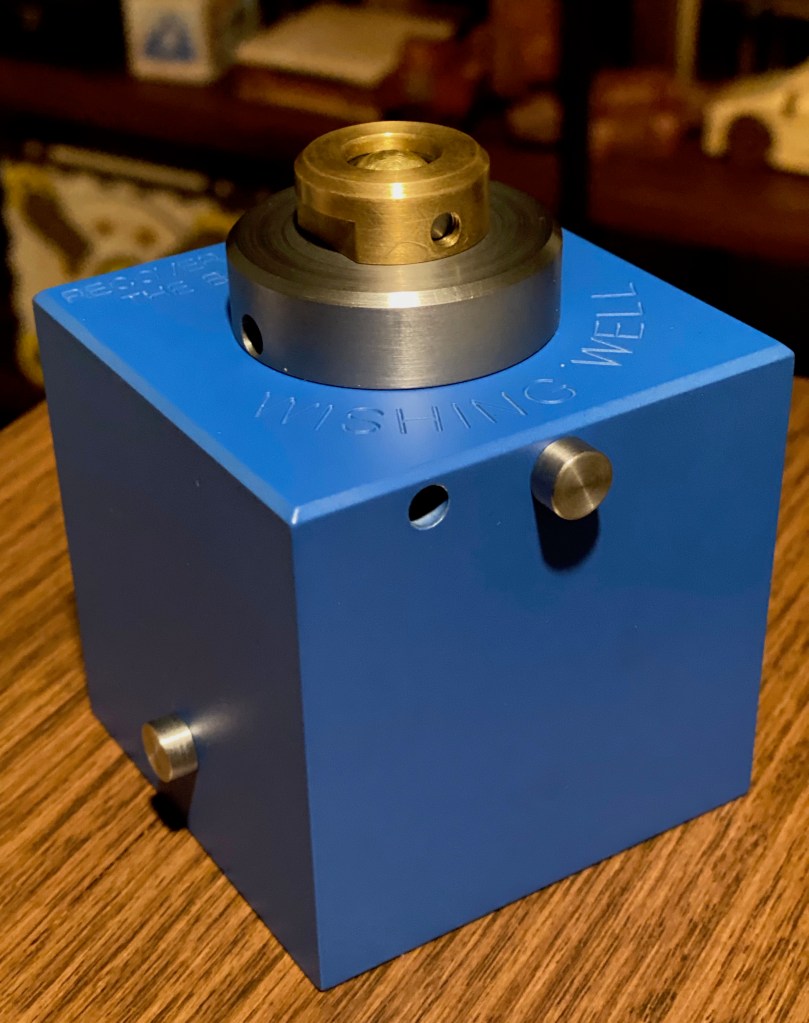
Recently, a puzzling friend of mine sent a pic of a metal puzzle box that had my puzzling parts tingling: Wishing Well is a new (currently available) puzzle from Perplex Puzzles; while seemingly a newcomer to the mechanical puzzle scene (afaik), the creator is a machinist with 39 years experience and the impeccable craftsmanship of the puzzle is definitely consistent with this expertise. At first glance, it seems somewhat similar to Will Strijbos’s First Box: it is a blue metal cube, with a cylindrical protrusion on its top. However, it is a bit bigger and significantly heavier than that puzzling classic; its blue surface is ceramic-coated “for long life,” and it has a number of holes and nubs and such located around its periphery.

Perhaps more importantly, this puzzle boasts an approximate number of 50 steps to solve(!) – this is made even more sweet by its instructions, informing us that there are no magnets, no need to spin or shake, and no smacking or excessive force needed. Described as “sequential mechanical,” after spending time with it, it most definitely falls squarely into the sequential discovery sub-genre of take-apart puzzles: it contains an “intricate assembly” of various metal parts that have been “precision machined on both CNC and conventional machines.” Presumably, this requires a lot of time and effort to make (a fact belied by its significant price tag); I took a bit of a leap of faith and bought it (who am I kidding – a brand new 50 step, SD puzzle box?! yes, please). As stated on the website, these are made in small batches: “[d]ue to the extremely close tolerances and tight fits, they are individually fit and assembled.” Yet again, music to my puzzling soul.

Made in the US, it arrived in just a couple days, arriving in a heavy wood crate with a dozen or so screws around its edges. This was obviously extremely cool and had me anticipating the puzzling experience all the more. Opening the crate, I found a wooden case with a metal clasp taking up about half its interior. Inside this unassuming (not a puzzle) box, lay Wishing Well, comfortably nestled in the foam-lined interior. Lifting it out of its perfectly-sized hole, the first thing I noticed is that it is heavy. Like really heavy. I mean, noticeably heavier than Pachinko, let alone First Box. Its ceramic coating feels smooth and softer than most metal puzzles had led me to expect, and the two-stage, two-toned protrusion on top immediately grabs my eye: a two inch metal circle (aluminum, presumably) topped by a one inch brass circle with what appears to be a brass ball nestled within. The primary directive has been etched into the surface of the box, just above the circles: “Recover the Coin from the Bottom of the” (and then, curving around the bottom of the circle) “Wishing Well.” There is something so practical about it that I like – almost like coming across an odd-looking lock box deep inside the guts of a factory.

Inside its wooden case were two folded sheets of paper: one were the instructions (see below), which included several points in addition to those listed above, instructing the puzzler to not only recover the coin, but to reassemble it completely before it can be considered solved. But the unassuming line that mechanical puzzlers will be likely to find most intriguing sits somewhere in the middle: “Disassembly and removal of the coin can be accomplished easily when taking the proper steps in the proper order.” Wunderbar! This is a puzzle that seems to follow a series of discrete steps – rather than vague movements blending into one another, I have found a tool-based mechanical progression that is by no means easy.

In addition to the instructions, there is a hint sheet – after spending a significant amount of time on the puzzle, I peeked at it, almost as much out of curiosity for the sheet’s contents as for the hint itself. Included hints are not a common occurrence with puzzles for some reason (many don’t even show up with instructions), and I found this to add to my enjoyment of the puzzle, especially as the hunts themselves are conceptual and do not really spoil anything: there are a couple quotes that provide as vague a nudge as any esoteric comment from a fellow puzzler might, as well as (wait for it) a crossword puzzle! Apparently, by solving the crossword, you can then put the words into the order provided to reveal an additional hint. The quotes were not anything particularly helpful – an experienced puzzler is likely to find them to be advice that is generally good to keep in mind when approaching a new, complicated take-apart puzzle, but I appreciate the vague nudges (and I think it is especially welcome to include something for those that may be relatively new to the puzzling world). I have not yet done the crossword, which I suspect may contain something a bit more concrete.

Along with the wooden case, there is a manila letter-sized envelope labelled “Solution.” Because of how heavy it is, I had to open it and at least peek in the top; careful not to reveal any of the actual content, I was able to see that it contains 10 laminated pages with printed text and pictures(!) – pretty awesome and likely quite thorough.

Finally, on to the puzzling experience. As I mentioned, I have not yet solved it fully (I suspect it will cause me to flounder and flail about for quite a while, which should come as no surprise if you know me at all); at this point, I have progressed through about dozen steps and I can confidently say that this thing is badass. As claimed, when you find a step, it is clearly a step; and yet, it is oftentimes totally unclear what to do – it seems like there is so much that you should be able to do, and yet at any given time it may take a while to find anything that you actually are able to do. The visible holes and nubs hide tools and inner working that change in nature as I work my way along – what did little, now does much; what was sticking out, is now sticking in; things move and potential pathways begin to open up, moving the puzzle along at a decent pace until I get to a point where I find myself yet again going in circles, able to do several things, but unsure which to do or in what way or order. Do I need to do this before I do that? Should this go here or should that go there? I am gathering intel on what lies inside the box, details emerging as I discover ways to make this or that happen. Each piece moves perfectly; this is a puzzle clearly made by an expert in the craft that knows how to get metal to do what he wants. Unlike some puzzles I have done, it does not feel like round pegs are being forced into square holes, where you are unsure whether you should do this or that – while it is by no means always clear what to do, I have found it very clear what not to do; this puzzle hides but it does not cheat.

I will end by saying this: it is very clear that this took a lot of thought to design and a lot of effort to make. The puzzling is very enjoyable, with well-concealed, discrete steps that incorporate tools and non-obvious movements that keep me interested and excited as I struggle to find my way through to the next wall. Perplex’s product page features a “Coming Soon” sign beneath Wishing Well; the new puzzle is named Turn, Turn, Turn and comes in at a slightly lower price tag. If it is anything like Wishing Well, the price is likely to be well worth it. I don’t know whether Perplex will continue to make Wishing Well after the new puzzle has been released, but I assume that once the puzzling world gets wind of these, they may start disappearing, so start saving or selling your solved stuff because this thing is seriously fun.


Craftsmanship: Five Sinatras
(No Terence Trent D’Arby jokes were made during the writing of this blog… until now)