“I want to say one word to you, just one word: Plastics”

Tree Box, Cocktail, and Football Match

Diniar Namdarian

After seeing some of his puzzles floating around the net, I reached out to Diniar Namdarian and, some weeks later, a box arrived, bringing me plenty of plastic puzzling. Even better, Diniar included a few extra pocket puzzles for some extra fun.

I was not sure what to expect, but the sheer variety of puzzles, some classic, some surprisingly unique, has given me hours and hours of entertainment, ranging from fidgety fun that didn’t need too much dedicated attention, and as much frustrated focus as any puzzle can offer.


Tree Box

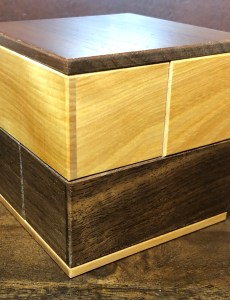
Tree Box is a combination slider / take-apart box, consisting of a pretty brown and black bonsai design atop a yellow box. Unlike some sliders, this starts in its proper arrangement; the challenge, of course, is to first open the box and to then reset the tree (the latter part containing the hardest part of the challenge).

The pieces have a tongue and groove on its edges, keeping them firmly in place (except one piece, which Diniar made the excellent design decision of keeping as the same color rather than an empty spacer). It is no trick to find this piece, and once you do you set about finding your way clear to get the pieces out, granting you access to the box beneath.

Of course, the tongue and groove edges keep you locked in and you must start messing up that pretty tree to find a way to properly remove a piece. The build is excellent – the pieces are not going anywhere until and unless you find the intended way of doing so.

I highly recommend mixing the pieces up once you’ve removed them; I let it sit for a day to allow my terrible memory to work for me, and came back to it clueless as to how I ever got them out.

It is NOT a trivial matter to get these pieces back in, at least not in a way that will then allow you to get the tree back in its original condition. The shapes and sizes of the pieces brilliantly prevent you from getting all pieces in just anywhere; it takes some thought to find the seemingly single arrangement of pieces that will allow you to successfully replace and rebuild.

This was an excellent and very unique challenge. Not a good place to hide anything you may need quick access to, but the box is plenty big if you wanted to hide a surprise for someone. It’s also confusing enough that you could certainly replay it, but don’t expect multiple challenges as with many of Diniar’s puzzles.


Cocktail
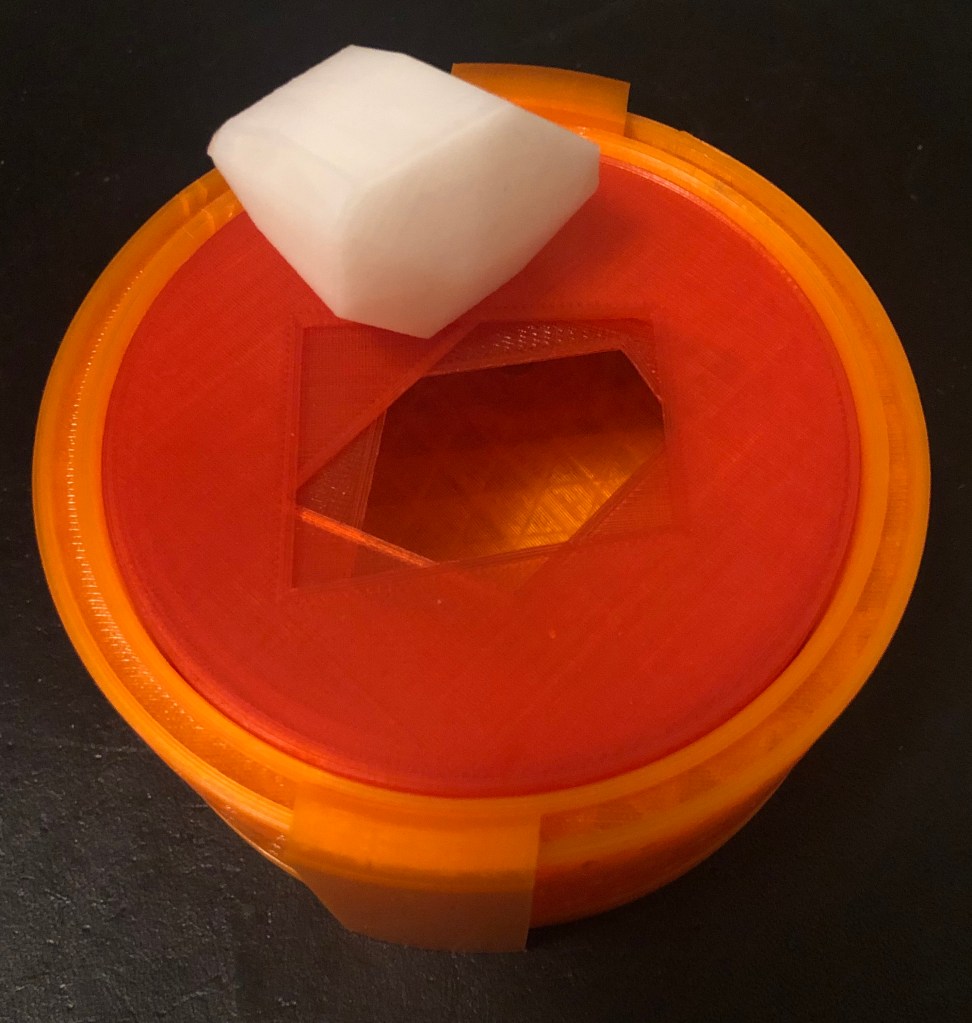
Cocktail is another wonderfully unique puzzle. I think of it as a reverse hedgehog: you must get a single ice cube into your drink by finding the correct orientation of three turning panels with partially overlapping polygons cut into their centers. The ice cube, as one would expect, is cut in seemingly random and certainly complex angles that make this a challenging task.

Trial and error may afford you success, and the fantastic fidget factor will allow you to be entertained while doing so, but without some luck it is unlikely to be anytime soon. Instead, it is beneficial to spend a bit of time examining your options to decide which orientations of the cube are most likely to afford you success.

Once again, the design feels intentional – these angles are not haphazard but made so as to minimize the window of success – I suspect there is only one possible way of getting the cube in, and, once found, force is unnecessary.

As with any good hedgehog, finding that one perfect angle is so satisfying. Here it is even more satisfying as you had to find multiple, overlapping angles of perfection before the cube slides right in.

The cage comes apart easily, allowing you to examine what worked and appreciate the solution, before resetting the puzzle for another go. An excellent twist that made me enjoy a type of puzzle that’s generally not at the top of my list.


Football Match

The last puzzle from Mr. Namdarian that I will share is more of a classic slider, but it carries a few novel additions that make it particularly enjoyable. I am currently about halfway through the 22 challenges, which range from 50 to 100+ move solutions, and I am still enjoying myself.

The puzzle is not overly large, about 18 voxels, including 2 spacer squares. The goal (sorry, couldn’t resist), is to get the “ball,” a white half-sphere disc, to go from one goal to the other, each located on either side of a narrow rectangle.

Interestingly, you do not just slide the ball through, as in a maze, Instead, there is one piece with a cutout on the right that must grab the ball and then “pass” it to a single piece with a cutout on its left, that can then carry it to the other goal.

For added difficulty, the cutouts are not centered, causing you to need to find a way to have your players pass by the goal vertically, before they can catch or release the ball.

The challenges definitely range in difficulty and ramp up quite well (except for one of the early ones, that I still cannot find my way through); the minimum required moves steadily increasing as you work your way through the challenges.

Once again, Diniar has taken a classic puzzle and made it especially interesting by adding his unique take on the medium. As an added benefit, as with most of his sliders, it comes with a top, allowing you to bring this one on the go and try and make it through one more challenge.


Grade: Four Sinatras

Beam Me Up, Freddy! Visitor Q by Frederic Boucher

Visitor Q

Frederic Boucher, 2020, 15 copies (more coming early 2021)
Eric Fuller has since produced ResQ, developing upon the Boucher’s original design

Frederic Boucher makes great packing puzzles (BonBon, Takiyaki, etc.), that are much more challenging than they might appear. He also makes some really unique puzzles with a whimsical and fun twist that make them particularly awesome, puzzles like Anti-Gravity Box and X Cube that are interesting takes on a classic puzzle genre. Visitor Q continues in this tradition (and is, oddly enough, another space-theme-adjacent Boucher puzzle reviewed by me).

Frederic contacted me some time ago to let me know that he would be making a few copies of a Sequential Discovery puzzle: VQ is mostly an interlocking disassembly puzzle that eschews some of the tropes of this classic puzzle genre to carve something of a new path via some fun sd challenges. Pretty much anything Boucher makes, I will happily try – and once I saw the letters “SD” I basically fell over myself saying “yes, please” and “thank you” and “yay!”

Frederic, in his humble and kind manner, expressed that he did not think it was overly complex and hoped that I (and the others fortunate enough to obtain a copy) would nonetheless find it to be fun. Needless to say, fun I did find it indeed.

While the term SD may be thrown around quite a bit these days, VQ comfortably meets the (collaboratively written) Discord-determined definition, which declares such to be puzzles “that take you on a journey through a set of sequential and generally non-repeating steps involving the discovery of hidden mechanisms or devices to reach a final goal.” VQ presents 4 goals that build upon one another as you discover…. things… along the way; I personally prefer to call it SD-lite, a term that I think portrays to the potential puzzler a partial picture that properly predicts appropriate expectations.

“Sequential Discovery” is not technically a puzzle genre and does not appear in the Slocum or Dalgety puzzle classification systems (an excellent classification comparison chart is available on Rob’s Puzzle Page); SD was usually used to describe aspects of some take-apart puzzles that featured multiple challenges, tools, etc. “SD-lite” might be a better fit for an interlocking disassembly puzzle that integrates SD elements into its design. This is not to detract from VQ – quite the opposite: VQ is an adaptation of a classic puzzle genre that represents something unique. (I would similarly describe Jerry McFarland’s Fidget Burr and Burrlephant 3 as SD-lite, interlocking disassembly puzzles; while they are really nothing like VQ, they nonetheless share this unique approach to puzzle design).

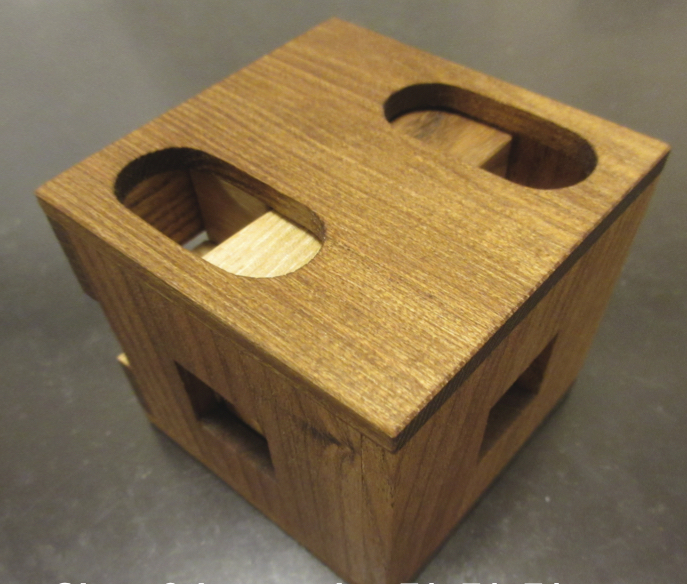
VQ is a relatively normal-sized cube of approximately 3″, with a single, one-voxel square hole on each of 4 sides, a three-voxel wide rectangle on a 5th, and two elliptical holes less than one voxel in width on the 6th. The instructions declare that a vortex has come, bringing forth a “visitor from another dimension who wants to be your friend.”

As if I was not already hooked, the instructions include my favorite guidelines, telling us that No hitting, shaking, force or spinning is needed to solve the puzzle. Except what it is provided with the puzzle, no external tools are allowed.”

VQ’s goals are fourfold:

  1. Unlock the vortex.
  2. Manage the visitor through the space warp and release him from the vortex (using only straight moves).
  3. The visitor had a gift for you, but he lost it somewhere during the travel. Find the gift.
  4. Return the gift and the visitor at their places of origin.

The tricky part of talking about a puzzle like this is that the first rule of talking about a puzzle like this is to “not talk about a puzzle like this.” As always, I will do my best to be careful and to only share specifics that are easily and readily discernible from a casual inspection of the puzzle, as well as a general sense of the puzzling experience.

A labeled plastic box contains the puzzle as well as instructions and a laminated strip featuring the name of the puzzle along with some neat, spacy graphics. When you first pick it up, you can see that there are a number of interlocking 3D polyominoes within the frame that are loose enough to make a bit of noise when shaken (lightly) but do not seem to be able to move any further: whatever the “vortex” may be, it is not readily apparent. Peering into the holes, you can see in its center a bright neon green something, seemingly inside some kind of clear casing: the visitor perhaps? Hard to say until we have successfully found the solution to the first challenge and unlocked the vortex in which the figure is initially trapped.

This first step confounded me: I got swept up, trying a series of moves that I thought would for sure lead to some measure of success; this is one of those puzzles that I picked up briefly, after the house was quiet: my wife and son asleep, the dogs tucked away. I did not intend on spending more than a few minutes with it, having looked forward to it since it arrived in the middle of a rather busy afternoon. As with many a fun puzzle, those few minutes grew closer to an hour before I realized that sleep might be a good idea – regardless, I realized that I might need clarification on something before I could expect any success. Frederic responded quickly, his answer waiting in my inbox the next morning (as he is in Japan, it was mid-day for him when I sent the email). As you may have guessed, all of my assumptions about the puzzle were pretty much completely incorrect and what I thought I needed to do was pretty much nothing like what I actually needed to do. Learning I was wrong only made me more intrigued by the puzzle. I had to step back and let go of my assumptions to find something I had missed; once found, I had to open my mind to think critically about what this might mean and what could be done with it. The aha moment that eventually came was probably more satisfying than that which I had previously expected, prompting laughing, some mental finger-wagging, and several repetitions of the newly discovered move(s).

The multiple challenges were well-planned: after working my way through the third goal, the puzzle was probably about as far from its initial state as is possible. This segued perfectly into the fourth and final goal as the puzzle was so jumbled that resetting the puzzle to its initial state took some thought; my spatial reasoning and short-term memory are faulty enough that successfully navigating the pieces back to the beginning was a (fun) puzzle in itself.

I asked Frederic if I could share this puzzle with my imaginary fives of readers, largely as I am advocating for someone to take up the mantle of producing additional copies for public consumption, a prospect that he has said he would welcome. Frederic seems to prefer designing new puzzles rather than producing large quantities of existing ones and I hope that VQ is simple enough that it could be reproduced without too much difficulty by someone with the appropriate skills – of course, it could well be more complicated to produce than I realize. I shared it with someone who is vastly better equipped to determine this and so maybe we will get lucky and see some additional copies down the road. I actually just received word that Frederic will be making more copies in early 2021, so good news! (ed. Great news! Not only did Frederic make a few more copies available, but Eric Fuller has decided to produce a run! They may be available with the March 1 update, although this is of course subject to change – you can check for updates on its production here).

If I am being totally honest, owning a really rare puzzle feels good… but what would make me happier is if more people got the chance to try the puzzle as I really think others would enjoy it. It may be true (in some ways) that it is not overly complex, but what really matters is that it is fun. Fun enough to inspire me to write what turned out to be a heckuva lot of words. Sometimes simple puzzles are so fun that I might prefer them to others that will end up sitting on my shelf for months as I struggle (sometimes seemingly in vain) to find the solution; VQ combines sneaky tricks with entertaining movements to create something unique, resulting in an interlocking disassembly puzzle that would be good without such deviousness and is even better with it.

Fun Grade: 5 Sinatras

(click here for more information on the Sinatra Scaling System, (c) John Maynard Keynes, 1944)

It’s Electric! Boogie Woogie Woogie: Detective Box by Joe Guarini

Detective Box

Joe Guarini, 2020

Just a few days ago, some fellow puzzlers and I were discussing how there are not many puzzles that truly integrate electronics into their puzzling; there are a few great puzzles that feature electronics (I’m looking at you Turtle Trip and Snack Brake), but not necessarily as a part of the solution itself. This, however, is no longer the case: Detective Box wonderfully integrates electronic elements into the puzzling, creating a imaginatively unique and fun experience that I think of as an SD escape-room-in-a-puzzle-box.

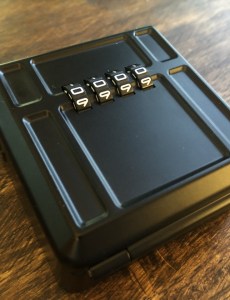
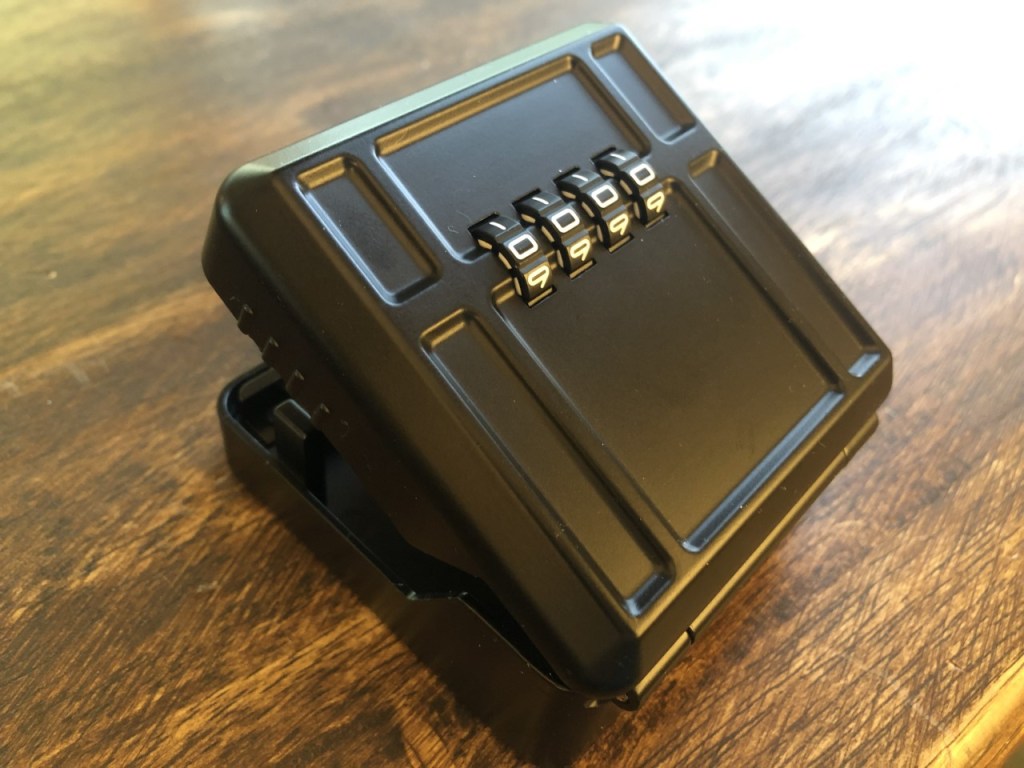
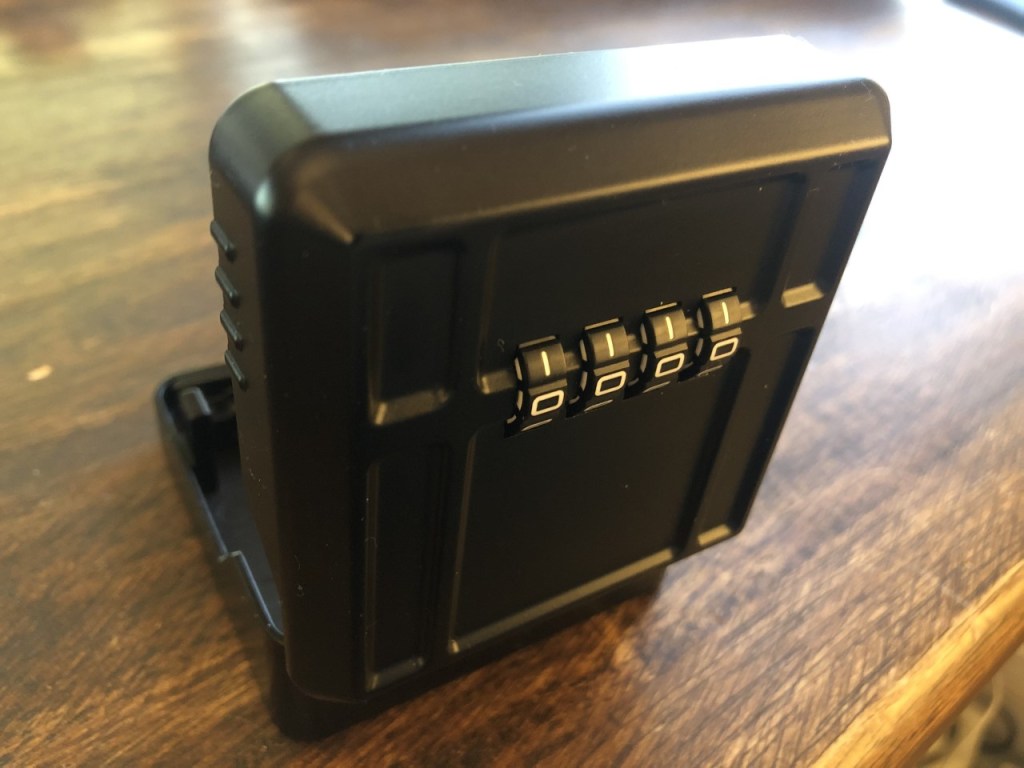
Detective Box is a seemingly unassuming 3″ x 3″ x 1.5″ metal lock box with a four number dial-lock on its face. The back shows four small holes, one of which belies its electrical nature by giving you a peek at some red wires that can be seen inside. Along with the box, there is an instruction sheet which includes our favorite rules, “no banging” and “no spinning”, along with “no gravity required” and a surprising early indicator of the puzzle’s distinctive nature, “no external tools except….” The instructions go on to explain that our goal is, essentially, to open the box and then “???…” Opening the box, we are told, requires that we “follow the clue” written on an accompanying letter and “find the box’s signal” (?!). Ultimately, the solution is not just to open the box, but to solve what is inside it (the aforementioned “???”).

After reading these instructions, I was extremely intrigued: its strange goals and reference to “a computer for your detective research” had me wholly hooked.

There is also a letter accompanying the puzzle, which gets you started (as per the instructions) and helps set the stage for the puzzle’s theme (which carefully and vaguely alludes, more or less indirectly, but probably not in any right-infringing way, to a certain flying-mammal-loving detective). The letter features a clue that will lead you to your computer (this is stated in the instructions, so no spoiler) – and, at that point, I was pretty clueless. The site does…. things…. but what could that have to do with the box? After spinning my computer availed me nothing (oddly enough), so began the electro-mechanical puzzling! After a couple cool aha moments, I managed to find the code needed to open the box. But this is by no means the end of the puzzle! Not at all – it is just the beginning.

I want to be careful not to give away too much: this really is a puzzling experience like no other I have ever had and one which I would not want to ruin. Suffice it to say that inside the box are some more electrical components that must somehow be used to solve a cypher, which will then lead you to the ultimate solution. Along the way, you will find a few more great aha moments, before you reach the puzzle’s end.

Joe clearly has some skills that are being put on display here – the functionality of its various electrical components must require a working knowledge of….. stuff….. that he is putting to good use. Although it was not necessarily an overly difficult box (for me, anyway), it is, even more importantly, a really really fun one. Sometimes puzzles seem to forego a full focus on facilitating fun in favor of bang-your-head-against-the-wall levels of difficulty (which can also be fun, of course, but sort of scratches a different itch than this novel, entertaining experience).

I am quite happy to have had the opportunity to try this puzzle out – Joe will be making them available for sale relatively soon and will likely be selling them directly, so keep an eye out on your favorite online puzzling haunt (i.e. Discord and Reddit). If you’re on Discord, he is @JHoag – you may want to hit him up with ye old LIST!!! emoji.

Originality Grade: 5 Sinatras

(click here for more information on the Sinatra Scaling System, (c) John Maynard Keynes, 1944)


Puzzle Parrrrrr-ty: Sea Chest by Jesse Born

Sea Chest

Jesse Born, 2020,
Wenge, Holly, Katalox, Bocote, Mahogany, Bloodwood and Copper

Avast ye mine puzzlers, thar be fine puzzlin’ on the horizon for those that be wantin’ of it… Dragons there may be, but the risk be worth takin’ for such a fine piece o’ work as this here box!

Captain Woodbeard of the Puzzler’s Revenge

A few days ago I got notice from Jesse that my copy of Sea Chest was ready – as one of the first to be lucky enough to get on the list, I soon received what is number 6 of an overall release of 100 copies. Sea Chest is the first in the three-box “Voyager” series; the next (named SunDial) has apparently been mostly designed (in collaboration with a certain other amazing puzzle designer), and I expect we shall learn more in a few months, once the other 94 Sea Chests have all made it to their various X-marks-the-spots. The third and final box in the series is named Alien and is fittingly otherwise unidentified.

Here There Be Puzzlin’

My copy arrived quickly, as is typically the case when crossing the state or two between me and Jesse’s workshop. I dug through the brown wrapping paper as I unearthed my newest acquisition. The box is a great size: about 8″ x 4.5″ x 3.5″ and somewhere between Slammed Car and SDBBM (or First Box and Pachinko) in weight, making it feel good and solid in your hands.

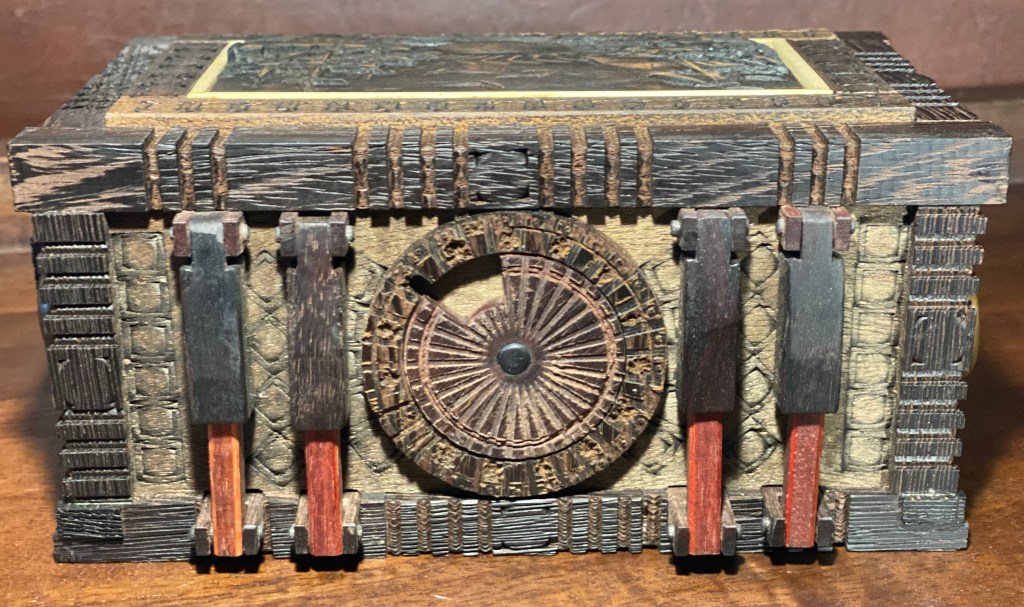
The box is both meticulously detailed and delightfully distressed: the top is a precise carving of two ships at sea, while the back features a medallion that rotates in a frame that appears to have been worn down in its time buried underground. Copper handles are affixed to the sides and a copper compass rose adorns its front. On either side of the compass/medallion, there are a total of 4 wooden pistons that pass through the body of the box. These are quite amazing when examined closely: the red wood moving in and out of the darker frame as they are pushed and pulled, held together with wooden pins at their base. There’s an unexpected feature to the bar that connects the pistons passing through the box, with gilded numbers appearing and disappearing as the pistons are moved.

Every aspect of the box is thematically consistent, down to the ample serifs used to make the numbers recognizable to the puzzle pirate inside all of us. Numerous details adorn the design, some surely there to serve as clues, implying that perhaps this puzzle is both treasure map and chest in one (as I’ve not yet solved it, this may well not be the case – just speculating here, so no spoilers my seafaring friend). It even comes with a folded sheet of “parchment”, with a wax seal identifying it as the solution.

The overall look is pretty awesome – the pistons remind me of the rows of oars of an ancient ship, emerging from port and starboard as your crew struggles to make your way to your final destination. While I do not think we will see sirens or cyclops on this journey, the Argonauts on board may yet be waiting a while to reach dryland as the solution is most definitely not obvious (to me, anyway).

Which leads us to why we are really on this journey: the puzzling. First off, it is not entirely clear what our destination will be – I know the puzzle will open, but my initial assumptions on where and how may well be incorrect. I have already had a great aha moment and have made additional discoveries that tell me what likely needs to happen, without showing me how how to actually do it. This is that type of box where the journey is at least as good as the destination, allowing me to be in no great hurry to get there. I couldn’t wait to solve this before sharing it, as it is just too darn pretty.

Captain SPH Sits Atop His Treasure

Jesse has once again produced a puzzle that is both striking and fun: Sea Chest has a thematically distressed aesthetic that seamlessly blends potential clues and red herrings with meticulously designed details, hiding whatever puzzling intricacies lay buried within.

(Past reviews of Jesse’s Jack in the Box and Secretum Cista)
Sealed Solution Sheet and Certificate of Authenticity

Captain’s Grade: Ye Olde 5 Sinatras


Check out Jesse’s Website and his Facebook page!

Lucky Number 13

Stickman #13: Chopsticks

Robert Yarger, 2007

Robert Yarger’s 13th puzzle box is as fun as it is pretty. After re-solving it today, it occurred to me that some folks might want to know more about it, and so here I am: telling some folks more about it, in case you might want to know.

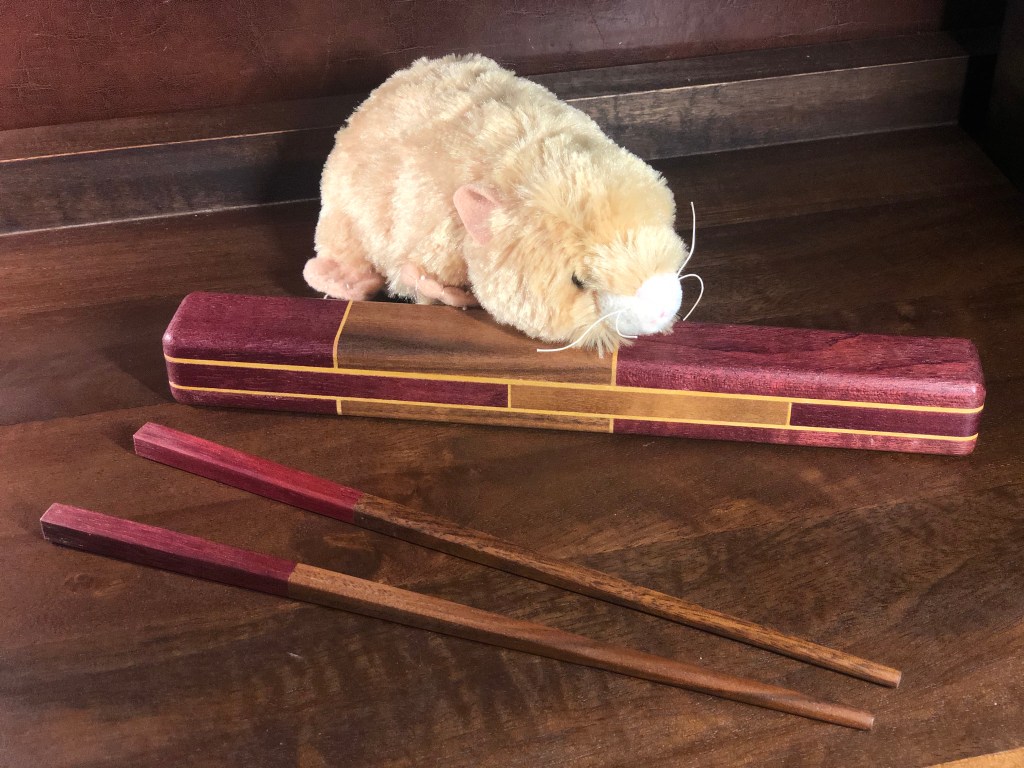
This is one of the rare puzzle boxes with a practical use: in addition to being a fun puzzle, it is a case for a lovely pair of chopsticks. Now, I wouldn’t personally carry this around to eat with, because I don’t typically put hard-to-come-by puzzles in my mouth (I don’t put easy-to-come-by puzzles in my mouth either, but you get the point). However, it would be pretty cool to bust these out at dinner, nonchalantly puzzling my way to dinner…. ok perhaps most people would not think this was cool, but those people are probably not reading this, so who cares what they think…

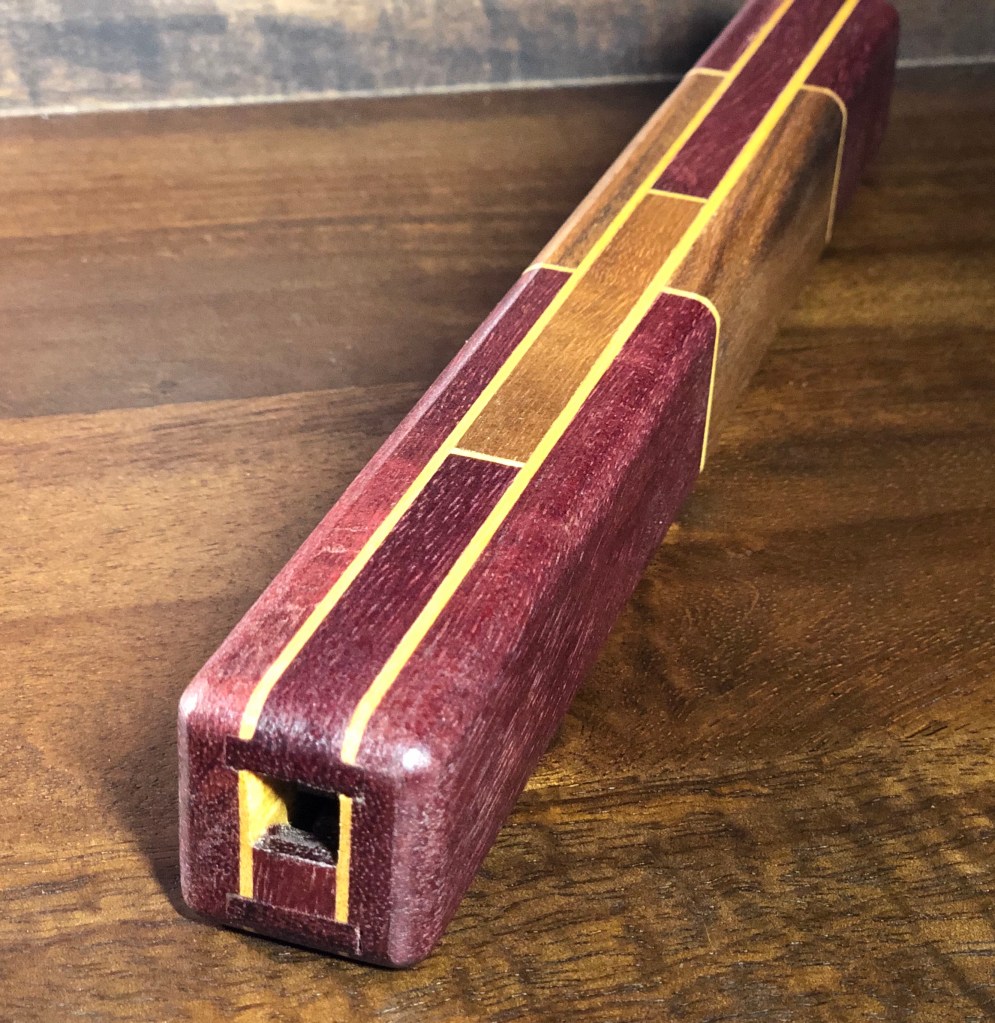
The box is smaller than most of Robert’s puzzles at 10″ x 1″ x 1” and uses puzzle box tricks to solve what is, in some ways, a 4×3 voxel packing puzzle. The steps are wonderfully smooth, and there are some really cool movements that I suppose are spoilery enough that I won’t share them (feel free to ask, though, if you’re curious) – apparently, Robert had been playing with the mechanism and realized it would make for a great puzzle (which it does).

Interestingly, there were two runs of the puzzle, using slightly different woods; the first was in 2007, with the second not too long after, in collaboration with excellent OG puzzle-maker, John Devost (the biggest upgrade: they are no longer lacquered bloodwood, but rather waxed purpleheart and leopardwood (I think), lending them their practical edge).

I got my copy about two years ago: as the first box by Mr. Yarger to come my way, I suppose it may have some added sentimentality, but this is truly a beautiful and fun box. The movements are wonderfully smooth; the puzzling is ingenious, even if not terribly difficult, with the chopsticks themselves integrated into the mechanism. The box feels solid in your hands; while narrow, its overall size is nonetheless substantial. More importantly, it has a look that is memorable, a cool mix of contrasting wood that demands to be picked up and handled. Its shape adds something special to the puzzle, standing apart from other boxes, making you wonder just what is inside (assuming you didn’t already know the name).

Needless to say, if you have a chance to pick up a copy, I do not think that you will be disappointed. And if you ever see me grabbing some sushi, perhaps you’ll get a chance to try it for yourself.

The 13th Stickman puzzle is a totally unique and oddly practical box, with a lovely mix of woods and chopsticks so perfectly balanced that I am tempted to use them; normally, I wouldn’t seriously consider it, but I suppose I can make an exception for Hiroshi Iwahara’s Sushi…
My Stickman logo has unfortunately faded a bit due to numerous and frequent solves – the box nonetheless works perfectly.

Overall Grade: 5 Sinatras

A Box, a Burr, and a Ball walk into a bar…

Burr Puzzle (with Yosegi ball inside)

Yoshiyuki Ninomiya, 2013
Burr 116×116×116 ㎜
        Box 140×140×142 ㎜
Walnut, Senn (Castor Aralia), Yosegi

In case you’re not aware, Ninomiya’s boxes are awesome. While he unfortunately was not as prolific a creator as others at the Karakuri Group (I wrote more about the Group here, if you’re interested), he still managed to make some of the most beautiful boxes produced by them (which is saying a lot). Even more unfortunately, he is not producing puzzles anymore; other than the occasional yosegi bookmark (which are great), I am not aware that he is making anything else (which is rather unsurprising as he is now 91 years old and has pretty much retired after about 75 years as a woodworker).

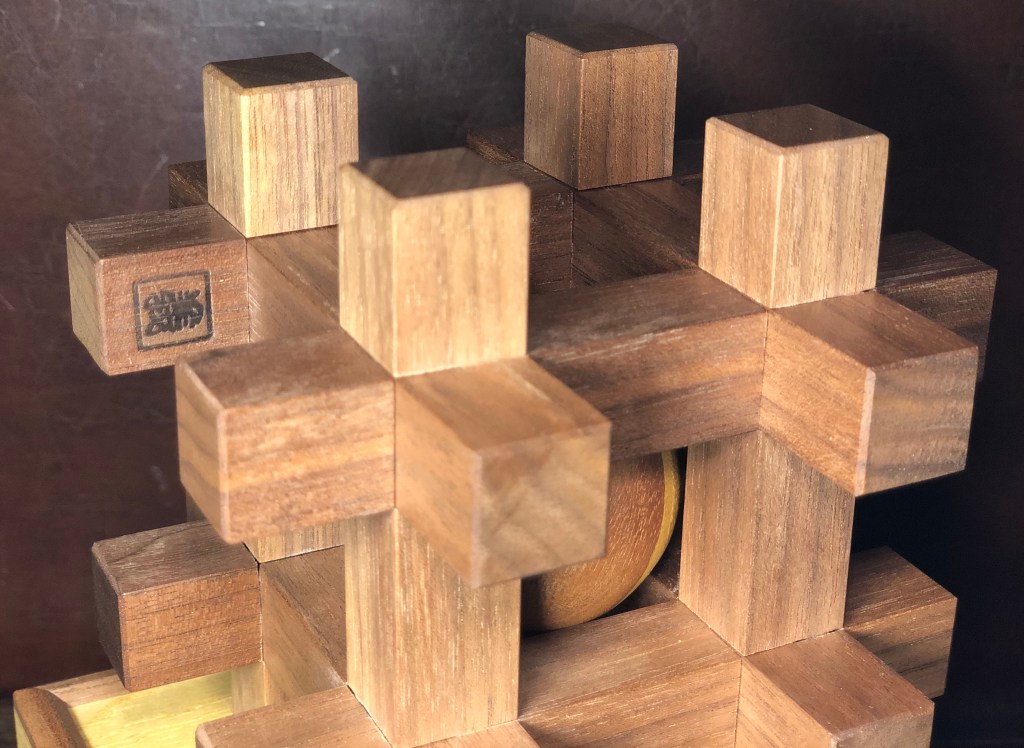
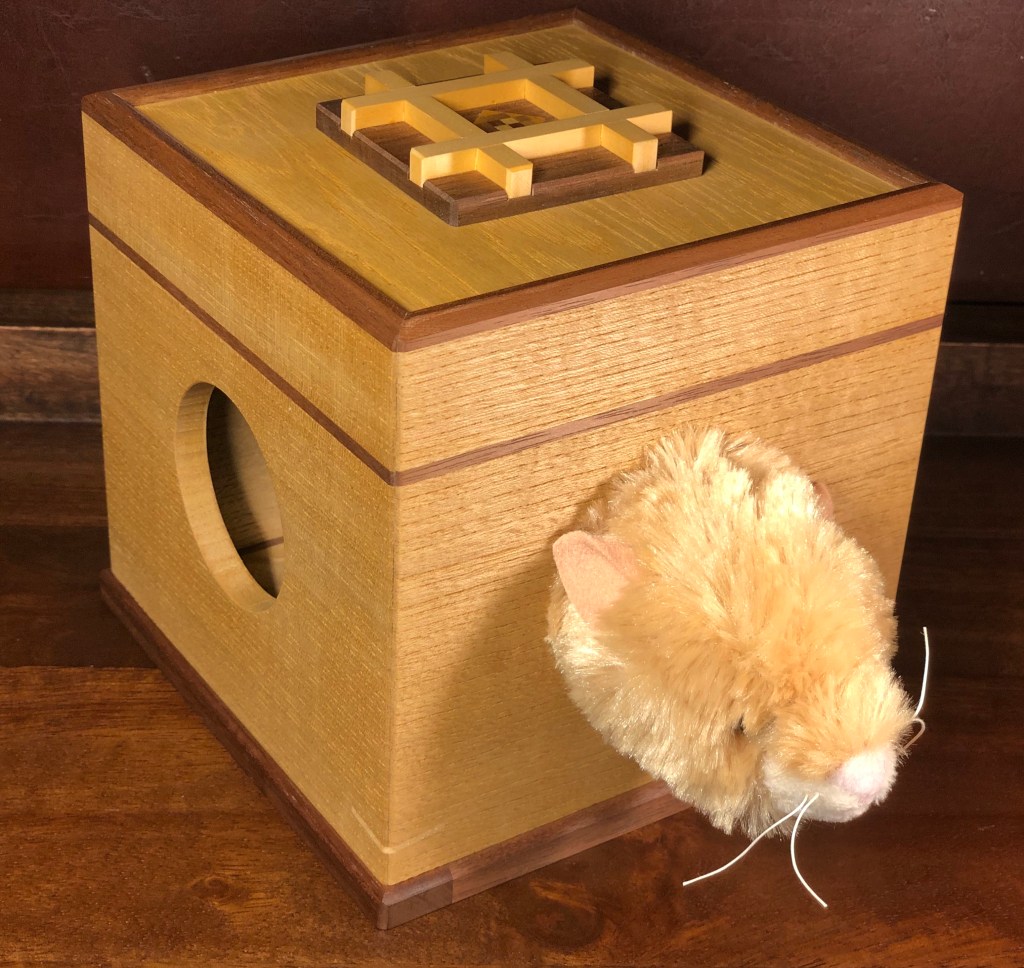
Recently, I managed to acquire one of his last Karakuri creations – a piece that I have been hoping to see for some time now. The appropriately named “Burr puzzle (with Yosegi ball inside)” includes one of very few burrs released by the Karakuri Group, which in and of itself makes it pretty cool. However, Karakuri are puzzle box-makers, and so, sure enough, the burr is trapped inside a puzzle box! That’s cool, too. If it ended there, I’d be happy with the puzzle. But Ninomiya adds a nice touch, adding a yosegi ball trapped inside the burr, which is of course trapped inside the box (which is now kept on my shelf).

The puzzle is quite large: the box is about 5.75″ and the twelve-piece burr is about 4.5″ (the ball is about 2″). This was the first thing I noticed, followed quickly by the excellent (and expected) workmanship. This is the 4th Ninomiya box I’ve acquired (alongside a few bookmarks) and the quality of his work continues to blow me away.

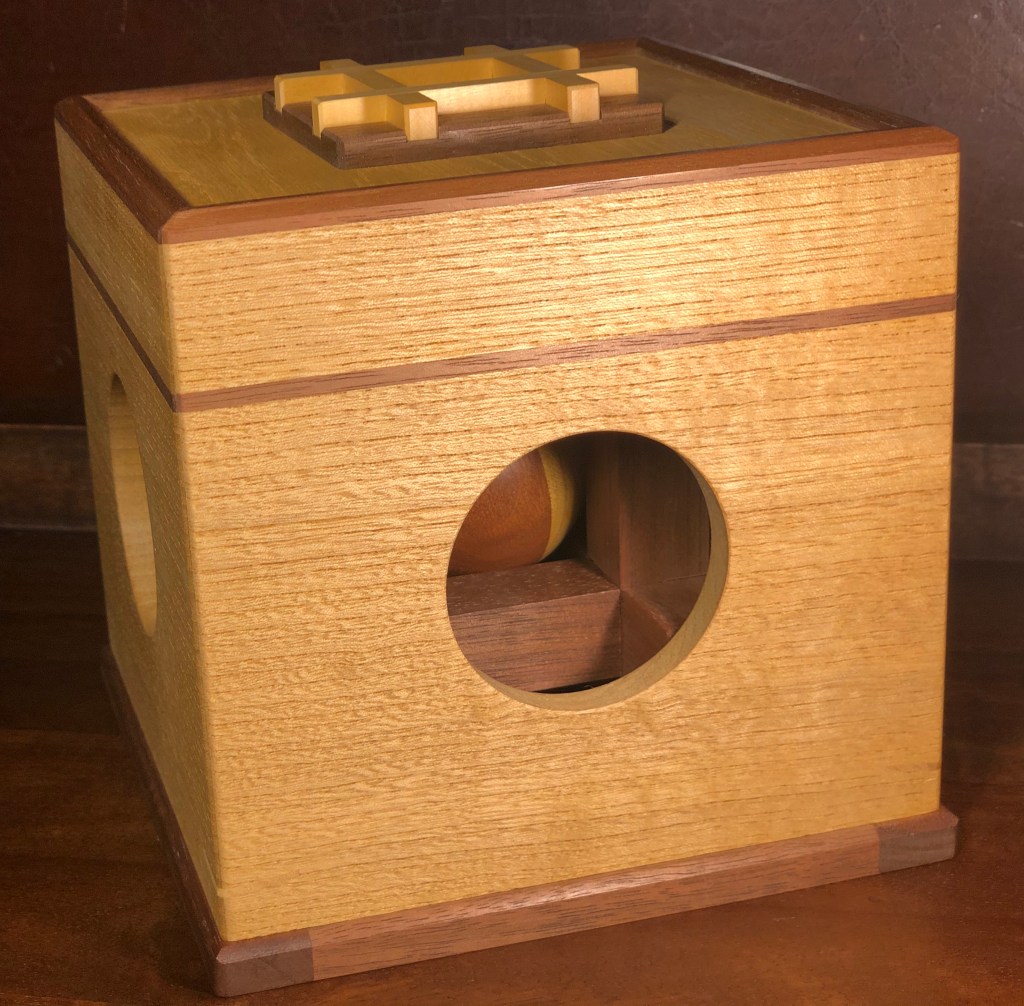
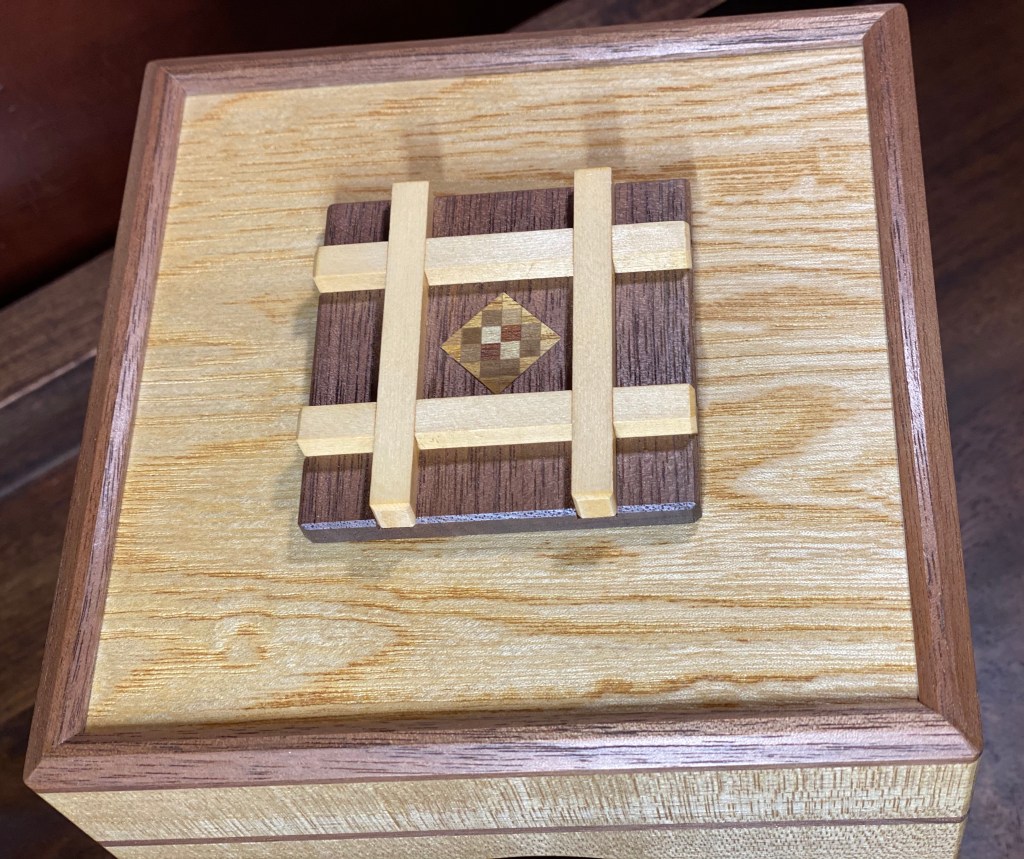
The box has circular windows on each of its 4 sides, allowing you to see the center of the burr with the ball held inside, perfectly placed for said perspective to be possible. Atop the box, there is a short, wooden hashtag (a/k/a tic-tac-toe or ye olde number sign), comprised of contrasting woods and featuring a small yosegi square (delightfully tipped on a corner to offset the square center of the symbol in which it sits). The piece is able to spin and its dimensions clearly establish that it was designed to allow the burr to sit atop it, the outer squares placed at the exact dimensions of the four pillars of the burr; the spin allows you to view all sides of the burr, which is, again, pretty darn cool. This allows all aspects of the puzzle to be seen clearly when kept on the display platform (as I prefer to keep it).

The box isn’t overly difficult, with 3 or 4 steps to open; I found the burr to be quite original (although admittedly my experience with burrs is lacking when compared to many other puzzlers) and challenging enough to be fun but not so hard as to be frustrating. It has some unexpected moves to disassemble, and reassembly requires just the right amount of dexterity, focusing more on good old logic to get you back together. The ball is made with Japanese marquetry, with four “slices” of alternating woods, which brings the overall aesthetic together nicely, combining the light wood of the box with the dark wood of the burr. And of course, the ball also complicates reassembly of the burr, which must largely be constructed around it. Both the box and the burr feature Ninomiya’s hanko.

I’m quite pleased to have been fortunate enough to obtain a copy of this puzzle and have not been at all disappointed in finally getting my hands on one of my (admittedly many) Karakuri unicorns… now if I could just get a copy of my most unicorny of Ninomiya unicorns: Desk Diary (he said, blatantly promoting his own self-interest in the hopes that one of his fives of readers has a line on a copy).


Overall Grade: 5 Sinatras

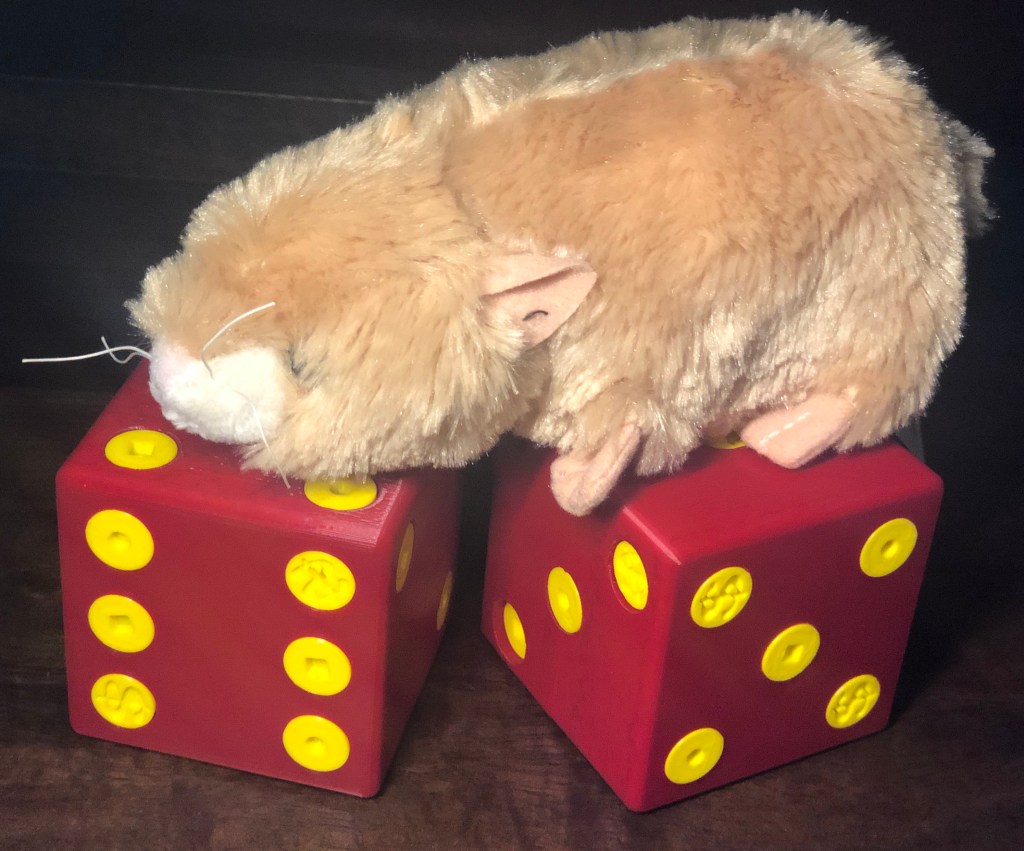
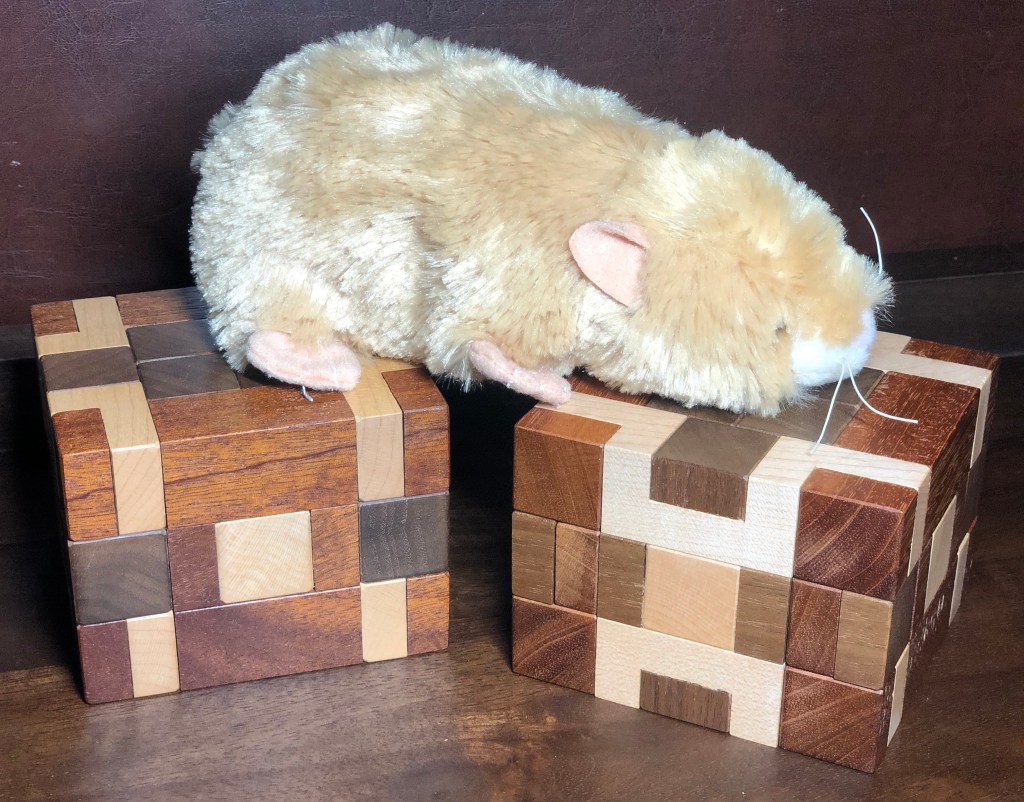
(no hamsters were hurt in the making of this post)

“Number 5 is Alive”

Asymmetric Cube

Hideaki Kawashima

The newest box from Karakuri member Hideaki Kawashima is the fifth in his Bars Box series, consisting of Bars Boxes I – IV, 2018 – 2019. Asymmetric Cube’s name is a
departure from the series and, while it continues to feature the series’ titular bars, its design represents the biggest leap forward yet.

Its asymmetric appearance is the first indication that Kawashima’s tendency to play with puzzler expectations is central to the box’s design. The series has always managed to both create and confound assumptions, something that is clear just from looking at his newest creation. As with each consecutive box in the series, the solution differs completely from that which preceded it, and the approach is unclear from the moment you pick it up.

Kawashima’s craftsmanship is as meticulous as ever, the potential location of breaks in any of the panels remaining unapparent even upon close inspection. For the first time since Bars Box I, he has eschewed the dominance of walnut in favor of alternating panels of different woods, further developing the asymmetric theme as their colors are unmatched from varied perspectives, with panels of three different woods framing the off-center bars visible at any given time. The box uses more woods than its previous siblings, featuring five woods: magnolia, purpleheart, padauk, zelkova, and maple, a design choice that reflects the box’s place as the fifth in the series. It may take a moment to notice another way in which the design directly reflects its place in the Bars Box series; forsaking the numbered sequence of titles used thus far, Kawashima has instead integrated this into the design itself, a small aha that can be enjoyed even without the pleasure of seeing the box in person.

Kawashima’s craftsmanship is as meticulous as ever, the potential location of breaks in any of the panels remaining unapparent even upon close inspection. For the first time since Bars Box I, he has eschewed the dominance of walnut in favor of alternating panels of different woods, further developing the asymmetric theme as their colors are unmatched from varied perspectives, with panels of three different woods framing the off-center bars visible at any given time. The box uses more woods than its previous siblings, featuring five woods: magnolia, purpleheart, padauk, zelkova, and maple, a design choice that reflects the box’s place as the fifth in the series. It may take a moment to notice another way in which the design directly reflects its place in the Bars Box series; forsaking the numbered sequence of titles used thus far, Kawashima has instead integrated this into the design itself, a small aha that can be enjoyed even without the pleasure of seeing the box in person.

It took me quite a while to find my way through to the center of Asymmetric Cube; the initial aha eluded me for longer than I would have expected and, having broken through to the foundation of the solution, I nonetheless got turned around, as with any well-designed Karakuri cube. The reveal is unique
as well, the final discoveries occurring in a manner as different from its predecessors as its aesthetic. Finally, upon reaching the end, Kawashima integrated additional design elements that are only visible upon reaching the solution; this is a somewhat rare addition adding some excellent detail work to surprise and welcome you to the box’s hidden compartment.

Kawashima’s fifth entry in the Bars Box series is a more nuanced and complex design than used in previous installments, as should be expected from a non-holiday release that carries a concomitantly higher price tag. It is, by far, the best yet of the series and sits as one of the best Kawashima boxes overall that I have had the pleasure of solving, showing that his puzzling design skills have only continued to grow more nuanced with time.

Puzzling by the Dashboard Light

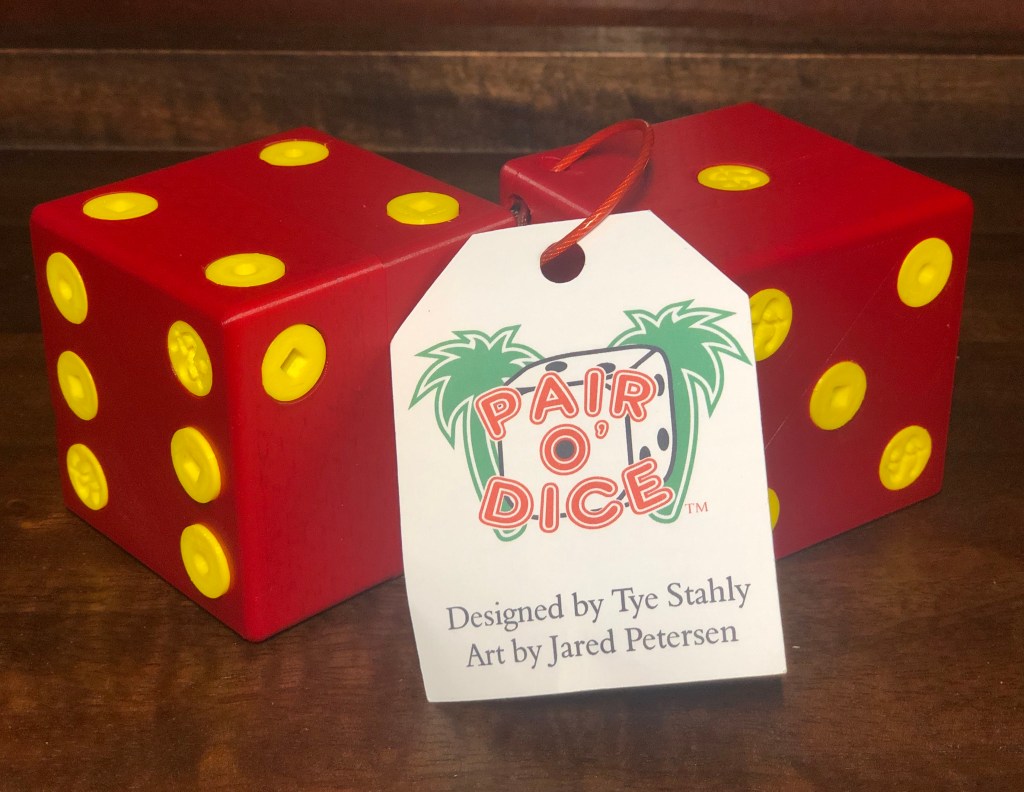
Pair O’Dice

Tye Stahly, 3D Printed 2.5″ Cubes (2), Sequential Discovery

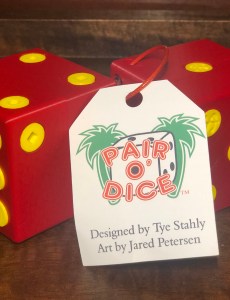
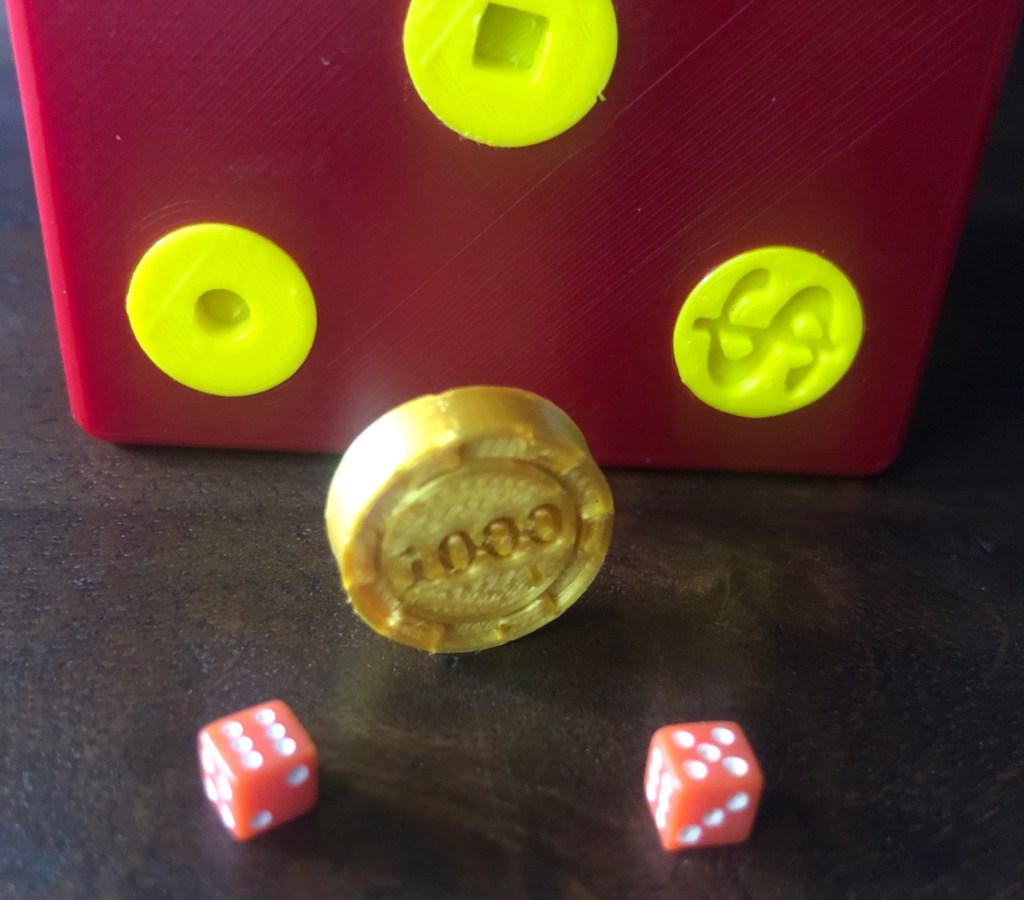
Recently, I was fortunate enough to solve an early edition of Tye Stahly’s excellent puzzle debut, Pair O’ Dice (hereinafter POD), kindly custom-crafted in red and yellow in a nod to one of my favorite board games (future copies will likely be a classic white with black pips). POD consists of two 2.5″ plastic dice, their pips featuring either a square, circle, or dollar sign, seemingly at random. The dice are linked together by a (removable) metal loop on which hangs the instructions along with a very cool title design by none other than Jared Petersen (Etsy’s CoreMods, creator of Unstable Eggs (reviewed by me here) as well as a number of other, excellent puzzles).

From the complexity and fun of the puzzle, you would not know that this is Tye’s first design; he has clearly poured a lot of time and energy into it, taking pride in his work and displaying the kind of connection to his design that any artist will recognize, that mixture of pride and anxiety in seeing something personal, something over which you have stressed and sweat, going out into the world to be judged by those for whom it was intended.

And I have to say: I really liked it. Despite how seriously he may take his work, his sense of humor nonetheless keeps things light, pervading the experience, which manages to exude more than a little playfulness (as evidenced by the slightly silly and thoroughly thematic instructions).

These must have taken quite a bit of time to print and build as they contain a large number of parts. The build quality is quite good – I didn’t find anything to be wonky or to do anything but what was intended (except for one now-fixed design issue that Tye discovered before I did, quickly sending out an entire replacement die before I had even realized there might be a problem – he even added in a free puzzle, which just shows his respect for puzzlers getting a copy from him).

The puzzling is even better, solidly falling into the much lauded sequential discovery category. I found the experience and difficulty to be somewhat akin to Juno’s Ring Case (albeit quite a bit longer): first, there are a good amount of pieces and tools that you are able to discover relatively quickly, amassing a considerable pile of stuff while causing you to wonder whether you will be able to keep a clear sense of what you will need to do to reset it properly (which is great as this will only add to the experience with resetting becoming a bit of its own challenge). Second, while some phases of the puzzle are not crazy difficult, nor are they simple and, perhaps more importantly, all are quite a bit of fun; significantly, there are a couple parts that had me stuck for quite a while, with one being particularly sneaky. Next, it follows a path that is mostly linear but feels like you have meandered far and wide to come back to a point of focus. Finally, POD also features two main challenges (which makes sense, considering there are two dice): first you must find the tiny dice, followed by a hidden coin.

These separate challenges also serve as a clear indication of when you have solved each die, quite helpfully providing some clarity and helping prevent you from getting lost as you move through the puzzle’s controlled chaos. Although you don’t know which die is which when starting out, the design does a good job of focusing you where you need to be, with plenty of misdirection to keep you on your toes (particularly challenging when you hit a nice wall midway through the puzzle, which hid perhaps my favorite of several aha moments).

Tye will be releasing more copies of POD; it is not clear yet whether these will be a limited run or not, and if you are interested you should reach out soon lest they all be gone (there is most assuredly a list already). The price is representative of the design’s complexity and the significant amount of puzzling it contains and is not at all unreasonable. You can reach him by emailing Thinkingfin@gmail.com (you may already know him by this same name if you frequent some of our online puzzler haunts). He is also planning on opening an Etsy store (this link may still work once the store is open).

Hopefully, you will get a chance to experience Pair O’ Dice; I am already psyched to see whatever he will come up with next – I anticipate it taking some time, as he put a lot of time into this design and I expect there will be a good number of puzzlers wanting one, but I also know he is not the type to let his mind sit idle. Regardless, good puzzles come to those who wait…


Fun and Challenging Debut Grade: Four and a Half Sinatras

(click here for more information on the Sinatra Scaling System, (c) John Maynard Keynes, 1944)

Jerry Does It Again (and Again): Quadlock I & Burrlephant 3

Quadlock I & Burrlephant 3

Jerry McFarland

By now, you may have heard about the awesomeness that is Jerry McFarland’s Fidget Burr (you can check out my review here); since enjoying the pleasure of solving Fidget Burr, I have had the good fortune of obtaining and solving two more of Jerry’s puzzles: the older Quadlock I and the quite new Burrlephant 3. Both are excellent puzzles, offering unique takes on burrs by adding take-apart / trick box-type elements to the mix, with perhaps a dash of sequential discovery.

Quadlock 1

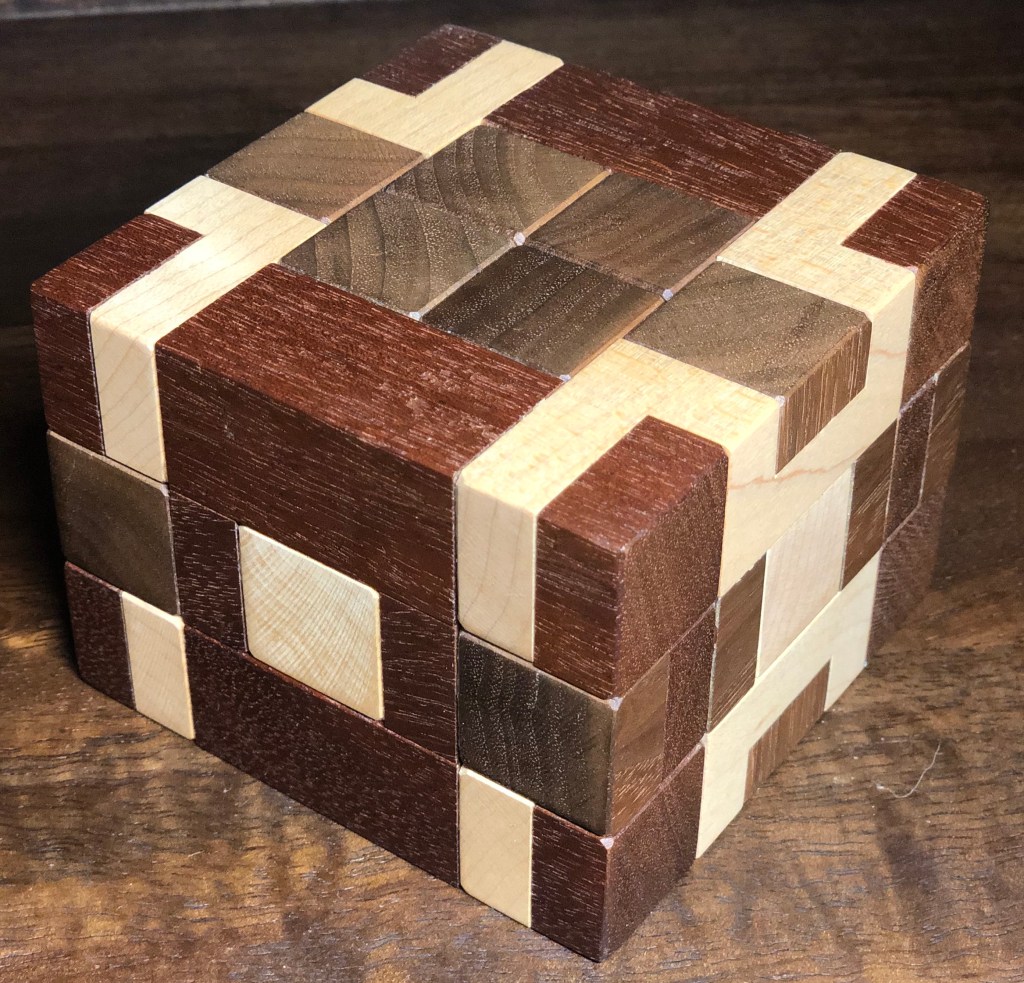
Quadlock 1 is a squashed cube made of 19 individual burr sticks, originally made by Jerry in 1992, and remade in 2008 and 2011 (possibly again since then). It is a 4 x 4 x 3 “cube” that measures 3.5″ x 2.6″ (after 2011, Jerry began making a slightly smaller version). It is made of Walnut, Mahogany, and Maple, although there are some versions made of alternate, exotic woods, as well. I have two copies of this excellent and quite challenging puzzle, which only goes to show that I truly think it is a great puzzle: they are both copies of the earlier, larger versions (one has the serial number “14 JM 94” and the other copy has “10 JM 92” – I am not certain if this means that they are from 1994 and 1992 but I will update once I ask Jerry about it).

If you have solved interlocking puzzles, you will know that many feature some sort of key piece, which must be discovered and moved before you can hope to progress. Quadlock 1 takes this a few steps further, with four pieces that work together to form a lock, preventing any further movement. After fumbling for some time, I found that it is better to approach this almost as I would an attempt at lock-picking, as I was better able to conceptualize how I might find my way past. As you are working on these early steps, you have no indication of what it might lead to: the other pieces permit no movement, whatsoever, forcing you to add some tension in various places as you struggle to find the correct movements and configuration of the four locking pieces (again, as one might a lock). You are unlikely to succeed early on without some amount of close observation, finding the correct moves step by step rather than all at once. It has only been a few weeks since I solved the puzzle for the second time, and I am already confused as to how I can repeat the process, showing the puzzle’s excellent replayability.

Once you find your way past this first wall, you are rewarded with some interesting movements, opening the puzzle up enough to permit the removal of some pieces. You are not done, of course, as you must now discover steps necessary to fully disassemble the puzzle, although you have now successfully navigated the main challenge. From this point, you will still need to think and explore as some of the next steps are certainly non-trivial, albeit perhaps not as difficult as the opening sequence of moves. Having found these next steps, the puzzle comes apart in a way that is conceptually similar to Fidget Burr, while consisting of totally different arrangements; at this point, disassembling it completely is pretty straightforward, leaving you with a nice pile of lumber.

My first time through, I chose to let the pieces sit for a day or two before returning to it for reassembly. I was able to reassemble the puzzle (mostly) without the assistance of burrtools or the instructions Jerry provided with the puzzle. His instructions are quite welcome, as they provide clear assistance without actually showing you specific the moves (as with burrtools); it will tell you which pieces need to be manipulated but leave it to you to find how this must be done (which at times is certainly not totally straightforward).

There were a couple particularly tricky aspects to reassembly – the main locks were actually not so difficult in reverse, but I found a couple steps midway that had me turned around, requiring more than a little Ikea-style mid-process disassembly; the pieces have enough non-uniformity to create the need for careful observation lest you find yourself painted into a corner.

I found this puzzle to be an excellent interlocking burr cube (squashed or otherwise) – the addition of a “trick” locking mechanism making it especially fun. I hope to eventually collect Quadlocks III and IV (II was essentially a 23-piece version of I, and very few copies were made, so my completist urges are that much more likely to go unfulfilled).

Burrlephant 3

I am clearly a fan of Jerry’s work – I have pieces he made for Bill Cutler that show his skills as a craftsman, and his own designs blow me away. Burrlephant 3 is another example of Jerry’s ingenuity as a puzzle designer, with multiple trick phases belying its playful exterior. First off, it is important to distinguish this from Don Closterman’s Elephant puzzle; I’ve not done that puzzle, but it appears to be a kumiki-like 3D assembly, and, as such, is nothing like Burrlephant in anything other than a cursory look at its appearance. Closterman’s Elephant could be an amazing puzzle, I’ve no idea, but I am mostly sure that it does not contain the mechanics of Jerry’s that separates his puzzles from most interlocking burrs.

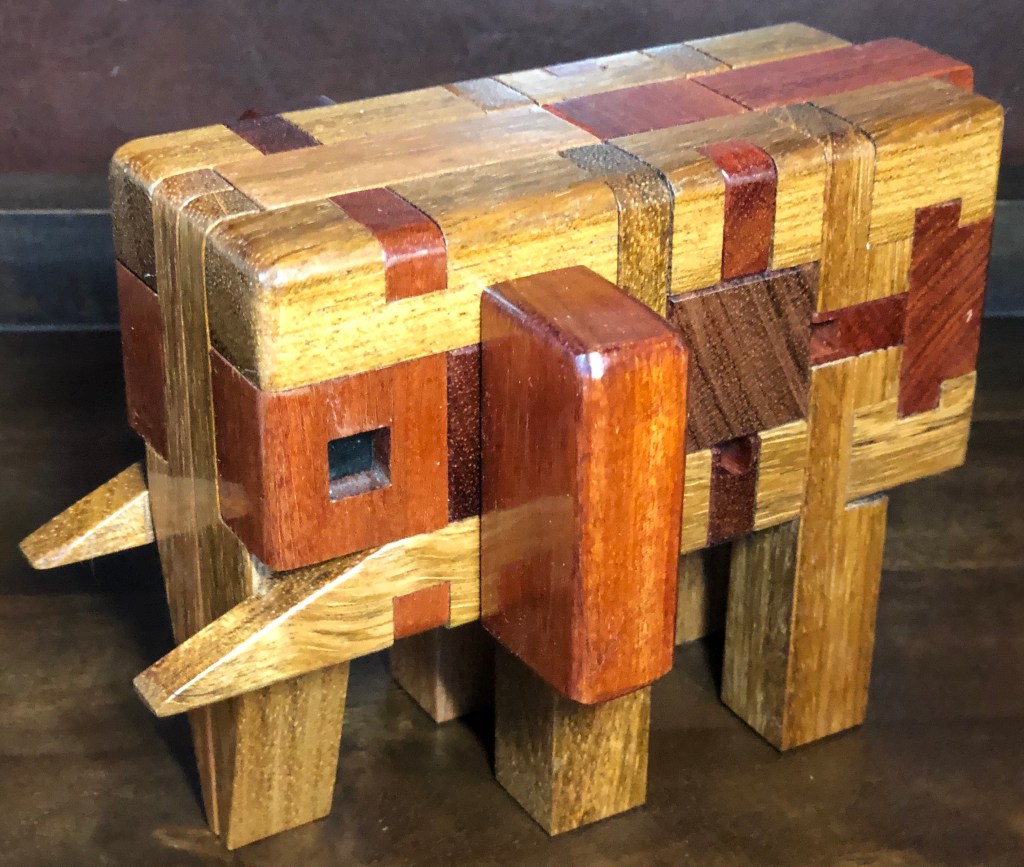
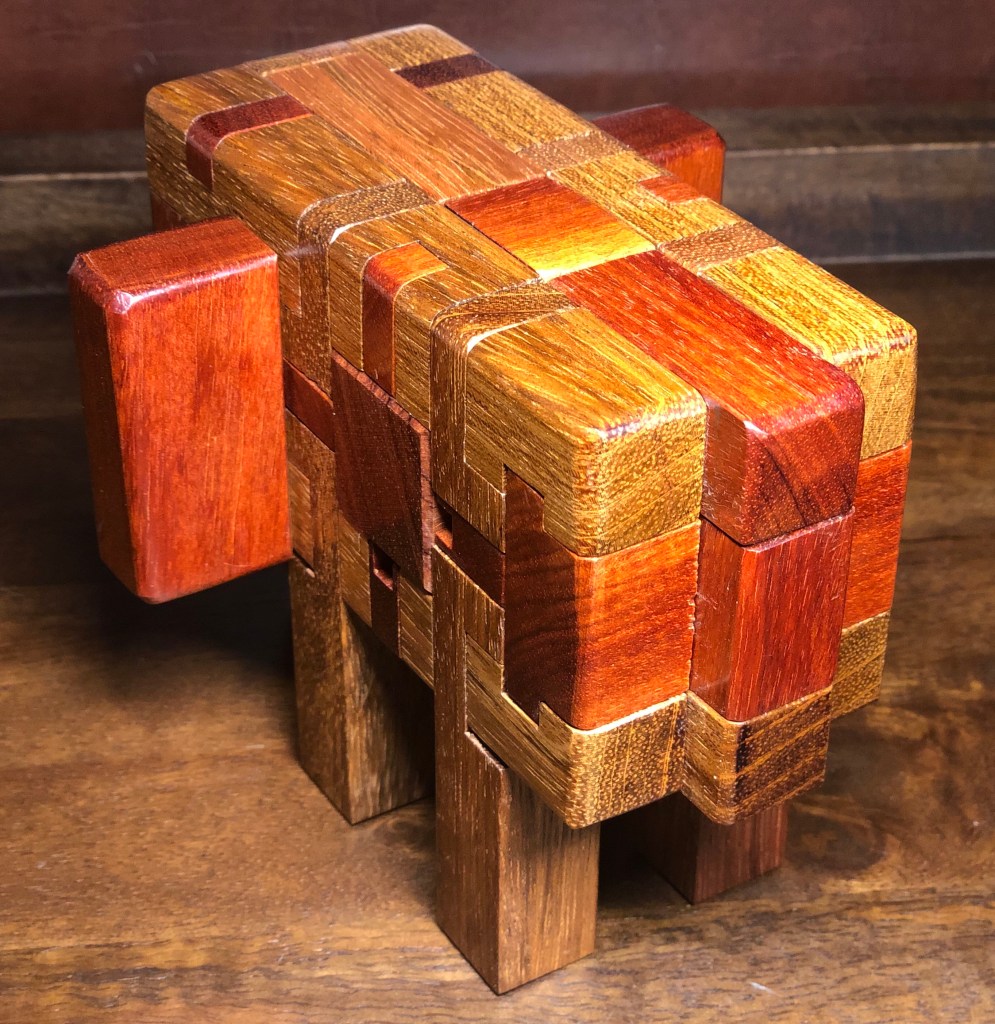
Burrlephant 3, in case you’ve not noticed, looks like an Elephant, complete with trunk, tusks, eyes, and big ole ears. It is an interlocking figure, comprised of 27 interlocking pieces of Jatoba, Bloodwood, Bubinga, and Ebony, as well as a few additional magnets and metal pins. Not counting its ears or tusks, it is a sizable 4.4″ x 5.5″ x 2.2″, making it significantly larger than Quadlock 1 or Fidget Burr.

When I started working on it, I quickly found that there looks like there is at least one aspect that appears similar to Fidget Burr, which a halfway close inspection of the photos will show; however, the mechanisms are not at all similar: Fidget Burr has an easily accessible button that leads to instant action, whereas Burrlephant requires much more exploration to make any sort of progress. You are able to find some movement quickly, but this does not appear to do anything helpful.

Burrlephant 3 essentially consists of 4 challenges, some requiring several steps to complete. Only after solving the fourth challenge, which rewards you with the key piece containing the serial number, are you are able to fully disassemble the puzzle into its 29 distinct parts. The puzzle succeeded at misdirecting my focus for some time, before I was able to fall upon the first challenge, decidedly the easiest of the four as trial and error will most likely get you there before too long. The second challenge requires some thought, and develops a better understanding of certain aspects of the puzzle, before leaving you with a few pieces in your hands and no idea how to proceed.

This third challenge is my favorite and is the one on which I spent the most time (mostly doing the same few things over and over while incredulously shaking my head and wondering it it was broken – spoiler: it wasn’t). You must first use what you know about the puzzle to determine what needs to happen next before you can hope to do anything else. Once you have considered the what, the how is going to take even more thought; trial and error will help to eliminate your options, but I found I was only able to find my way through by engaging in some good old critical thinking. Having found the solution, I am impressed by how simple and elegant it is to do despite having been so difficult to figure out. This part of the puzzle is pretty ingenious and relies on some precise designing and craftsmanship to accomplish. I actually repeated the step a few times, just because it made me happy – always a sign of a good puzzle.

At this point, it is fairly clear what you need to do for the fourth challenge; accomplishing this task is a bit tricky, and I was able to figure it out before too long, some trial and error pointing me in the right direction and leading me to the removal of the key piece. Having removed most of the tricky parts of the puzzle in overcoming the various challenges, complete disassembly is now fairly straightforward.

The puzzle comes with Jerry’s description and solution, in text and pictures, and Jerry has again labelled some of the pieces to aid in reassembly; he stepped it up a bit from Fidget Burr, etching them into a few pieces that could easily get mixed up otherwise. Sitting back and looking at the rather enormous spread of pieces before me, I nonetheless felt confident that I would be able to reassemble it without too much frustration; there is one part that is a bit tricky, due to the necessary placement of some magnets, but a bit of dexterity gets me through, allowing me to return to reassembling the main challenges of the puzzle.

Overall, Burrlephant 3 is an excellent and super-fun burr puzzle with elements of sequential discovery and take-apart trickery that earns it the right to stand apart from other puzzles, unique in its cross-genre design and its slick and playful appearance. In many ways I prefer its quiet, contemplative rhythm to Fidget Burr’s in-your-face action; either way, it is just another example of Jerry’s craftsman-informed ingenuousness, which has me craving his next creation.


Overall Grade: 5 Sinatras

(click here for more information on the Sinatra Scaling System, (c) John Maynard Keynes, 1944)

Kakoi: I couldn’t think of a witty title for this post but the box is still super cool.

Kakoi

Shiro Tajima, 2016, Monarch Birch, Black Walnut and Japanese Cherry, 4” x 4” x 4”

Shiro Tajima was creating puzzle boxes with the Karakuri Group until a few years ago; his Hermit Crab and Goblet boxes are probably the most recognized of his boxes, as they have been produced in larger numbers. I reviewed his Uroboros box a few months ago (with one of the few solution vids I’ve done, as it was requested by a fellow puzzler). Kakoi is quite different, not only from Uroboros but from any box I’ve seen or done.

Kakoi consistently gets listed in community polls as being among puzzlers’ favorite boxes; in fact, it won the 2017 Nob Yoshigahara Puzzle Design Competition Jury Grand Prize, which is basically a long way of saying it’s a damn good puzzle. The only reason it likely doesn’t get an even better showing is simply due to its rarity.

It is a bit bigger than your typical Karakuri box and eschews the traditional panels for a look that is anything but traditional (or a panel). Your first impulse is pretty clear from looking at it and it does in fact lead to some success, or at least it seems to: this is one of those puzzles where movement early on doesn’t necessarily give you much info on how to proceed from there. While I have chosen not to post pics that display these early movements, a simple search will let you see some slight spoilers for said steps.

After futzing with it for a while, essentially just poking the same few things back and forth, I began to get a sense of what might be possible and started experimenting. This is one of those puzzles where things have to be juuuust right before you’re able to proceed, and it’s not so easy to see what that is until things are, in fact, just right, a tautological conundrum that helps to build the aha into something truly satisfactory.

One you find that perfect setting and the move it permits, the main movement is quite elegant and unique. Having accomplished this, it doesn’t take much to find the final steps, allowing you to access a total of four(!) hidden compartments.

Opening the compartments makes the puzzle impossible to close and it is pretty easy to get turned around such that knowing how to close it and actually doing so are not quite the same thing, at least for a few moments. This forces you to really look at how everything works together to first prevent and then permit the main movement. Once again you need to find the exact right arrangement before you can reverse the main step; when closing it you can really appreciate the close tolerances, a bit of a vacuum is even created, with the displaced air acting as excellent evidence of this precision.

Resetting the box is quite satisfying: enough so that Kakoi is among the puzzles that I have a tendency to re-solve most frequently. There is something about that main movement that I find to be so pleasant to do; the fine adjustments never seem to get easier, such that a moment of confusion feels inevitable with each run-through.

Shiro Tajima’s Kakoi is an excellent example of the uniqueness of Karakuri boxes; its aesthetic and movement stand apart from other boxes and offer an elegant and fun solution that relies on high levels of precision that others might sometimes struggle to obtain. If you happen to see this one available somewhere, I’d recommend considering it – it certainly sits comfortably amongst my favorite Karakuri.


Overall Grade: 5 Sinatras

(click here for more information on the Sinatra Scaling System, (c) John Maynard Keynes, 1944)