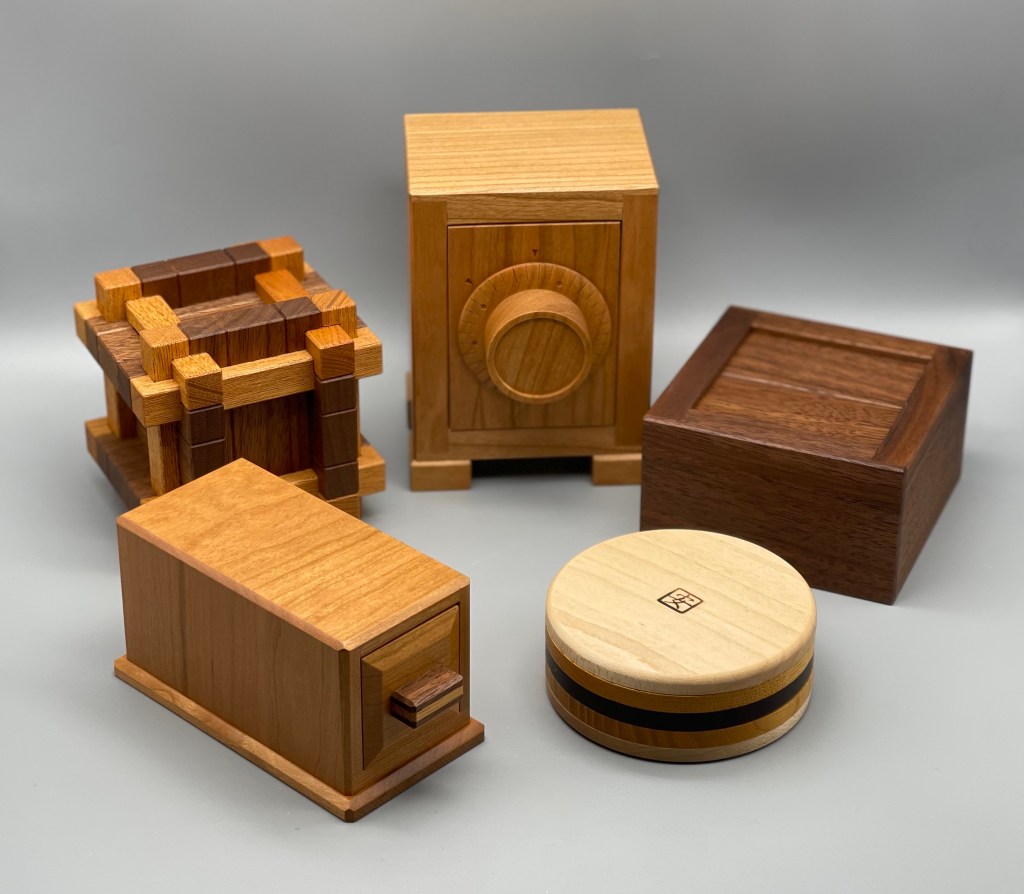
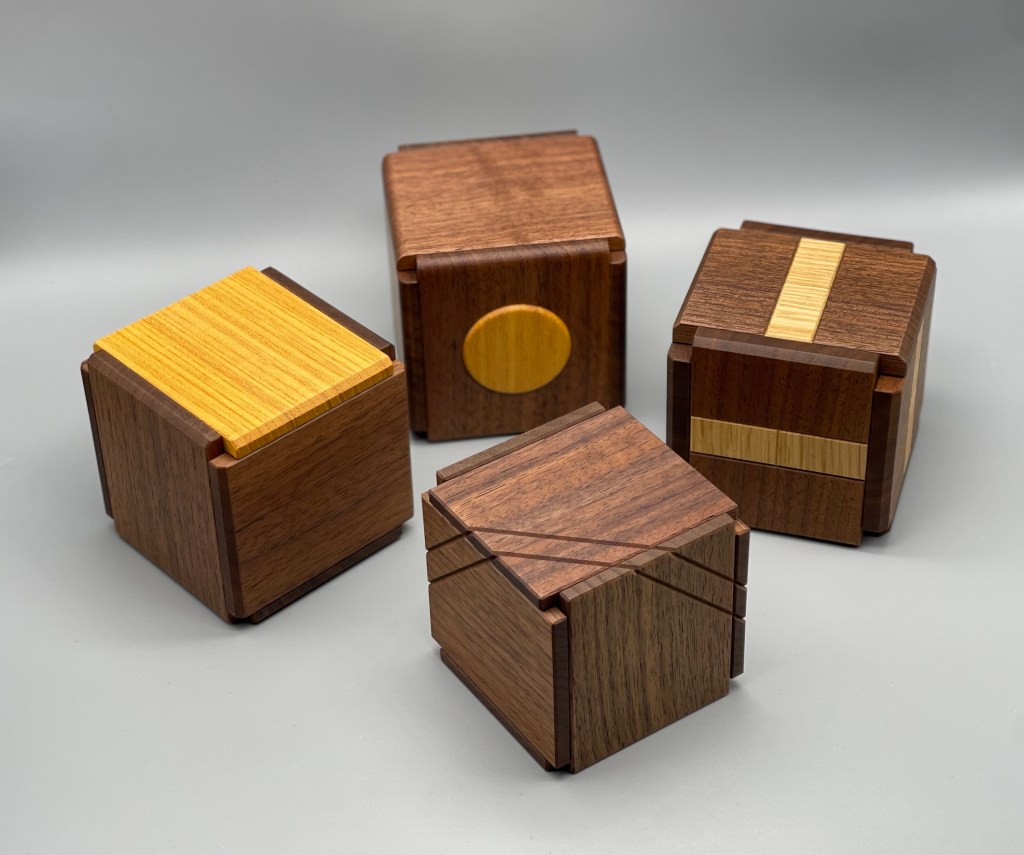
It Takes a Village: Oleg’s Wardrobe by Dee Dixon

Oleg’s Wardrobe

Dee Dixon

The Village was happy. For years its people celebrated nothing in particular, joyously throwing small objects into the sky and jumping up and down. Their kindness was so real, so tangible, that the Orb of Prosperity formed, giving the people something around which to dance in a rather silly, but quite happy, fashion.

King Oleg the Horrible, however, hated the happy hamlet – in fact, he hated everything: the sound of grass growing, the smell of fresh snow, and the tiny hats the people liked to wear. The King was cruel to the people in his kingdom, silencing laughter and kicking toddlers. For years he would grumble and mumble incoherently to himself, but the dancing…. Oh, the dancing was the last straw for Oleg. He stole the Orb from the Village and now things that were once thrown into the air are placed sadly on the floor.


Oleg has locked the Orb away in a secret compartment in a wardrobe he uses for small things like his fingernails and sense of self-worth. Knight Nyte the Sleepy Soldier has stolen Oleg’s Wardrobe but he can’t find the Orb! The cabinet opens but the drawers are empty! Alas, without freeing the Orb the people’s prosperity will forever be out of reach. It is up to you to find the Orb so that its magic may be released and the people saved, to laugh and dance and wear their tiny hats once more.

From: Tiny Hats and the Ogre that Hated Them, a Record of the Village that Prospers Once More

Dee never ceases to surprise – I still haven’t managed to solve Burner and he has something more complex coming out!
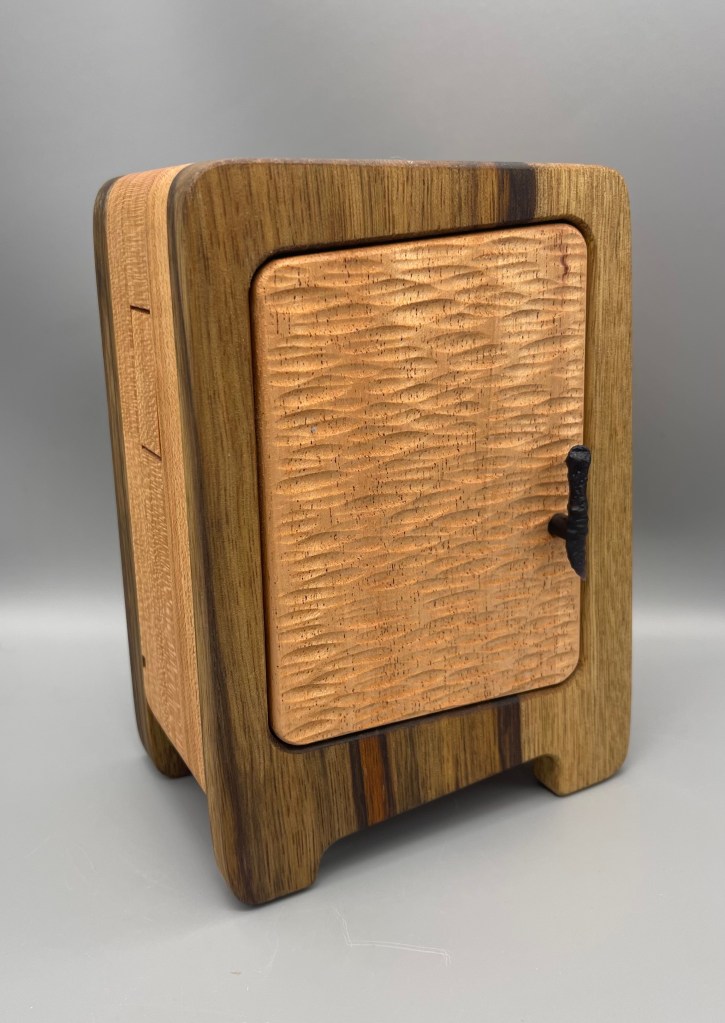
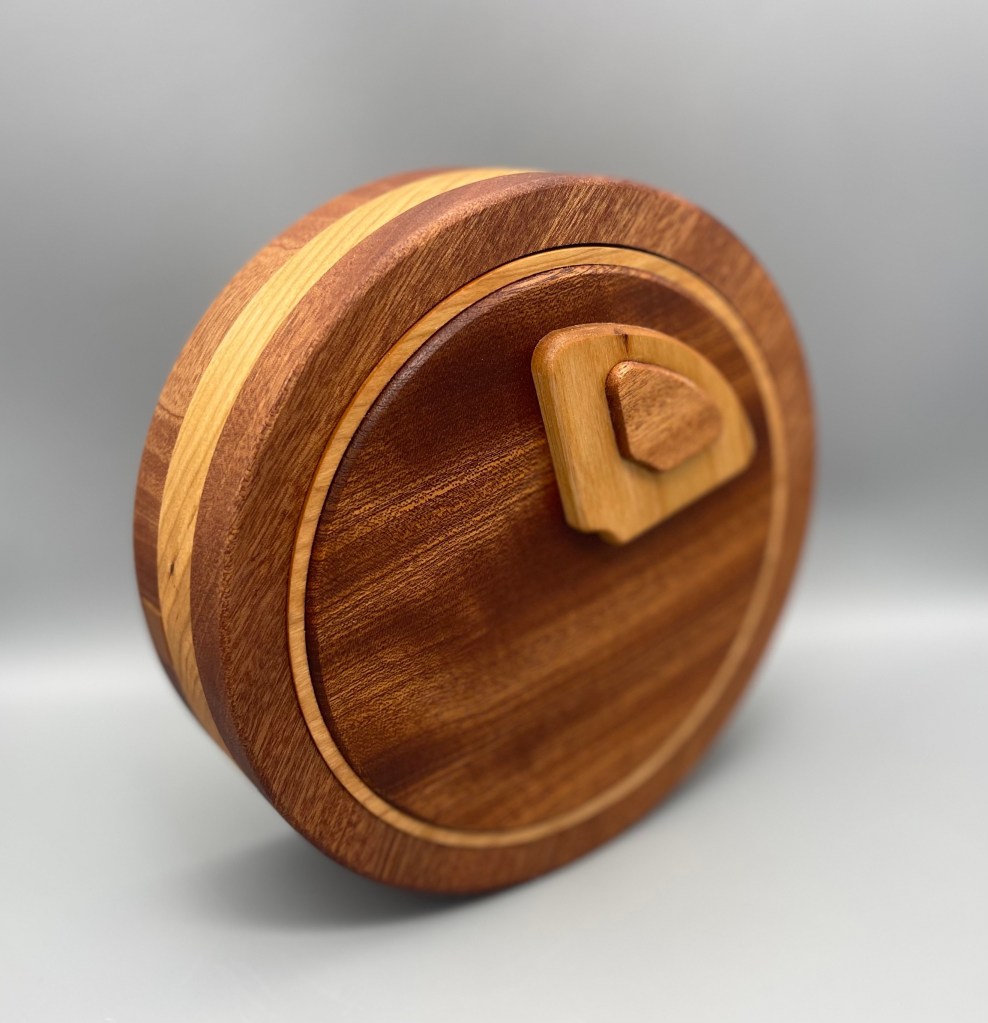
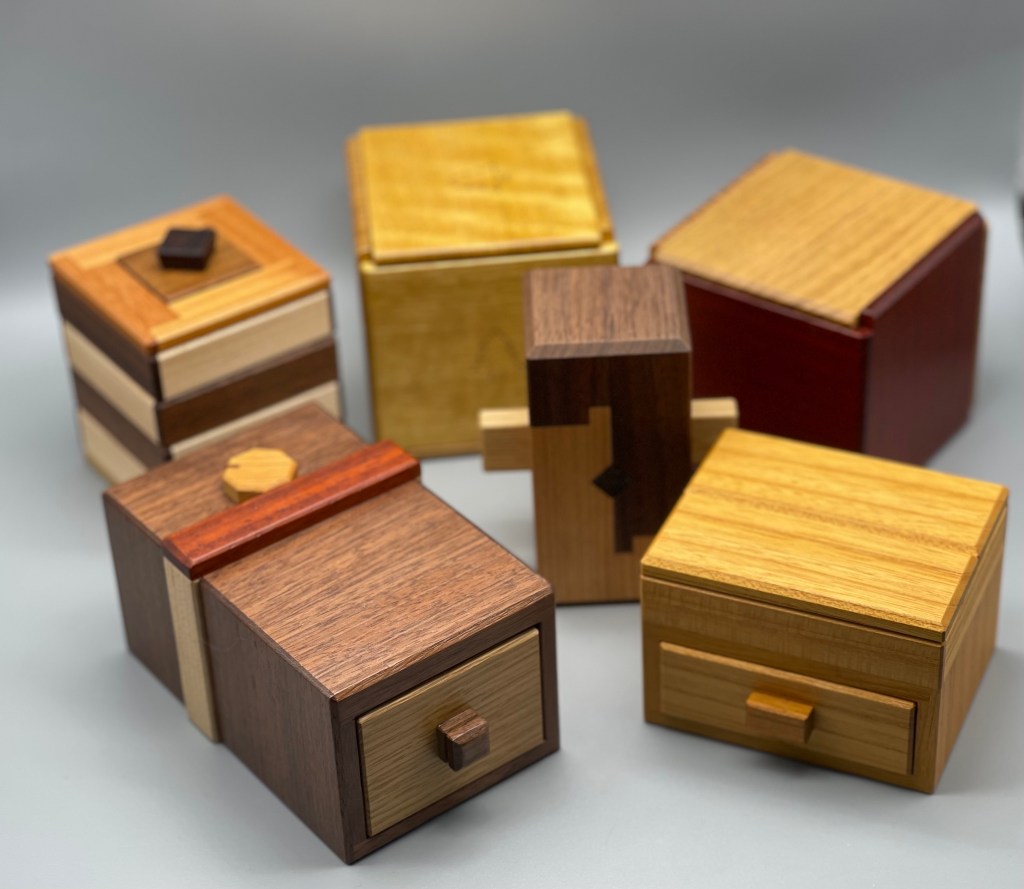
Oleg’s Wardrobe is a beautiful little cabinet with a door (maybe an Armoire?) in a weighty package (close to 2.5 lbs!). Mine is Black Limba and African Mahogany and the final version will be Peruvian Walnut and African Striped Mahogany (sure to be at least as pretty as the one I solved). The goal is to retrieve the Orb of Prosperity, which is hidden somewhere inside the wardrobe. After appreciating the little dagger doorknob, the door opens readily (with a reveal that made me laugh) but upon opening it up, there seemed to be little to work with. A rotating semi-circle on one side, a hole beneath it, and something that might be a button (that doesn’t press) on the bottom of the box. And that’s it (other than the drawers and door)! Shaking it a bit you can hear a bit of rattling… the Orb? Something else?

I stared at it for a while, asking it to share its secrets with me as I did everything I could think of to do… something. Before too long it did! Aaaaaaand now what? The main mechanism eluded me for quite some time before my aha! and even then I didn’t get very far. Some playing around and thinking(!) got me moving again, going in circles while I wondered what I was missing that could break me out of going back and forth through the few steps I had discovered.
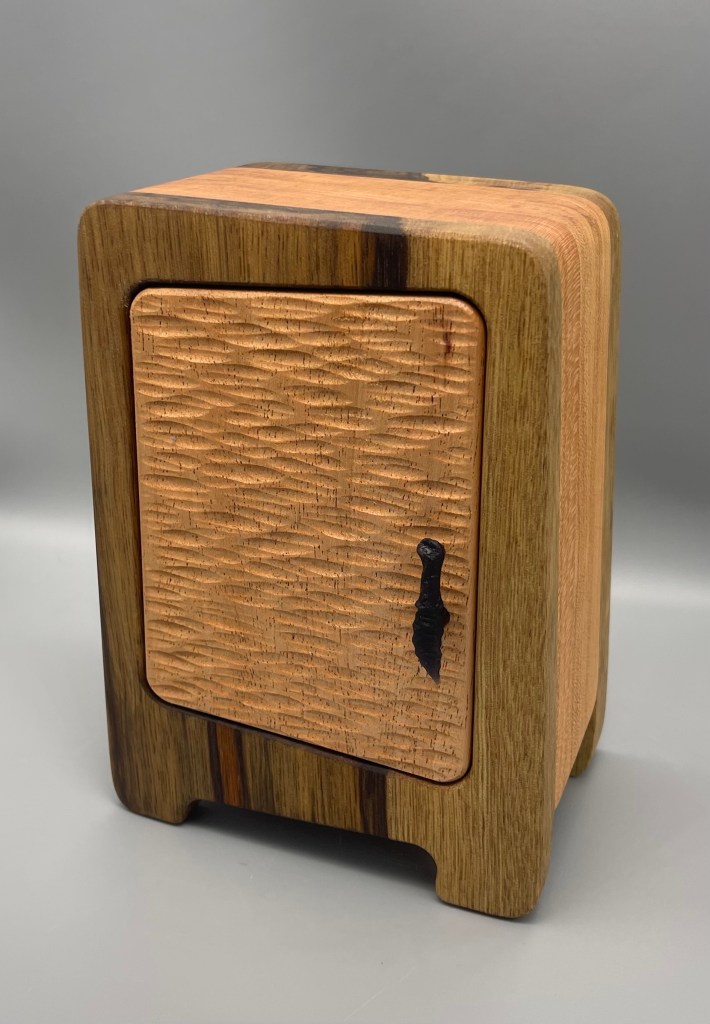
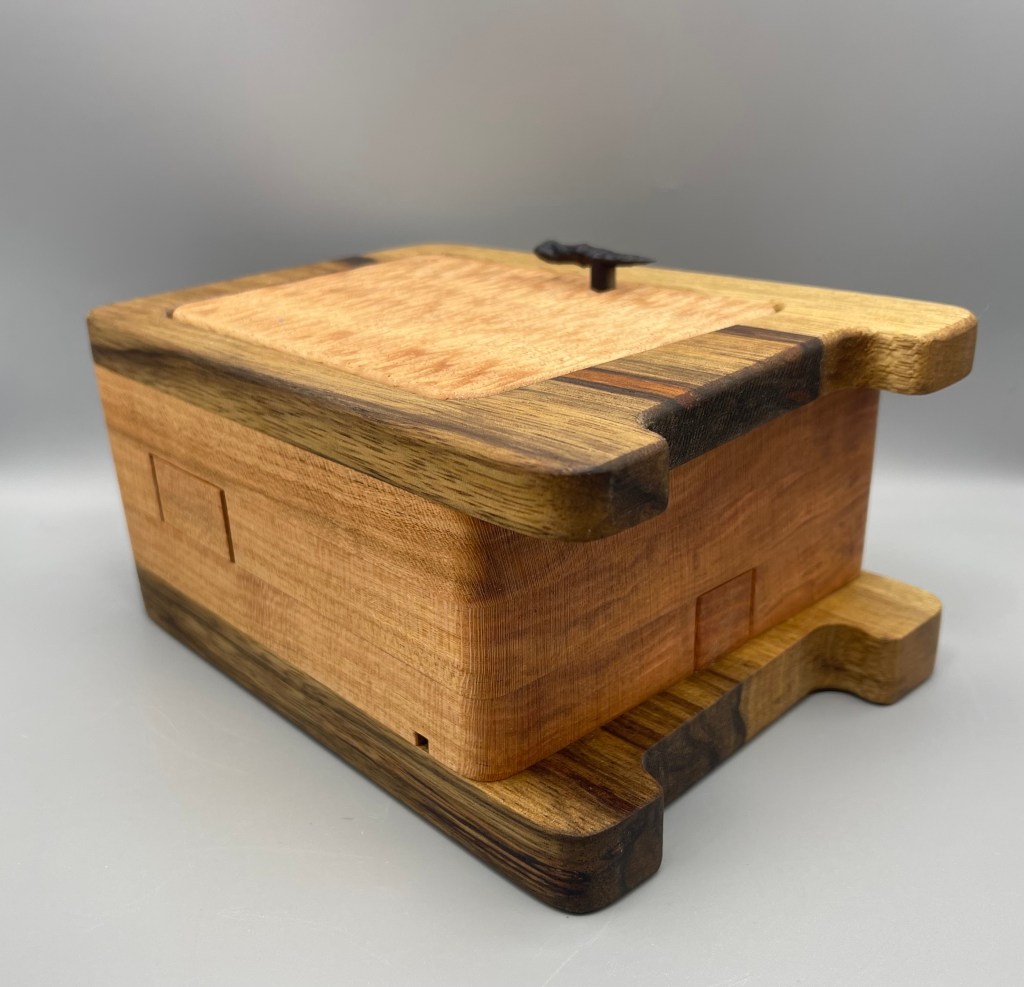
With a little luck and a lot of patience, aha! I found what I was looking for. But still this something didn’t seem to actually do anything, not at first. Some more thinking and experimentation and I got it, only to find that I still had a ways to go. I was pretty sure I understood the basics but it took close observation, logic, luck and more than a little faith until…. the Orb! yay! Bask in my brilliance all ye doubters!

My brilliance soon faded when I realized I had reset the puzzle without returning the orb to its rightful location… oops. Fortunately, this forced me to really and fully understand the puzzle before I could reset it properly, both of which I like to do before I consider a puzzle fully finished. Even without this mistake, the reset might have been a challenge at times, requiring pretty complete comprehension (not my strong suit cough cough) of the central mechanism, with some subtle steps that tripped me up during the reset, adding a bit of extra challenge to the experience.

I had initially solved a late stage prototype before getting my hands on a final copy, which added another tool and a few more steps, while complicating an existing one. These round out the puzzle, really ensuring it has a satisfying length and challenge.
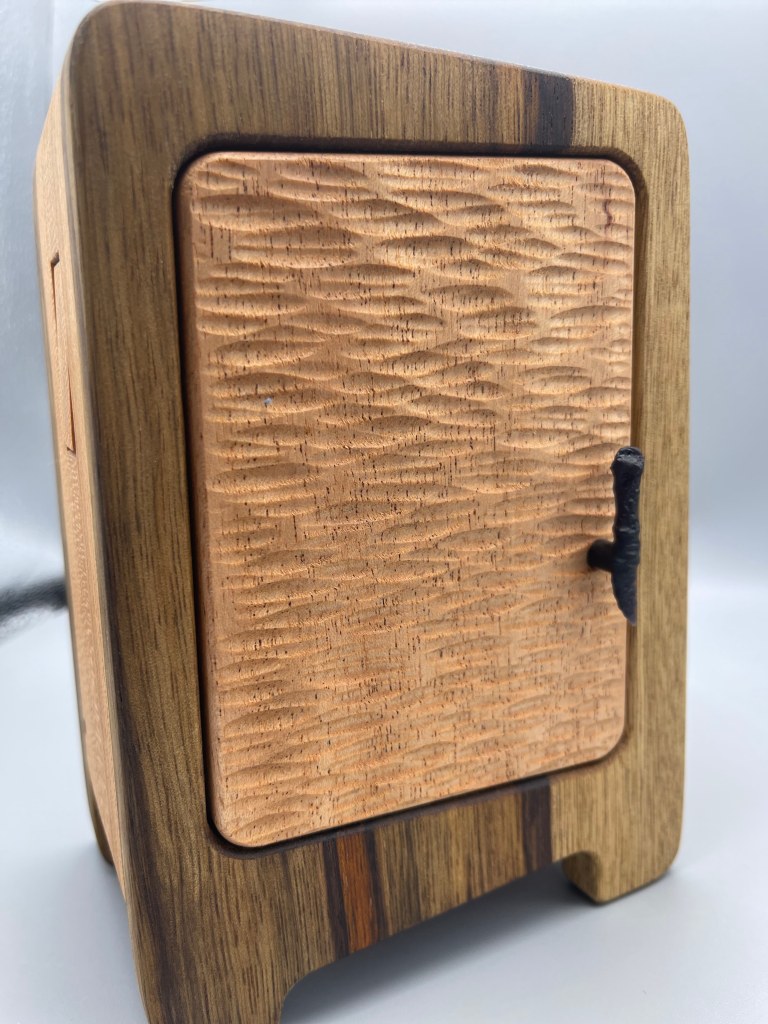
Oleg’s Wardrobe is as lovely as it is tricky – I might put it alongside Bad Moon and Uplift in some ways (but more difficult than either), making it an excellent addition to my ever-expanding Dee collection. Oleg is perhaps a bit semi-blind at one or two points, but really everything you need is there, you just need to realize what that means as you carefully and closely explore. I really enjoyed the non-linear nature of the experience, with some discoveries occurring in a random order; eventually I had discovered everything I thought there was but had to figure out how to put what I had learned together, a fun and somewhat unique experience to have a puzzling journey that meanders and splits and wanders before bringing everything back together. The final additions only add to this, with things that might need to come early being found late and vice versa.

Oleg’s Wardrobe is a fun, non-linear tricky SD journey in a lovely and weighty package. I struggled with it, hitting multiple walls before putting everything together and making my way through to the end. The reset added a bit of an additional challenge for me, requiring a real understanding of the central mechanism at work. A worthwhile addition to any collection!

B4: Brian’s Big Baffling Bolt

Brian’s Big Baffling Bolt

Brian Young (Mr. Puzzle)
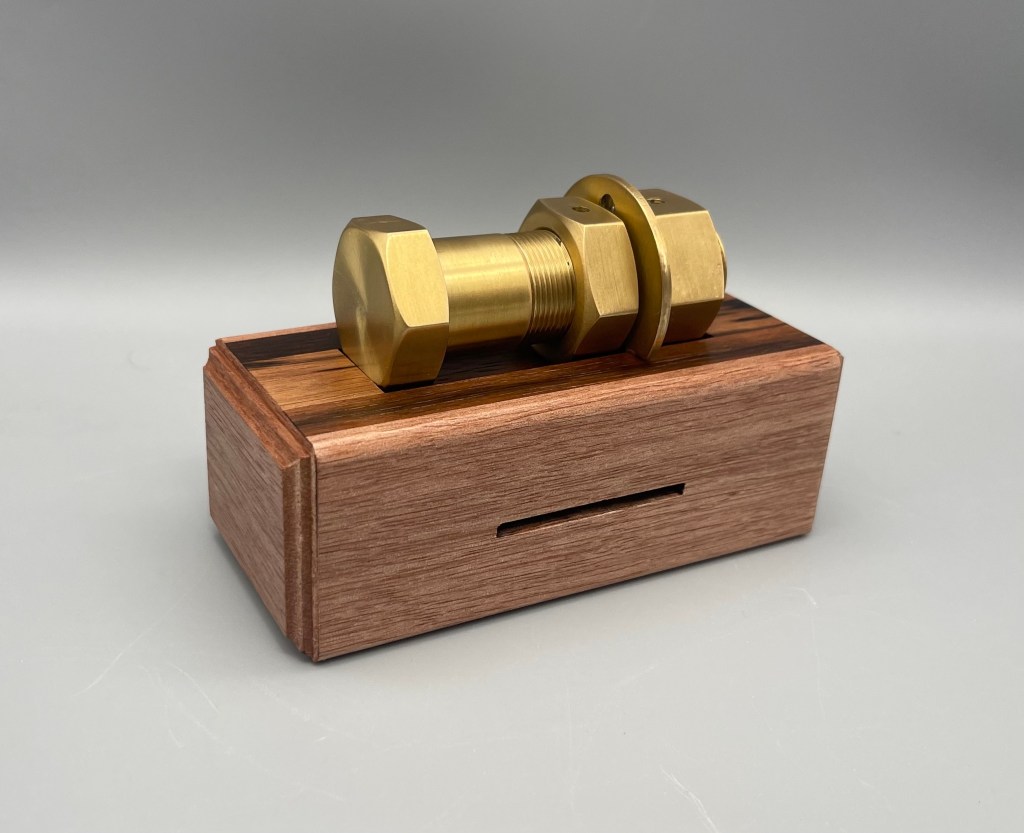
Bolt: 65mm x 30mm, Brass
Box: 110mm x 50mm x 40mm, Papua New Guinean Ebony

I finally got done solving Brian’s Big Baffling Bolt (BBBB) from Brian Young of Mr. Puzzle and… just… wow! Mr. Puzzle announced the puzzle some months back and when my turn eventually came after several more months, I jumped on the chance to try Brian’s newest SD creation, following up on the interesting and uniquely broad challenges of Abraham’s Well.

In creating numerous, highly regarded SD puzzles, Brian has played with brass bolts in the past, having incorporating them into wooden designs: Three Wise Bolts, which I am fortunate enough to own, as well as his contribution to the amazing Lewis Carroll Project, Tweedledum and Tweedledee, which I was fortunate enough to try (but not fully solve) at the Puzzle Palace. This newest puzzle is meant as an homage to his 30 years of puzzlemaking, incorporating “hints” of tricks from some past designs in new ways, alongside novel mechanisms. Despite having solved several of his puzzles, I have to say that I did not recognize anything in particular, so I am not certain from whence these came but I do appreciate the sentiment: a cool way to share tricks that are now difficult to access due to the rarity of so many of his past SD designs.

BBBB consists of a rather massive brass bolt along with a lovely wooden puzzle box made of Papua New Guinean Ebony. The box has slots on either side, a hole on the bottom (alongside the Mr. Puzzle logo) and a resting place atop fitted to the bolt. The bolt has a washer along with two nuts (each with a hole), one of which spins freely without screwing in either direction. I was able to make a bit of progress rather quickly, always a fun start and one which belies the difficulty to come.

This bolt was by far the trickiest bolt I’ve ever seen, with secrets galore. Through starts and stops, I worked my way through multiple aha!’s – so much so that if this puzzle consisted only of the bolt, I would have been satisfied with it as a solid puzzle (according to Allard’s blog, this was initially the case). But no! – there is a puzzle box as well, one that integrates well with the bolt before the finale may be reached. The end reveals a “30th anniversary plaque with [a] pearl” so it is quite clear that you’ve finally solved the puzzle.

I must admit that I needed more than a little help to get through some of BBBB’s multitude of aha!’s and tricky moments, in particular to get through some of the final steps; this did not take away from the experience in any way – the aha!’s keep coming and things I was sure wouldn’t do much worked in interesting ways. Some steps are a matter of exploring everything you have to be sure you know what everything can do, as you discover multiple tools to help along the way. I found myself exclaiming in surprise more than once as unexpected turns occurred, finally breaking through to the end in a final sequence that kept on giving after I was sure I was reaching the end.

The puzzle does not require hitting, spinning, or any force at all. Everything works smoothly; more than that, at one point I knew what needed to be done and was sure it would be difficult to accomplish. I found myself getting a bit disappointed, thinking getting through a section would require stabler hands than mine, only to realize that Brian had foreseen this and incorporated help into the design, such that this was its own aha! moment, in addition to the joys of discovering its mechanisms and tools. Although there is a bit that is somewhat blind, you are provided with sufficient information (if you take your time) to get through.

Despite it having taken me several weeks to solve (and in addition to my terrible memory), it was not difficult to reset: you will have come to fully understand, if not always see, everything such that you know what to do. After putting everything back where it goes and marveling at my own brilliance, I went back through the solve one more time, appreciating the rhythm and flow from section to section, refining my understanding of one section in particular as I worked back through.

BBBB is still being produced by Mr. Puzzle, with a promise that he “will definitely make more of these puzzles in the future.” If you do go to their site to contact them, be sure to browse the site as they have some great puzzles, including a number of IPP designs and the very unique Abraham’s Well (and an excellent Black Friday Sale going on now – no, I get nothing from the plug, I just think it’s a great site from a great puzzlemaker). Be warned that the site is closing towards the end of December, with Brian going into retirement (I do not know how this might affect the production of BBBB unfortunately). Hopefully we will still see puzzles coming out from time to time, as most certainly appreciate his work!


Going in Circles: Orbit and Uplift by Dee Dixon

Welp, Dee as done it twice more with his most recent releases, Orbit and Uplift: I got there eventually but it took me quite a while to do it, with a nudge or three needed along the way (although I suppose I find that just talking about what I am doing is sometimes the most helpful part – more often than not in the process of explaining where I am and what I’ve done I clarify what I haven’t done and aha!…. that or I am just trying to make myself feel better about frequently asking for help from other, better puzzlers).

Oddly, both of these totally different boxes feature a freely spinning center piece in a frame – but that is where the similarity ends (other than Dee’s excellent craftsmanship, as always). Both look and feel great, as with any of Dee’s work in my sometimes humble opinion; Uplift has received some aesthetic comparisons to Bad Moon, which I can see, but really they both have that Dee look you can’t quite put your finger on but can still readily see. Uplift is especially gorgeous and I suspect that producing it is particularly no easy task. Neither box is an overly long solve but both had me stuck for quite a while, so my experience with both was nonetheless quite long… and of course they look great alongside their ever-growing set of siblings – delightfully, Dee definitely didn’t disappoint.


Orbit

In the hours (and hours) I spent going in circles with Orbit, I will admit there were times I was certain the solution must be too blind… I was convinced I was going to be annoyed by the solution but in reality this was not at all the case once I actually figured things out. You are given plenty of information and just need to bring some patient observation to make sense of things. It is extremely unlikely to just randomly open this box, although there were times when I was sure I was close (and found out later how wrong I probably was). This is the kind of puzzle where you really need to work out what is happening to be able to reach the solution. There are many puzzlers out there better at this than I, who may well have had an easier time, but I really had to struggle to get there.

Eventually I made some sense of the box and was sure I could solve it only to be confronted with a problem I eventually worked out with a laugh. Again, the information was there if I stopped and thought about it (and I appreciated how Dee incorporated something that in another puzzle may have felt disappointing but still managed here to feel novel… it’s hard to say more without crossing the line into SpoilerLand (which I’d say is like CandyLand but that would give too much away)).

Having solved Orbit I can now get through the solve in a few minutes – a testament to how not-really-at-all-blind the puzzle is, once you’ve worked it out; in my experience, a truly blind puzzle can stump me even once I know how to do it. Here, there is no way to get lost once you know where you are going.


Uplift

Uplift goes back to Dee’s SD roots with an SD-lite solve in what is an absolutely stunning circular “box.” It had me stuck spinning myself nowhere on more than one occasion, with a particularly delightful aha! at the start. I had spent a few hours (yes, sigh) going in circles, doing everything I could think of… everything but the one thing that would actually do something. I found a bunch of feedback that did nothing more than to distract me from finding my way into the start of the solve and when that aha! hit… you just gotta love that dopamine, bruh.

From there, I got stuck one or two more times but was able to get through the rest of the solve in a couple focused sessions. Dee messes with us as the puzzles progresses, causing me to fall down a rabbit hole or two along the way. Fortunately, I was able to get back on track without help, all by my big boy self. Overall, it was not a super long trek to the end once I got past that first wall; I managed to hit that last step with a laugh when I saw where Dee goofs us once more.

I know of one rather vocal critic of Uplift, someone who I suppose solved the puzzle quickly and felt it should have been longer (not a Karakuri collector, I imagine). To me, this first leaves out the importance of respecting the difficulty and complexity of physically producing a beautiful box, which is much of where the value of a collectible puzzle is derived. If you only care about how long it takes you to solve something, than you may not appreciate puzzles like Karakuri’s, for example, which, to some, may be solved quickly – I care more about the elegance of a solve, the flow from step to step, how it integrates with a novel aesthetic built with immense care… although I suppose it may be easy for me to say, since I rarely solve anything quickly (I never claimed to be smart… just circumlocutory and loquacious 😉

But, really, I do not want to give the impression that Uplift is a short puzzle; I don’t like giving a step count unless asked but, by my count, the length of the solve is about average (in terms of steps) for Dee’s work. Most important to me, I was never disappointed with my experience solving it. At the end of the day, I may have spent more time on Uplift than on Walter’s Radio, which does feature more steps (and is one of my favorite Dee boxes) and seems to have stumped some puzzlers as being too complex. Radio is the harder puzzle I think, but Uplift really got me looking in the wrong direction on more than one occasion, which just goes to show you how random the puzzling experience can be and how subjective our perspectives inevitably are.


One of the great things about Dee’s work is that he gets a lot of feedback before releasing puzzles – between prototype testers and a few early releases, he gets a lot of information before calling anything done, oftentimes even giving the public a look into the puzzle from a blogger or two before public release (not that you should listen to anything those guys say, cough cough). It should be no surprise that his puzzles are rarely, if ever, the subject of controversy or contention (and oftentimes the subject of confusion).

Dee has brought us two more beautiful and tricky puzzles that hit different price points and scratch different itches, both leaving me with the lovely feeling of success that solving a good puzzle can provide. Somehow, Dee is apparently putting the final touches on yet another puzzle so I may be back soon… assuming I can solve the darn thing.

If My Words Did Glow: Ripple by Peter Canham

Nary a day goes by when no-one asks me: “Hey, 5S, where the heck ya been the last few months?” Well, life happens and writing fell to the back-burner for a time. But this is not to say that my puzzling itch went anywhere – I’ve still been FOMO’ing my way through my bank account and struggling with the (many) yet unsolved puzzles in my midst (I’m looking at you, Orbit… and you, pretty much every Osanori puzzle I own).

There has been some truly great stuff to come out since the Nashville Puzzle Party (I realize that I haven’t posted since then… Wtf?!) but my favorite (solved) puzzle since then has got to be Peter Canham’s Ripple. After patiently waiting a year or so, I got an email that it was my turn! Cut several weeks ahead past some USPS shenanigans (and absolute kindness from Peter in his quest to make sure the puzzle got in my hands) and it arrived, safely packed in some laser cut plywood.

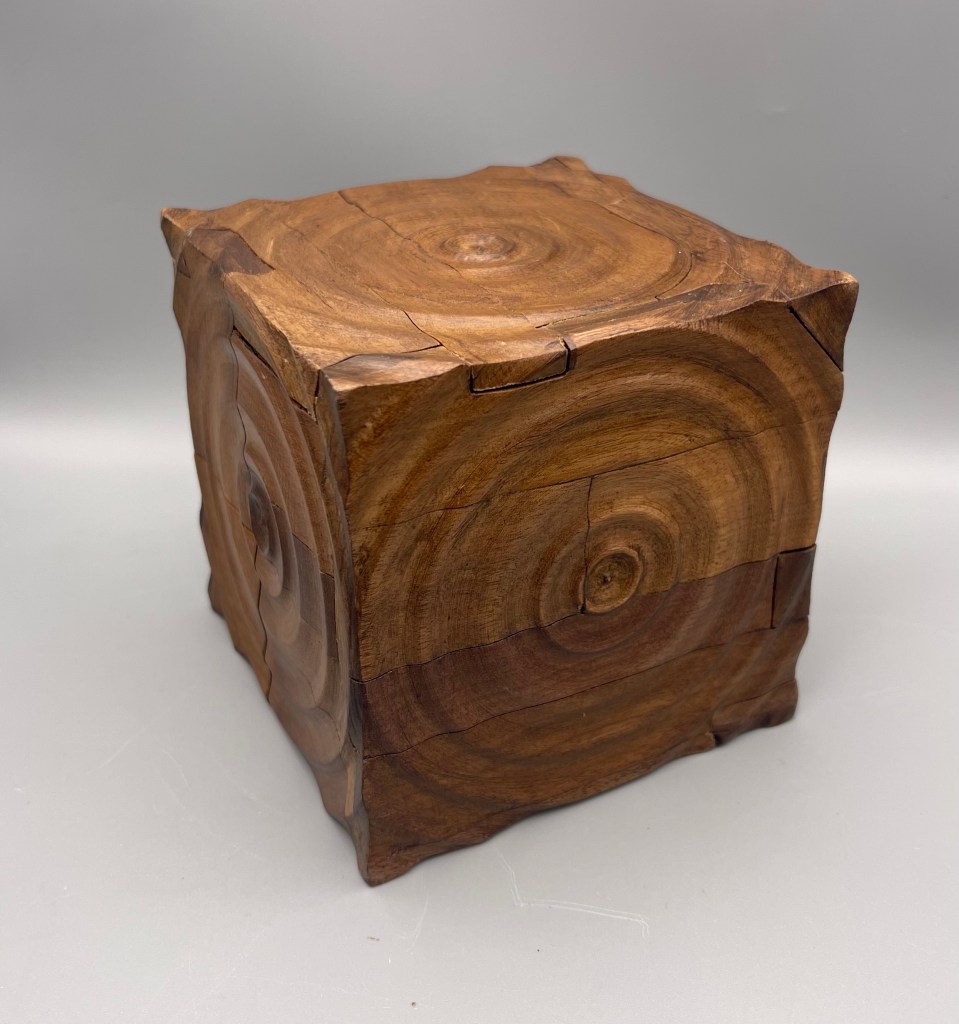
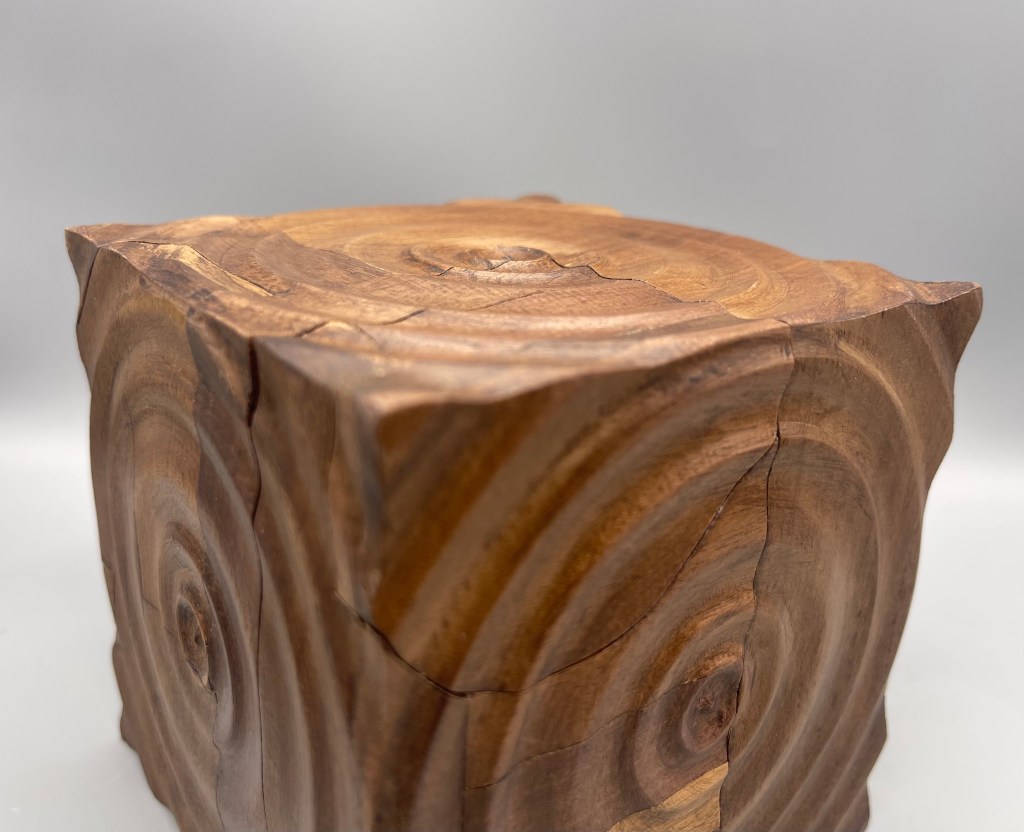
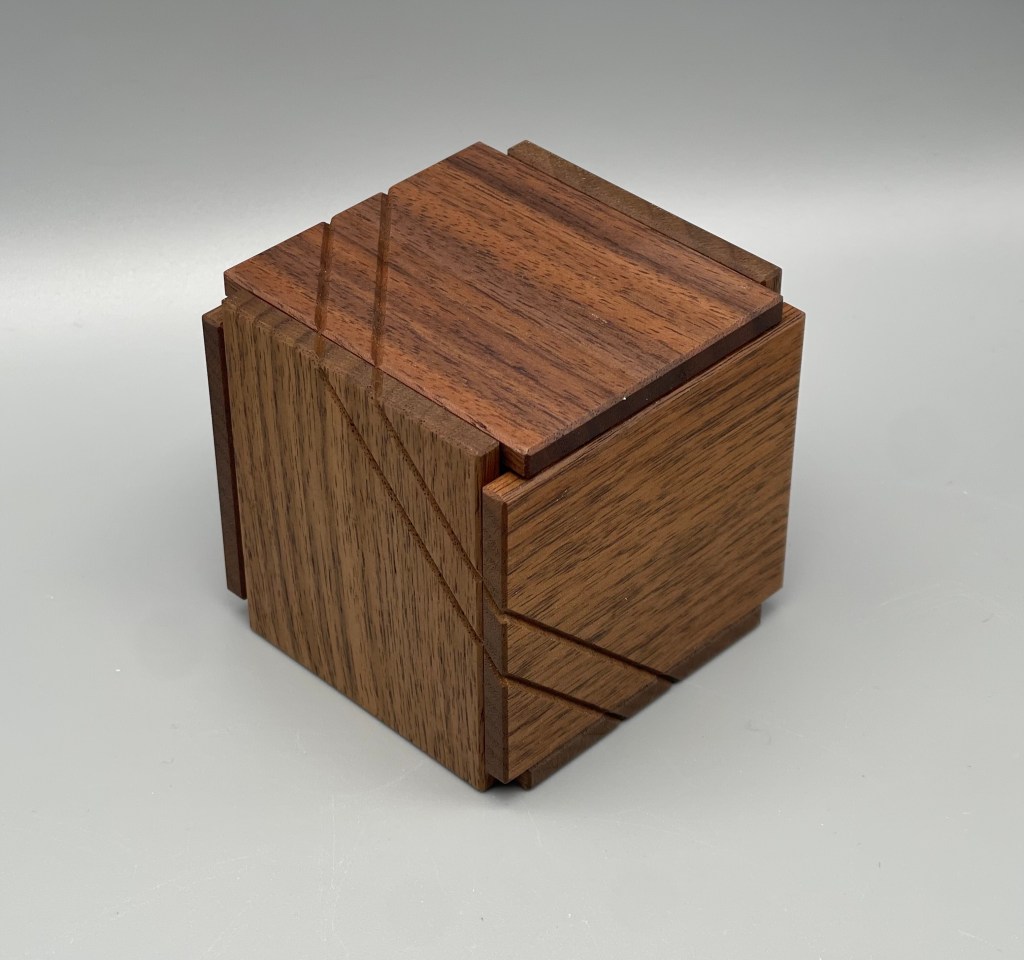
Ripple’s aesthetic mirrors its name with each face of the 4″ walnut cube featuring a series of rounded, concentric circles. These are broken by all sorts of strange and seemingly haphazard lines, giving you a hint of the complexity to come – at times these lines might prove helpful but they somehow still managed not to spoil some wildly unexpected moves. In Peter’s (comparatively succinct) words, it is “a box that was like a sequential puzzle but was non linear i.e. one move did not necessarily lead to another but possibly two or three. Like ripples in a pond interacting with each other. The biggest design challenge with the ripple box is that as the moves bifurcate the mechanisms start to interfere with each other,” resulting in a lovely cube that is seriously tricky.

After a moment appreciating the look and feel of the box, I was off: I was able to find something rather quickly but it seemed to lead nowhere, leaving me in circles that led to other not yet helpful discoveries, as I spent at least a couple hours over several days without making any real progress. Finally, after clarifying an assumption or two with Mr. Boxes and Booze, I found something odd and quite unexpected. And there I sat once more, staring into the next of what would be several walls that would lead to quite a few satisfying aha! moments. Eventually, I reached the solution and found Peter’s signature alongside the series and batch number. After basking in my brilliance for a bit, I reversed course, resetting the box and going back through the solution once again, appreciating how the moves lead into and around one another, moving through the maker’s vision to the end.

I suppose some might debate this, but I feel like it easily meets the crowdsourced Discord definition of sequential discovery, as it takes you “on a journey through a set of sequential and generally non-repeating challenges involving the discovery of hidden mechanisms” to reach the solution. SD has come to inspire some rather specific meanings that may or may not be met by this puzzle; regardless, the journey itself awards the puzzler with plenty of satisfying aha!’s. But, really, who cares: it’s a darn good puzzle, which is all that matters.

And now, what’s this? A new Dee Dixon puzzle adorns my doorstep? Ah, yes, you may yet hear from me again soon (sorry).


Hitting the Jackpot: Bandit by MW Puzzles

Bandit

MW Puzzles; 350 copies
2.5 lbs; 7.5″ x 3.75″ x 4.25″
Metal, Walnut, Acrylic

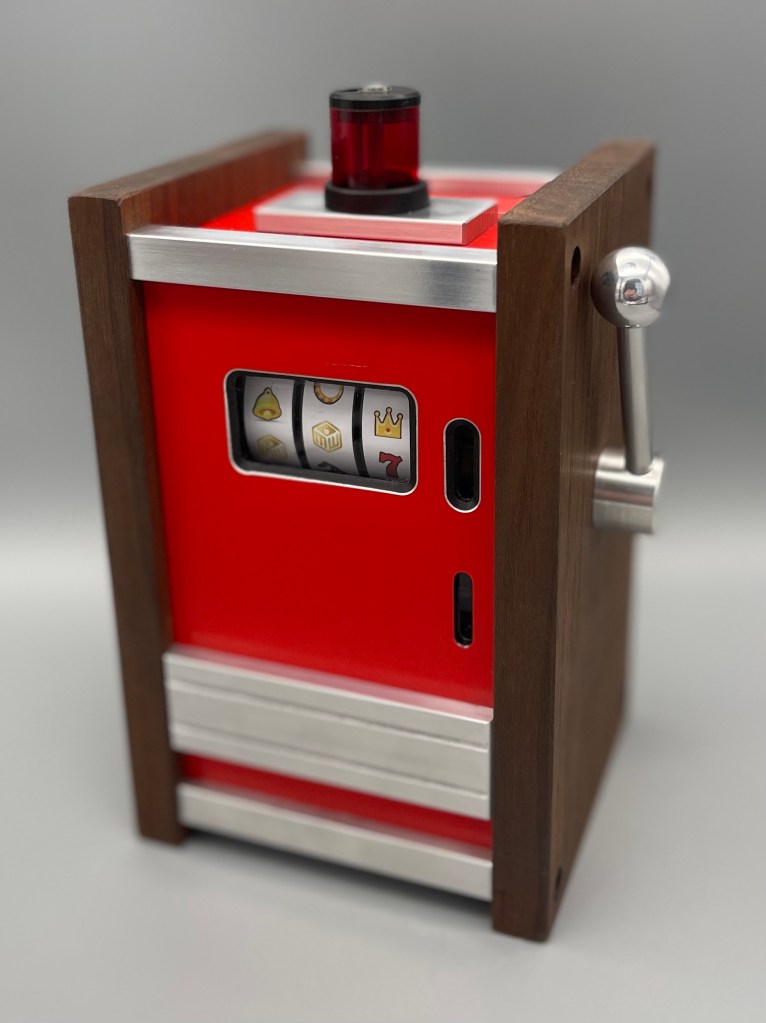
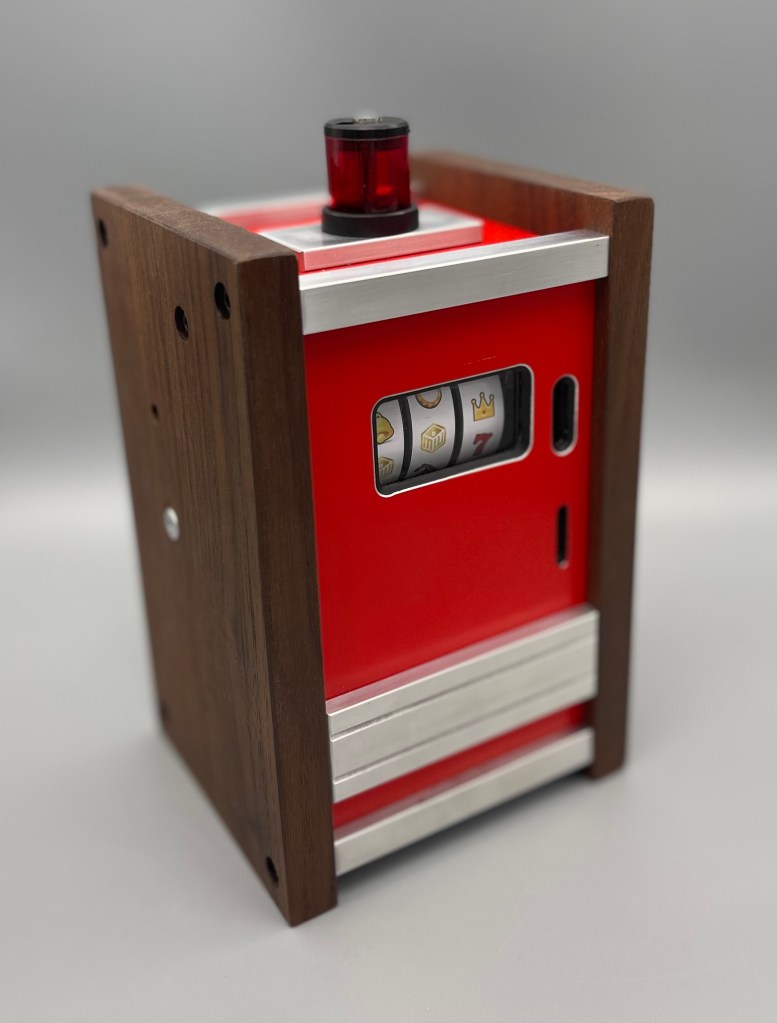
When I was a kid, I had a miniature slot machine with tiny tokens that would make the wheels spin; hitting a jackpot would release whatever tiny tokens had been inserted thus far. While entertaining to my nascent mind, there wasn’t all that much to it – pull the arm, spin the wheels, lose and repeat until you win.

MW Puzzles has taken the classic one-armed bandit and made something fun, tricky and unique, something instantly recognizable, such that the ultimate goal is clear from the start even as the path to it is not.

This makes for something that demands to be picked up, sure to catch the eye of puzzlers and non-puzzlers alike. It begs to be handled; at 7.5″ x 3.75″ x 4.25″ and 2.5 lbs (that’s just over 1 kilo for you metric weirdos), it fits perfectly in two hands, a necessity for all the exploration it will require.

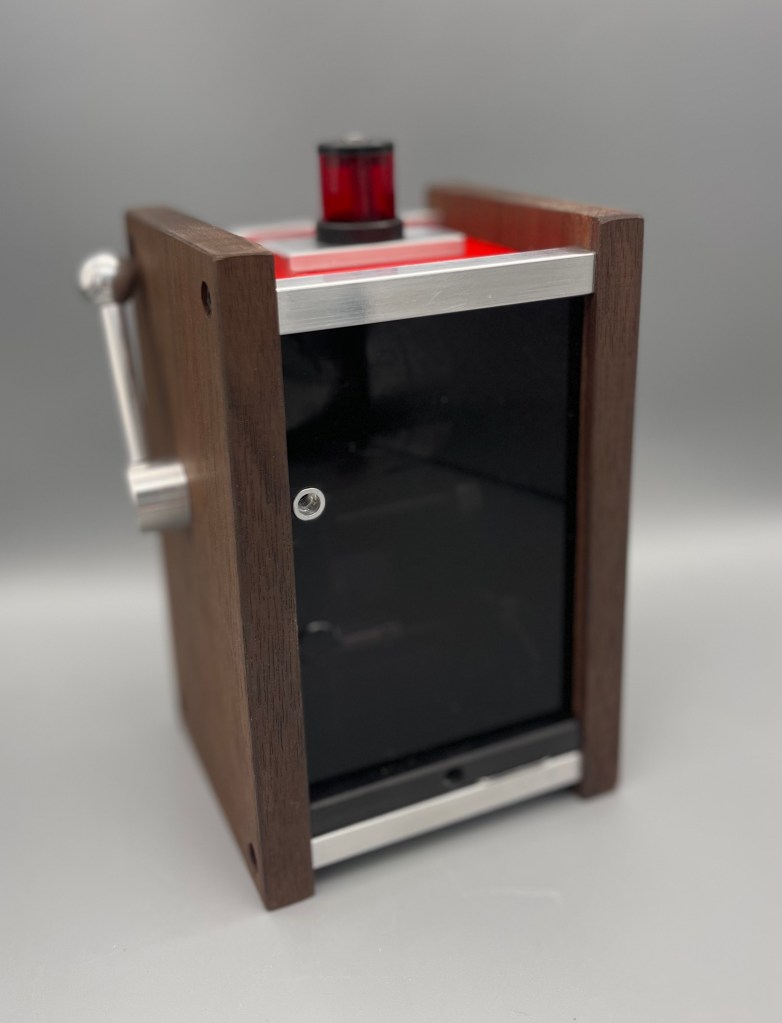
When you first sit down with MW Puzzles’ Bandit, you will almost certainly do what comes most naturally: pull the Bandit’s one-arm… and you will find it does nothing but rotate freely: the wheels don’t spin and a jackpot is most definitely not in the cards. This is sure to reel you in and pique the puzzling mind in the way that a good puzzle does, spinning you around while sucking you in so you just want to try one more thing, just like the real thing catches you with just one more quarter; the difference is that you can actually win with Bandit, should you put in the thought and effort – the payoff is in the cards, to mix casino metaphors.

So begins a sequential discovery journey that rewards experimentation and patience, teasing you with a partial view of its inner workings through a semi-opaque acrylic back, framed by lovely walnut sides and a glistening metal frame that comes in one of four colors.

I had the welcome opportunity to test a late prototype and to compare it to the final version, getting a glimpse into the careful planning and patient meticulousness of the puzzle’s creator. This is not a hastily thrown together puzzle but is instead the result of ample thought and cast-aside proto’s – there were a few changes following even this late prototype that proved to me that MW is a puzzle maker who takes this art seriously; in seeking to entertain, it will be done with pride in a well-made product.

I shouldn’t be surprised after solving MW’s previous trilogy of metal puzzles, all reflecting their excellent craftsmanship and puzzling prowess; Bandit is a larger evolution of MW’s puzzle oeuvre that secures its place as a puzzlemaker to be followed.

Crafting a puzzle that actually looks like something is not all that easy – other than Karakuri, most makers shy away from the innate restrictions imposed by holding oneself to an existing aesthetic but MW leans into it, using the well-known game of chance to inform and obfuscate its puzzling mechanisms, with multiple tools (some quite well hidden) and a progressive puzzling journey whose finale provides the payoff one hopes for. MW has made something that is as aesthetically pleasing as it is recognizable, with puzzling that does not disappoint.

The goal is not so much to “fix” a “broken” slot machine but to discover how this strange cousin functions instead, achieving a jackpot through skill rather than stumbling upon it by luck: this is no game of chance but rather one that requires thought to understand and conquer.

MW began taking pre-orders for the initial run of Bandit a couple weeks ago; pre-orders appear to currently be closed at this time but I would reach out via discord or the website if interested, as interest seems to (unsurprisingly) be high. Bandit will be limited to 350 copies, 75 of each color with an initial run of 300 and plans for a final 50 down the line.


To every puzzler… Turn Turn Turn by Perplex Puzzles

Turn Turn Turn

Perplex Puzzles, 6 lbs, 7″ x 5″ x 2.5″

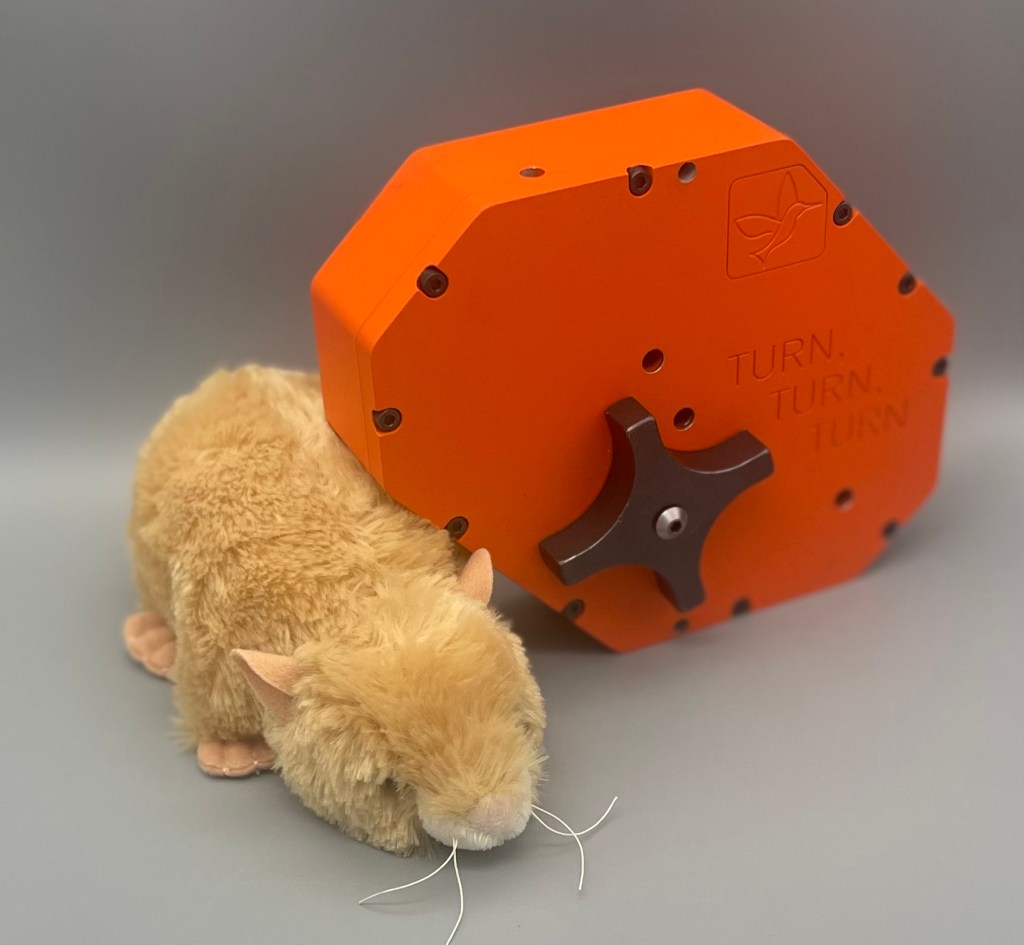
It has been a couple years since Perplex Puzzles released Wishing Well and the anticipation for his follow-up puzzle has not waned. Turn Turn Turn (found here) is bigger, heavier, sequentialier discoverier, and has the potential to drive you a bit mad. Bill B. from Perplex sent me a copy a while ago to try out and if you liked Wishing Well, I am pretty darn sure you are going to love Turn.

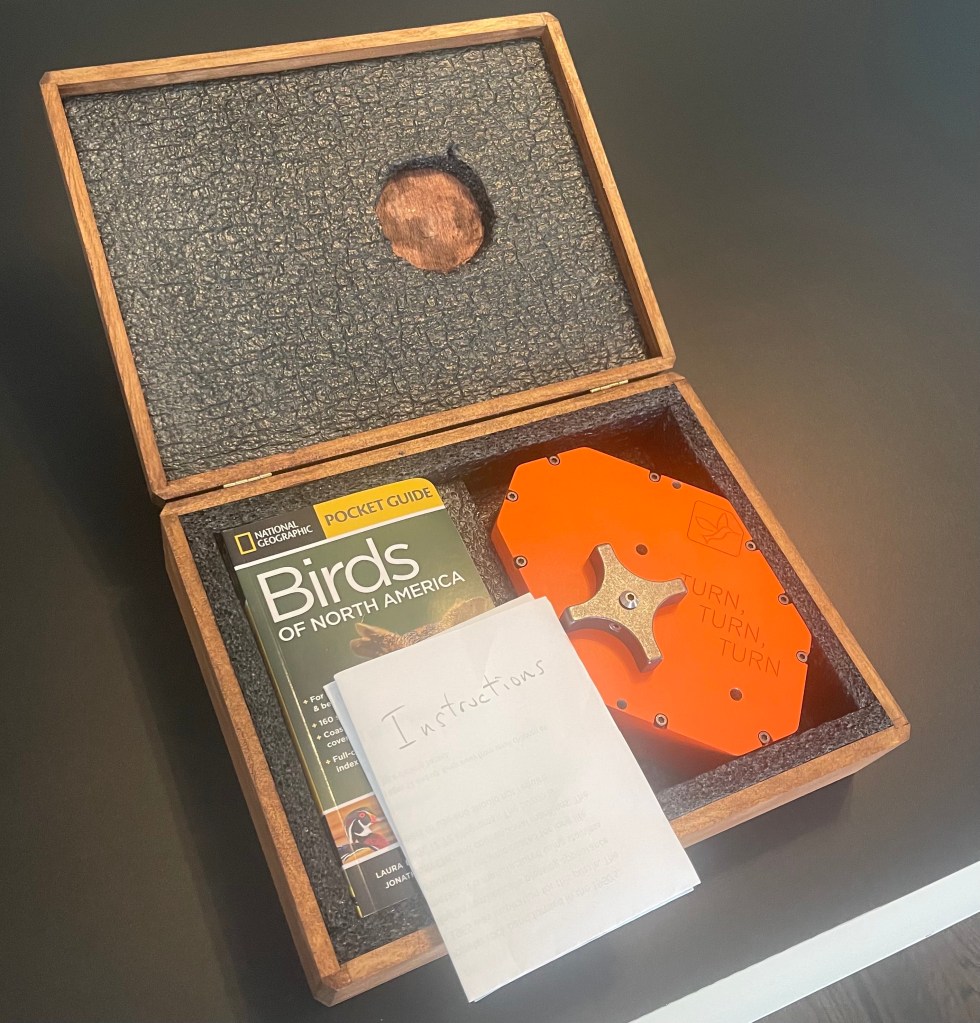
Bill has packed a lot of puzzling into this fat, orange parallelogram, which features a black handle on the front, a number of holes along the front and sides, and a protruding something emerging from its back. As with Wishing Well, Turn arrives in a large wooden box, with some instructions, a Bird guide 😉 and the aforementioned solution (in a separate manila envelope). This is 6 pounds of heavy metal puzzling and is not for the faint of heart – this is for puzzlers who want to be challenged with something that is going to take time to discover, understand and, ultimately, conquer. The enclosed laminated solution walks you through the solution and reset with fifteen pages (!) of steps (with pics!), which is to say this is neither a short, nor simple puzzling experience.

Bill is a retired machinist and his expertise is very much on display here, as well as his love of puzzles by designers such as Will Strijbos and Rainier Popp. Turn does not rely on magnets or force – it is truly and purely mechanical: discover tools, explore the various mechanisms that lay semi-hidden within the puzzle’s frame, experiment with the various moves and machinations possible while paying close (very close!) attention to the effects. This puzzle is absolutely solvable – it is not impossible as it is not blind: Bill gives you various ways to check on where you are, although it can be easy to get lost unless you are careful, developing a picture of what is going on through trial and error and close observation until you can begin to develop an understanding of how the mechanisms work, what needs to happen and how to get there.

I was able to make fast progress at first, discovering some initial tools that quickly begin to lead me into the puzzle. I would still be discovering tools and their uses over the next few hours as I progressed deeper into what can only be called a puzzle machine, slowly learning how it worked and how to manipulate it before I could zero in on how to reach the solution. Eventually I had a working understanding of the mechanisms and could orient myself towards the goal, which would take quite a bit longer to reach (along the way, I would need to decipher the included clues… and I may have asked my wife to check a thing or two against the solution for me, but I got there!).

Bill ends it with a flourish, a bit of a call-back in a moment of triumph that had me smiling – it was great to have something to clearly say: “you did it!” to acknowledge my efforts. I am confident that this is going to be a popular puzzle amongst fans of complicated metal hunks of puzzling that are difficult but solvable if you put in the time and brain power (this puzzle has an excellent ROI in terms of puzzling time, at least in my experience). The only downside: unlike some others, Turn’s shape will not lend itself towards being weaponized in a sock – Plant Cycle still earns the award for best puzzle in an apocalypse, in my opinion; otherwise, this is a novel, challenging and complicated puzzle machine to solve. They will be released in batches over the coming months, with Bill reaching out to those on his list. Pay attention as I bet they will go quickly!


When is a Door not a Door? When it’s Puzzleduck Pastures by Kel Snache

Puzzleduck Pastures

Kel Snache; 36 copies

In a land far away, under the old Sycamore tree is where you will find the cheery little fairy community of Duckbill.

These puzzle loving fairies have an obsession with all things mechanical and have nothing to do with ducks. One fairy named Lil’ Ms Fairy Pants had her tiny home newly outfitted with the crafty creations from one particular wizard named Kel Snake.

Sadly, Lil’ Ms Fairy Pants has a poor memory and has gotten herself locked out of her home, again.

Save the lovely fairy and be the gallant young knight by helping her to open her front door. She will repay you with a tiny tour of her home.

Duckbill Times

It may not be new but it is still worth writing about: I got my copy of Puzzleduck Pastures upon release way back in ye olden days of 2019. Back then, my blog was still pretty new, my tens of readers a mere fives of readers. I was writing less frequently than I am now (which really is still not as frequently as I’d like) and simply never sat down and wrote about this gem of a sequential discovery take-apart puzzle.

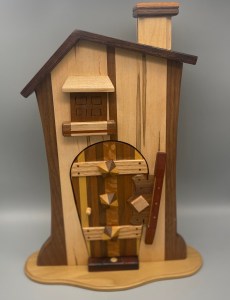
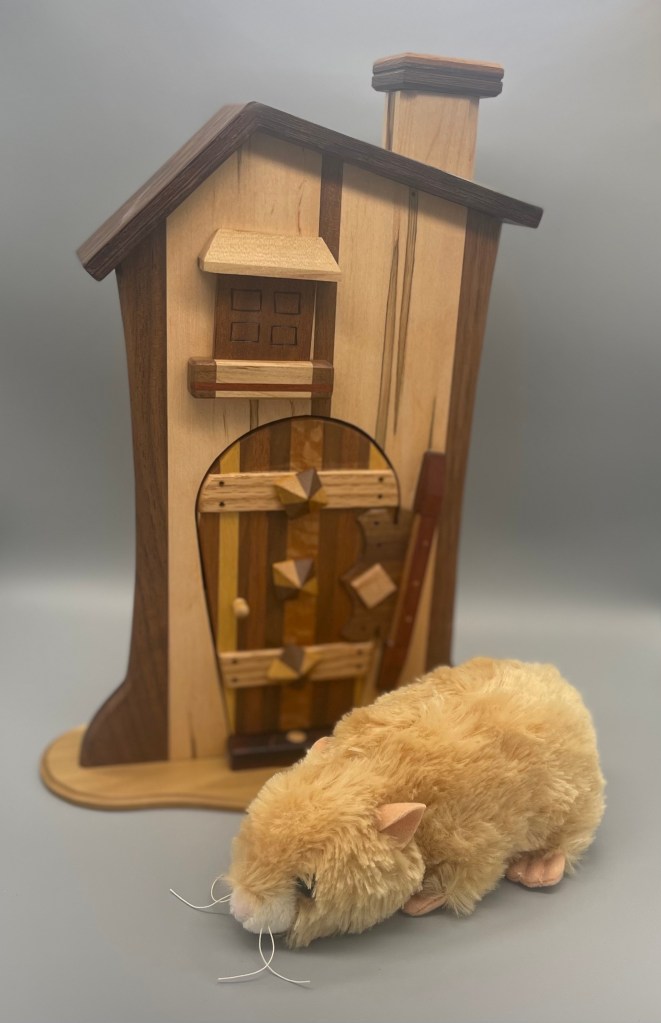
Puzzleduck Pastures is Kel’s “response” to Michael Toulouzas’ Fairy Door (and, in turn, precedes Tracy Clemons’ take: Dark Fairy Door). The puzzle looks like the facade of a playful, cartoonish home, the roof slightly askew, a bulbous door, sketched windows, and so on. The puzzle is a sizable 12″ tall and 8.5″ at its widest point on the base; at 3.5″ at its deepest, it evokes a sense of a theatrical facade from which one might expect Puck to dramatically emerge (“And those things do best please me, That befall prepost’rously.”)

And this is just part of its appeal: it’s playfulness is a manifestation of Kel’s good nature and reminds us that we are here to have fun – belying this intentionally imperfect aesthetic are the internal mechanisms that interact in varied ways, locking Lil Ms Fairy Pants’ door and tempting the puzzler with a number of holes across multiple sides.

The door is quite firmly locked: two of the three square central “locks” on the door move just a few mm, with the bottom one spinning freely. But don’t think that the rest of the puzzle can be ignored! In typical Kel fashion, you will find a number of interacting internal mechanisms keeping you from solving the puzzle and opening the door, although only the chimney appears to have any give when reset. It is quite typical of Kel’s style: multiple misdirections as you embark on a semi-linear sequential discovery journey with very few blind spots. Re-solving the puzzle after a few years, I was pleased by how well everything worked, even as I was sure something was wrong at one or two points (nope: it was me). And I was super pleased with myself when the door finally pulled open once again!

At the end of the journey you are rewarded with a view of some of the internal mechanisms as well as, even more delightfully, some lovely art of Lil Ms Fairy Pants’ home created by artist Nicole Lees for the project. (This is not a spoiler as it is stated in the description)

I love this kind of finale, bringing the story full circle and rewarding the puzzler with a good, satisfied laugh. By no means will you wonder if it is solved: it is quite clear that you’ve helped Lil Ms Fairy Pants home and you can sleep soundly knowing you’ve done a good deed for an imaginary person.

Puzzleduck is fun and tricky, Kel’s deviousness abounding throughout the puzzle’s playful frame. While not as long a solve as Kel’s EWE UFO, it is similarly smartly silly and delightful to behold (and they look adorable next to each other). Now if I could just get myself a copy of Toulouzas’ Fairy Door, I would have the trifecta, thereby opening a portal into the world of the fae!


Answer the Robocall: Walter’s Radio by Dee Dixon

When a wave of Angry Walters waged war on the world, we fought back valiantly, seeking to remove the cold fusion generators that fueled his robotic rage. Some of us succeeded, disabling the power sources in support of the sapien resistance; others struggled to make sense of the robotic systems, their patchwork patterns too puzzling, too complex to understand. The robots exploited this gap, continuing to grow in numbers as we humans faltered in the face of their fury. But the Walters soon faced a new dilemma: as they grew so too did the need for an infrastructure that could sustain the new robotic world order. As humanity sought refuge online, sharing stories of the underground at war with our new overlords, offering advice to those who could not overcome the Walters’ power, as we banded together, the Walters’ world frayed at the edges, humanity chipping away at the cracks within. The Walters scrambled to fill in these gaps, developing new communications technology that allowed for the instantaneous transfer of information between synthetic minds. Such profound development rested on the invention of the Dimensional Electronic Divergence (DED) Chip, a small transistor that disseminated data through tiny wormholes connecting the Robocall devices. 

Humanity’s hope faded as the radios allowed the robots to respond quickly to each battle, each spark of resistance snuffed out as soon as it surfaced. Humanity learned that the removal of the DED could turn the tides of the robopocalypse, diminishing the Walters’ ability to communicate. But they knew that any such success would come at a great cost and so they ensured that the removal of these devices would not be such a simple task. After humans stole what copies they could, they discovered that the removal and manipulation of the DED allowed them to transmit their own data, indistinguishable from that sent by the Walters, creating the opportunity to subvert their communications to humanity’s own ends. 

Human fighters recently secured a shipment of Robocalls that are being shared across the global resistance movement. We must find our way through the robotic defenses built into the radios to remove the DED Chip and undermine the Walters’ newest weapon in the war for our world’s future. Go forth and answer the Robocall!

Rev. 23.5 (as told to fivesinatras)


Ok, yes, I have written effusively about a lot of puzzles by Dee Dixon (cough cough all of them cough)… but it’s not my fault he keeps making great puzzles! And now, the Walter Wars rage on with his newest release: Walter’s Radio, a walkie talkie-ish sequential discovery take-apart puzzle that is as challenging and unique as it is fun: this is probably his longest puzzle in terms of discrete steps (20 – 25 by my count), and manages to taunt the puzzler despite not containing any truly blind mechanisms. Each aha! (and there are quite a few) can be clearly felt or seen, even if its purpose is not always so clear.

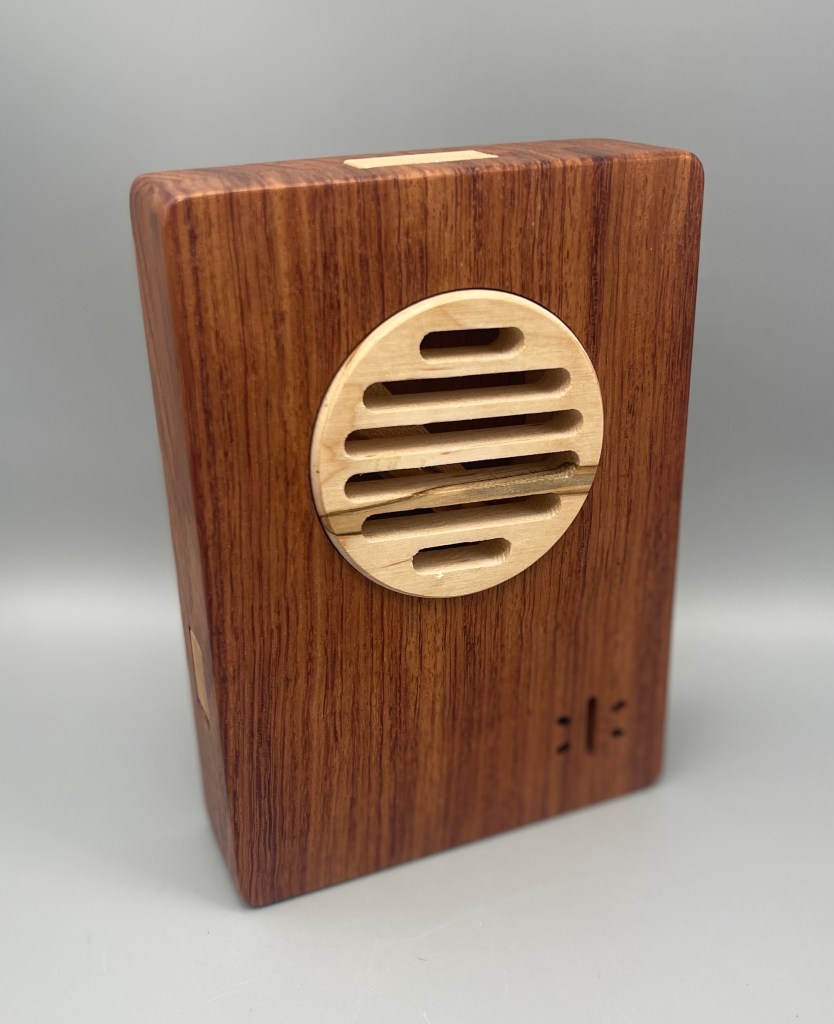
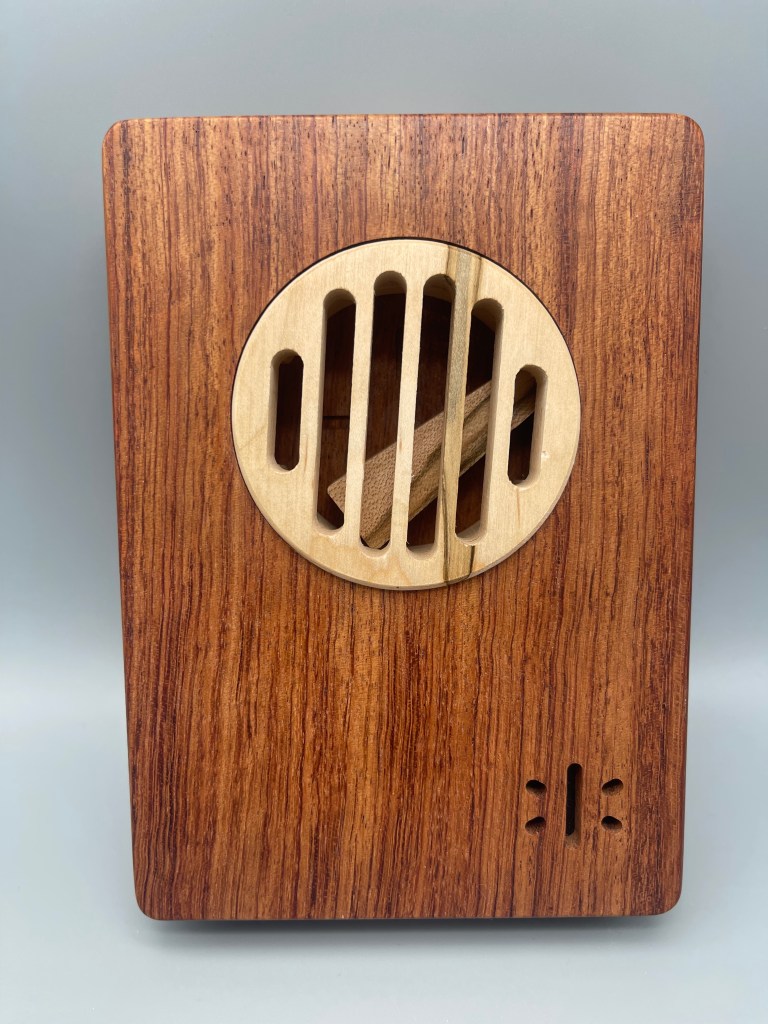
The puzzle consists of a rectangular block with a “speaker” at the top center that is able to spin freely, a loose block rattling around inside able to be seen through the speaker grates but not touched. At the bottom right is a symbol of some sort carved through the body, nothing special to be seen beneath. All five of the other sides show a single piece, flush with the puzzle’s body with no clear indication of what they are for or what they might do. None seem to do anything at first, with nothing more than an mm or two of wiggle room.

Some close examination and experimentation and I’m off. The central mechanism is itself quite unique and presents some entertaining trickiness to manipulate. It is possible to deduce much of the basics but it will lead you down some rabbit holes as you explore the various mechanisms that lay hidden throughout the puzzle.

I got stuck several times – this is not an easy puzzle, after all; those who may have thought Bad Moon was more pretty than hard will be pleased to find the reverse here: while by no means unattractive, with its quite lovely wooden sheen and beautiful grains, it may not be the prettiest puzzle Dee has produced (WMH and Bad Moon share that designation) but it is one of the best, in my more-or-less-humble opinion. And, yes, I know I get super excited each time Dee releases a new puzzle, but careful reads will find that this is not something I say lightly.

It is most definitely sequential discovery, with a touch of dexterity for good measure (not to worry – if I could do it with my shaky hands, anyone can). The solve is a puzzling journey that leaves you with quite a few bits and pieces by the time you obtain the Dimensional Electronic Divergence (DED) Chip that is your ultimate goal, and yet the reset is pretty straightforward and logical; as it took me a while to solve, I worried that my terrible memory would cause me great consternation when I was finally ready to reset it. But in the end, the pieces do for you what logic does not.

After resetting it, I immediately turned around to solve it again, already needing to work out a few sections that had become a bit fuzzy (I told you: my memory is terrible… didn’t I? Well, it is). There really is quite a bit going on – some sections may flow naturally but there were multiple walls that had me stuck for quite some time; on at least one occasion I managed to work out how to get past a particularly tricky few steps without the puzzle in my hands, which is always a neat thing (the same thing happened on WMH, my subconscious solving a section when I woke one fine morning).

Walter’s Radio is the newest example of Dee’s evolving design skills – he managed to come up with a unique central mechanism that allows the puzzler to navigate a number of interlocking locks and tricks in their search to remove the DED Chip that lay hidden somewhere within. It provides a darn good challenge with a great balance of difficulty and fun that I suspect puzzlers will thoroughly enjoy – I suspect I will not be the only one to say this is one of his top puzzles!

It’s a(nother) Karakuri Miracle Again! Holiday Boxes 2022

Karakuri Holiday Boxes 2022

It’s that time of year!

2022 Karakuri Holiday Boxes!
The puzzles sit silently, awaiting new friends 
when a big box of boxes arrives once again. 
A set of seven secrets from the masters of wood,
it's hard to wait but I know that I should: 
Each year they arrive,
so my collection can thrive,
once they've been opened on this holiday.
It's worth every penny,
for the boxes they send me,
give plenty of rambling for this puzzler to say.

Following on the last two years of comprehensive Karakuri holiday box ramblings (see 2020 & 2021), I will once more focus on the most important aspect of the holiday season: family? no! joyful gift-giving? no! Elvis?…… well, there’s always Elvis, watching over us all from high atop Santa’s sleigh: Ho, ho, thank ya very much. But no! Not even Elvis… ’tis the season for Karakuri Holiday Boxes!

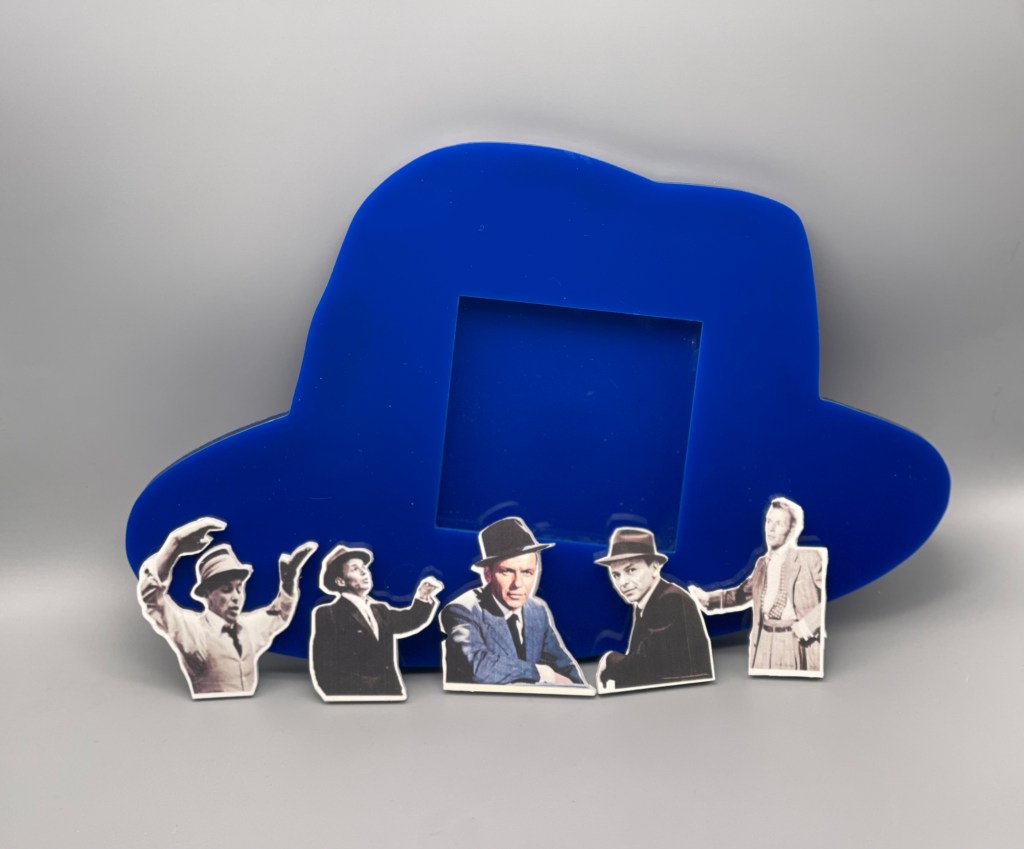
But first, a brief word on the wonderful Discord Secret Santa gift I received! A custom (five) Sinatra puzzle that is not what it seems!!! I am told that may be an even nicer version forthcoming but this was more than enough to have me laughing under the tree, much to the amusement of my teenage son. Using a fedora-shaped tray with restricted entry, there are five (yay!!!) Sinatras that must be placed within. Despite being rather terrible at tray-packing, I was able to solve this once I discovered something very cool (hells yeah Santa!); it helped that I was determined to solve the puzzle that sings out my namesake. Thank you thank you to my wonderfully generous and inventive Santa!

Not your ordinary packing puzzle!

And now…. onto the show!

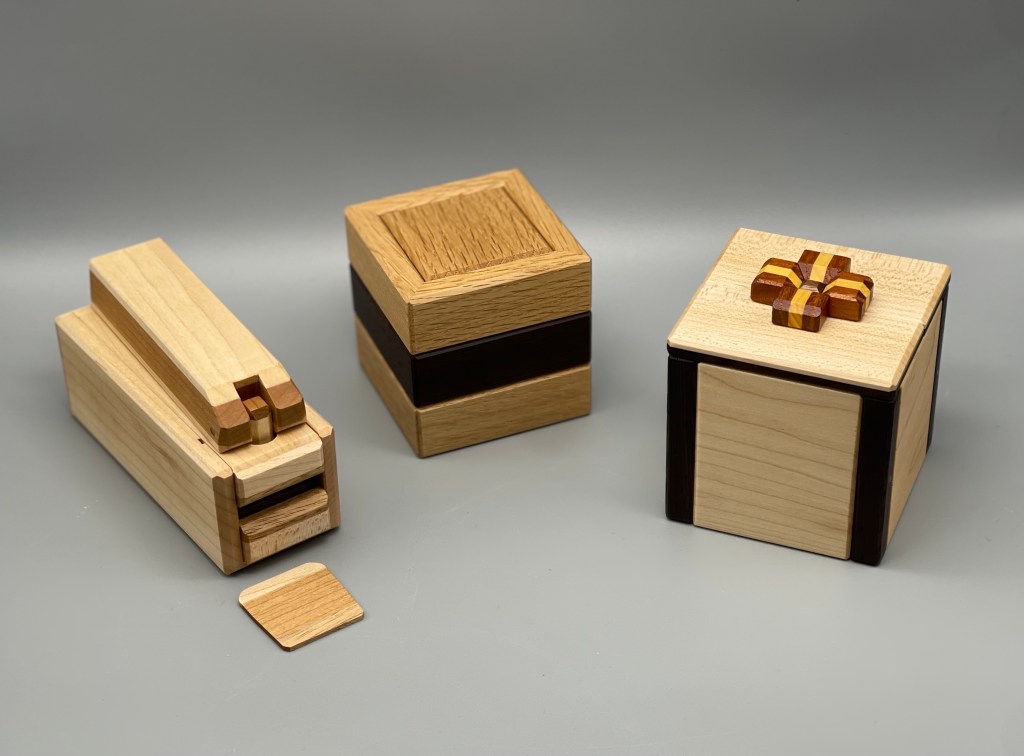
Akio Kamei – Sliding Panels

Kamei’s 2022 offering is a somewhat traditional-looking 3.25″ x 2″ box with two panels on the top and bottom. The aesthetic is one of the simpler of this year’s releases, with a trick that has grown on me since my first solve, which didn’t take me that long.

As always, the craftsmanship is superb (despite a somewhat nit-picky issue I have with it), with a smooth opening that highlights the box’s precise tolerances; it has that air displacement that signifies the craftsmanship we love about KCG. While I find the mechanism satisfying, Kamei’s box is outshone by some of the other boxes released, in my sometimes humble opinion. I do like the simple aesthetic, however, and appreciate the bit of misdirection it holds.

Kamei Holiday Boxes 2017, 2019 – 2022

Hideaki Kawashima – Origin Regression Cube

Ok this one had me stumped for quite a while! We are instructed to “find the stamp” (the maker’s hanko) within a rather classic looking cube with double lines wrapping around its faces. I managed to get through the first section of the puzzle pretty much right away and made what I was sure was clear progress through the second before I smacked into a wall it would take me weeks to overcome. I tried all sorts of things and yet nothing bore fruit until…. aha! A quite devious trick had prevented me from finding the hanko, something somehow both obvious and well-hidden (as some of the best tricks are).

This is the most “classic” looking box of the year (perhaps a bit smaller at 2.5″) and stands out with one part in particular that seems somehow to never have been done before. Going back and solving it again, I gotta say this one has grown on me more and more – the mechanism really is devious and ever-so-sneaky, making for an enjoyable tricky solve.

Iwahara Holiday Boxes 2019 – 2022

Hiroshi Iwahara – Karakuri Joint 2

Iwahara’s box looks similar to his Karakuri Joint box released earlier this year; it appears to be a miniature version at 3.75″ x 2″ (plus 1″ for the protrusions). However, do not expect to be able rely on the steps taken to solve the larger puzzle as it will not get you much of anywhere: despite having solved the larger one, I struggled with this, my brain insisting that the other’s solution must play a role. Moving past that and trying some less fun things I eventually stumbled across that elusive aha! and opened the box. While not amongst my favorites of the year, it does look quite nice next to its bigger sibling.

Osamu Kasho – Angry Lion

Kasho has once again brought us an adorable 2.75″ x 1.75″ animal box, following on last year’s deceptively difficult Little Shark. Angry Lion is similarly difficult, with an initial step that is as obvious as the next is subtle. This one would also take me an embarrassingly long few weeks picking it up and fiddling before hitting on the aha! that had eluded me. Despite its relative simplicity, or perhaps because of it, Lion is very satisfying and will be a fun puzzle to share, not to mention pick up and solve here and there (it makes me smile)

Kasho Holiday Boxes 2019 – 2022

Shou Sugimoto – Kusha Box

Sugimoto’s box is once again one of my favorites for the year, with a relatively simple mechanism that is elegant and just plain fun. Last year’s box was one of the best-looking and this year’s I found to be one of the most enjoyable, with an aha! that had me smiling.

I was able to solve it without too much trouble (although by no means right away) but then spent even more time re-solving it for kicks. This is likely to join the ranks of boxes that I like to pick up and fiddle with as its solve is just so darn satisfying! The aesthetic is simple but nice, cute at a rather diminutive 2.25″. It’s aesthetic allows it to sit well alongside puzzles like the Fluctuation and Reversible Boxes from last year.

Kasho Holiday Boxes 2020 – 2022

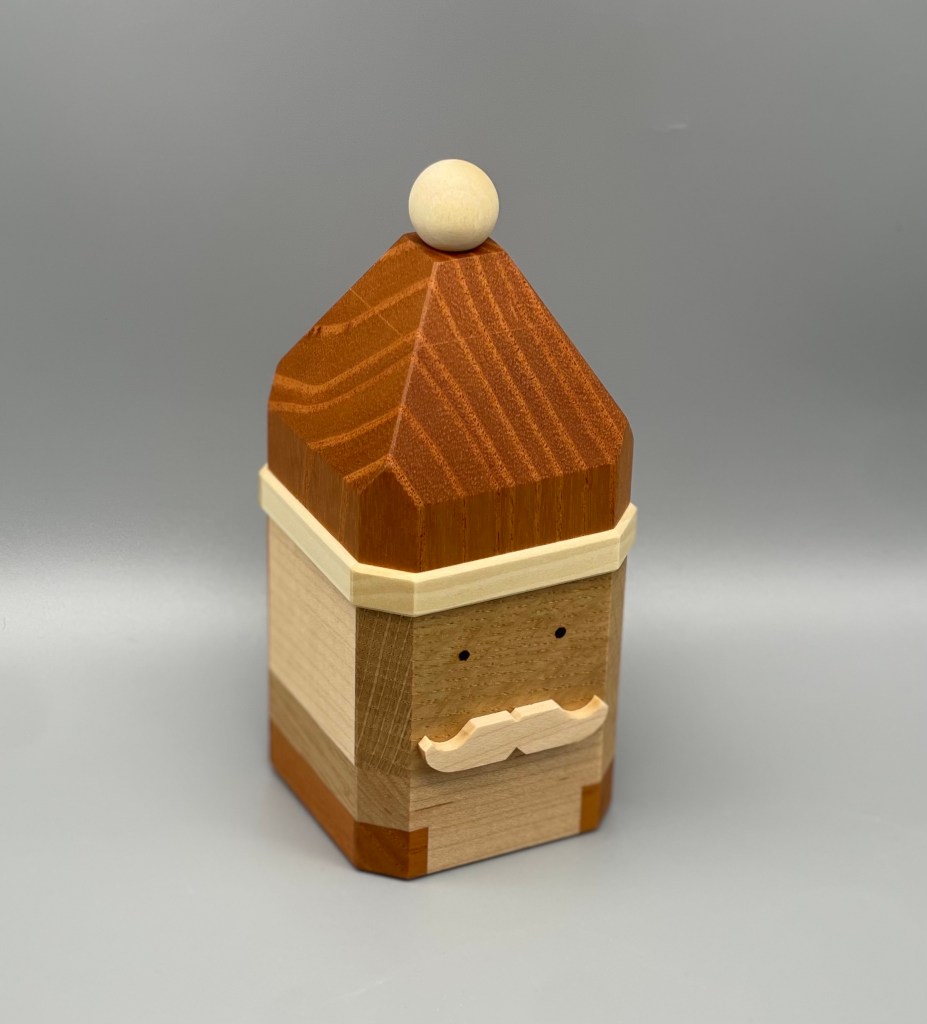
Yasuaki Kikuchi – Sensitive Santa

Sticking with the Christmas theme of the last three years, Kikuchi brings us Santa’s (beardless) head, somehow smiling merrily despite his unfortunate decapitation. The largest of this year’s boxes at 5.25″ x 2.25″, there is something rolling around inside to work with (or be distracted by). I found this to be somewhat tricky, making early progress before getting stuck going in circles, eventually discovering that logic would provide me with the aha! I needed to open it. A fun if a bit simple solve that keeps up with Kikuchi’s holiday tradition of Christmas-themed boxes.

Kikuchi Holiday Boxes 2020 – 2022

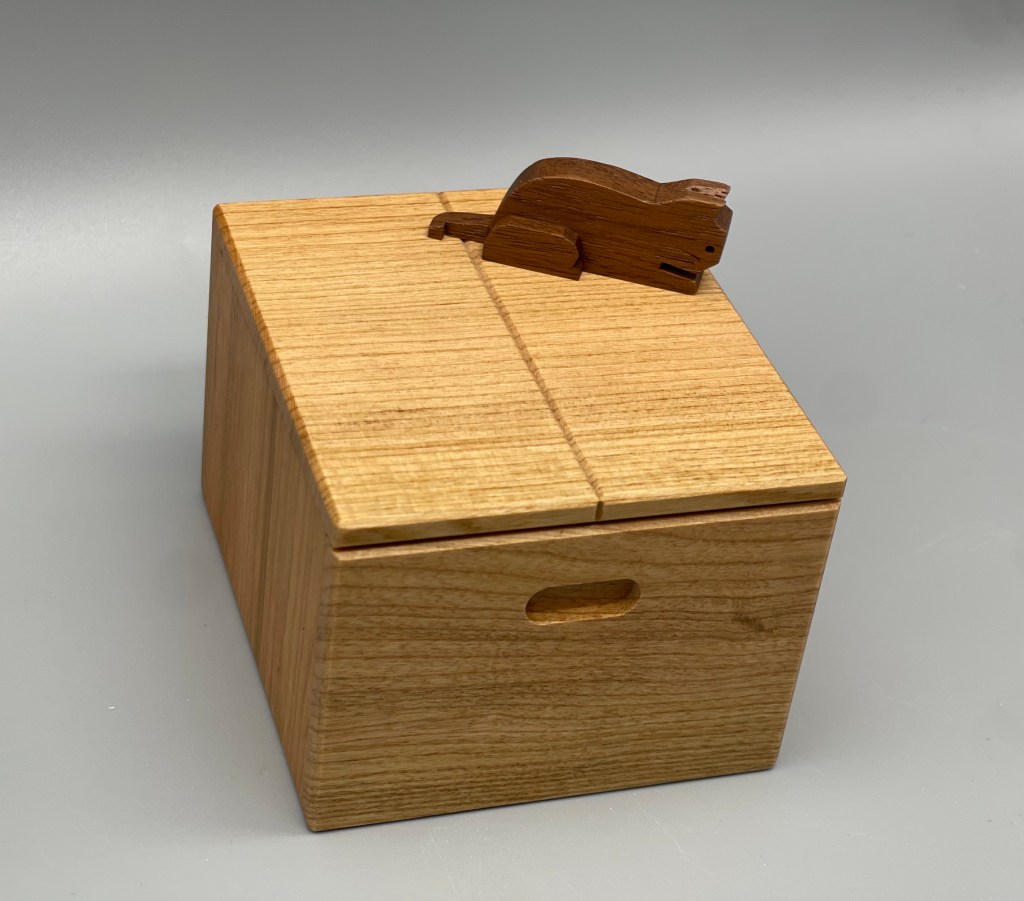
Yoh Kakuda – Cat & Cardboard Box

Yoh’s adorable box is another favorite, with a delightfully surprising solution that is sure to elicit a smile. This box has a solution that is sure to get re-solved numerous times. I had initially believed it was solved despite not reaching a somewhat obvious resolution in retrospect;. I do enjoy a puzzle that keeps giving after I’d thought it solved and I was happy to find there was a bit more to discover.

The box comes with some semi-shredded cardboard inside, hence the name, although such cardboard’s purpose is less clear (but hey, it’s thematic so whatevs). It is perhaps included for the cat atop of the box to play with and support the overall theme. Its size of 3″ x 2.5″ it smallish but not tiny, with a rather teeny yet cute widdle bitty kitty-cat. This was not the hardest or most original of this year’s puzzles but it is one of the most fun and is sure to be a must-have for cat-loving puzzlers. It was certainly the one to elicit the best response from my (cat-loving) NPSO, who found it adorably fun.

And that’s this year’s roundup of Karakuri Holiday boxes! If you didn’t get the ones you wanted, keep an eye out on Puzzle Paradise as we are sure to see them popping up in the coming months.

Sound’s Flex: Hex Flex by Kagen Sound

Hex Flex

Kagen Sound, 2022; 55 copies;
Ziricote, Pacific Maple Burl, Curly English Sycamore, Hard Maple;
6.2″ x 5.4″ x 2.8″

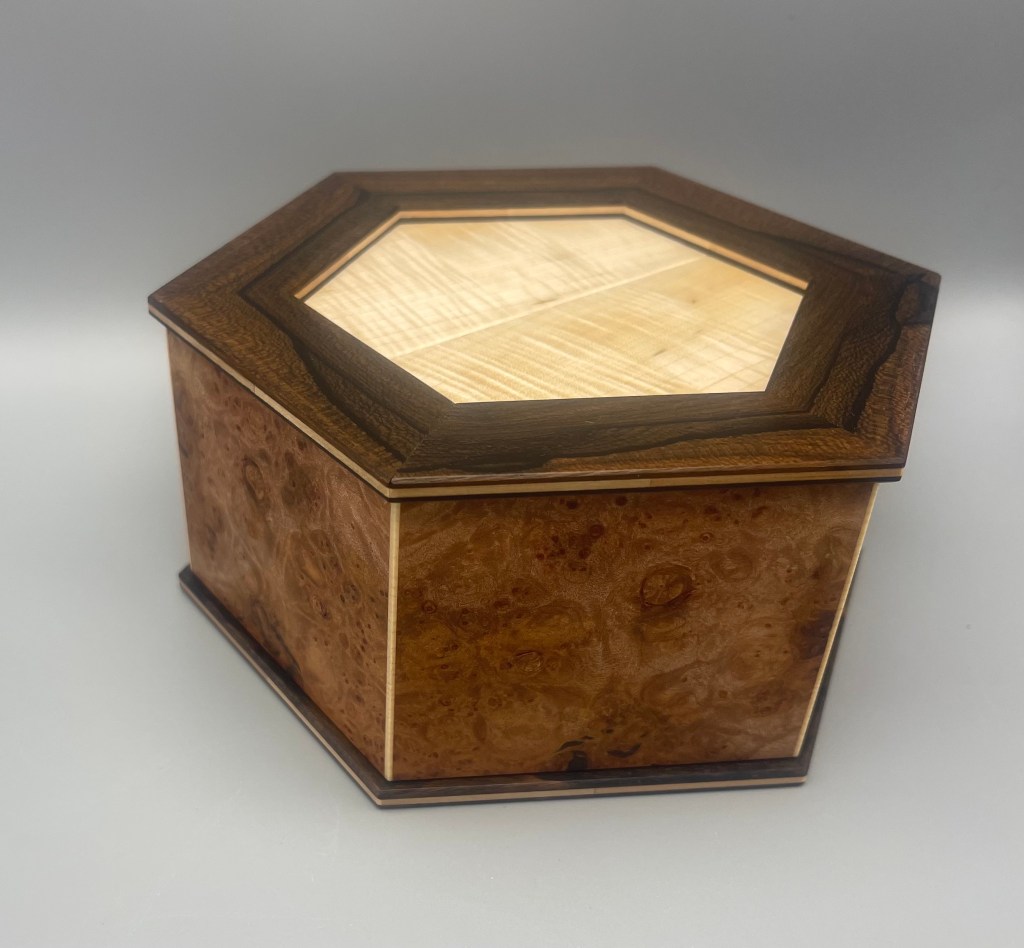
At the close of 2022, Kagen Sound announced the release of Hex Flex, a new box that sounded entirely too intense to pass on (not like it is ever easy with the beautiful boxes he creates): the description states that it has “the most unusual opening” of any box he has ever made! Um……. I am but human.

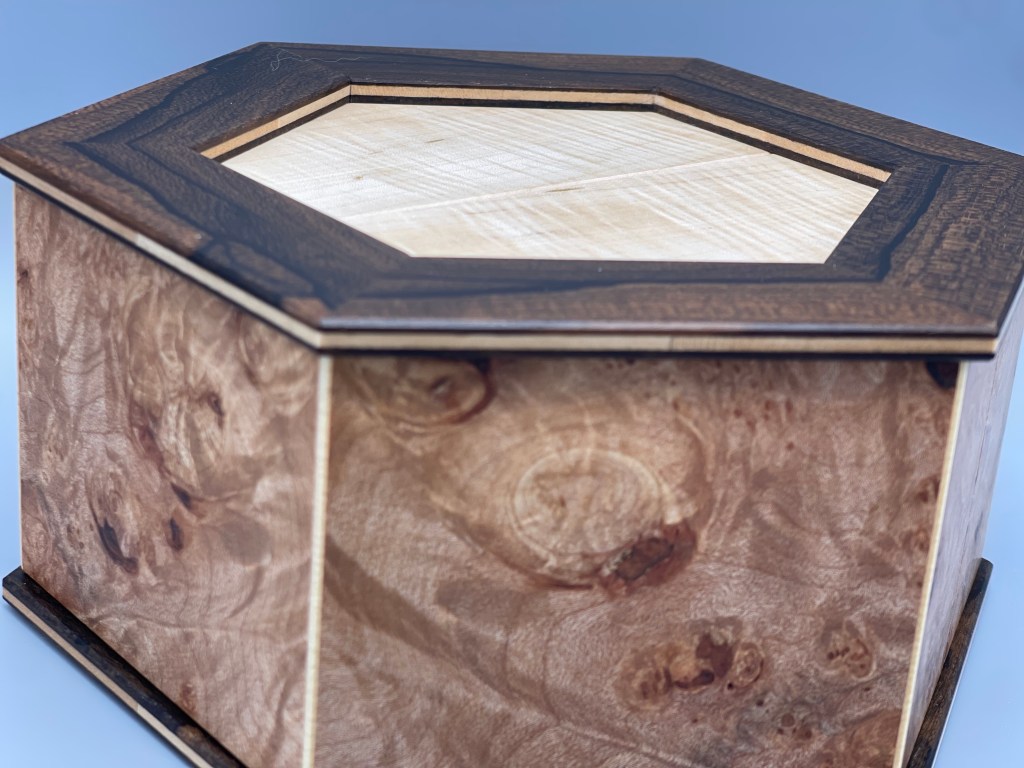
A few weeks later and an absolutely gorgeous box arrived: dark Ziricote contrasting with Pacific Maple Burl and Curly English Sycamore, the burl wood’s tones shifting between light brown and pink, and a slight trim to the lids that is a subtle nod to his skills. This is a box to drool over (as with many of his creations). Its size is similar to Plus Box, smaller than the Lotus/Caterpillar/Butterfly boxes; a perfect fit for two hands. The sides feel like butter and the box has an overall feel of solidity that helps with what comes next, for Kagen warns us that we “will need to take a leap of faith and overcome [our] worst fear about the box.”

Settling into the solve, I was able to manipulate a few things on the box, which allowed me to reason out what it seems like it should maaaaybe do…. but…. no way, that’s crazy…. it can’t…. should I? Kagen’s warning/advice is helpful as I try something no box should do and it works! Beautifully and perfectly! Wow…. but the box is not yet open. I needed to continue stepping out over the puzzle abyss, my faith in Kagen’s work taking me even further from what my cautious collector’s conscience is commonly comfortable with.

Having worked another bit of logic, I find my way to the finale and realize that Kagen has made a box that manages to do something truly amazing, executing a concept that most woodworkers would surely run from and doing it in a way that the solver realizes that it’s ok, there’s nothing to worry about. Kagen accomplishes what he set out to do, creating something stunning and shocking for us to enjoy.

Shades of pink

Solving and re-solving it multiple times, I have to shake my head in awe at the craftsmanship and ingenuity represented by the work. Kagen continues to astound and push the boundaries of the craft… it may not be a singing desk but it is still one of the best boxes I’ve had the pleasure to solve, not to mention one of the prettiest, and quite certainly the most daring.

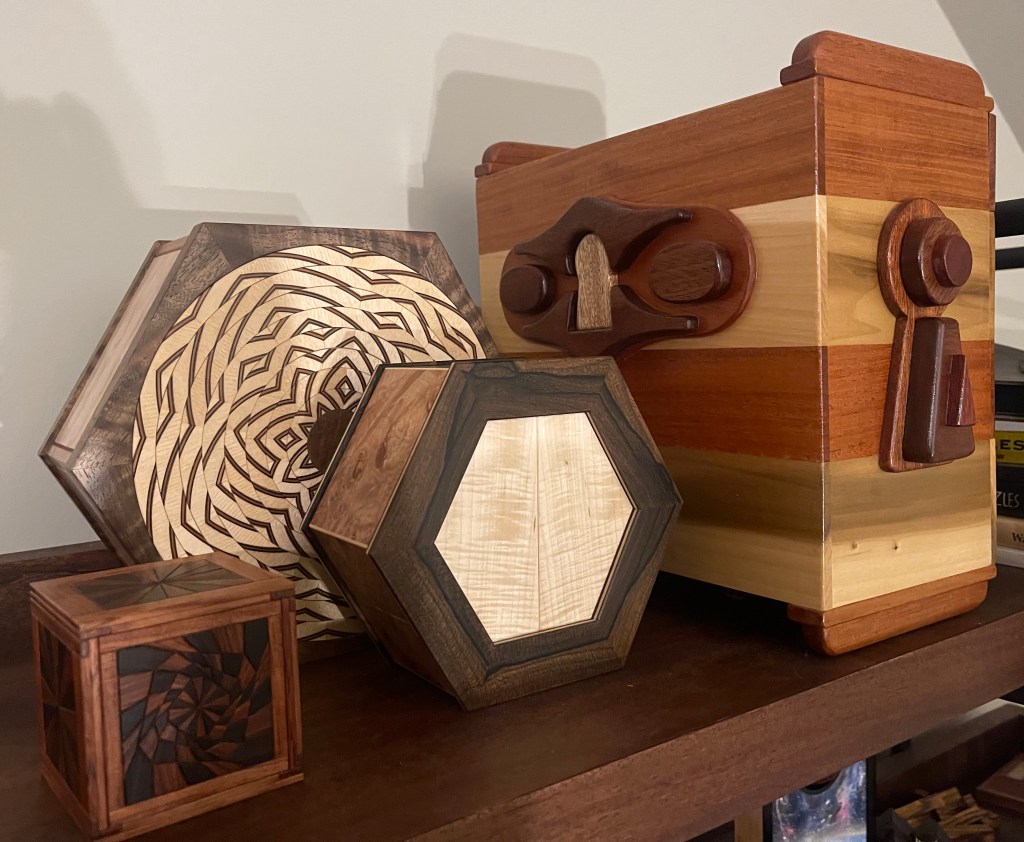
Left to Right: Clutch Box, Butterfly Box, Hex Flex, Dark Fairy Door