Packing It In 5: A Good Day to Pack Hard

First, we had to 
Pack Hard.
Later, it was time to
Pack Harder.
The Puzzles resisted and we had to
Pack Hard with a Vengeance.
It still wasn’t enough and we asked ourselves if we should
Live Free or Park Hard
Finally, it’s a Good Day to Pack Hard

John McClane

Coin Wallet, Perfect Entrance, 3L x 2

Designed by Koichi Miura, Produced by Mine

Packing puzzles, as a genre, can be quite diverse. All the great artisans have produced great examples of this fact: Stephan Baumegger, Yavuz Demirhan, Tom Lensch, WoodWonders, PelikanPuzzleMaster has 173 tray and 3D packers right now and NothingYetDesigns is an excellent curator of both 2D and 3D packers. RobsPuzzlePage is still loading all of its numerous examples 🙂

There are a number of designers whose names have been or should be written on these pages – I think even Osanori Yamamoto may have somehow managed to completely evade me thus far (except for a great(?) moment in my parody of Baby Got Back). Another that seems to have escaped my serious gaze thus far is Koichi Miura. Most of my puzzles by him have been beautifully produced by Mineyuki Uyematsu (MINE) and an excellent trio of puzzles recently added to my collection serve as great examples.
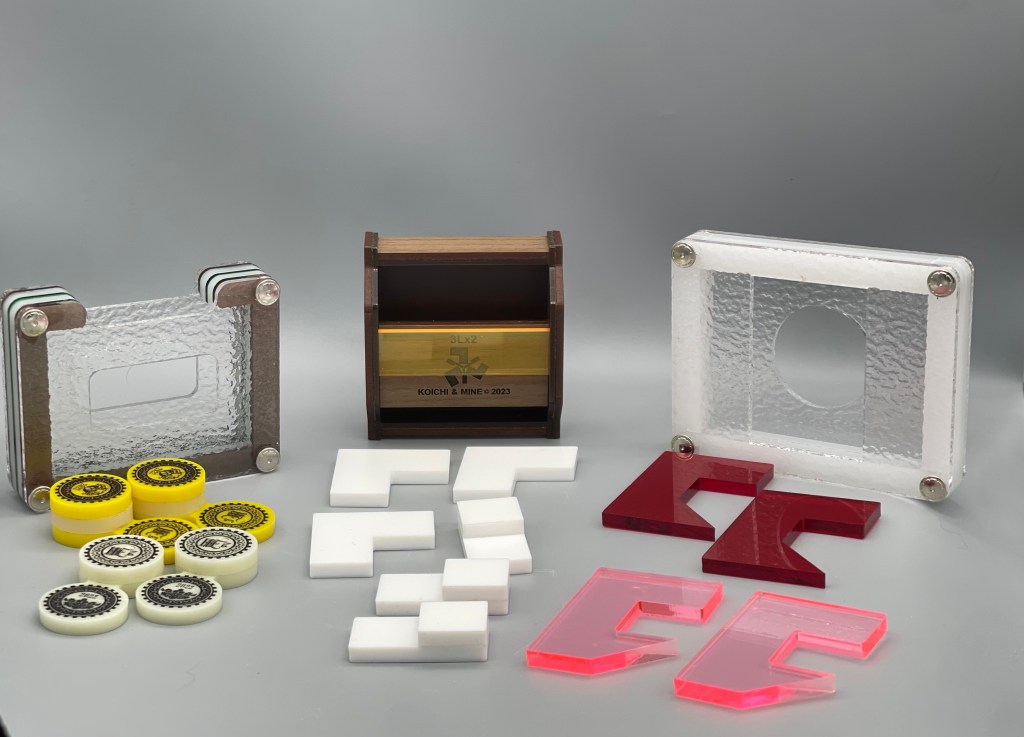
Coin Wallet, 3L x 2, and Perfect Entrance

Coin Wallet

Coin Wallet is a restricted entry 3D packer that consists of 5 multi-coin pieces and a “wallet” in which to place them with a restricted opening at the top. MINE has done an excellent job of producing the coins, apparently not such an easy job to do: there are three layers of “coins” inside and the yellow pieces are 3 and 1 vs. the white’s 2 and 1. Placing any three coins inside is trivial but that fourth one….. it seems like it should be easy but, as with many a good packing puzzle, it just isn’t.

After a good amount of trial and error, getting to know the pieces and what allows what, I began to get a sense of how these would fit together and what needs to happen to allow them to do it. Still, the temptation to try and force the pieces kept rearing its ugly head until I stepped back and really thought about how this will work. That’s a big part of a good packing design imo – logic and reason will ultimately win out over trial and error, getting you over the finish line after t&e gets you past almost all the hurdles.

There is something so satisfying about finding how that last piece goes in, ultimately smoothly and without any trouble or resistance, once it is done correctly, that is.

Perfect Entrance
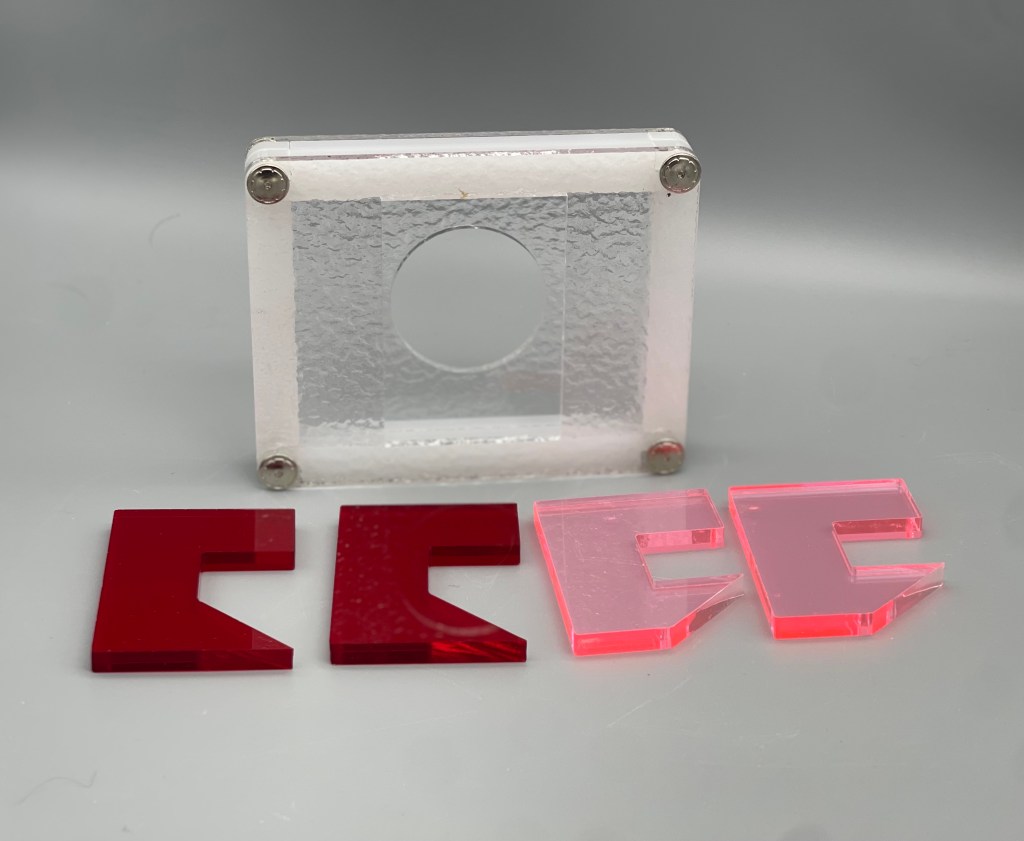
Perfect Entrance’s has two sets of identical pieces with a frame that will allow any single piece easy access in its front entry. A finger hole in the back helps with removing the pieces, which you will likely do many times before successfully solving it. Again, getting three of the four pieces is simple but that fourth one…

I had originally solved this one at IPP41, where it had been entered into the puzzle competition. It was in the top-10 for the Puzzlers’ Award, earning universal praise as far as I could tell. Fortunately, my terrible memory meant that re-solving it was a non-trivial exercise when my own copy arrived a few weeks later.

Although it might seem that PE could perhaps be solved just through trial and error (there are only so many permutations that are possible), there is more going on than just order. Any anyway, that is both time-consuming and not all that fun – rather, stepping back after some experimentation it is possible to see how the second layer of pieces might be permitted entry. With an aha!, I saw how it must work and lo and behold that last piece was no problem at all; everything fits perfectly when you know what needs to be done. So very satisfying to feel that aha! become reality.

3L x 2

3L x 2 is another Miura/MINE puzzle, this time featuring two sets of three identical pieces that must fill a frame with a restricted entry – what really sets this apart is the moving panel that allows alternating entry into either side (but not both at the same time). This one took me much longer to solve; perhaps it was the extra pieces or the moving piece that slowed me down. Regardless, I would struggle with this one for quite a while, trying and failing a number of ideas after the experimentation phase ended.
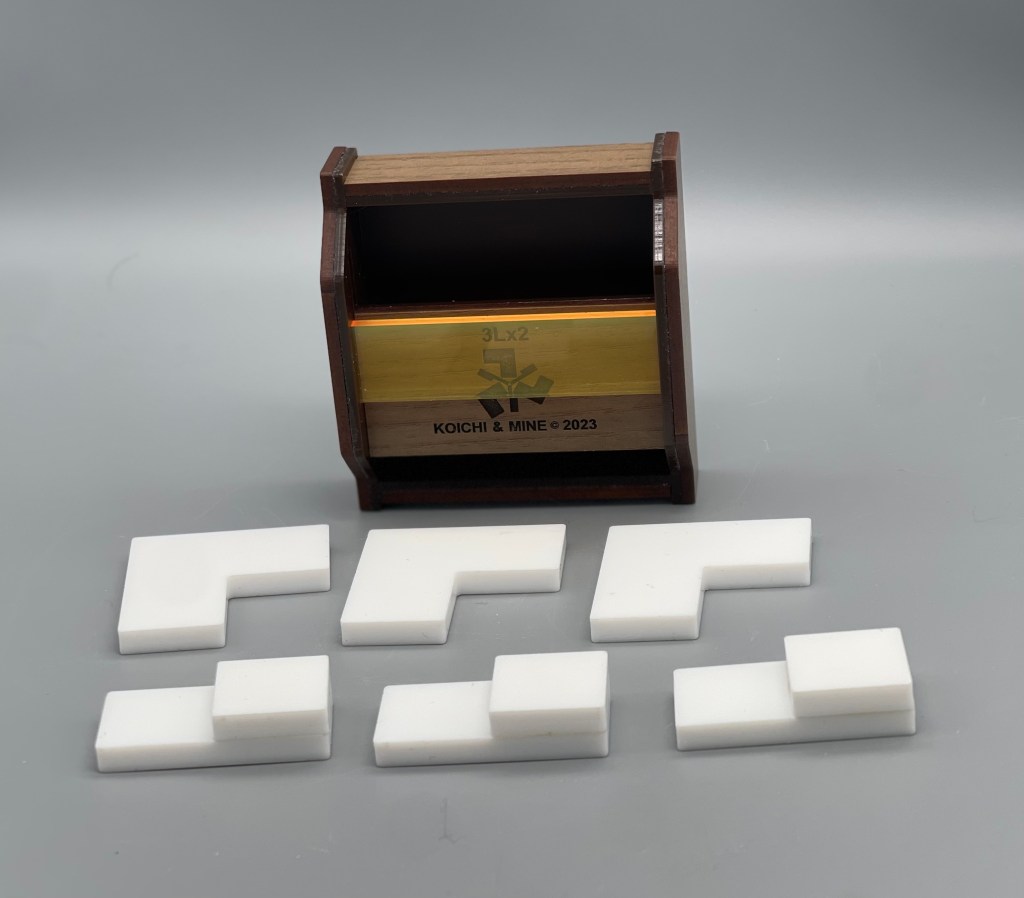
I love packing puzzles with dynamic elements (see my still unsolved Everyday Holiday puzzles by Yavuz Demirhan) and 3L x 2’s sliding entry adds some intrigue to the puzzle, making for something particularly tricky. I spent a LOT of time on this one – there are a good number of possible builds but it becomes readily apparent that many of them will simply not be possible.

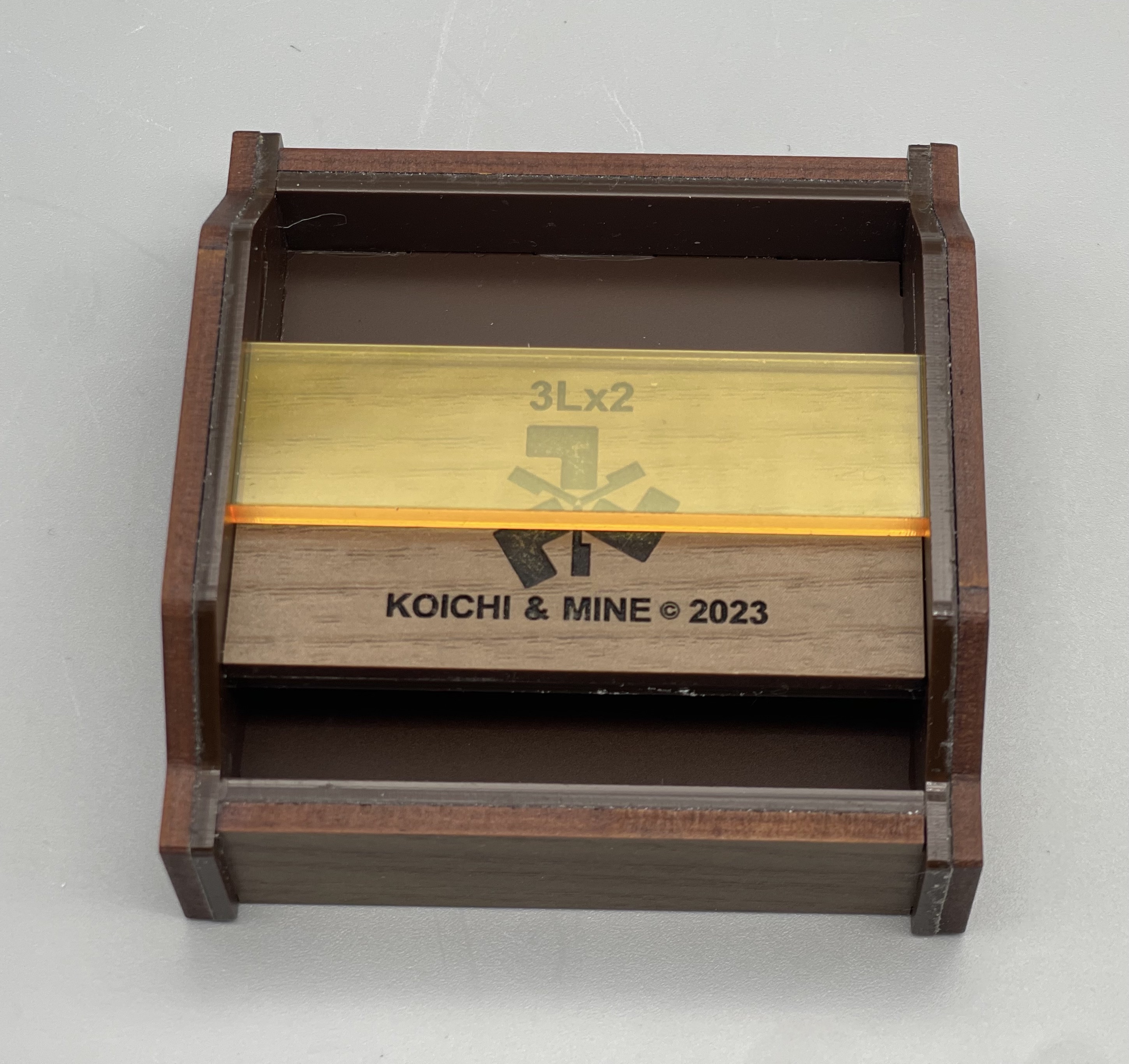
Dynamic Restricted Entry

Once I had a good sense of what would and wouldn’t work, I spent a long time trying different builds outside of the frame, attempting it inside when it seemed like I had a lead. Eventually one last aha! hit and I was able to get that last piece in! Huzzah!


Packing Puzzles are a great example of how something that seems so simple can pose a particularly problematic puzzling experience. Stay tuned as there might just be a day when we need to Pack Hardest (or something).
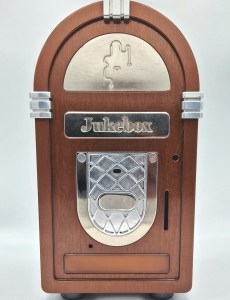

Puzzling With Myself: Jukebox by MoonTree Puzzles

Jukebox

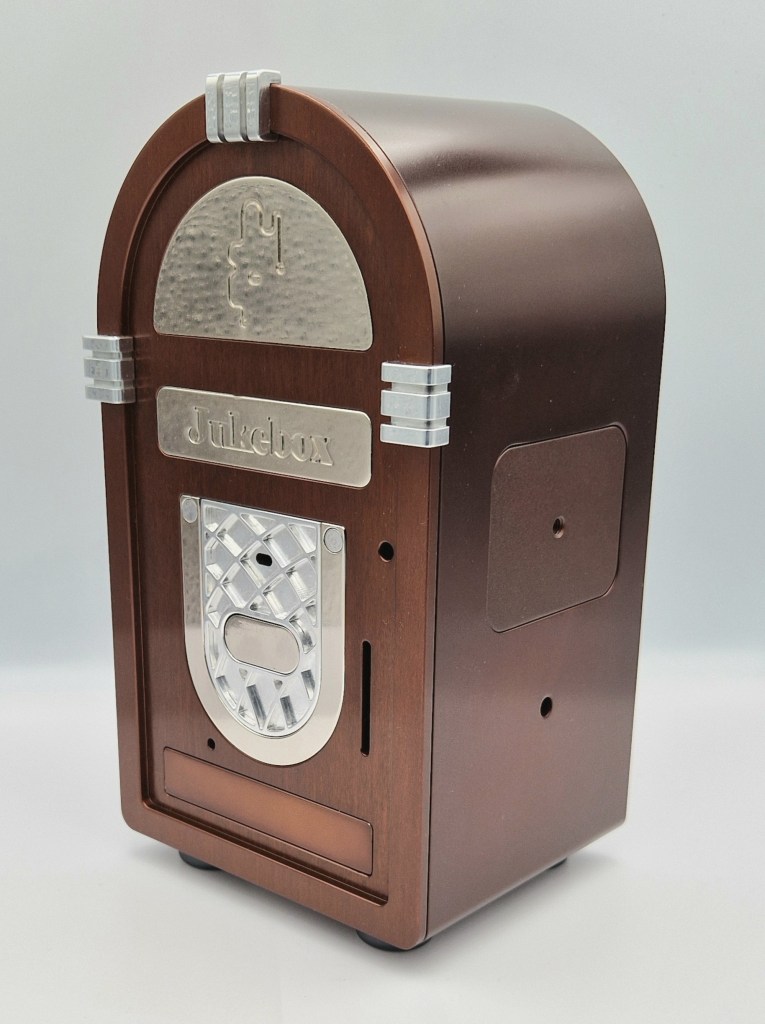
Daniel Czuriga and Tibor Folytan (MoonTree Puzzles), 4.75″ x 8.5″ x 4.1″, 6.5 lbs

In the puzzling world, a few years can go by quite quickly – I think it was back in 2020 that Daniel Czuriga first shared with me his idea for a new sequential discovery puzzle that would take the form of a jukebox. Daniel never stopped – periodically checking in with an update or a proto pic to share (I recall a prototype pic in laser cut wood that especially piqued my interest). Such interest was further undeterred as I know his taste in puzzles is quite similar to mine and so I suspected that whatever puzzle project was in the works would be something I wouldn’t want to miss out on. Still, a first puzzle from anyone could go either way, and I knew how ambitious this particular puzzle promised to be. When Daniel told me he had his two IPP copies ready to go, I was oh so grateful to have the chance to solve a copy before it went off for official IPP judgment. As he was submitting for judgment, he asked that I not post until after the party (go over to Boxes & Booze to check out his post as well). I should mention that it deservedly won Jury Grand Prize and as you will see below, I believe this was well deserved.

Going back to a few weeks ago: so it was that a large box arrived, containing an expertly packaged metal jukebox, with an absolutely lovely brown to offset its aluminum sheen. Frankly, it is gorgeous, resembling a classic jukebox, miniaturized to about 4.75″ x 8.5″ x 4.1″ from its place of honor in Ye Olde Soda Shoppe but still significantly substantial at close to 6.5 lbs. It stands on four small legs, with some holes and what-not adorning its sides. After admiring it for some time, turning it this way and that as I poked and prodded, I found something that did something, affording me a couple early steps before hitting my first of several walls. After playing around some more, I developed an idea of what needed to happen and set about accomplishing the task.

Eventually, after a fair amount of stops and starts (and stops and starts), I was able to get somewhere new; I was already working with some tools and the next step was fairly apparent, leading me to the first of several compartments. After examining the fruits of my success I stayed stuck for some time until an aha! hit – I jumped this wall, finding that a quite cleverly crafted clue contained yet more surprises. Yet again, success afforded me some fruits to enjoy, as another wall faced me. I was sure there must be something I was missing (there was) and it took a good amount of experimentation before I found the well-hidden secret needed to progress. This would continue through step after step and compartment after compartment until I found the “satisfying ending” to which the description refers, which does little to express the originality and joy of the puzzle’s finale. I not only laughed but ran to get my lovely and typically puzzle-indifferent NPSO to show her what I had accomplished: the finale is cool enough to elicit a smile from even the most jaded of non-puzzling partners.

Jukebox is most definitely sequential discovery, with tools and tricks that lead you on a journey that steers close to its theme; the jukebox is not just a concept but is integral to the puzzling itself. Puzzles that look like something do not always do this – sometimes the aesthetic is purely aesthetic but not here: Jukebox relies on multiple points of thematic reference that keep you close to its concept throughout the solve.

After solving, I set about the reset, which I found to be extremely intuitive. I would solve and reset the puzzle a few times before shipping it off to be judged by the lucky band of IPP-ers chosen for the task. I will be pretty surprised if it doesn’t elicit the same level of joy I was fortunate enough to experience (which it ultimately did).

Daniel and his partner, Tibor Folytan (together: MoonTree Puzzles) have made something that is fun and unique, with a complexity that challenges but never annoys. Any time a puzzle’s description contains the word “dexterity” I tend to get a bit suspicious – this is not at all my strong suit and I worry that such steps might frustrate me. But this never happened with Jukebox; that particular section had sufficient clues and feedback that I was able to enjoy progressing through it, never feeling compelled to smack my head (or the puzzle) against a wall.

I am excited for this puzzle to be released into the wild – Daniel has put so much into making this and we puzzlers are the fortunate beneficiaries of such care. He has worked hard to try and keep the cost down so that more puzzlers have the chance to enjoy it. Because that is really what sits at the base of this project: the desire to make something cool for us to enjoy. With the amount of hours put into designing and prototyping and tweaking over a period of several years, this is assuredly not the best way to make a buck; rather, this is a project that shows puzzlers’ love for the medium. I sincerely hope that these two designers find the time to bring us a follow-up (first they need to actually begin producing these for sale – I know I will be ready to pick up a copy despite having already solved it because this one is a keeper). Be sure to keep an eye on the #upcoming-Puzzles channel on Discord and/or on their website: http://moontreepuzzles.com.


Thar She Blows! Abraham’s Whale by Idan Shvartz

Abraham’s Whale

Idan Shvartz,

The initial release of Abraham’s Whale into the wild somehow slipped by my puzzle radar – I saw this intriguing locked metal box popping up on Discord and lamented the reality that life stuff had distracted me from what really matters: puzzles. Fast forward several months and I manage to get my hands on one… I was not disappointed.

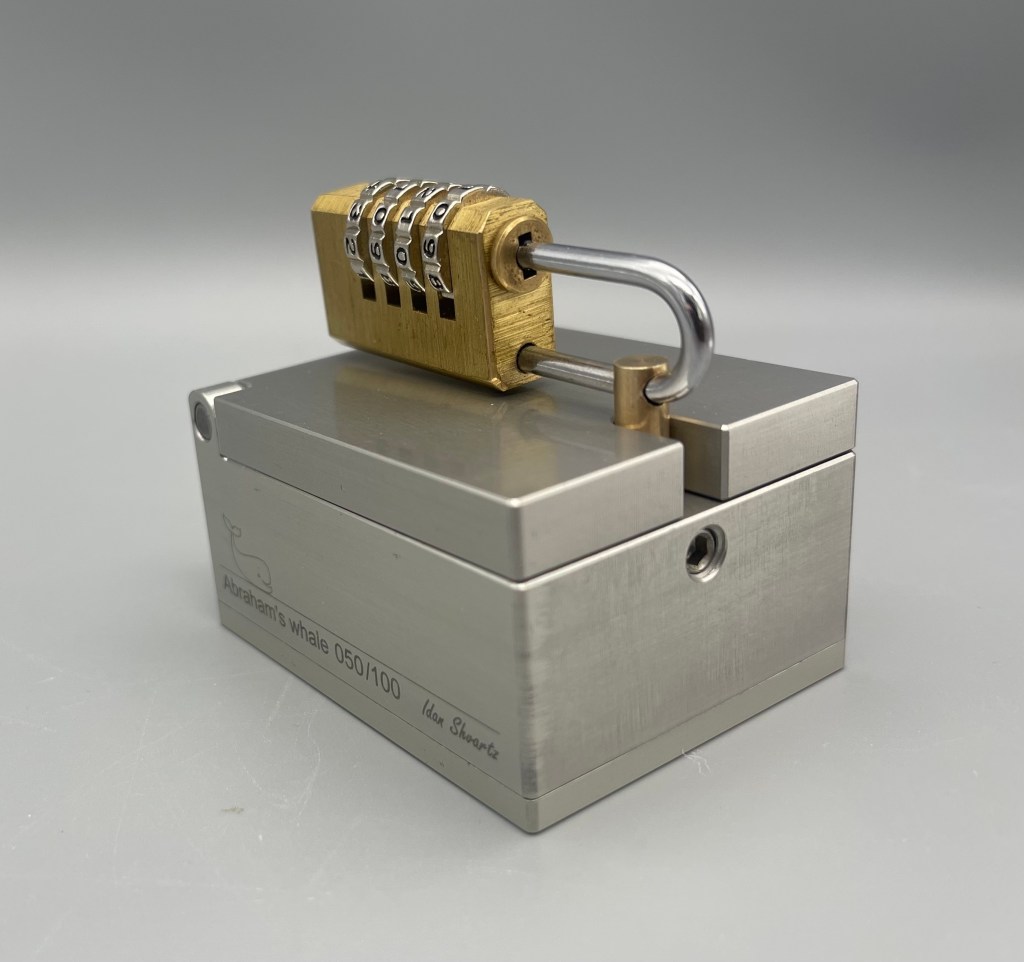
At 2.5″ x 2″ x 1.5″, the puzzle is not overly large, fitting perfectly in your hands. There are various holes on the bottom and sides but, apart from some noise, I did not initially find anything that seemed to do anything off the bat. I, like many did with this puzzle, needed some guidance getting started – the first step really does not do the puzzle justice, starting off with its weakest element. However, this quickly gave way to the satisfaction of a darn good sequential discovery puzzle as I dove in; the puzzle does a great job at directing you through its various stages, the appearance of tools or other developments helping to guide you along.

This is most definitely SD, with a rather lengthy journey in which your discoveries must be put together in novel and exciting ways. There is some serious science sitting at the base of several steps; if you did not know how some things work, you will by the end (this is rather vague of course but once you’ve solved the puzzle you will know what I mean).

The puzzle brings in a number of strategies; typically what may seem burdensome has a more graceful way of being accomplished, if you stop and do some of that thinking thing for a moment. A bit of dexterity may come into play, but overall the puzzle does a great job of getting you to figure out what you have and how it can be used to do what needs to be done.

I needed some help at a couple points (not that surprising if you’ve ever read this blog), one section posing a particularly significant amount of trouble – as is oftentimes the case, it turned out I was basically correct in what I was doing and just needed a bit of encouragement and clarification to pass through to the next section.

There are several strong aha!’s along the way, with some great moments of satisfied success as I figured out what was happening and what I needed to do. This was a puzzle that definitely required my awesome-sauce puzzling headset (combo headlamp and magnifying glasses, bruh) to seek out and discover new developments as I worked my way through.

Eventually, I did it! The whale was free! Huzzah! After an appropriate time basking in my brilliance, I set forth resetting it. The reset is mostly straightforward, moving backwards through the puzzle. Somewhat unsurprisingly, I still managed to screw this up a couple times, proceeding out of order and needing to backtrack. The good thing is that this really forced me to appreciate how the various mechanisms work and how different elements work together to create a fun, puzzling experience. One part of the reset was especially tricky and I am not ashamed to admit that I used an external tool to help myself out (is it cheating if it is just on the reset? whatevs.)

Amazingly, this is Idan’s first foray into puzzling; he is working on his follow-up and I for one can’t wait to see what he comes up with!

Going in Circles: Orbit and Uplift by Dee Dixon

Welp, Dee as done it twice more with his most recent releases, Orbit and Uplift: I got there eventually but it took me quite a while to do it, with a nudge or three needed along the way (although I suppose I find that just talking about what I am doing is sometimes the most helpful part – more often than not in the process of explaining where I am and what I’ve done I clarify what I haven’t done and aha!…. that or I am just trying to make myself feel better about frequently asking for help from other, better puzzlers).

Oddly, both of these totally different boxes feature a freely spinning center piece in a frame – but that is where the similarity ends (other than Dee’s excellent craftsmanship, as always). Both look and feel great, as with any of Dee’s work in my sometimes humble opinion; Uplift has received some aesthetic comparisons to Bad Moon, which I can see, but really they both have that Dee look you can’t quite put your finger on but can still readily see. Uplift is especially gorgeous and I suspect that producing it is particularly no easy task. Neither box is an overly long solve but both had me stuck for quite a while, so my experience with both was nonetheless quite long… and of course they look great alongside their ever-growing set of siblings – delightfully, Dee definitely didn’t disappoint.


Orbit

In the hours (and hours) I spent going in circles with Orbit, I will admit there were times I was certain the solution must be too blind… I was convinced I was going to be annoyed by the solution but in reality this was not at all the case once I actually figured things out. You are given plenty of information and just need to bring some patient observation to make sense of things. It is extremely unlikely to just randomly open this box, although there were times when I was sure I was close (and found out later how wrong I probably was). This is the kind of puzzle where you really need to work out what is happening to be able to reach the solution. There are many puzzlers out there better at this than I, who may well have had an easier time, but I really had to struggle to get there.

Eventually I made some sense of the box and was sure I could solve it only to be confronted with a problem I eventually worked out with a laugh. Again, the information was there if I stopped and thought about it (and I appreciated how Dee incorporated something that in another puzzle may have felt disappointing but still managed here to feel novel… it’s hard to say more without crossing the line into SpoilerLand (which I’d say is like CandyLand but that would give too much away)).

Having solved Orbit I can now get through the solve in a few minutes – a testament to how not-really-at-all-blind the puzzle is, once you’ve worked it out; in my experience, a truly blind puzzle can stump me even once I know how to do it. Here, there is no way to get lost once you know where you are going.


Uplift

Uplift goes back to Dee’s SD roots with an SD-lite solve in what is an absolutely stunning circular “box.” It had me stuck spinning myself nowhere on more than one occasion, with a particularly delightful aha! at the start. I had spent a few hours (yes, sigh) going in circles, doing everything I could think of… everything but the one thing that would actually do something. I found a bunch of feedback that did nothing more than to distract me from finding my way into the start of the solve and when that aha! hit… you just gotta love that dopamine, bruh.

From there, I got stuck one or two more times but was able to get through the rest of the solve in a couple focused sessions. Dee messes with us as the puzzles progresses, causing me to fall down a rabbit hole or two along the way. Fortunately, I was able to get back on track without help, all by my big boy self. Overall, it was not a super long trek to the end once I got past that first wall; I managed to hit that last step with a laugh when I saw where Dee goofs us once more.

I know of one rather vocal critic of Uplift, someone who I suppose solved the puzzle quickly and felt it should have been longer (not a Karakuri collector, I imagine). To me, this first leaves out the importance of respecting the difficulty and complexity of physically producing a beautiful box, which is much of where the value of a collectible puzzle is derived. If you only care about how long it takes you to solve something, than you may not appreciate puzzles like Karakuri’s, for example, which, to some, may be solved quickly – I care more about the elegance of a solve, the flow from step to step, how it integrates with a novel aesthetic built with immense care… although I suppose it may be easy for me to say, since I rarely solve anything quickly (I never claimed to be smart… just circumlocutory and loquacious 😉

But, really, I do not want to give the impression that Uplift is a short puzzle; I don’t like giving a step count unless asked but, by my count, the length of the solve is about average (in terms of steps) for Dee’s work. Most important to me, I was never disappointed with my experience solving it. At the end of the day, I may have spent more time on Uplift than on Walter’s Radio, which does feature more steps (and is one of my favorite Dee boxes) and seems to have stumped some puzzlers as being too complex. Radio is the harder puzzle I think, but Uplift really got me looking in the wrong direction on more than one occasion, which just goes to show you how random the puzzling experience can be and how subjective our perspectives inevitably are.


One of the great things about Dee’s work is that he gets a lot of feedback before releasing puzzles – between prototype testers and a few early releases, he gets a lot of information before calling anything done, oftentimes even giving the public a look into the puzzle from a blogger or two before public release (not that you should listen to anything those guys say, cough cough). It should be no surprise that his puzzles are rarely, if ever, the subject of controversy or contention (and oftentimes the subject of confusion).

Dee has brought us two more beautiful and tricky puzzles that hit different price points and scratch different itches, both leaving me with the lovely feeling of success that solving a good puzzle can provide. Somehow, Dee is apparently putting the final touches on yet another puzzle so I may be back soon… assuming I can solve the darn thing.

If My Words Did Glow: Ripple by Peter Canham

Nary a day goes by when no-one asks me: “Hey, 5S, where the heck ya been the last few months?” Well, life happens and writing fell to the back-burner for a time. But this is not to say that my puzzling itch went anywhere – I’ve still been FOMO’ing my way through my bank account and struggling with the (many) yet unsolved puzzles in my midst (I’m looking at you, Orbit… and you, pretty much every Osanori puzzle I own).

There has been some truly great stuff to come out since the Nashville Puzzle Party (I realize that I haven’t posted since then… Wtf?!) but my favorite (solved) puzzle since then has got to be Peter Canham’s Ripple. After patiently waiting a year or so, I got an email that it was my turn! Cut several weeks ahead past some USPS shenanigans (and absolute kindness from Peter in his quest to make sure the puzzle got in my hands) and it arrived, safely packed in some laser cut plywood.

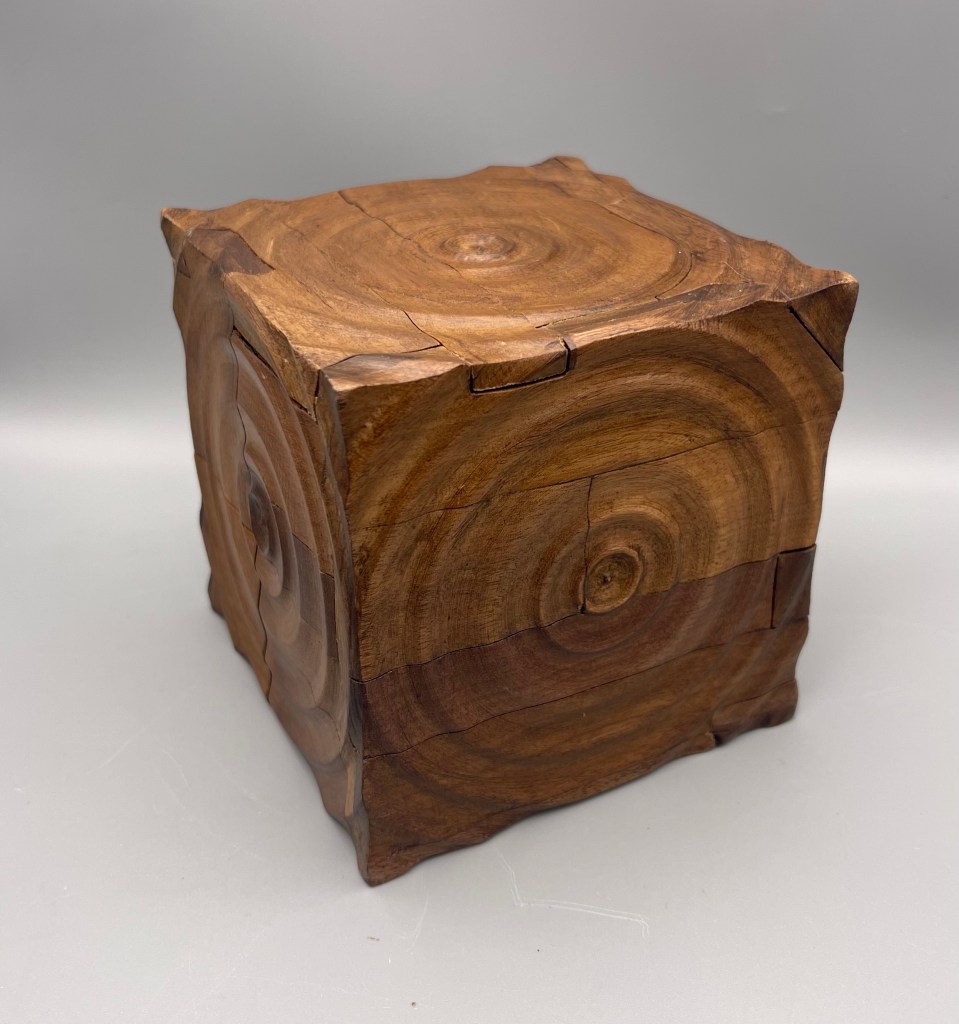
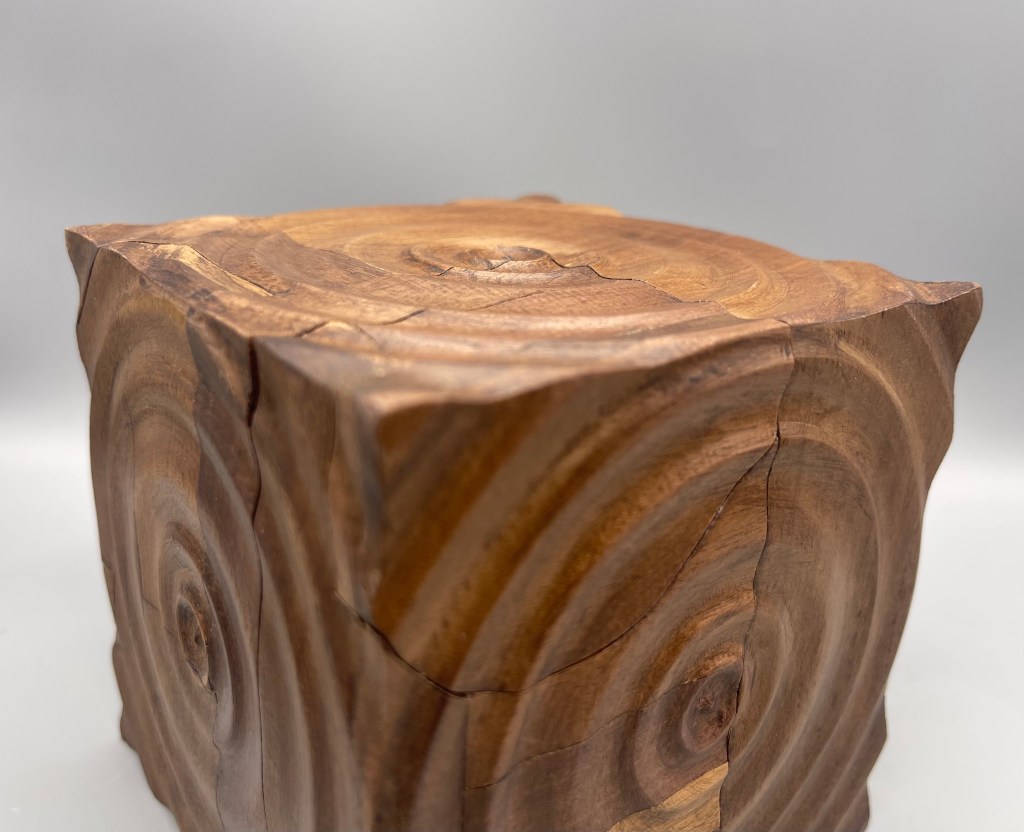
Ripple’s aesthetic mirrors its name with each face of the 4″ walnut cube featuring a series of rounded, concentric circles. These are broken by all sorts of strange and seemingly haphazard lines, giving you a hint of the complexity to come – at times these lines might prove helpful but they somehow still managed not to spoil some wildly unexpected moves. In Peter’s (comparatively succinct) words, it is “a box that was like a sequential puzzle but was non linear i.e. one move did not necessarily lead to another but possibly two or three. Like ripples in a pond interacting with each other. The biggest design challenge with the ripple box is that as the moves bifurcate the mechanisms start to interfere with each other,” resulting in a lovely cube that is seriously tricky.

After a moment appreciating the look and feel of the box, I was off: I was able to find something rather quickly but it seemed to lead nowhere, leaving me in circles that led to other not yet helpful discoveries, as I spent at least a couple hours over several days without making any real progress. Finally, after clarifying an assumption or two with Mr. Boxes and Booze, I found something odd and quite unexpected. And there I sat once more, staring into the next of what would be several walls that would lead to quite a few satisfying aha! moments. Eventually, I reached the solution and found Peter’s signature alongside the series and batch number. After basking in my brilliance for a bit, I reversed course, resetting the box and going back through the solution once again, appreciating how the moves lead into and around one another, moving through the maker’s vision to the end.

I suppose some might debate this, but I feel like it easily meets the crowdsourced Discord definition of sequential discovery, as it takes you “on a journey through a set of sequential and generally non-repeating challenges involving the discovery of hidden mechanisms” to reach the solution. SD has come to inspire some rather specific meanings that may or may not be met by this puzzle; regardless, the journey itself awards the puzzler with plenty of satisfying aha!’s. But, really, who cares: it’s a darn good puzzle, which is all that matters.

And now, what’s this? A new Dee Dixon puzzle adorns my doorstep? Ah, yes, you may yet hear from me again soon (sorry).


To every puzzler… Turn Turn Turn by Perplex Puzzles

Turn Turn Turn

Perplex Puzzles, 6 lbs, 7″ x 5″ x 2.5″

It has been a couple years since Perplex Puzzles released Wishing Well and the anticipation for his follow-up puzzle has not waned. Turn Turn Turn (found here) is bigger, heavier, sequentialier discoverier, and has the potential to drive you a bit mad. Bill B. from Perplex sent me a copy a while ago to try out and if you liked Wishing Well, I am pretty darn sure you are going to love Turn.

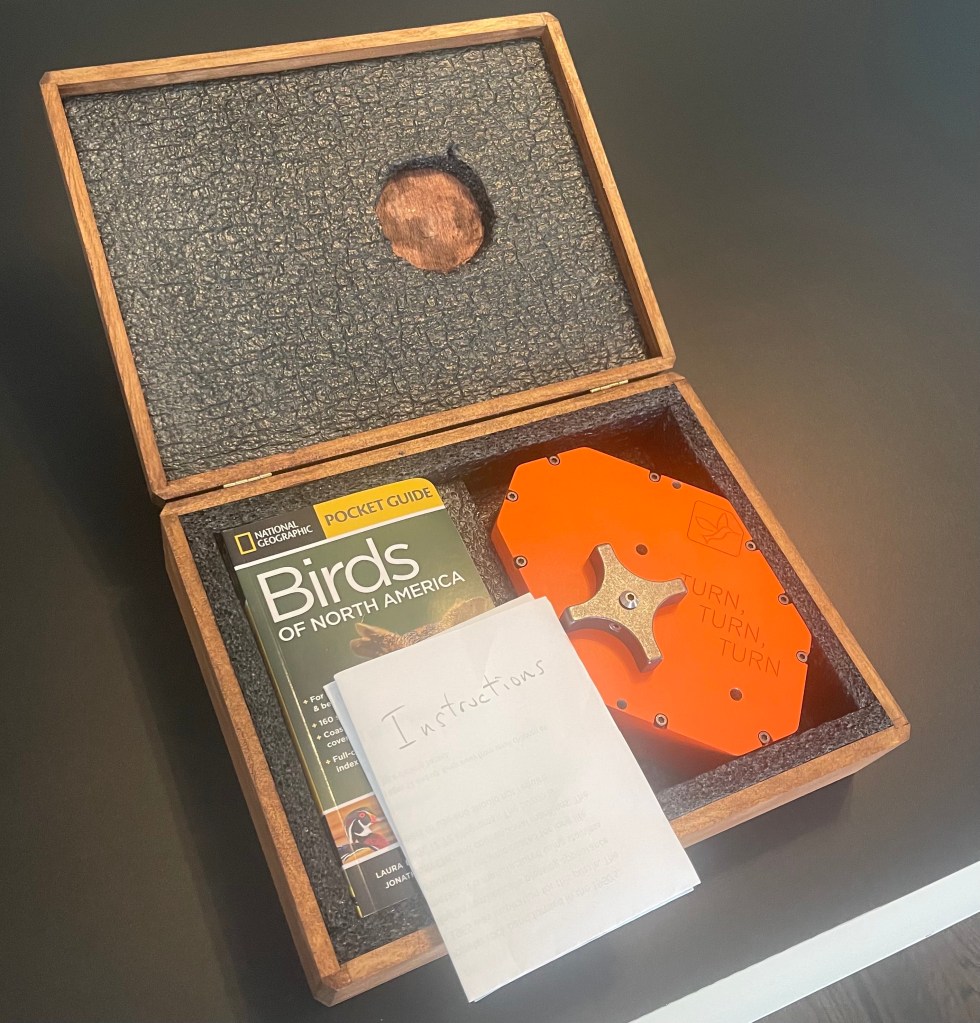
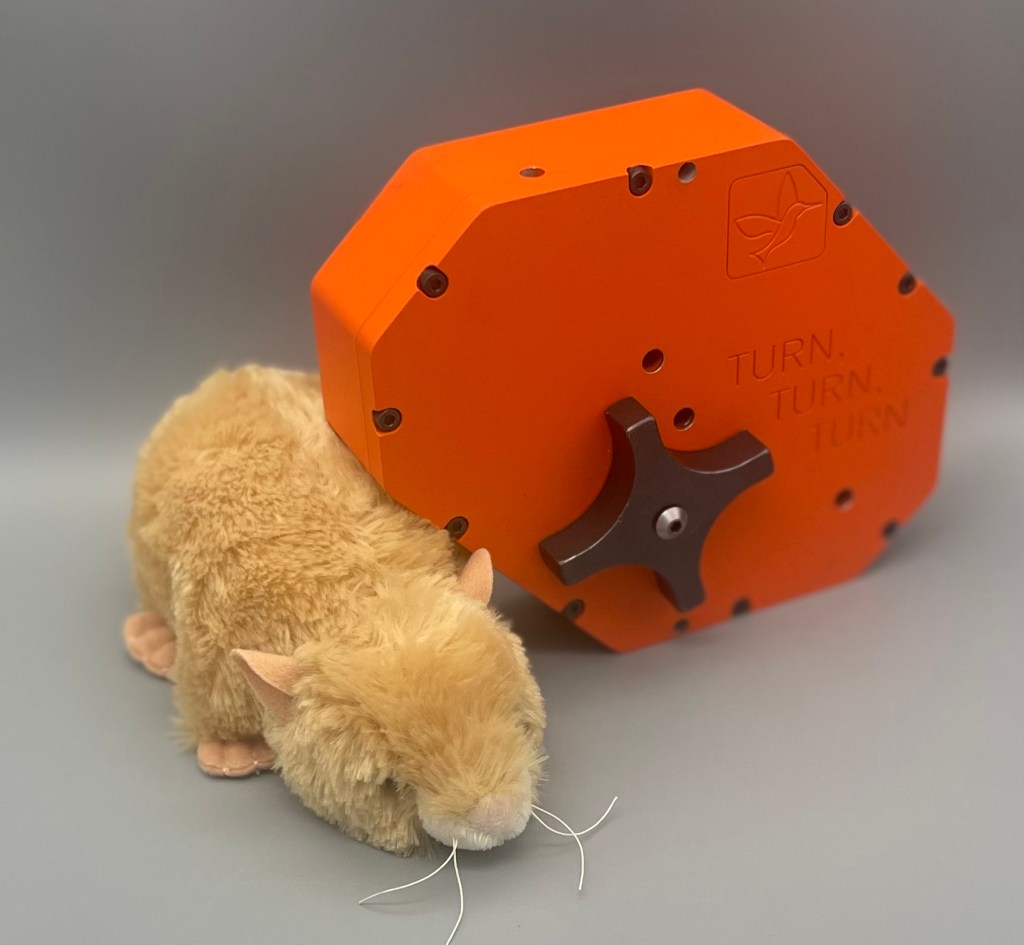
Bill has packed a lot of puzzling into this fat, orange parallelogram, which features a black handle on the front, a number of holes along the front and sides, and a protruding something emerging from its back. As with Wishing Well, Turn arrives in a large wooden box, with some instructions, a Bird guide 😉 and the aforementioned solution (in a separate manila envelope). This is 6 pounds of heavy metal puzzling and is not for the faint of heart – this is for puzzlers who want to be challenged with something that is going to take time to discover, understand and, ultimately, conquer. The enclosed laminated solution walks you through the solution and reset with fifteen pages (!) of steps (with pics!), which is to say this is neither a short, nor simple puzzling experience.

Bill is a retired machinist and his expertise is very much on display here, as well as his love of puzzles by designers such as Will Strijbos and Rainier Popp. Turn does not rely on magnets or force – it is truly and purely mechanical: discover tools, explore the various mechanisms that lay semi-hidden within the puzzle’s frame, experiment with the various moves and machinations possible while paying close (very close!) attention to the effects. This puzzle is absolutely solvable – it is not impossible as it is not blind: Bill gives you various ways to check on where you are, although it can be easy to get lost unless you are careful, developing a picture of what is going on through trial and error and close observation until you can begin to develop an understanding of how the mechanisms work, what needs to happen and how to get there.

I was able to make fast progress at first, discovering some initial tools that quickly begin to lead me into the puzzle. I would still be discovering tools and their uses over the next few hours as I progressed deeper into what can only be called a puzzle machine, slowly learning how it worked and how to manipulate it before I could zero in on how to reach the solution. Eventually I had a working understanding of the mechanisms and could orient myself towards the goal, which would take quite a bit longer to reach (along the way, I would need to decipher the included clues… and I may have asked my wife to check a thing or two against the solution for me, but I got there!).

Bill ends it with a flourish, a bit of a call-back in a moment of triumph that had me smiling – it was great to have something to clearly say: “you did it!” to acknowledge my efforts. I am confident that this is going to be a popular puzzle amongst fans of complicated metal hunks of puzzling that are difficult but solvable if you put in the time and brain power (this puzzle has an excellent ROI in terms of puzzling time, at least in my experience). The only downside: unlike some others, Turn’s shape will not lend itself towards being weaponized in a sock – Plant Cycle still earns the award for best puzzle in an apocalypse, in my opinion; otherwise, this is a novel, challenging and complicated puzzle machine to solve. They will be released in batches over the coming months, with Bill reaching out to those on his list. Pay attention as I bet they will go quickly!


When is a Door not a Door? When it’s Puzzleduck Pastures by Kel Snache

Puzzleduck Pastures

Kel Snache; 36 copies

In a land far away, under the old Sycamore tree is where you will find the cheery little fairy community of Duckbill.

These puzzle loving fairies have an obsession with all things mechanical and have nothing to do with ducks. One fairy named Lil’ Ms Fairy Pants had her tiny home newly outfitted with the crafty creations from one particular wizard named Kel Snake.

Sadly, Lil’ Ms Fairy Pants has a poor memory and has gotten herself locked out of her home, again.

Save the lovely fairy and be the gallant young knight by helping her to open her front door. She will repay you with a tiny tour of her home.

Duckbill Times

It may not be new but it is still worth writing about: I got my copy of Puzzleduck Pastures upon release way back in ye olden days of 2019. Back then, my blog was still pretty new, my tens of readers a mere fives of readers. I was writing less frequently than I am now (which really is still not as frequently as I’d like) and simply never sat down and wrote about this gem of a sequential discovery take-apart puzzle.

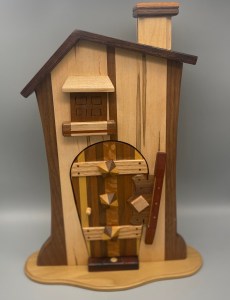
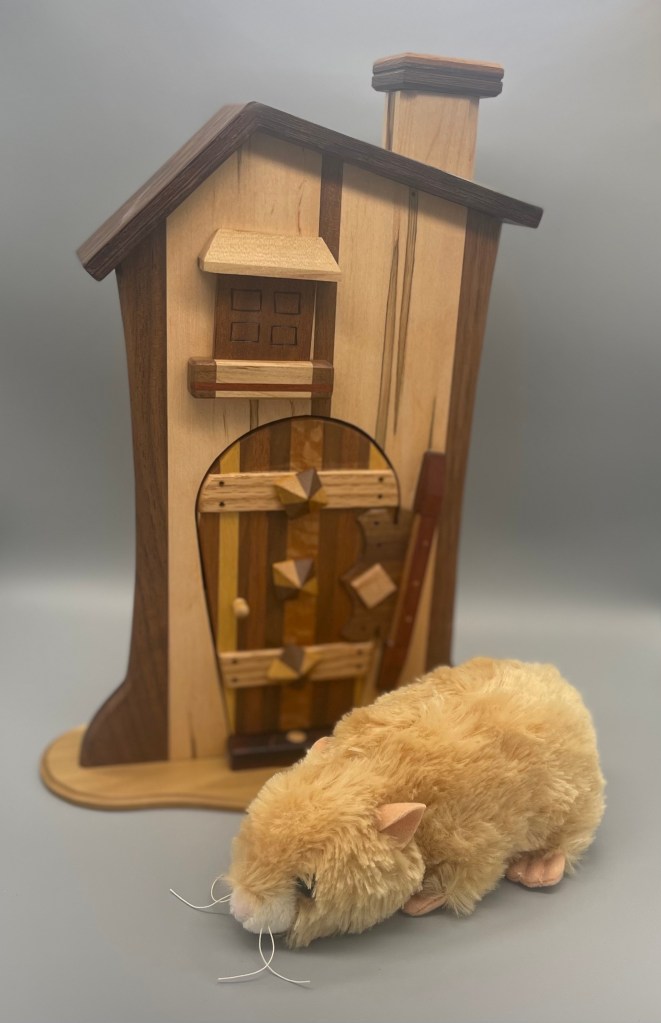
Puzzleduck Pastures is Kel’s “response” to Michael Toulouzas’ Fairy Door (and, in turn, precedes Tracy Clemons’ take: Dark Fairy Door). The puzzle looks like the facade of a playful, cartoonish home, the roof slightly askew, a bulbous door, sketched windows, and so on. The puzzle is a sizable 12″ tall and 8.5″ at its widest point on the base; at 3.5″ at its deepest, it evokes a sense of a theatrical facade from which one might expect Puck to dramatically emerge (“And those things do best please me, That befall prepost’rously.”)

And this is just part of its appeal: it’s playfulness is a manifestation of Kel’s good nature and reminds us that we are here to have fun – belying this intentionally imperfect aesthetic are the internal mechanisms that interact in varied ways, locking Lil Ms Fairy Pants’ door and tempting the puzzler with a number of holes across multiple sides.

The door is quite firmly locked: two of the three square central “locks” on the door move just a few mm, with the bottom one spinning freely. But don’t think that the rest of the puzzle can be ignored! In typical Kel fashion, you will find a number of interacting internal mechanisms keeping you from solving the puzzle and opening the door, although only the chimney appears to have any give when reset. It is quite typical of Kel’s style: multiple misdirections as you embark on a semi-linear sequential discovery journey with very few blind spots. Re-solving the puzzle after a few years, I was pleased by how well everything worked, even as I was sure something was wrong at one or two points (nope: it was me). And I was super pleased with myself when the door finally pulled open once again!

At the end of the journey you are rewarded with a view of some of the internal mechanisms as well as, even more delightfully, some lovely art of Lil Ms Fairy Pants’ home created by artist Nicole Lees for the project. (This is not a spoiler as it is stated in the description)

I love this kind of finale, bringing the story full circle and rewarding the puzzler with a good, satisfied laugh. By no means will you wonder if it is solved: it is quite clear that you’ve helped Lil Ms Fairy Pants home and you can sleep soundly knowing you’ve done a good deed for an imaginary person.

Puzzleduck is fun and tricky, Kel’s deviousness abounding throughout the puzzle’s playful frame. While not as long a solve as Kel’s EWE UFO, it is similarly smartly silly and delightful to behold (and they look adorable next to each other). Now if I could just get myself a copy of Toulouzas’ Fairy Door, I would have the trifecta, thereby opening a portal into the world of the fae!


Get Lost: FastMaze by Dan Fast

FastMaze 1

Designed by Dan Fast
Produced by CubicDissection
Aluminum & Brass, 3″ x 1″

I got the chance to try an early copy of one of FastMaze 1 (designed by Dan Fast and produced by CubicDissection), and “fast” is not one of the words I would use to describe it: smooth, yes; fun, certainly; challenging, absolutely; but fast? Nope. Not for me anyway.

Dan has designed many a high level burr, including the relatively recent Stir the Coffee produced by Pelikan; PWBP shows more than 100 puzzles designed by him, a level of prolificacy shared by few others, including the rather iconic Superman and Batman burrs (also produced by Pelikan). FastMaze 1 is one of a series of three new puzzles being produced by the excellent craftspeople at CubicDissection, whose recent equipment expansion allows them to create more affordable challenges that still meet Eric’s extremely high quality demands (perhaps the hallmark of CD creations).

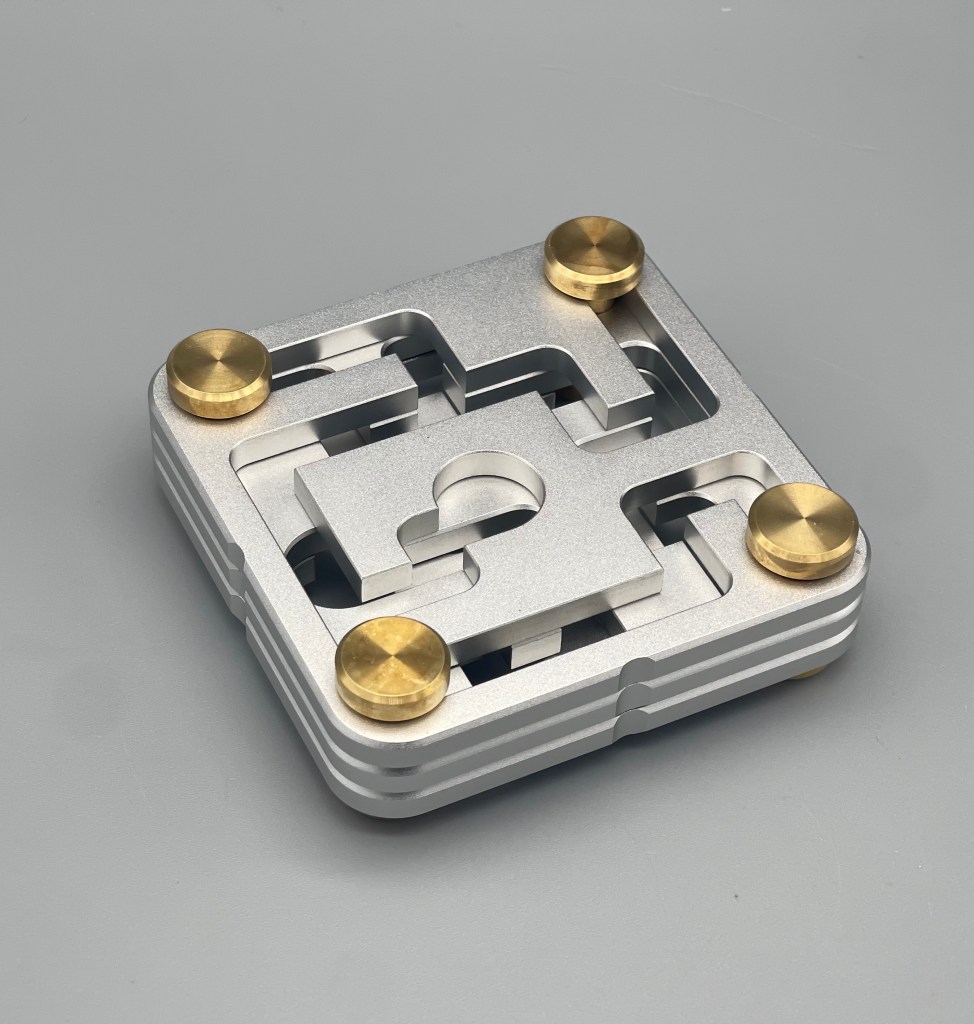
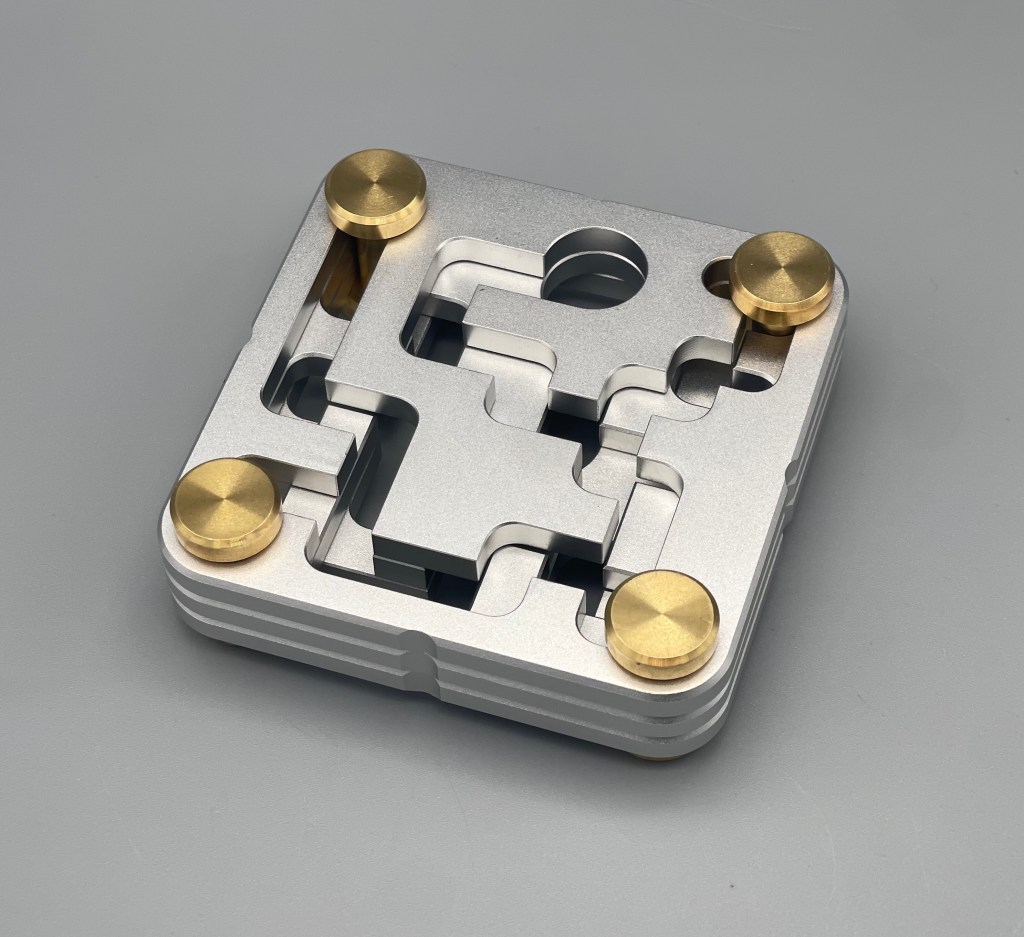
FastMazes 1 – 3 are three-level square mazes in which you must navigate pins in each of the four corners to a hole that will allow them to be removed one at a time; of course, this hole is in a totally different spot on each of the three levels so getting them to line up is no small feat. FastMaze 1 is the “easiest” of the three – I say this with my tongue firmly set into my cheek as its 137 moves is far from easy. Not only is that a lot of moves total, but once you have removed the first piece you still have another 83 moves to go for complete disassembly (the full solution is 54.28.24.28). FastMazes 2 and 3 are levels 160 and 196 respectively (#3 requires 121 moves just for the first piece!). This may sound intimidating but while it is most definitely a challenge, it is by no means unapproachable.

CD has produced the series of 3 puzzles in metal, with super smooth aluminum mazes navigated by four brass pins. The puzzles have been designed to easily come apart, allowing for a simple reset that makes the puzzle much less terrifying. The quality is apparent from the moment you pick it up: the metal is smooth to the touch, the pieces gliding over one another softly and easily. Notches marking the edition of the puzzle have been built into the center of each side, a nice aesthetic detail that helps you maintain control over the puzzle, especially once the levels start getting spread out as you progress through the solution. This happens quickly as the paths block one another unless you are able to have all pins situated such that the maze levels can shift. After a little while, it becomes possible to rotate one or more levels, something that I am still not sure whether it helped or hindered my progress. Apparently, the second of the three designs requires rotations, which I plan on confirming once they all become available. Regardless, the rotations are similarly smooth and, importantly, feel controlled – this is not like a burr that has become unmanageable with pieces rotating against your will. Its size fits perfectly into two hands (or your pocket for easy transport), allowing for easy control even as the pieces spread apart into its various contortionist configurations.

At first, I simply appreciated the construction and fit, the pins refusing to move until sliding smoothly and freely once a path becomes available. I began playing with it just to get to know its movements, finding it has a fun fidget friendly factor as an added bonus (it was also oddly satisfying to pinch one of the pins and swing the puzzle back and forth….. maybe that’s just me lol). It quickly became clear that such an approach was not going to afford me much progress: I was going to have to apply some brain power if I wanted to get anywhere as random fiddling isn’t going to get this little guy apart on its own (eventually, I suppose, but there might be a monkey Shakespeare by the time you get there). The exposed top and bottom levels allow you to work out a lot of where you need to go, but the center layer is largely hidden, confused by the paths above and below it through which you can try to make it out. As you work through the solution, of course, more of this layer is revealed and you must adjust your intentions and goals accordingly. Solving multiple mazes simultaneously with multiple moving restrictions is much more than the sum of its parts: dead ends exist in most any maze but here you must sometimes take advantage of these, working pins somewhere just so you can allow another to move elsewhere before backtracking once again. This makes for a great balance of experimentation and logic in working towards the solution, which will sometimes seem so close only to slide away once more. After finally releasing the first pin, I thought things would open up and become easy but in fact there was still plenty of puzzling left, the logic somewhat simplified but still significant in the strategy required to solve it.

FastMazes 1 -3 were released today, August 29th, 2022, available individually or as a set of three. I found that as soon as I had solved mine I wished I could reach for another, so I will definitely be picking up at least one more (who am I kidding, like my compulsive completionism will allow me to have just 2 of 3…). These are a fun challenge at an affordable price point with no sacrifice of quality (as we expect from our friends at CD), bringing excellent puzzling value to whatever puzzle shelves it will soon grace. You can find FastMaze 1 here and the others here.


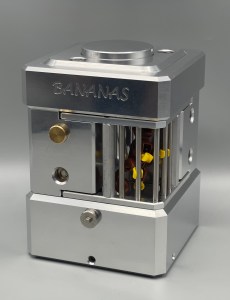
Bananas is bananas.

Bananas

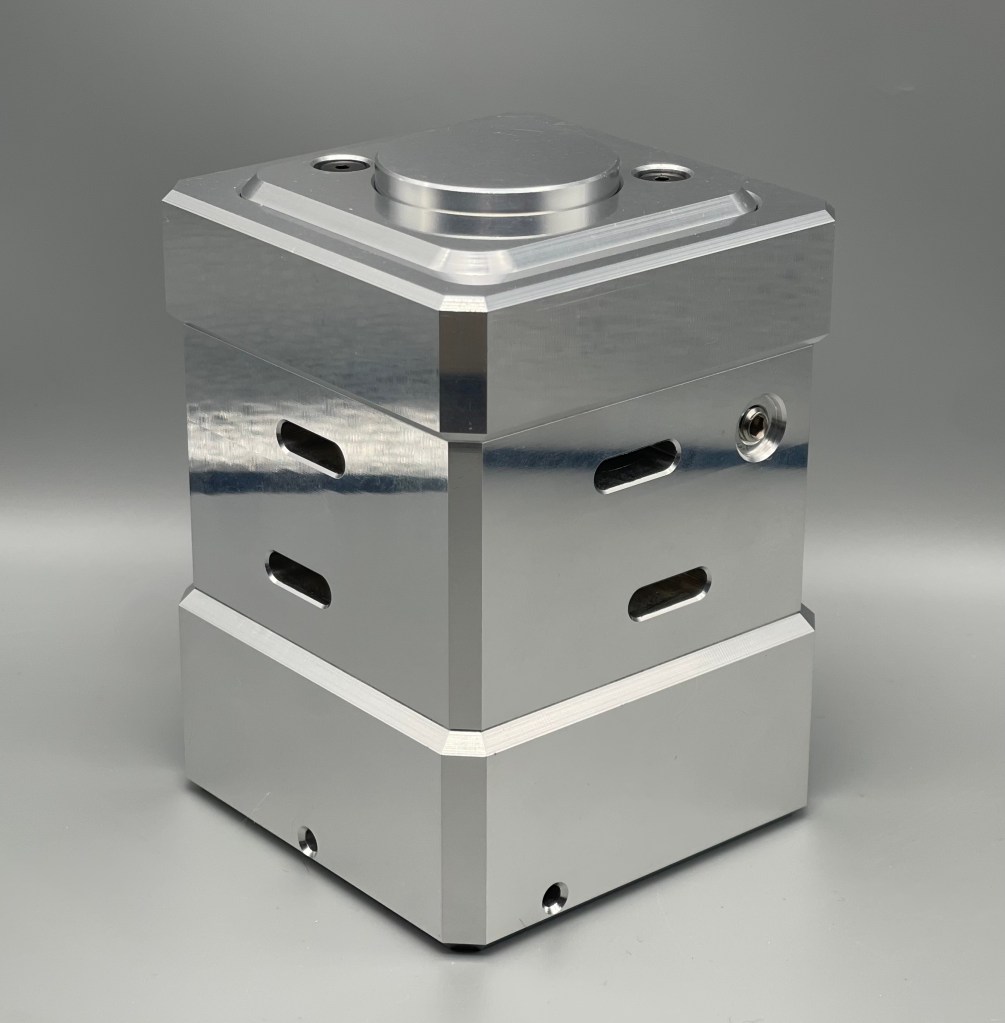
Jon Keegan, 8.5 x 8.5 x 11.5cm, 1.45kg

I was trying to explain to my wife how puzzling can be a mindful experience (she’s a therapist… I’m just cool like that ;-P ) as you may spend an hour or more in near silence, focused on every sound or perceived resistance or reaction to determine just what in the heck is going on, divining patterns from some series of stimuli, some so subtle as to cause concern that it’s just me doing something wrong or hearing or feeling something that isn’t there. But when finally this intense focus bears fruit and you get that aha! midnfulness is out the window with the dopamine hit you’re getting, earned with the eye strain and aching back from contorting yourself to try and look down some tiny hole or shaft.

And what fruit hath been bear-ed? I’m sure you didn’t click on this write-up to read me ramble vaguely about puzzling in general but rather to read me ramble vaguely about Bananas, the new puzzle by Jon Keegan (his follow-up to Jewel Thief). And if the paragraph above ap-peals to you, then your interest in Bananas is anything but bananas (because you see: Bananas is bananas).

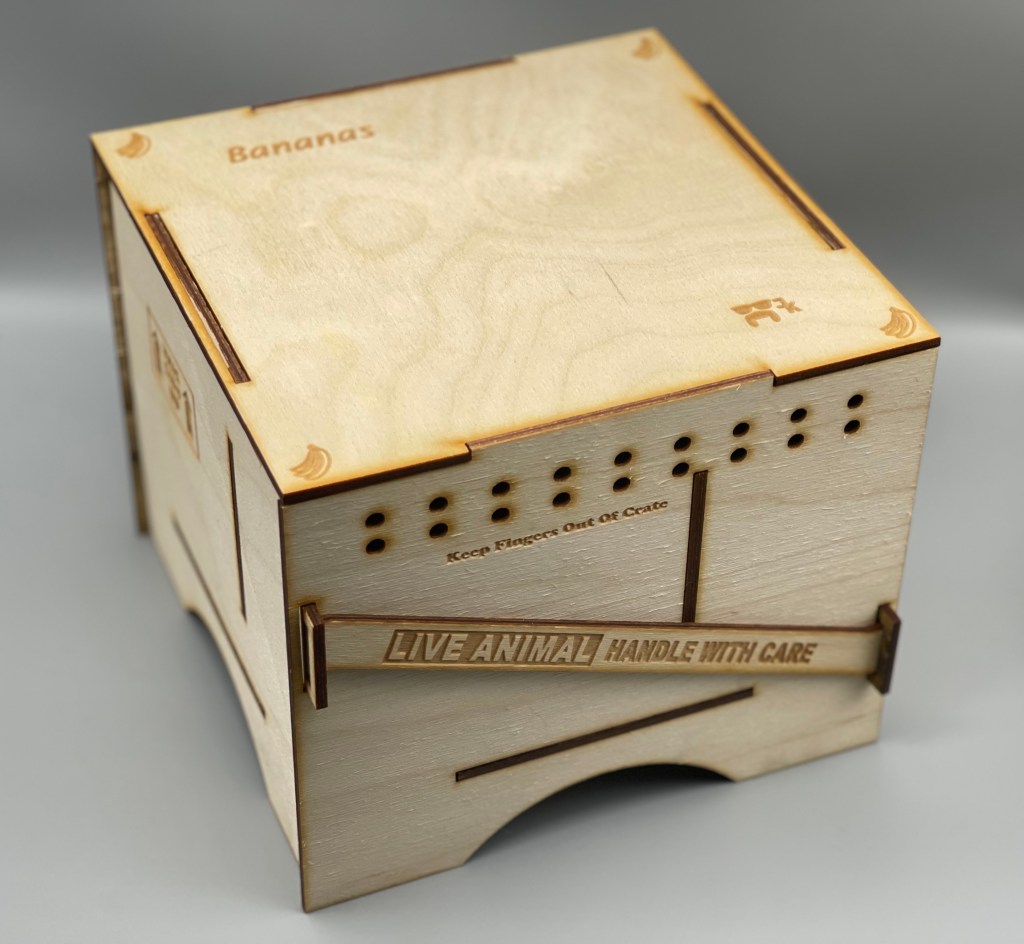
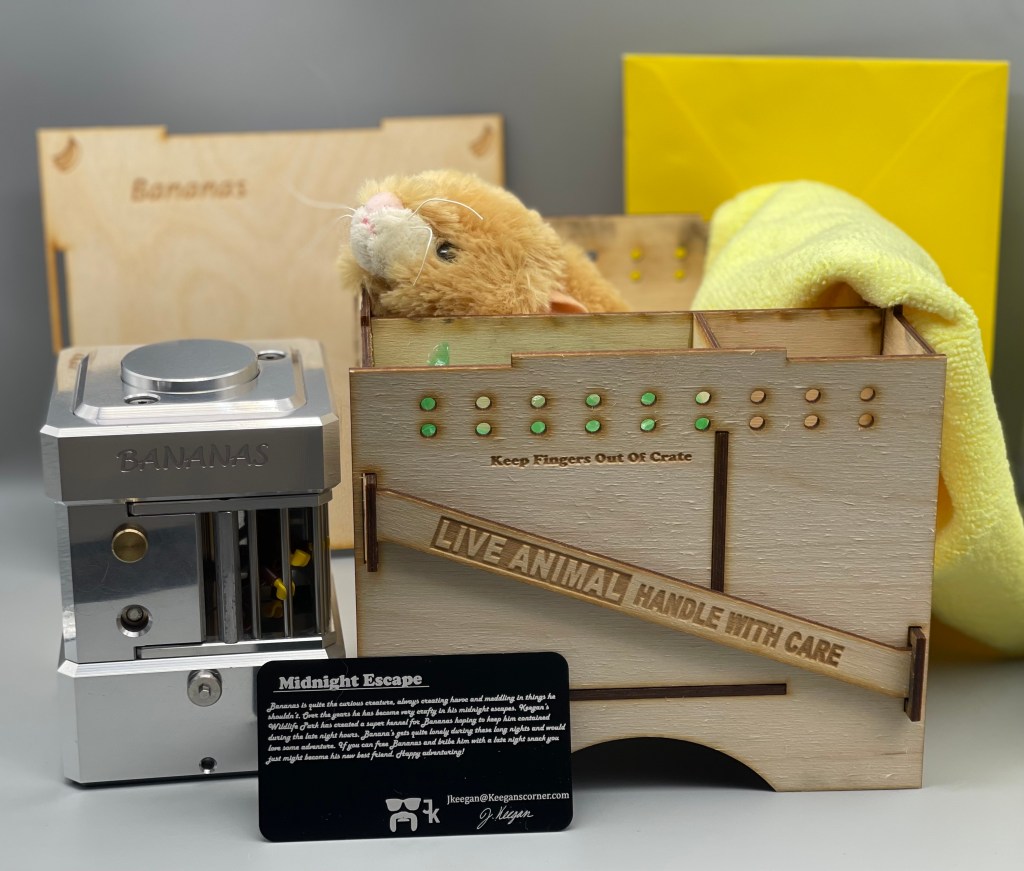
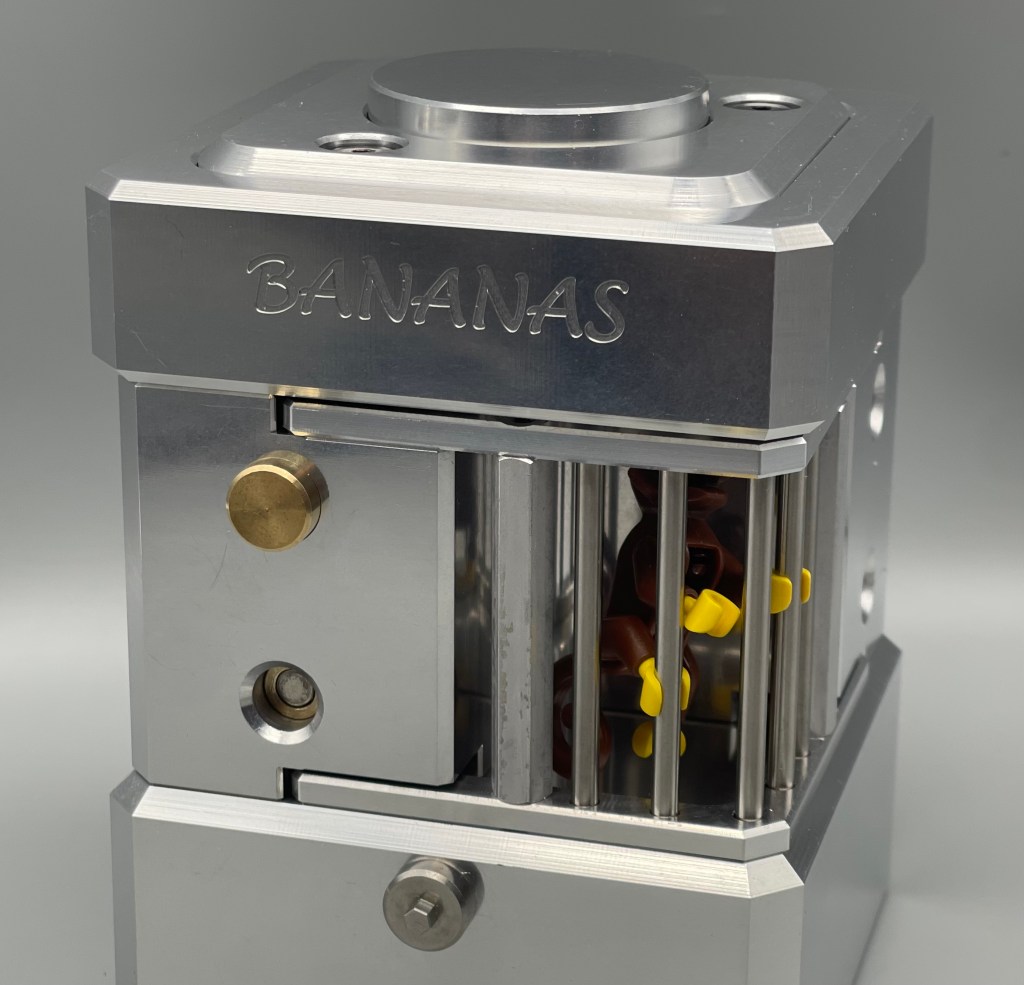
Bananas arrives wonderfully: super safely packed with a wooden shipping crate straight off the boat to Skull Island, ready to pack away something wild and dangerous. Cue a cute lego monkey caged by Keegan for our puzzling pleasure. Inside we find the puzzle, along with a metal objectives / story card, an envelope with pics of the internal mechanisms to decipher post-solve and a kindly supplied towel to protect the puzzle (and whatever surface you will be working on.

And as for the puzzle itself: Bananas is trapped in a cage set into the corner of a pretty massive block of metal replete with holes and knobbies and squares and circles to poke and prod and wonder at. Everything does something, of course, although nothing does anything just yet. The ticket in isn’t easy in itself (but you will get to understand it eventually); I struggled there for a bit and passed through with a bit of luck before too long, going on to make good progress before finding myself with a whole bunch of stuff and things to do with no clear path. Examining the puzzle does give you a sense of what is going on, at least in some areas, so I thought I know where I was shooting for, for the moment anyhow.

What follows would be a montage set to an uplifting light rock ballad about overcoming struggles as I proceeded to do what I started this post with, trying to find some magical combination of moves that would see me through to the next section. And eventually: aha! of course, and aha! again, with ever more aha!s big and small throughout the entire puzzle. There are some really great discoveries to be made before you free Bananas… and that’s the really crazy thing because you’ve only just started! The instructions tell you to solve the puzzle in 4 parts:

Bananarama!

I had done 1 and 2 but…. wtf.

So I kept going and going, through multiple additional sections, each with several variously moving bits to contend with. Eventually I sat back with pride, Banana’s snack in hand, admiring the mess of metal that had amassed around me, amidst my super-cool puzzle headgear and pleather dice trays. Such puzzling pride passes quickly though, and it’s time to reset.

The reset is tricky and challenging but not frustrating or overly confusing; I had some concerns about whether I’d be able to piece it all together after having taken a couple weeks to solve it but while it took fully understanding all that had happened to make it all ready to go again, this was not so difficult in reverse. In my typical genius fashion I had to solve and reset multiple sections multiple times due to having reset some part before some other part… I’d say I did it purposely, to better master the puzzle, but really I just do it all the time because I’m a dumbass  ¯\_(ツ)_/¯

Such dumbassery does have its benefits though: I feel now that I truly get what was happening throughout the puzzle when at first I couldn’t imagine how I ever could. What else can you ask from a puzzle? There is a fair amount of blind struggle but careful and close observation and experimentation will give you guidance, along with some subtle clues to make sense of as you go.

Bananas was released in a limited run of 225 by Jon Keegan and were all claimed (as is fairly typical with a good puzzle) long before this was written – in typical voracious puzzle fashion, we all politely and (seemingly) patiently waited with occasional but regular updates on Jon’s progress and puzzle maturation. I have to admit that I have not actually solved any other puzzle by him! My zealous overuse of multiple emails led to a snafu in which I missed my chance at a Jewel Thief… (meh, whatcha gonna do – from what I’ve heard, while it seems to be an amazing puzzle I’m pretty sure I would still be struggling with the first step lol). I did get a Scarf prototype but want to wait for the updated version coming out down the road (which just means that I haven’t been able to solve it 😉 But Bananas… the more I let it sit after finally solving and resetting I come to appreciate it more and more… quite simply, Bananas is bananas.


Sun Dial’s Art of Puzzling (UPDATED: Now with more puzzling!)

Sun Dial

Jesse Born & Rob Yarger
Ipe, Katalox & Brass
2.75 lbs, 7″ x 4″
Box 2 in the Voyager Series (Sea Chest, Sun Dial, Alien)
(Ed. A couple weeks after posting this, I discovered that there was still quite a bit of puzzling left after I had thought the puzzle had been solved! See below for more)

Well, the past several weeks have been busy here in the 5S household, getting in the way of my puzzling (much to my dismay). But the wonderfully unrelenting onslaught of new puzzles has only seemed to increase its pace, with several excellent puzzles arriving during this none-too-brief, unplanned hiatus. I realize that this break has not been difficult for you, but fear not: plenty a puzzle ramble awaits you!

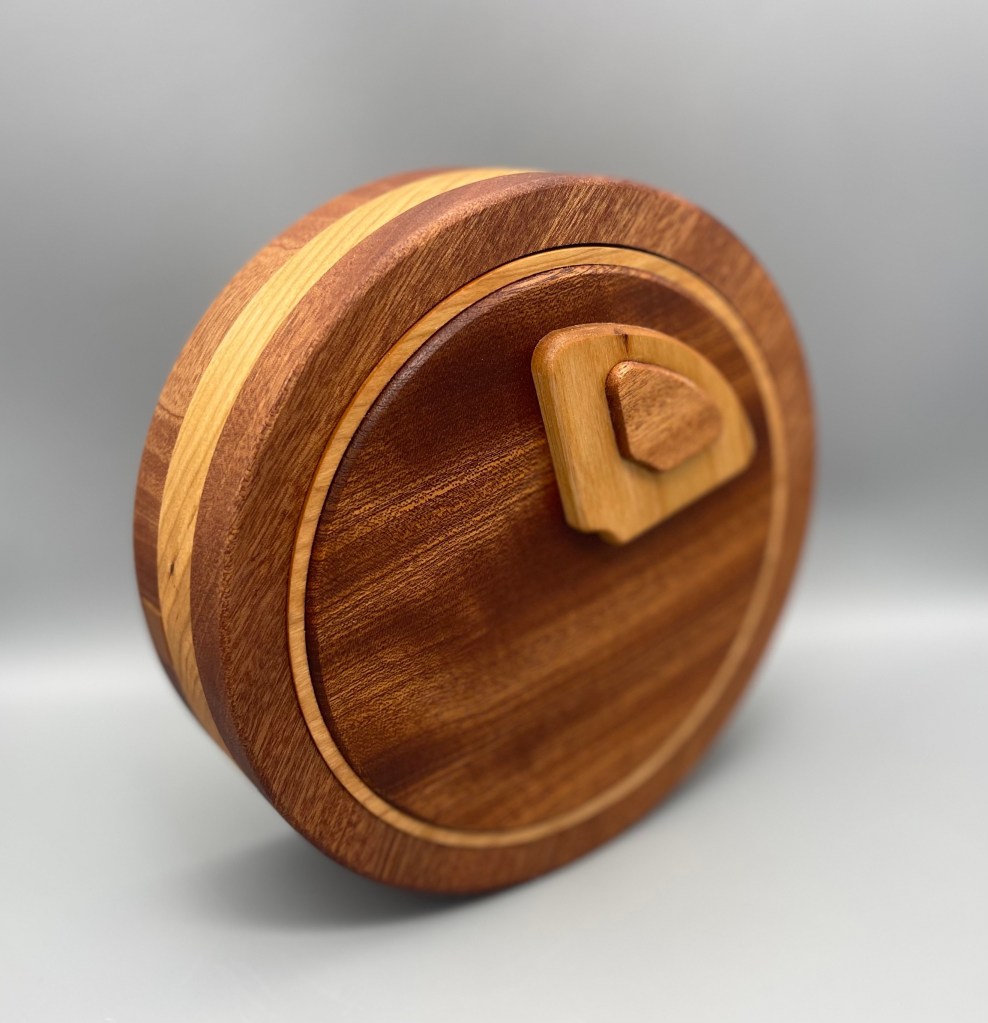
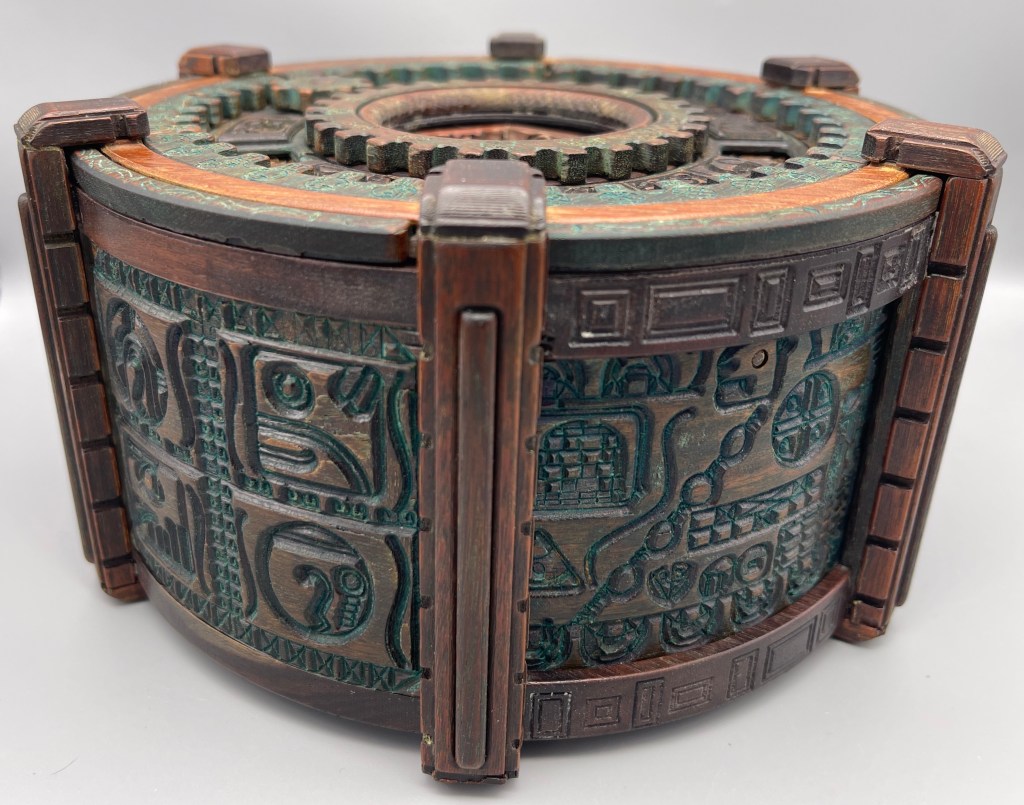
And what better puzzle with which to break this devastating dearth of dear old me than Sun Dial, Jesse Born’s follow-up to 2020’s excellent Sea Chest (reviewed by me here); Sun is co-designed with Rob Yarger (a/k/a The Great and Wonderful Stickman) and mostly made by Jesse (Rob did some laminating on the curved side panels, which are constructed of multiple layers of hand-carved veneer crafted by Jesse). Sun Dial is a circular box (?!), painstakingly covered in some rather intricate etchings and distressed in a fashion similar to its elder sibling. Jesse has plans for a third and final entry in the Voyager Series that will presumably share in this aesthetic, crafted to create the impression of a discovered Alien artifact that must be opened to access its other-worldly treasure. What pirates were to Sea Chest, the ancient Aztecs are to Sun Dial, with myriad markings and hidden secrets that invoke this lost world in the psyche of the spelunking (s)puzzler.

Jesse is one of those designers whose puzzles I would happily buy sight unseen (his Secretum Cista is quite probably the coolest puzzle I own). Rob is (of course) another such designer , so when I heard that Rob was designing Sun Dial with Jesse, I began drooling more than Pavlov’s dog at a doorbell store. (Rob was a big big fan of Sea Chest, which is especially high praise from the creator of some of the most insanely awesome puzzles ever to reach us mere mortals). Jesse and Rob went back and forth over a period of months, trading ideas and CAD models as they refined the design that Jesse would ultimately craft (for a more in-depth look at the design process, check out Boxes & Booze’s excellent post).

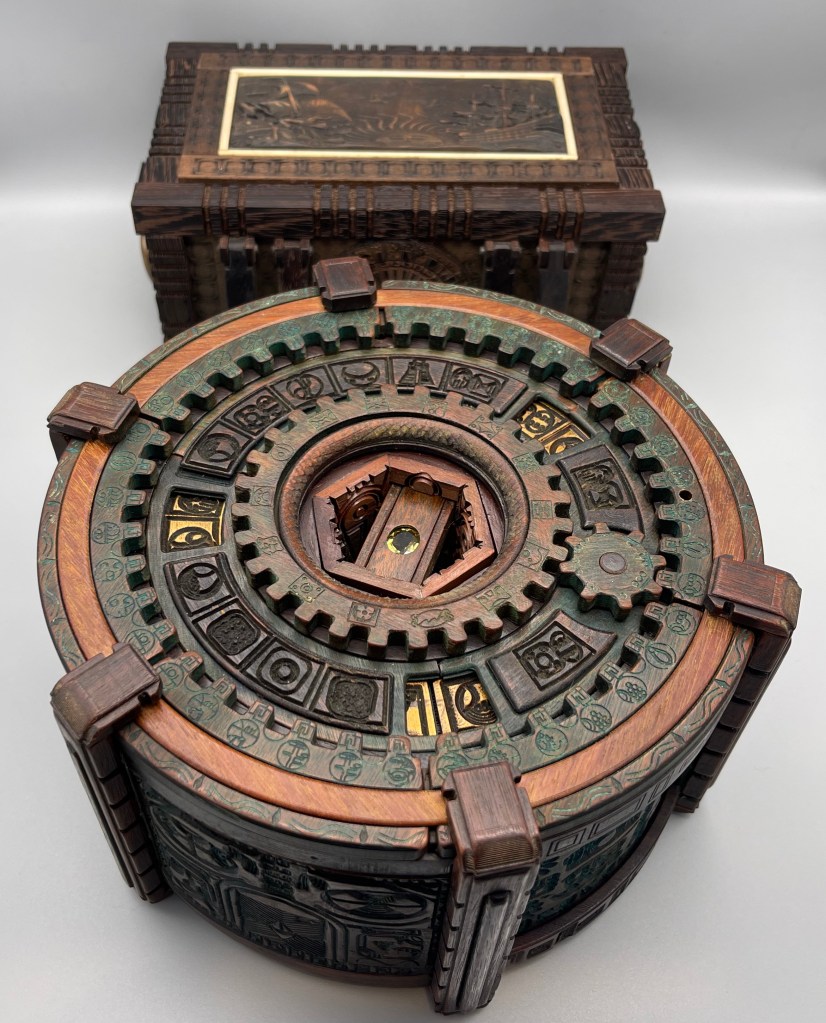
At a relatively hefty 2 lbs, 12 oz, the 7″ x 4″ Sun Dial is no small box. As part of its intentionally distressed appearance, its aromatic woods appear to have been partially stained, a greenish tint furthering its lost artifact aesthetic. It is shaped something like a flattened donut, with a citrine gem nestled into a piece of wood bridging the top of its center shaft. The outer wall is broken into 6 sections, 4 of which are covered by inset panels that have a noticeable bit of give when reset. The top alludes to the circular calendar of the Aztec civilization, a series of concentric circles and layers surrounding a set of gears that promise to put the mechanical in mechanical puzzling.

Sun Dial vs. Aztec Calendar (12 ft./25 tons, discovered in Mexico City in 1790)

In its reset state, Sun allows for some quality mechanical playtime – I first spent several minutes just playing and giggling at the smoothly tactile movements possible in its initial state. Other than some admittedly puerile fun, this did not immediately lead me anywhere productive; it would take some keen and careful observation before that first aha moment, which soon led me into the puzzling depths that await within.

Over the next few weeks, I would progress in fits and starts; discovering things that must help (while unsure of exactly how) as I pieced together the path through its various compartments. Well-hidden, subtle clues abound, some more important than others in clearing the way forward. Venturing into the puzzle’s interior gave me a sense of adventure, akin to Indiana Jones-ing (Quartermaining?) my way into an ancient temple, replete with treasure and cool discoveries that could be decorative, essential, or both.

I knew I had to be reaching the end when I was surprised by the results of a particular step that I repeated a few times with a goofy grin. Some final details discovered, I held my prize in my hand, admiring how Jesse and Rob managed to bring things full circle, like the cyclical nature of time perceived by the Aztec culture.

(This paragraph was added a few weeks after posting this) OMG! Turns out not only was I not actually finished solving the puzzle, there was quite a bit of puzzling still left! There is one aha that is particularly satisfying and we are left with a sense that more is yet to come…… Once again, Jesse has brought us something great only to add some icing to make it excellent. I found this last section to bring back memories of Sea Chest, which also hid some final secrets that took me a few weeks to discover still laid in wait after I’d thought I had reached the end. Gotta love a puzzle that keeps on giving!

After resetting the puzzle and going through the solution once more (now a few more times!), I followed a QR code printed on the back of the Certificate of Authenticity (signed by both Jesse and Rob) to a short video in which Jesse walks us through the solution. I smiled at a few details whose significance had escaped me and ran back through the solve one more time, appreciating the puzzle’s rhythm and flow.

The puzzle’s mechanics do not rely on blind mechanisms, instead favoring discrete steps that must sometimes be worked out beforehand to properly progress – I suppose it could be possible to cluelessly solve certain sections through experimental trial & error but the design provides ample direction to see you through, if you can slow down and do some of that thinking stuff the kids are all talking about these days. Either way, the mechanics are clear and purposeful, laying out a meandering path to its final treasure.

Jesse decided to increase this run to 400 copies, a big jump from the 100 Sea Chests that had (officially) been produced (let alone the 30 copies of Secretum Cista). I imagine that all 400 will not have trouble finding a home: if a collaboration between two great puzzle box-makers wasn’t enough to convince you, the positive praise that has followed its premiere will probably do the trick. The larger run may help prevent the puzzle from immediately skyrocketing on the secondhand market but I don’t expect too many collectors will want to let this one escape anytime soon (there will always be solvers and flippers, of course, but hopefully the box will remain in the realm of relative reasonableness, for a while at least). While officially sold out, (at the time of writing) the boxes are still being produced in batches and there is a drop-off list for spots that might open up should puzzlers decide to give theirs up, so be sure to swing by Jesse’s site before they’re all gone.