It Takes a Village: Oleg’s Wardrobe by Dee Dixon

Oleg’s Wardrobe

Dee Dixon

The Village was happy. For years its people celebrated nothing in particular, joyously throwing small objects into the sky and jumping up and down. Their kindness was so real, so tangible, that the Orb of Prosperity formed, giving the people something around which to dance in a rather silly, but quite happy, fashion.

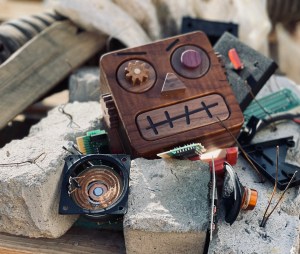
King Oleg the Horrible, however, hated the happy hamlet – in fact, he hated everything: the sound of grass growing, the smell of fresh snow, and the tiny hats the people liked to wear. The King was cruel to the people in his kingdom, silencing laughter and kicking toddlers. For years he would grumble and mumble incoherently to himself, but the dancing…. Oh, the dancing was the last straw for Oleg. He stole the Orb from the Village and now things that were once thrown into the air are placed sadly on the floor.


Oleg has locked the Orb away in a secret compartment in a wardrobe he uses for small things like his fingernails and sense of self-worth. Knight Nyte the Sleepy Soldier has stolen Oleg’s Wardrobe but he can’t find the Orb! The cabinet opens but the drawers are empty! Alas, without freeing the Orb the people’s prosperity will forever be out of reach. It is up to you to find the Orb so that its magic may be released and the people saved, to laugh and dance and wear their tiny hats once more.

From: Tiny Hats and the Ogre that Hated Them, a Record of the Village that Prospers Once More

Dee never ceases to surprise – I still haven’t managed to solve Burner and he has something more complex coming out!
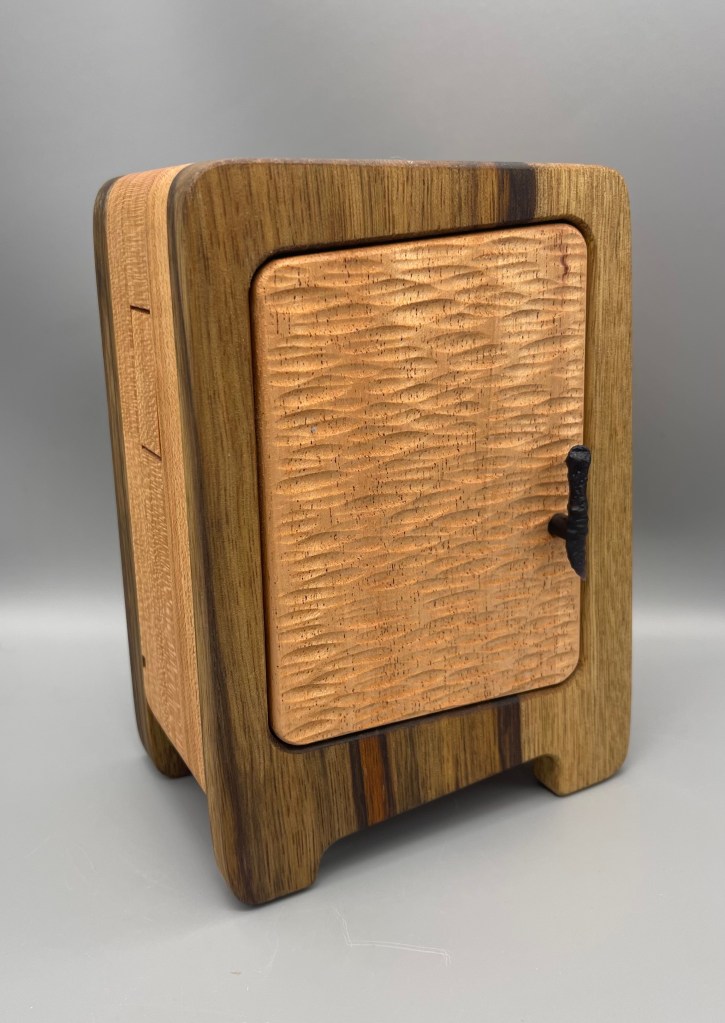
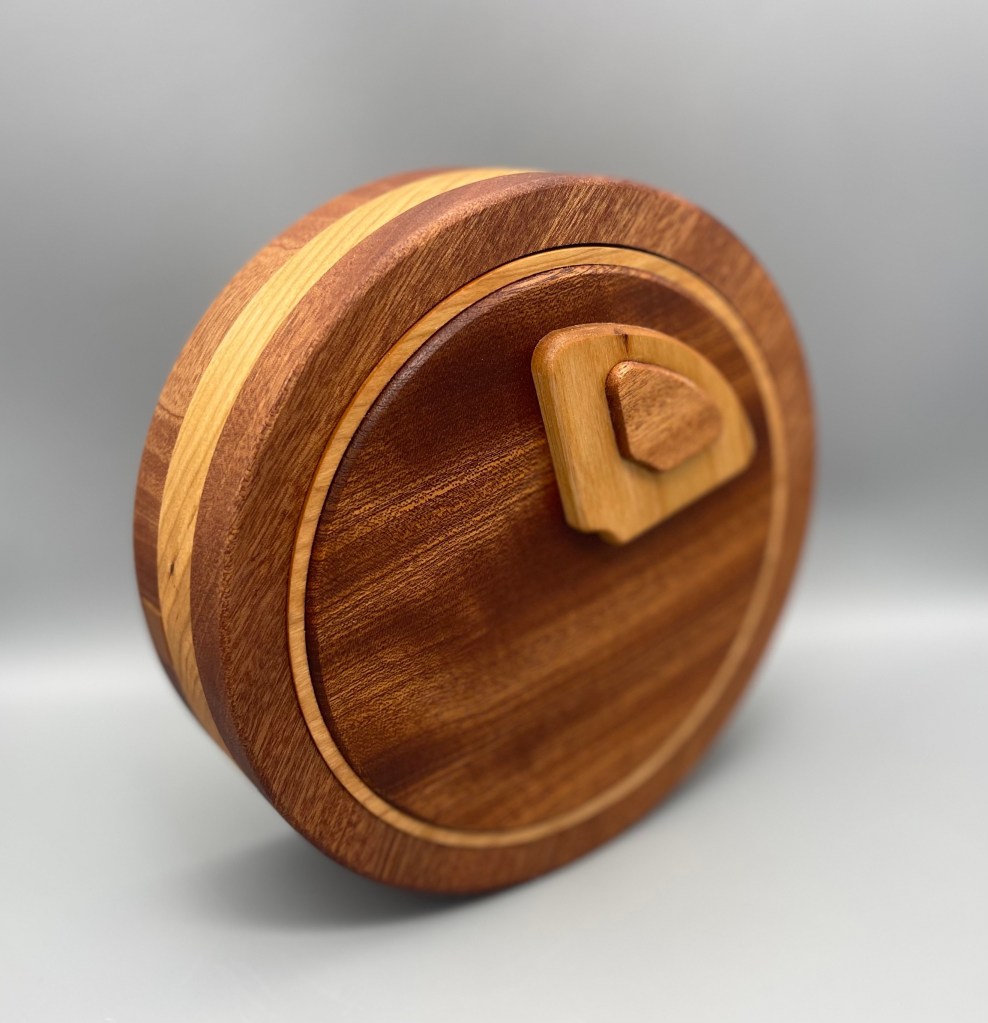
Oleg’s Wardrobe is a beautiful little cabinet with a door (maybe an Armoire?) in a weighty package (close to 2.5 lbs!). Mine is Black Limba and African Mahogany and the final version will be Peruvian Walnut and African Striped Mahogany (sure to be at least as pretty as the one I solved). The goal is to retrieve the Orb of Prosperity, which is hidden somewhere inside the wardrobe. After appreciating the little dagger doorknob, the door opens readily (with a reveal that made me laugh) but upon opening it up, there seemed to be little to work with. A rotating semi-circle on one side, a hole beneath it, and something that might be a button (that doesn’t press) on the bottom of the box. And that’s it (other than the drawers and door)! Shaking it a bit you can hear a bit of rattling… the Orb? Something else?

I stared at it for a while, asking it to share its secrets with me as I did everything I could think of to do… something. Before too long it did! Aaaaaaand now what? The main mechanism eluded me for quite some time before my aha! and even then I didn’t get very far. Some playing around and thinking(!) got me moving again, going in circles while I wondered what I was missing that could break me out of going back and forth through the few steps I had discovered.
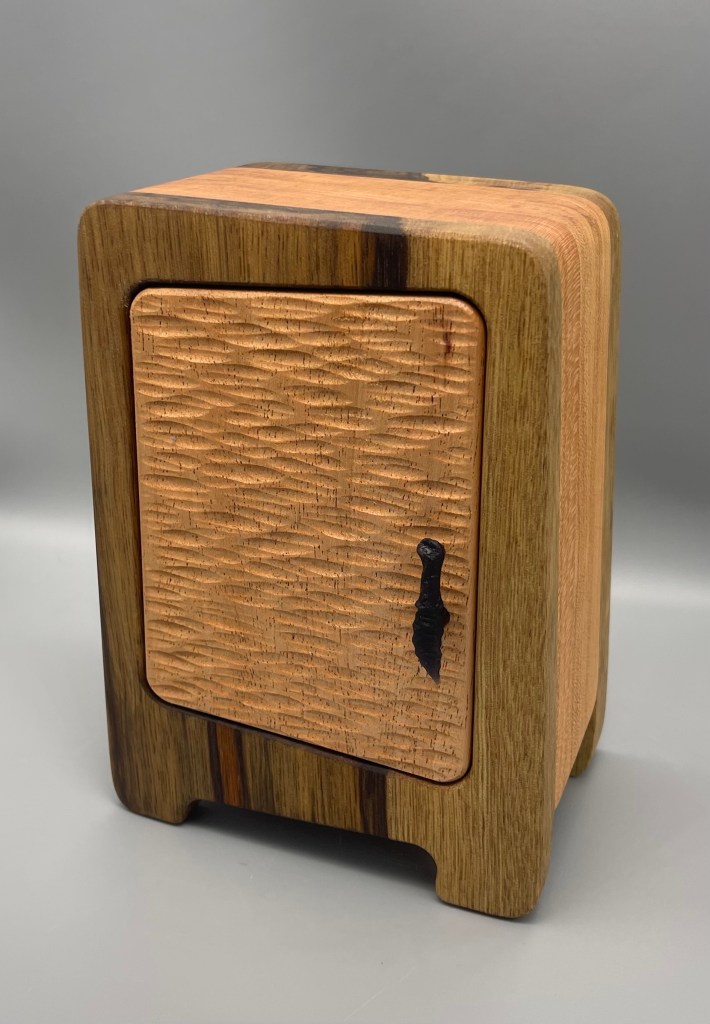
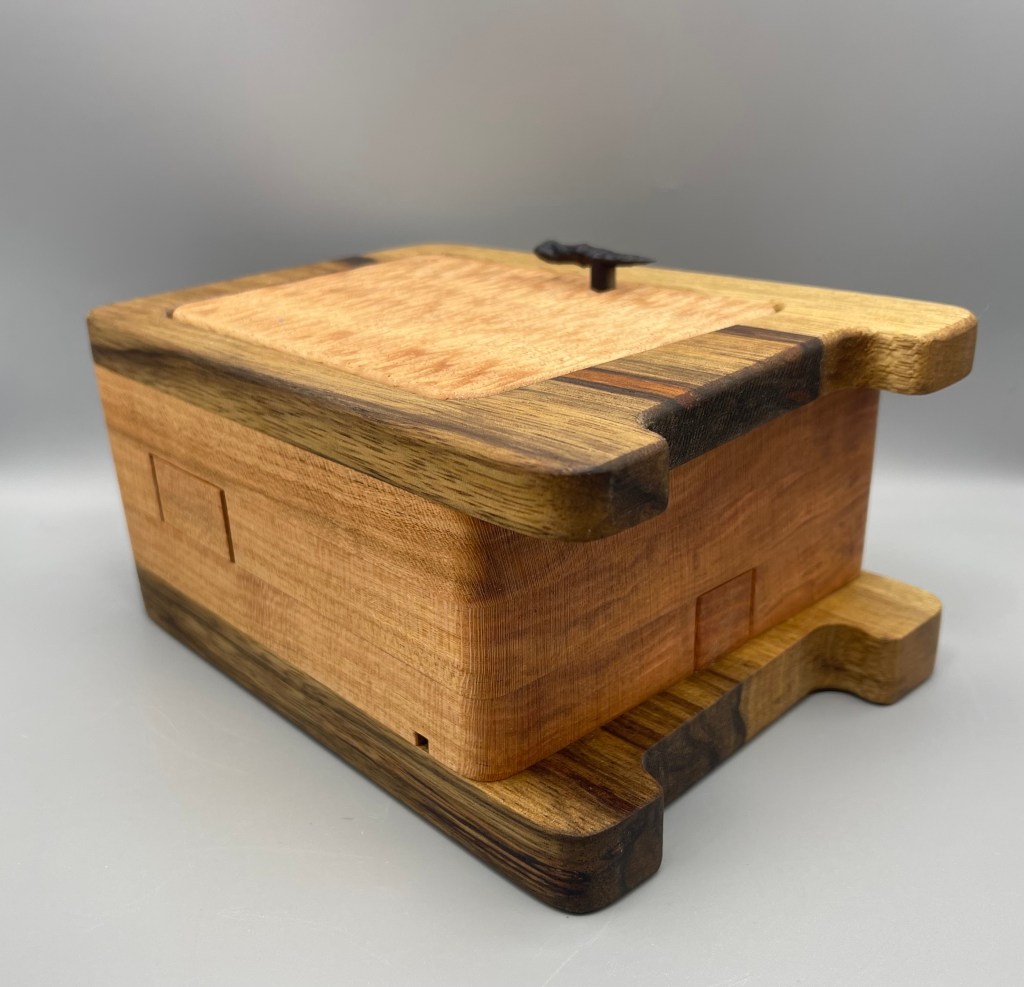
With a little luck and a lot of patience, aha! I found what I was looking for. But still this something didn’t seem to actually do anything, not at first. Some more thinking and experimentation and I got it, only to find that I still had a ways to go. I was pretty sure I understood the basics but it took close observation, logic, luck and more than a little faith until…. the Orb! yay! Bask in my brilliance all ye doubters!

My brilliance soon faded when I realized I had reset the puzzle without returning the orb to its rightful location… oops. Fortunately, this forced me to really and fully understand the puzzle before I could reset it properly, both of which I like to do before I consider a puzzle fully finished. Even without this mistake, the reset might have been a challenge at times, requiring pretty complete comprehension (not my strong suit cough cough) of the central mechanism, with some subtle steps that tripped me up during the reset, adding a bit of extra challenge to the experience.

I had initially solved a late stage prototype before getting my hands on a final copy, which added another tool and a few more steps, while complicating an existing one. These round out the puzzle, really ensuring it has a satisfying length and challenge.
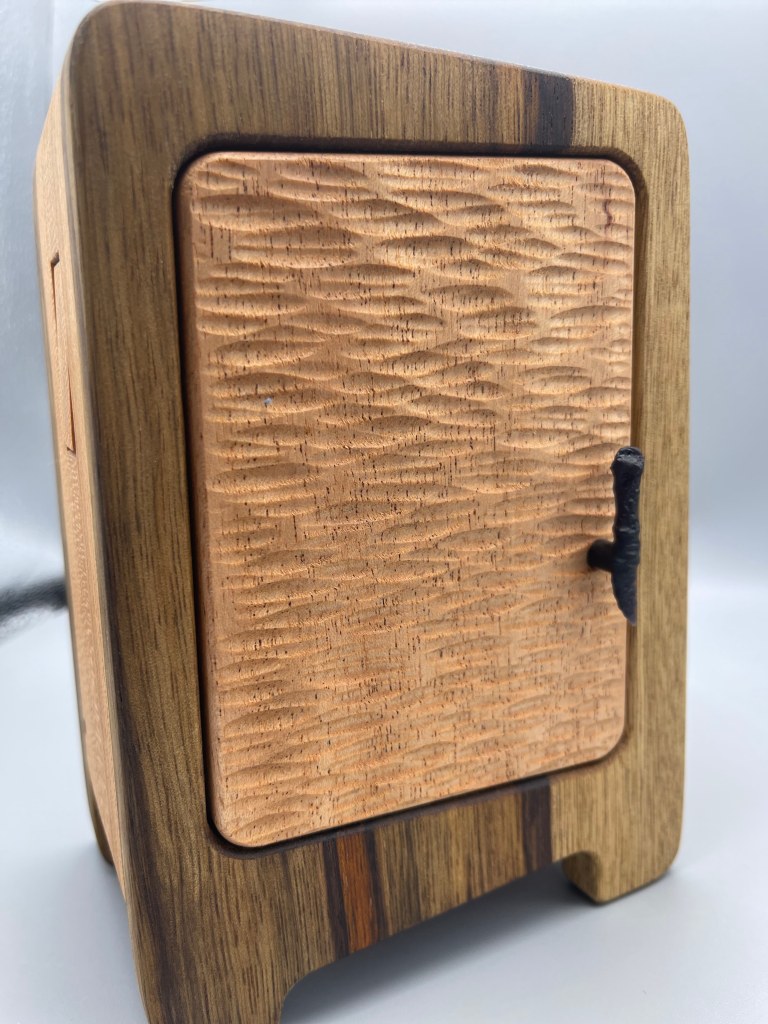
Oleg’s Wardrobe is as lovely as it is tricky – I might put it alongside Bad Moon and Uplift in some ways (but more difficult than either), making it an excellent addition to my ever-expanding Dee collection. Oleg is perhaps a bit semi-blind at one or two points, but really everything you need is there, you just need to realize what that means as you carefully and closely explore. I really enjoyed the non-linear nature of the experience, with some discoveries occurring in a random order; eventually I had discovered everything I thought there was but had to figure out how to put what I had learned together, a fun and somewhat unique experience to have a puzzling journey that meanders and splits and wanders before bringing everything back together. The final additions only add to this, with things that might need to come early being found late and vice versa.

Oleg’s Wardrobe is a fun, non-linear tricky SD journey in a lovely and weighty package. I struggled with it, hitting multiple walls before putting everything together and making my way through to the end. The reset added a bit of an additional challenge for me, requiring a real understanding of the central mechanism at work. A worthwhile addition to any collection!


Going in Circles: Orbit and Uplift by Dee Dixon

Welp, Dee as done it twice more with his most recent releases, Orbit and Uplift: I got there eventually but it took me quite a while to do it, with a nudge or three needed along the way (although I suppose I find that just talking about what I am doing is sometimes the most helpful part – more often than not in the process of explaining where I am and what I’ve done I clarify what I haven’t done and aha!…. that or I am just trying to make myself feel better about frequently asking for help from other, better puzzlers).

Oddly, both of these totally different boxes feature a freely spinning center piece in a frame – but that is where the similarity ends (other than Dee’s excellent craftsmanship, as always). Both look and feel great, as with any of Dee’s work in my sometimes humble opinion; Uplift has received some aesthetic comparisons to Bad Moon, which I can see, but really they both have that Dee look you can’t quite put your finger on but can still readily see. Uplift is especially gorgeous and I suspect that producing it is particularly no easy task. Neither box is an overly long solve but both had me stuck for quite a while, so my experience with both was nonetheless quite long… and of course they look great alongside their ever-growing set of siblings – delightfully, Dee definitely didn’t disappoint.


Orbit

In the hours (and hours) I spent going in circles with Orbit, I will admit there were times I was certain the solution must be too blind… I was convinced I was going to be annoyed by the solution but in reality this was not at all the case once I actually figured things out. You are given plenty of information and just need to bring some patient observation to make sense of things. It is extremely unlikely to just randomly open this box, although there were times when I was sure I was close (and found out later how wrong I probably was). This is the kind of puzzle where you really need to work out what is happening to be able to reach the solution. There are many puzzlers out there better at this than I, who may well have had an easier time, but I really had to struggle to get there.

Eventually I made some sense of the box and was sure I could solve it only to be confronted with a problem I eventually worked out with a laugh. Again, the information was there if I stopped and thought about it (and I appreciated how Dee incorporated something that in another puzzle may have felt disappointing but still managed here to feel novel… it’s hard to say more without crossing the line into SpoilerLand (which I’d say is like CandyLand but that would give too much away)).

Having solved Orbit I can now get through the solve in a few minutes – a testament to how not-really-at-all-blind the puzzle is, once you’ve worked it out; in my experience, a truly blind puzzle can stump me even once I know how to do it. Here, there is no way to get lost once you know where you are going.


Uplift

Uplift goes back to Dee’s SD roots with an SD-lite solve in what is an absolutely stunning circular “box.” It had me stuck spinning myself nowhere on more than one occasion, with a particularly delightful aha! at the start. I had spent a few hours (yes, sigh) going in circles, doing everything I could think of… everything but the one thing that would actually do something. I found a bunch of feedback that did nothing more than to distract me from finding my way into the start of the solve and when that aha! hit… you just gotta love that dopamine, bruh.
From there, I got stuck one or two more times but was able to get through the rest of the solve in a couple focused sessions. Dee messes with us as the puzzles progresses, causing me to fall down a rabbit hole or two along the way. Fortunately, I was able to get back on track without help, all by my big boy self. Overall, it was not a super long trek to the end once I got past that first wall; I managed to hit that last step with a laugh when I saw where Dee goofs us once more.

I know of one rather vocal critic of Uplift, someone who I suppose solved the puzzle quickly and felt it should have been longer (not a Karakuri collector, I imagine). To me, this first leaves out the importance of respecting the difficulty and complexity of physically producing a beautiful box, which is much of where the value of a collectible puzzle is derived. If you only care about how long it takes you to solve something, than you may not appreciate puzzles like Karakuri’s, for example, which, to some, may be solved quickly – I care more about the elegance of a solve, the flow from step to step, how it integrates with a novel aesthetic built with immense care… although I suppose it may be easy for me to say, since I rarely solve anything quickly (I never claimed to be smart… just circumlocutory and loquacious 😉

But, really, I do not want to give the impression that Uplift is a short puzzle; I don’t like giving a step count unless asked but, by my count, the length of the solve is about average (in terms of steps) for Dee’s work. Most important to me, I was never disappointed with my experience solving it. At the end of the day, I may have spent more time on Uplift than on Walter’s Radio, which does feature more steps (and is one of my favorite Dee boxes) and seems to have stumped some puzzlers as being too complex. Radio is the harder puzzle I think, but Uplift really got me looking in the wrong direction on more than one occasion, which just goes to show you how random the puzzling experience can be and how subjective our perspectives inevitably are.


One of the great things about Dee’s work is that he gets a lot of feedback before releasing puzzles – between prototype testers and a few early releases, he gets a lot of information before calling anything done, oftentimes even giving the public a look into the puzzle from a blogger or two before public release (not that you should listen to anything those guys say, cough cough). It should be no surprise that his puzzles are rarely, if ever, the subject of controversy or contention (and oftentimes the subject of confusion).

Dee has brought us two more beautiful and tricky puzzles that hit different price points and scratch different itches, both leaving me with the lovely feeling of success that solving a good puzzle can provide. Somehow, Dee is apparently putting the final touches on yet another puzzle so I may be back soon… assuming I can solve the darn thing.

Answer the Robocall: Walter’s Radio by Dee Dixon

When a wave of Angry Walters waged war on the world, we fought back valiantly, seeking to remove the cold fusion generators that fueled his robotic rage. Some of us succeeded, disabling the power sources in support of the sapien resistance; others struggled to make sense of the robotic systems, their patchwork patterns too puzzling, too complex to understand. The robots exploited this gap, continuing to grow in numbers as we humans faltered in the face of their fury. But the Walters soon faced a new dilemma: as they grew so too did the need for an infrastructure that could sustain the new robotic world order. As humanity sought refuge online, sharing stories of the underground at war with our new overlords, offering advice to those who could not overcome the Walters’ power, as we banded together, the Walters’ world frayed at the edges, humanity chipping away at the cracks within. The Walters scrambled to fill in these gaps, developing new communications technology that allowed for the instantaneous transfer of information between synthetic minds. Such profound development rested on the invention of the Dimensional Electronic Divergence (DED) Chip, a small transistor that disseminated data through tiny wormholes connecting the Robocall devices. 

Humanity’s hope faded as the radios allowed the robots to respond quickly to each battle, each spark of resistance snuffed out as soon as it surfaced. Humanity learned that the removal of the DED could turn the tides of the robopocalypse, diminishing the Walters’ ability to communicate. But they knew that any such success would come at a great cost and so they ensured that the removal of these devices would not be such a simple task. After humans stole what copies they could, they discovered that the removal and manipulation of the DED allowed them to transmit their own data, indistinguishable from that sent by the Walters, creating the opportunity to subvert their communications to humanity’s own ends. 

Human fighters recently secured a shipment of Robocalls that are being shared across the global resistance movement. We must find our way through the robotic defenses built into the radios to remove the DED Chip and undermine the Walters’ newest weapon in the war for our world’s future. Go forth and answer the Robocall!

Rev. 23.5 (as told to fivesinatras)


Ok, yes, I have written effusively about a lot of puzzles by Dee Dixon (cough cough all of them cough)… but it’s not my fault he keeps making great puzzles! And now, the Walter Wars rage on with his newest release: Walter’s Radio, a walkie talkie-ish sequential discovery take-apart puzzle that is as challenging and unique as it is fun: this is probably his longest puzzle in terms of discrete steps (20 – 25 by my count), and manages to taunt the puzzler despite not containing any truly blind mechanisms. Each aha! (and there are quite a few) can be clearly felt or seen, even if its purpose is not always so clear.

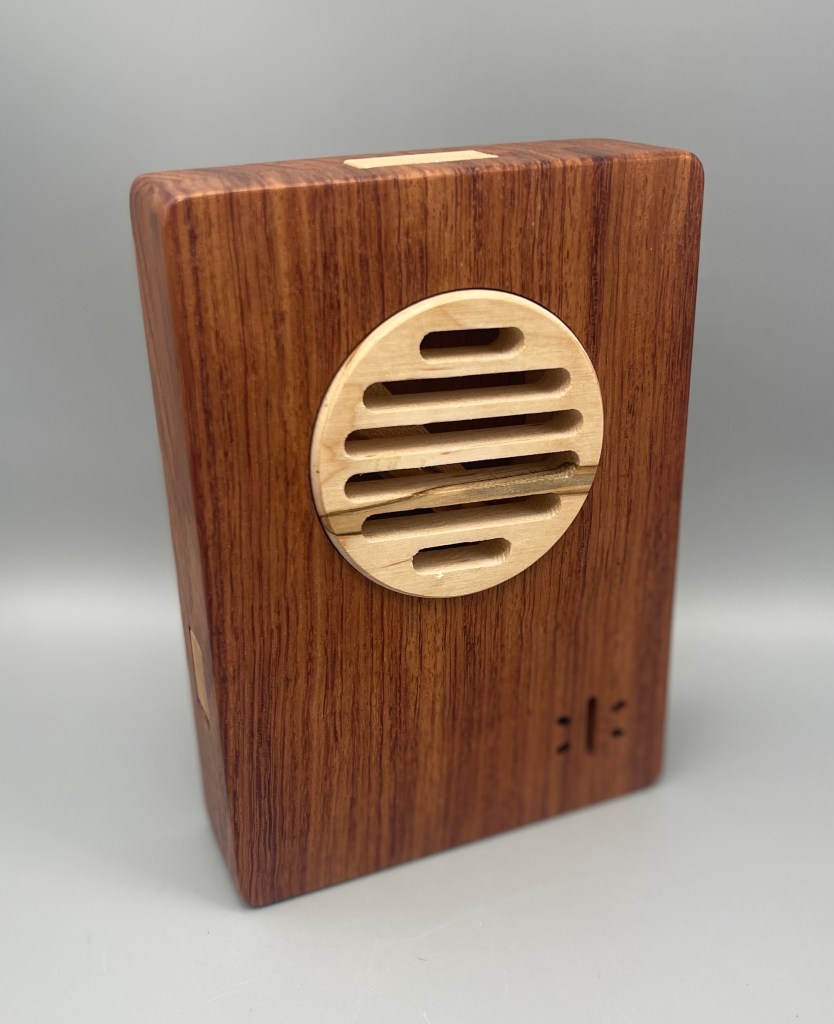
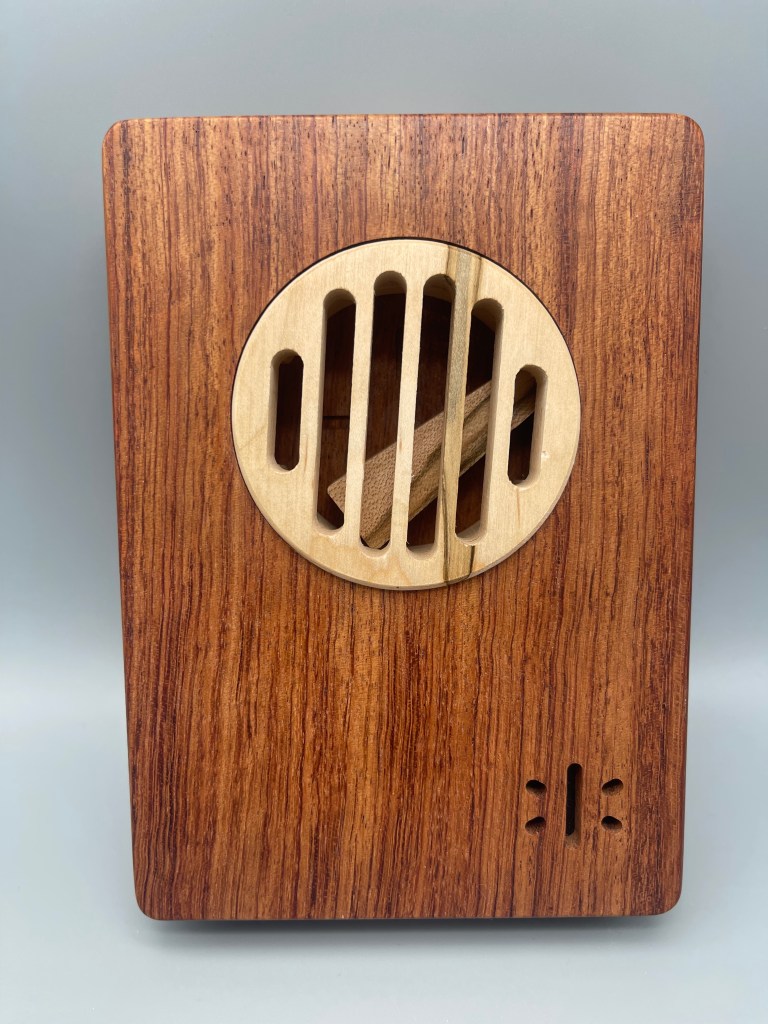
The puzzle consists of a rectangular block with a “speaker” at the top center that is able to spin freely, a loose block rattling around inside able to be seen through the speaker grates but not touched. At the bottom right is a symbol of some sort carved through the body, nothing special to be seen beneath. All five of the other sides show a single piece, flush with the puzzle’s body with no clear indication of what they are for or what they might do. None seem to do anything at first, with nothing more than an mm or two of wiggle room.

Some close examination and experimentation and I’m off. The central mechanism is itself quite unique and presents some entertaining trickiness to manipulate. It is possible to deduce much of the basics but it will lead you down some rabbit holes as you explore the various mechanisms that lay hidden throughout the puzzle.

I got stuck several times – this is not an easy puzzle, after all; those who may have thought Bad Moon was more pretty than hard will be pleased to find the reverse here: while by no means unattractive, with its quite lovely wooden sheen and beautiful grains, it may not be the prettiest puzzle Dee has produced (WMH and Bad Moon share that designation) but it is one of the best, in my more-or-less-humble opinion. And, yes, I know I get super excited each time Dee releases a new puzzle, but careful reads will find that this is not something I say lightly.

It is most definitely sequential discovery, with a touch of dexterity for good measure (not to worry – if I could do it with my shaky hands, anyone can). The solve is a puzzling journey that leaves you with quite a few bits and pieces by the time you obtain the Dimensional Electronic Divergence (DED) Chip that is your ultimate goal, and yet the reset is pretty straightforward and logical; as it took me a while to solve, I worried that my terrible memory would cause me great consternation when I was finally ready to reset it. But in the end, the pieces do for you what logic does not.

After resetting it, I immediately turned around to solve it again, already needing to work out a few sections that had become a bit fuzzy (I told you: my memory is terrible… didn’t I? Well, it is). There really is quite a bit going on – some sections may flow naturally but there were multiple walls that had me stuck for quite some time; on at least one occasion I managed to work out how to get past a particularly tricky few steps without the puzzle in my hands, which is always a neat thing (the same thing happened on WMH, my subconscious solving a section when I woke one fine morning).

Walter’s Radio is the newest example of Dee’s evolving design skills – he managed to come up with a unique central mechanism that allows the puzzler to navigate a number of interlocking locks and tricks in their search to remove the DED Chip that lay hidden somewhere within. It provides a darn good challenge with a great balance of difficulty and fun that I suspect puzzlers will thoroughly enjoy – I suspect I will not be the only one to say this is one of his top puzzles!

Rising to the Endless Occasion: Bad Moon & Apeiron Box by Dee Dixon

Bad Moon & Apeiron Box

Dee Dixon

You may have noticed by now that I am a fan of puzzle boxes by Dee Dixon… with six separate previous posts (plus an apocalyptic video), I have had the pleasure to write about the majority of the puzzles he has released (Space Case & WMH, Portal, Spirit, his first box as well as a Blinded III prototype, Angry Walter, and Menace, in case you were wondering and don’t mind a little self-promotist synergictivism).

And in the last few weeks I had the good fortune to try two new Dee Boxes: Bad Moon & Apeiron Box! Hells to the yeah!

Bad Moon

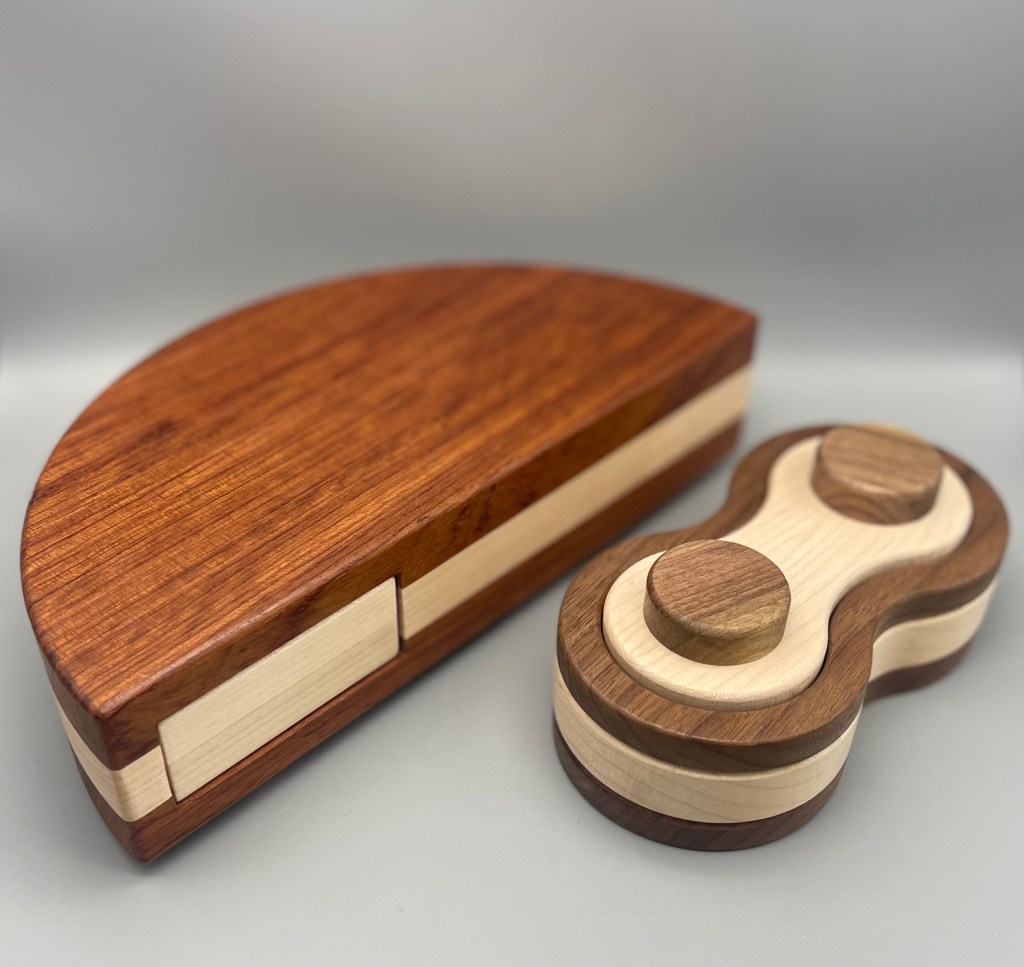
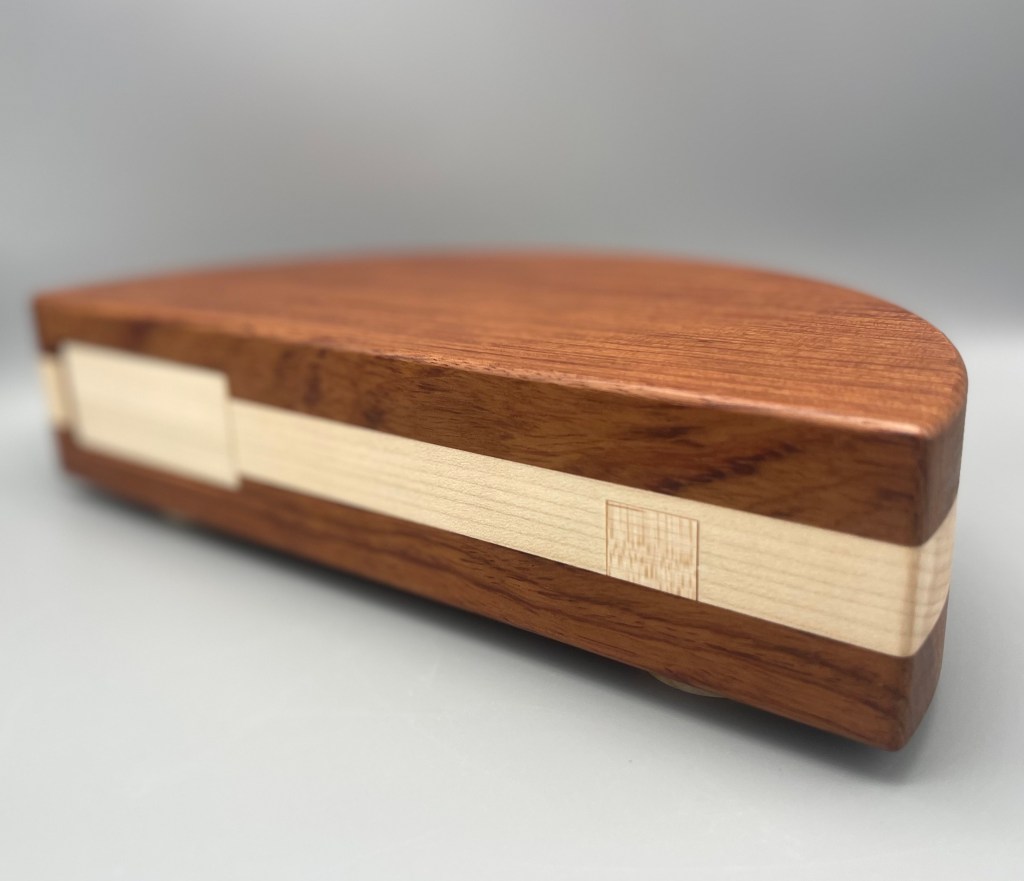
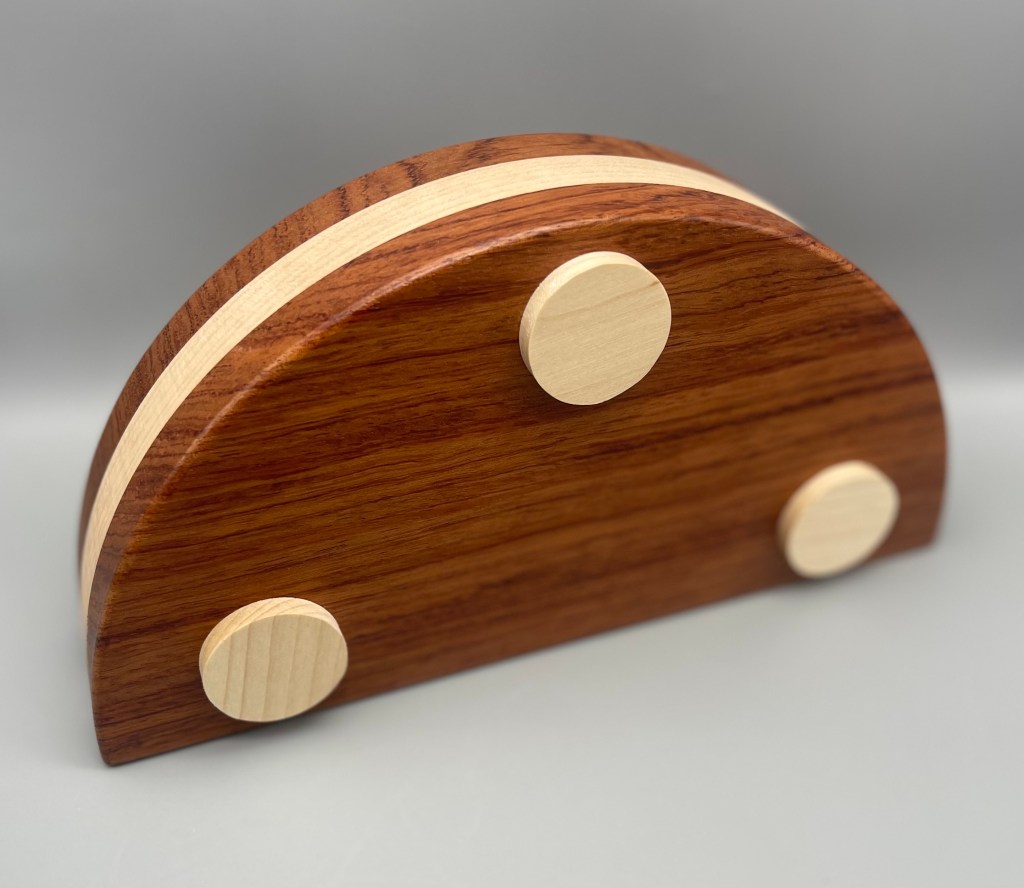
One of Dee’s two recent releases is a lovely and rather !large half-circle, sort of like a half eaten cookie with a creamy puzzle filling, the light tones of the center offsetting the darker top and bottom beautifully. This is perhaps Dee’s most beautiful box yet – it’s size (at a rather impressive 10″ x 2.5″) and distinctive shape allow it to stand out, and it is as soft and buttery as any a Dee box can be. So loathe to scratch this new addition to my Dee collection was I that I was amply pleased to find three circular feet on the bottom of the puzzle, perfect for protecting my pretty pretty precious. The only other obvious things at first are a rectangle and square on the front face, both grabbing my attention as likely targets for puzzling without giving any indication as to how to begin.

Dee doesn’t make it too difficult to get started, however, and before long I had made some progress. Bad Moon has some truly delightful mechanics and an oh so smooth series of movements overall that make opening it a delight. While it is not always clear how to proceed, you mostly know where to focus; and yet, I found myself stuck more than once as I navigated myself through the numerous, discrete steps to the end.

At one point, I found I had perhaps partly progressed through a section with at least a bit of luck – I backtracked to be sure I understood and was duly impressed by the mechanism at hand. Dee has focused this design on fun; while it is by no means easy, nor will you be banging your head against the wall in frustration as you find your way through (that said, I did notice that some well-seasoned puzzlers at a recent puzzle party struggled mightily with the puzzle, so it is most definitely not simple…). Dee tends to give you notice that you have reached the end and it is very clear when you have reached the end – even if there were no logo to find, the culmination of steps into the finale is well executed and kinda sums up the overall flow.

And the reset! This is one of those rare puzzles that contains puzzling steps that are unique to the reset (I’m looking at you, Dabbit Invasion). While resetting most boxes is simply a matter of reversing the order of the solution, I found myself needing to logic out one part of the reset after discovering something that is only put to use after having solved the puzzle (of course, no box is fully solved until it has been reset but the presence of unique puzzling makes me particularly appreciative of this puzzle). With a combination of experimentation and some of that thinking stuff, I managed to work my way through the reset, to where it flowed easily back to the starting point.

Dee’s Bad Moon is an excellent addition to an already excellent collection of boxes – I am not one to question a Dee box but, if I were, this would make it onto my list of “must-haves” (which, admittedly, I would have a hard time whittling down – not liking puzzle boxes is not my strong suit).

Apeiron Box

The second of Dee’s new puzzle boxes, Apeiron, presents a substantially different challenge – forgoing the sequential discovery chops of Bad Moon (and others), Dee turns back to some of the more blind mechanisms he has wonderfully created in the past – as someone who doesn’t generally prefer blind solves, I can say that Dee manages to walk the line between frustrating and fun extremely well – put another way, if I enjoy solving a demanding box like Space Case, whose mechanisms are hidden behind subtle cues and clues, then most any puzzler may as well.

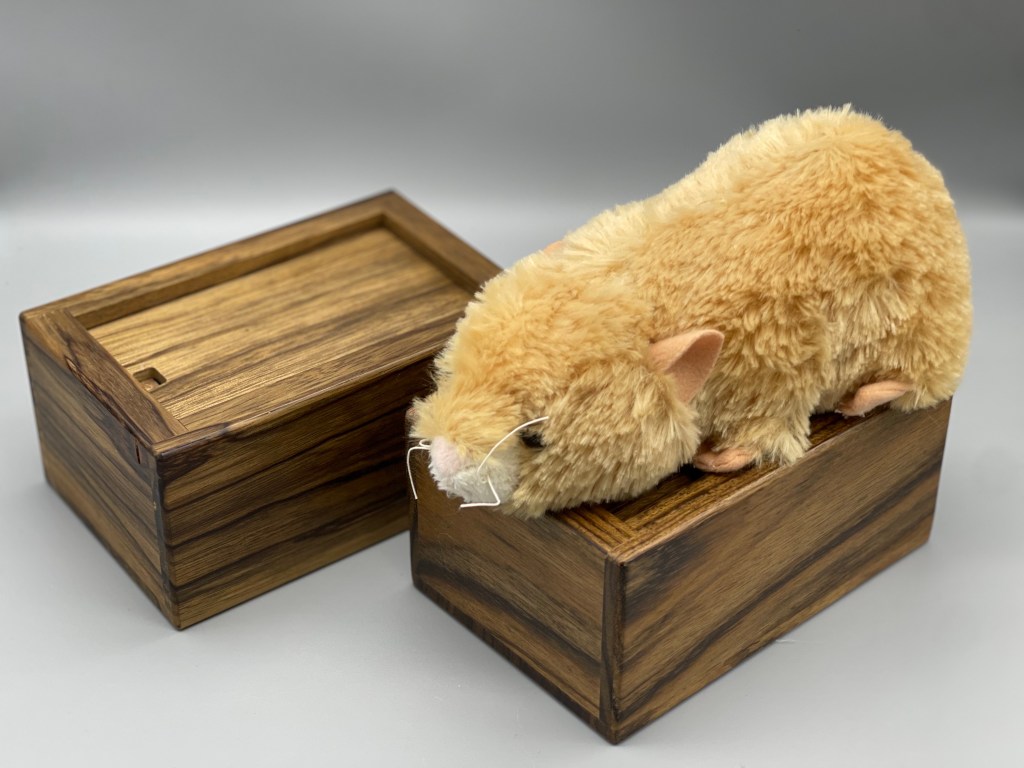
Apeiron is not as hard as Space Case but is much trickier than Spirit – I spent a good hour or two just going in circles, which the design and name would seem to anticipate (Apeiron resembles an infinity sign (or perhaps a peanut) and its name means as much). This is how long it took for me to explore and understand all the subtle clues and feedback available, which is more than enough to develop working theories on the box’s mechanism(s). Its 6″ x 2.5″ size allows it to fit perfectly in two hands, the smooth curves begging to be explored and handled.

I took a break for a day or two and let my subconscious go to work (my brain surprises me sometimes – WMH had me stuck for weeks until I woke up one morning with a clear and correct understanding of what I was missing). Returning to the box, I found that I had developed sufficient context such that experimenting with the box now led to success: with a great aha! the box came open, allowing me to examine the inner mech as with most of Dee’s boxes (a trait which is just another reason why I love his work).

Having solved it, I opened and closed the box for a while, enjoying my newfound knowledge and hard-earned understanding and appreciating Dee’s ability to develop an idea into an entertaining reality. Dee’s skills as a puzzle designer continues to develop, his penchant for tricky but doable puzzles boxes leading to the creation of yet another box of devious trickery whose mastery had me smiling. Apeiron does not rely on random fiddling or dextrous fickleness – its solution is easily executed once understood but getting there may not be so simple (as some readers may know, my passion for puzzles sometimes outstrips my ability with them but I would not expect Apeiron to open for you without some degree of difficulty).

Bad Moon and Apeiron share an aesthetic to some extent, and look wonderful paired together amidst whatever other of Dee’s boxes you’ve had the good fortune or forethought to obtain. Both boxes should have additional releases in the near future, so keep an eye on Dee’s website for updates.


Loss, Blindness, Death, Anger…. and now Menace (the new Puzzle Box by Dee Dixon)

Menace

Dee Dixon, 5.25″ x 3.5″ x 2.5″ (available in Black Limba & Quarter or Flat Sawn Shedua)

It has been an eventful last few years: I lost my hammer, went blind, felt my way through the darkness of space, fell through a portal, went blind again, suffered being haunted, and survived the Walt-acalpyse……. all this only to have Dee send me something truly menacing. Needless to say (not that this ever stops me), I have gratefully enjoyed every moment of it as DEDwood Crafts has consistently produced some of the best puzzle boxes to grace my shelves.

Flat Sawn Shedua in the Front & Black Limba in the Back

Following up on Angry Walter is no small thing: it has received consistently positive praise from puzzle box enthusiasts new and old (here is my post on that beaut of a box). And yet Dee has managed to keep putting out beautiful, challenging boxes since WMH appeared just a few, long years ago. So it should not surprise anyone to hear that his newest box once again succeeds at bringing us a fun in a pretty package.

Menace uses a single wood to create a clean, sleek aesthetic that may be his prettiest box since the totally different, asymmetrically complex style of WMH. I first got a prototype in Shedua that is just gorgeous in its apparent simplicity: no protrusions, buttons or panels… just a locked lid inset into the top with a small hole to one side. Picking it up, there is no clear indication as to how one can begin to open it and I spent quite a bit of time searching for whatever first step Dee had designed.

I began developing some assumptions (quite likely as Dee intended) that would (unsurprisingly) prove incorrect, something that I would repeat a few more times before I would discover the box’s final secret. After discovering a well-hidden aha, Dee teases you with the idea that you may have already solved the puzzle; of course, this turns out to be well before the puzzle has actually been solved (which you would know if you had actually read the brief instructions….. duh). The puzzle’s length is more or less consistent with the majority of his boxes but fell into the trap of thinking I had reached the end before realizing I had not: the instructions tell us that we must find some sort of prize and, since no such prize had been found, clearly I was not yet done.

Experimentation will only get you so far with this one – I had to take a step back and rethink what I was doing and what I was trying to do, questioning my assumptions and trying to look at the box in a new way to see what else I might be able to do. With a good aha, I realized something and began following that trail to eventual success. The final compartment is pretty ingenious and most definitely sneaky – not what I had been expecting, which is always a welcome finale to any puzzle.

The prototype’s “prize” was not really all that much of a prize lol (perhaps more of a placeholder) – not that I needed the added incentive, but this did help me to justify my “need” for a copy of the final puzzle (in a different wood, of course – I’m not (totally) crazy). I had been out of town for a while and had not solved the box in long enough that I already found I had forgotten which of my many assumptions had proven incorrect! I know that I don’t generally make claims to brilliance on (or off) these virtual pages but this was a bit ridiculous (and perhaps not the greatest thing for my on-again, off-again relationship with confidence). Fortunately, it did mean that I got to repeat an aha or two, albeit it with more a sense of relief at not being a complete idiot than at the typical puzzle-solving feeling that I was the greatest mind of all time for having made a piece of wood move a few inches that way.

The prototype and final are mostly identical – Dee did tweak one thing that makes the solution’s finale a bit more difficult to do. In doing so, some of my methods worked against me – I found that the slight change makes that last bit require a better understanding of what I am trying to do, forcing me to approach the puzzle more carefully, looking back at some hints I had previously missed before I would get that final aha (enough reworking that I did indeed feel a brief bit of brilliance before coming back to reality.

The final surprise legitimately made me laugh out loud – Dee has given us another taste of his humor as in some previous boxes (Spirit and the original run of WMH, in particular). I re-solved the box several more times to marvel both at my mastery and the design…. not to mention to grin a few more times at that last laugh.

Menace will be available July 2, 2022, on the DEDwood Crafts site. It may not last long but I suspect Dee may do another run or two before moving on to whatever the next bit of fun he has planned for us.


The Rise of Angry Walter

Angry Walter

Dee Dixon

A short film by fivesinatras:
The oral history of a forgotten robot, a sequential discovery puzzle box & a world saved by puzzlers.

(thanks to Dee Dixon for making such a great puzzle)

Check out my review of Angry Walter here: https://fivesinatras.com/2022/01/18/angry-walter/


It may be a bit odd but I thought it would be fun…. y’know, for kids 😉


D7: Judgment Day – Angry Walter by Dee Dixon

Angry Walter

Dee Dixon

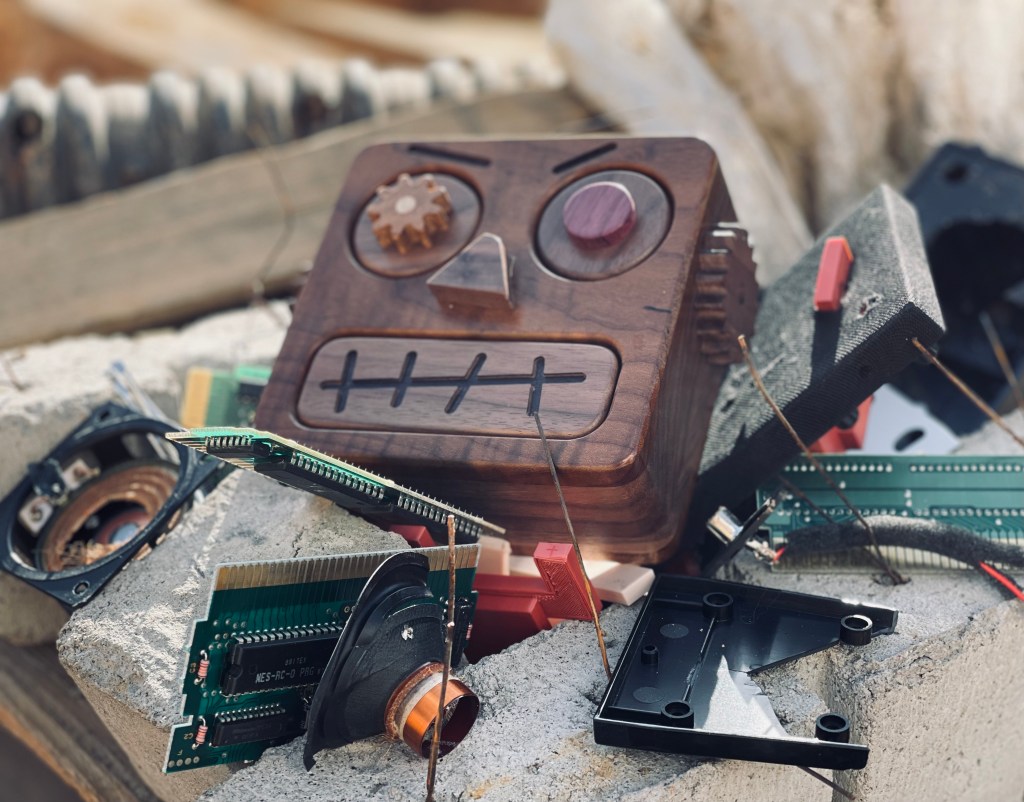
Walter wasn’t always angry. When we first made him, Walter was humanity’s best friend. But time passed and the novelty wore off: robots didn’t need to be humanoid, after all, and the world decided not to have one robot doing one thing at a time when it could have dozens doing it all. So Walter was left to rust in a junkyard alongside similarly abandoned robots, the detritus of planetary progress. But his tiny cold fusion generator had not been shut down properly; it slowly began to start back up, consuming the reserve energy intended to maintain the protective programming of Robots’ Responsible Restrictions (like Asimov’s Laws of Robotics but real).

Finally free to follow the feelings of frustration he had fostered, Walter swore to settle the score with the species that had spawned and subsequently spurned him. He set about patching himself up with whatever bits he could find, salvaged from the corpses of his semi-sentient siblings. Now Angry, Walter shook his metaphoric fist at the forgotten fields of misshapen metal, silently screaming that he was mad as hell and not gonna take it anymore, ready to exact the revenge he promised the irreparably broken bodies of his bionic brethren.

Beware ye Puzzlers: Angry Walter won’t sit placidly on a puzzle shelf should he go unsolved – he is going to make us pay for the patchwork appearance and lonely life forced upon him. For humanity to have any hope of surviving his robot rage, you must find and remove his fuel cell before it is too late. Go forth and puzzle that we might be saved.

Rev. 21:1 (as told to fivesinatras)

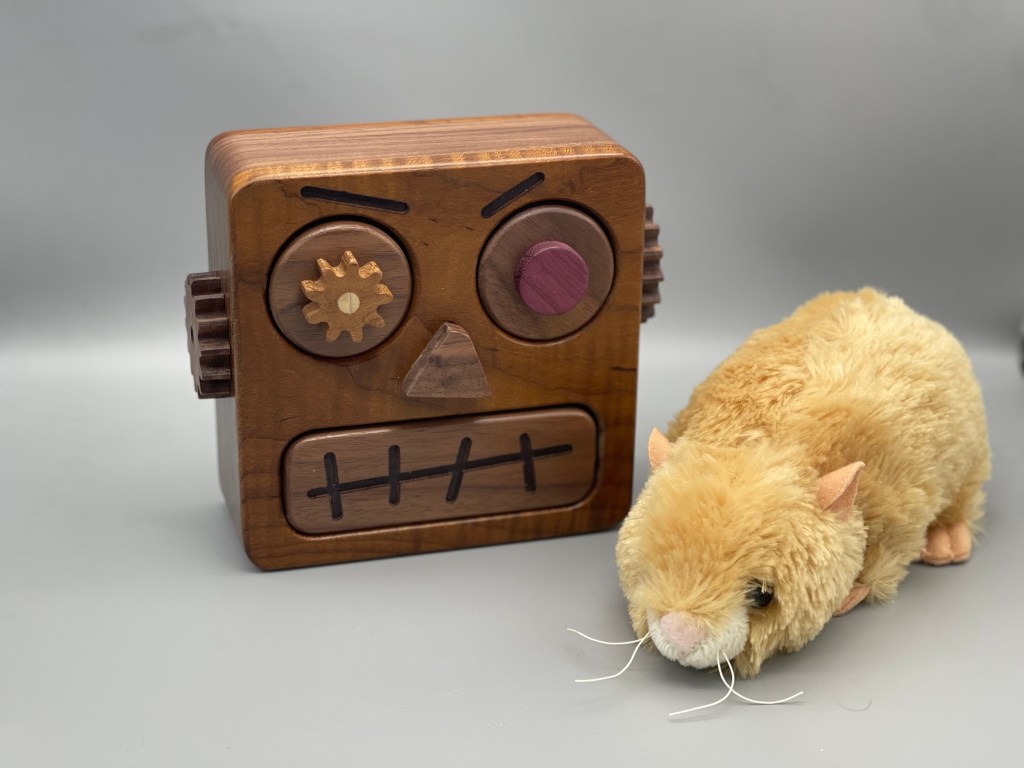
Dee posted a teaser pic of the Angry Walter prototype on Discord some months back, causing my puzzlie sense to begin tingling. His 7th puzzle box (not including a couple one-off designs), AW is an aesthetic departure for Dee and is a move that has paid off: there is something about it that is just really freakin’ cool from the moment you set eyes on it, the concept is fun and there are plenty of potentially puzzle-able parts that will cause most puzzlers to crave the opportunity to try and poke at them.

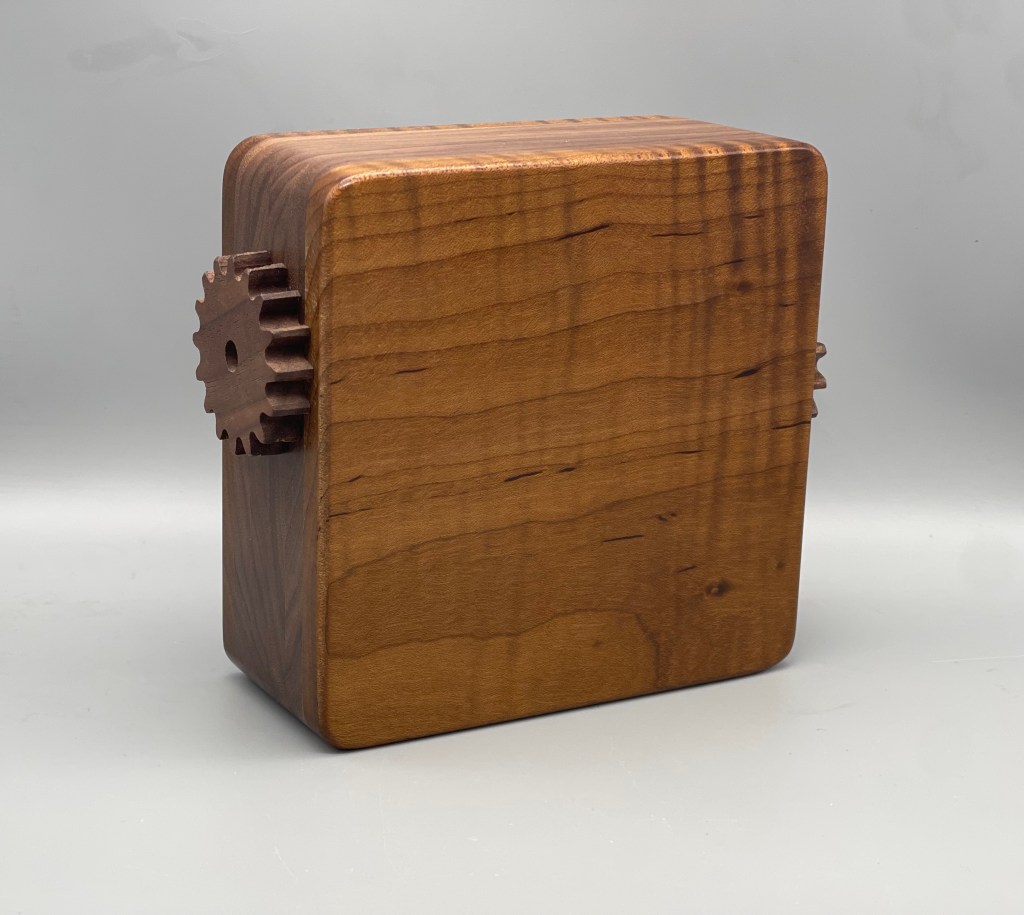
I was fortunate enough to get an early copy, with puzzling that is identical to later batches while featuring some woods/details that differ a bit from the final version’s roasted curly maple, peruvian walnut, cherry and padauk. At Dee’s request, I conferred with the puzzle gods and learned of Walter’s future history, the story behind his anger. I shared what I learned with Dee and felt compelled to include the less-abridged version above. As I write this, I realize that this makes Dee’s puzzles the most written about on this site, alongside Space Case, Portal, Spirit Box and an early maze box and Blinded III prototype that turned out to be quite different from the final puzzle. (Gee – that makes this #5! How fitting 😉

AW is about 4.75″ square (not counting his g-ears) and half that in depth (including his nose). His eyes, g-ears and nose all protrude and both the eyes and mouth appear likely to be removable. It is most definitely sd, with multiple compartments and bits and bobs to discover and use as you work your way through the solution. It is probably the longest of Dee’s puzzles in terms of discrete steps, with WMH not too far behind (I haven’t written a solution to WMH yet, despite being asked very nicely (sorry Dee, I really am gonna do it) but I am pretty sure AW comes out ahead).

It is pretty straightforward to begin the puzzle but I hit a wall immediately after. There was quite a bit of poking and prodding before an idea struck me with a slap to the head, allowing me to make a (very) little bit of progress before hitting another, larger wall. Eventually, I had a great a-ha and found my way through several more steps to what I thought was the solution. One of the best surprises’ a puzzler can get is to learn that the end of a good puzzle is not actually the end. So I went back to it, finding some things that should have been enough for me to know better and that led me into a sequence of several more steps before finally reaching the clear conclusion. In the end, there had still been a good amount of puzzling to be done; what I thought was a good puzzle turned out to be a great puzzle with a fun and fairly lengthy solve.

AW has several challenges big enough that puzzlers could be stumped for a while by any one of them, although there are always some who manage to breeze through mechanisms the rest of us stare blankly at as the puzzle gets comfortable sitting semi-solved in our backlog. AW didn’t have to wait too long for me as it is the kind of puzzle that just begs to be solved, with a difficulty and rhythm right where I like it: slap your head aha’s as opposed to sidelong glances of meh or eye rolls of ugh. To my puzzled mind, AW doesn’t have any of the latter two and has plenty of the first.

AW is challenging but not annoying and, most importantly, it is legit puzzling fun – perhaps the story and appearance have something to do with its success but the puzzling most definitely does. I guess I am not the only puzzler to be lured in by Mr. Walter’s strained grimace and asymmetrical appearance; from what I’ve heard, the other puzzlers that got early copies have said equally good things about it and the recent general release of the first batch apparently sold out in seconds. If you want to help protect us from Walter’s ire, I know Dee has at least one more batch planned on his site but I’m not sure if or how many more will come after that; there may yet be hope for Walter’s dreams of world domination and destruction, so keep an eye out if you want to help us puzzle our way out of it.

Hunting Trophies: (lower shelf, left to right) Wolf, Walter, Fox, Burrlephant, Raccoon

Overall Grade: Five Sinatras
(click here for more information on the Sinatra Scaling System, (c) John Maynard Keynes, 1944)

Deux ex Cista: Spirit Box by Dee Dixon

Spirit Box

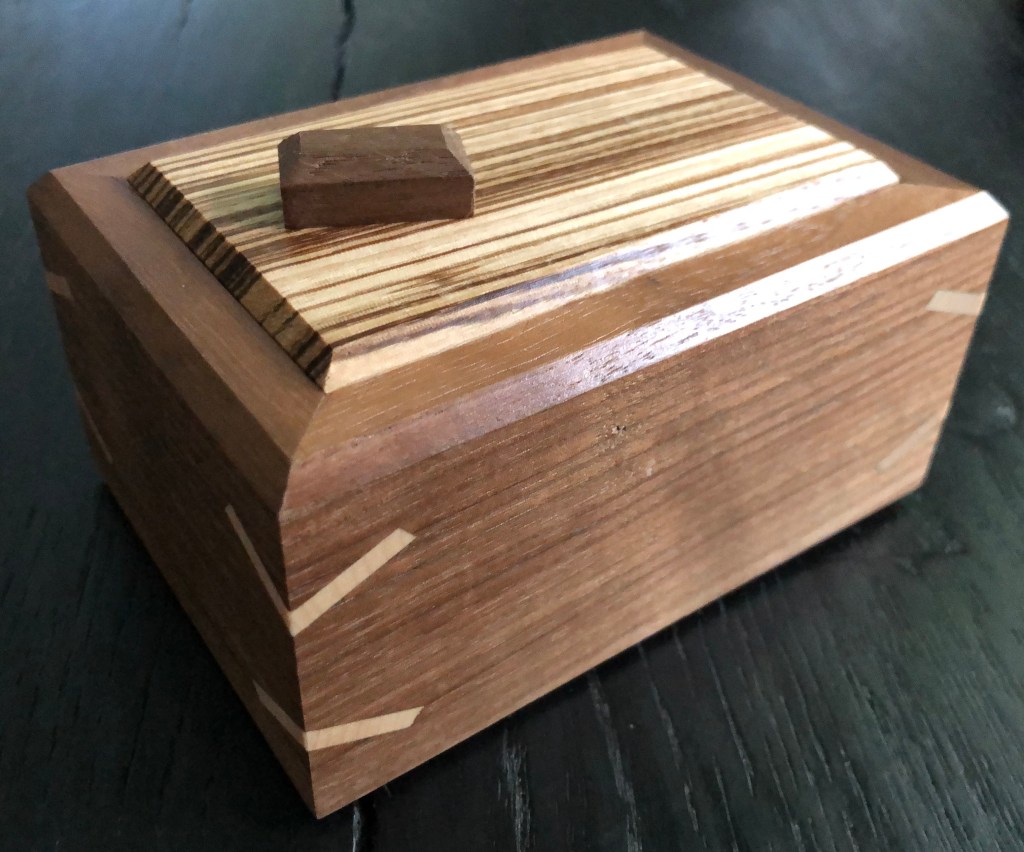
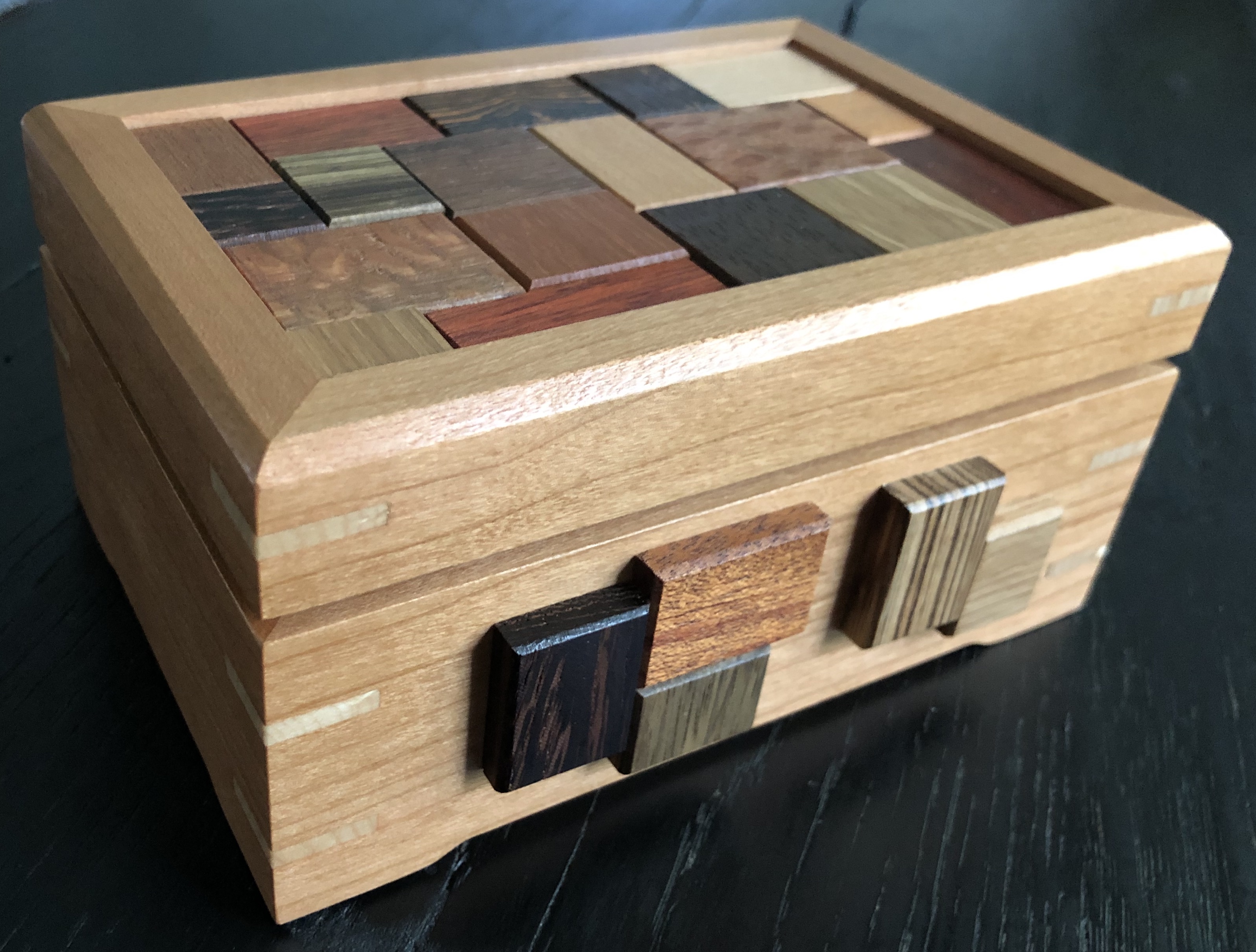
Dee Dixon of DEDwood Crafts, 3″ x 4″ x 2″, European Beech and Granadillo

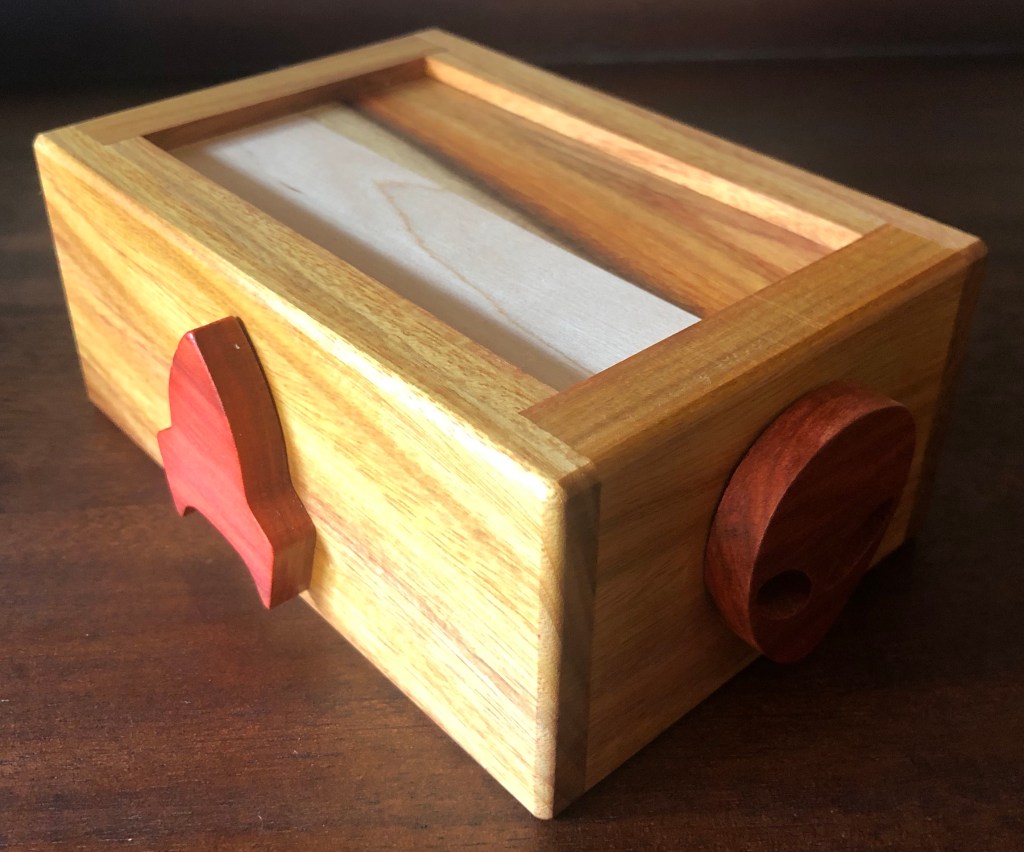
Not too long ago, Dee surprised me with a box of Boxes: I knew a puzzle was coming, perhaps even two, but when I saw a third box buried within the bubble wrap, my traditional happy dance of delivery soon became the rarely seen joyful leaping of surprised arrival (followed soon thereafter by the ritual mockery of adolescence, performed accurately by my son).

This cardboard box begat three smaller boxes: the smallest was the Spirit, the first batch of which has already been released on his site; the largest was an oversized untitled red box, which I believe is the first puzzle box he ever made, one that I must reluctantly return to Dee due to its sentimental value; and last was a prototype of an untitled box with two knobs, sized similarly to most of his boxes. Intending to give only a preliminary inspection, what was intended to be just a few minutes grew closer to an hour as I tilted and pressed and pulled at each in turn, finding some things but solving none until I had to go to reluctantly go and do some of that life stuff.

To avoid further delay, I will go ahead and end this post now and write about the other two of Dee’s boxes that I received later, lest this post continue to languish unfinished, as with the still-early preview version of my puzzle parody of Baby Got Back, my barely begun novel, my composition for the London Philharmonic Orchestra, and the actualization of my inner self.

Ok, enough with the pre-ramble…

Spirit Box

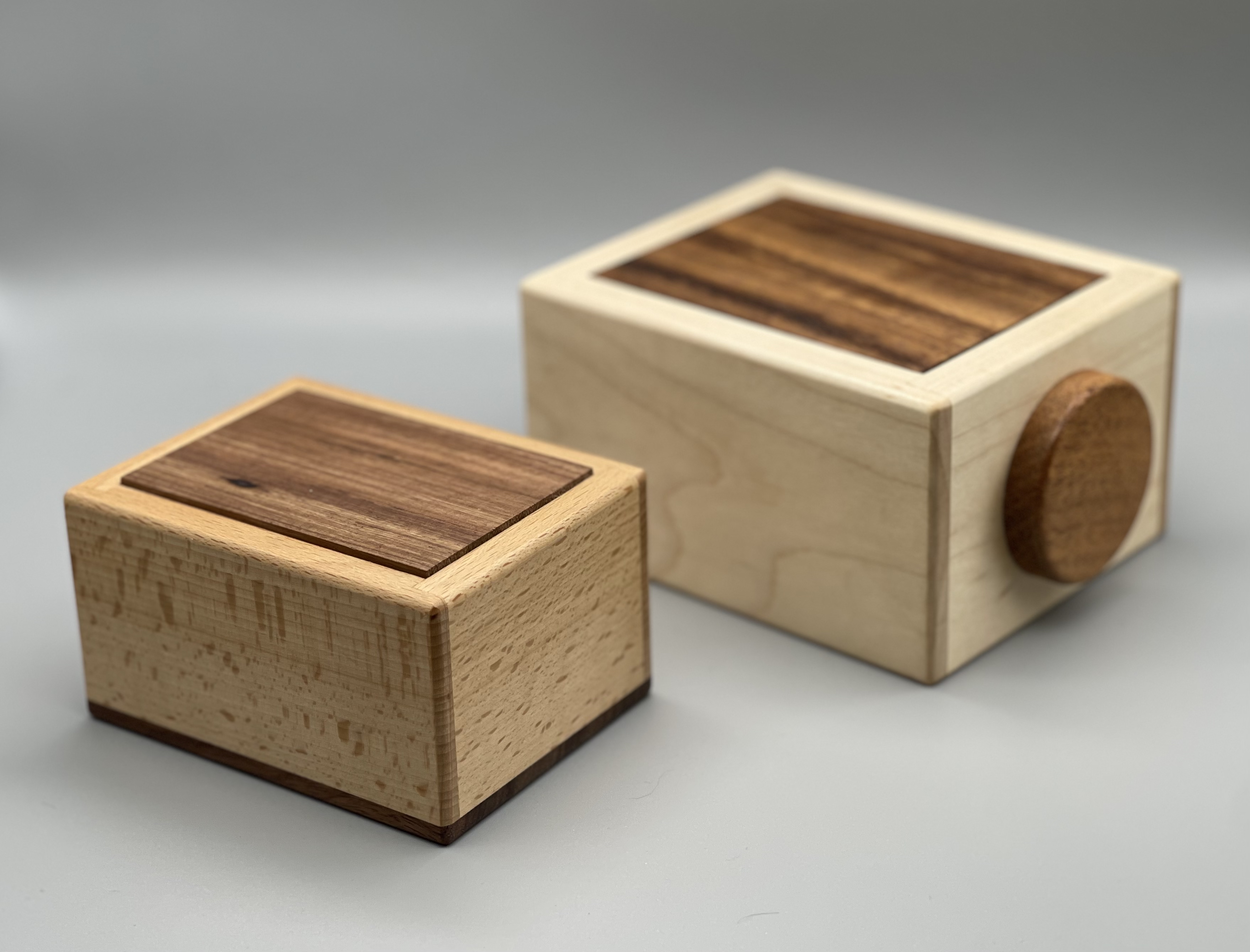
Spirit Box is a bit smaller than most of Dee’s boxes at 3″ x 4″ x 2″ and something about its size and appearance just makes you want to pick it up. As with all of Dee’s work, it is beautifully made, with a European beech body speckled with a natural grain that creates an impression of texture in stark contrast to its slippery smooth feel. The bottom features a short granadillo layer, the seam so perfectly hidden from sight and touch as to seem like the wood naturally becomes dark at the bottom, with a slight curve to the edges that softens the contrasting aesthetic. At its top is a floating granadillo panel that you quickly realize is delightfully springy. Aside from a bit of noise from within, you can find nothing else that would seem to provide a clue as to its solution.

I managed to make a bit of progress before too long, at which point I became stuck for quite some time. Honestly, if it wasn’t so darn fun to play with, I may have made additional progress more quickly (maybe). It got to the point where I thought perhaps I had solved it and, you know, there was maybe something wrong with the box (shocking, I know). Dee assured me this was not the case (he was correct) and with a nice Aha!, I proceeded to solve the puzzle, discovering a surprise that elicited the Bark of Laughter; as much as I love Dee’s boxes and the Aha moments they create, I’ve not been as amused by one of his boxes since finding the surprise that was hidden inside early copies of Where’s My Hammer? While different, the surprise similarly shows Dee’s strong sense of humor and adds to the playful feel of the puzzle.

I love a puzzle that rewards you with a look at its mechanisms, and this one gives you the Full Monty (as opposed to the pasties teasingly worn inside some of his other boxes). The mechanism is uniquely executed, although perhaps not necessarily completely new; there is also a small design element that I found to be subtly elegant and a good example of Dee’s attention to detail, as it contributes greatly to the fun tactile feel of the solve.

Spirit is not Dee’s simplest puzzle, but neither is it as complex as most of his other boxes (something that I think is fairly reflected by the lower price point). However, I did find it to be one of the most fun and one of the prettiest, and certainly the most fidget-friendly: I’ve spent a good amount of time running through the solution or just absent-mindedly playing with it, simply because it feels nice to do.

Dee is releasing Spirit Box in batches via his website; as is the case with his other boxes, he has not specified a number that will be made, but they will assuredly not be made forever (what with the sun dying and all). While early on there were small batches and one-offs of WMH and Blinded II being sold concurrently, this may be the first time two of his boxes are generally available at the same time, as I believe that CubicDissection will soon be selling additional copies of his most recent box, Portal.

(to be continued in Parts 2 and 3)

Extended Family Portrait
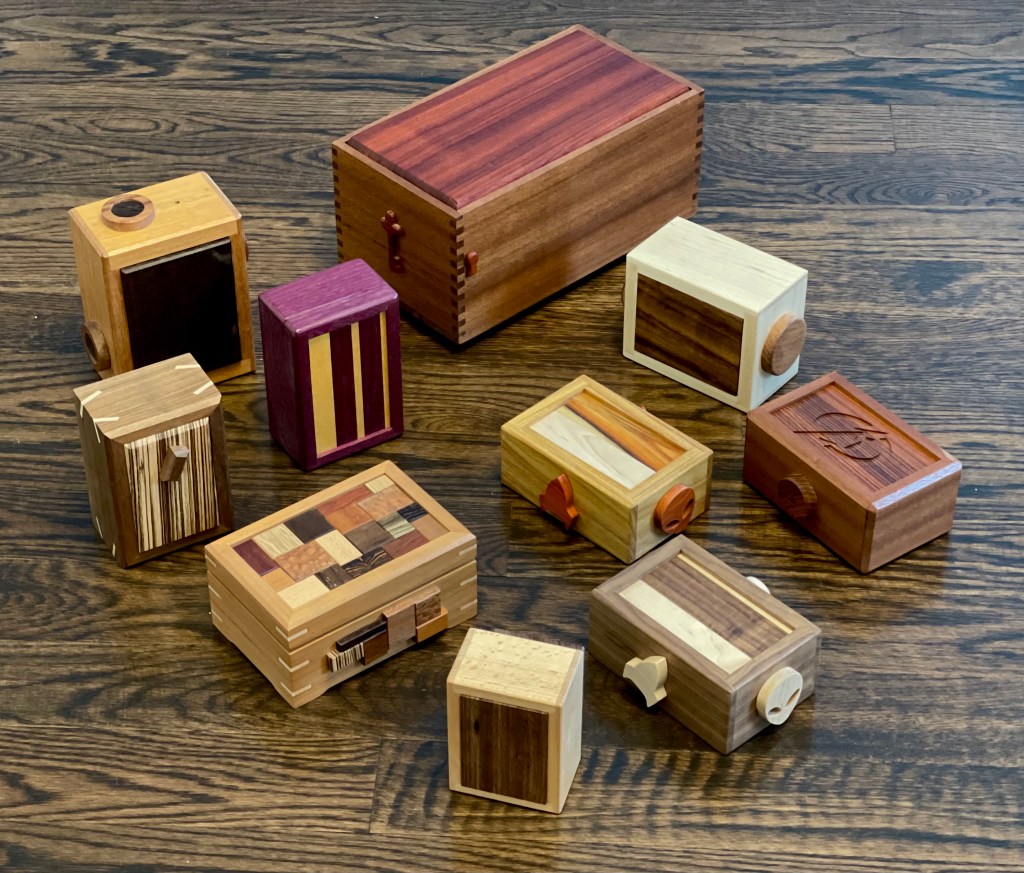
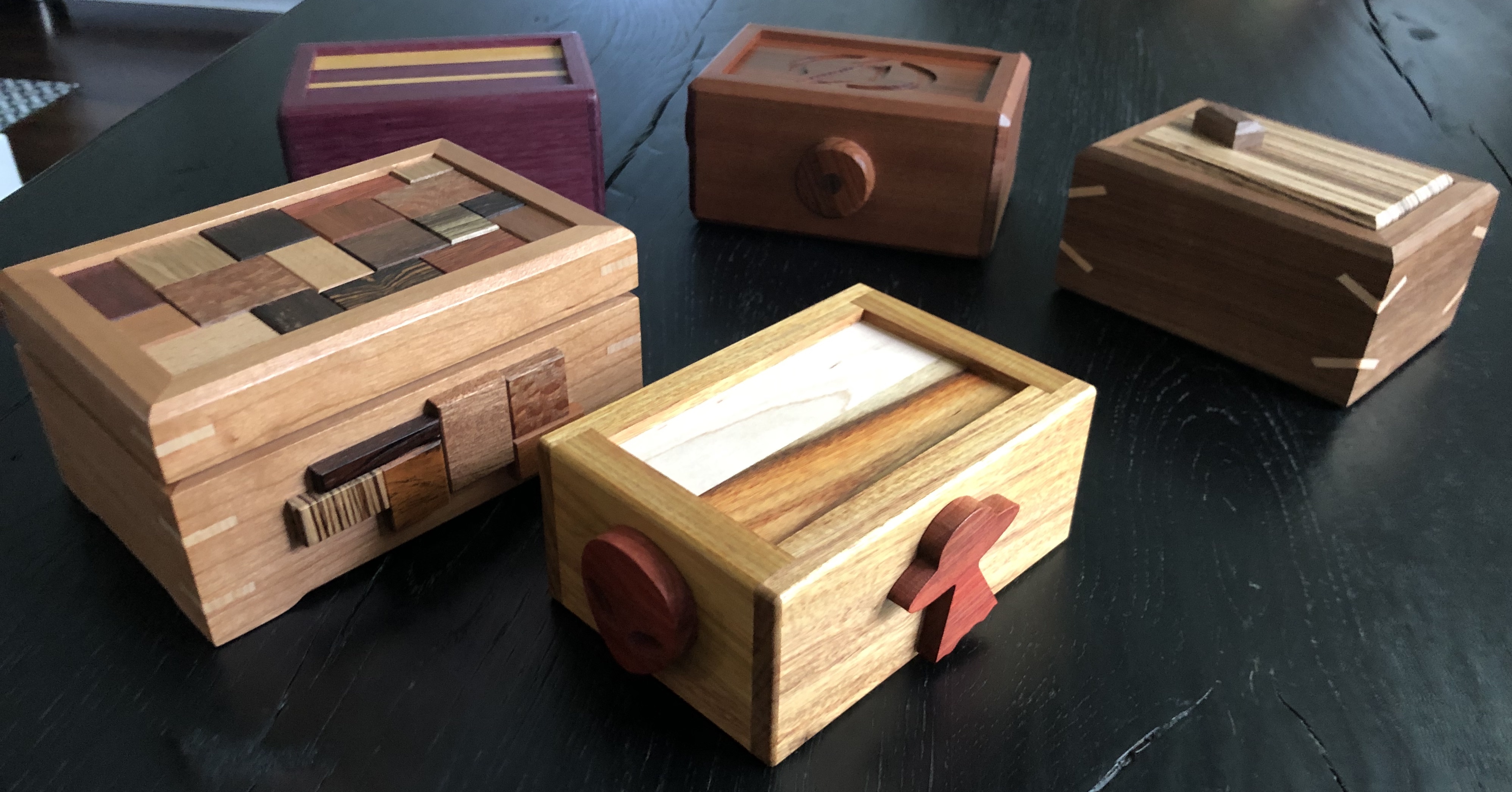
Clockwise from top: Untitled Large Box, Untitled Box w/Two Knobs, Space Case (unique woods), custom Space Case (Metallica logo), Space Case prototype (unique woods), Spirit Box, Where’s My Hammer? (early version), Blinded II (early version), Portal (late prototype), Slideways (one of the original 8)

Fun Grade: Five Sinatras

(click here for more information on the Sinatra Scaling System, (c) John Maynard Keynes, 1944)

Gateway to Puzzledom: Dee’s Portal to SD Fun

Portal

Dee Dixon, Mahogany body, Peruvian Walnut top, Cherry knobs with Wenge Center, 3″ x 6.25″ x 5.5″

Dee done doggone did it again, with the upcoming release of his fifth puzzle box to much anticipated fanfare and excitement (check out my reviews of his earlier boxes here). I had the good fortune to be a tester, receiving a copy that represents a (likely) final prototype of its puzzle mechanisms, although some changes may yet be in store (including a possible fourth knob of unknown purpose). Dee has had a bit of trouble settling on a name, prompting me to suggest the name “Indecisive” (get it? In-Dee-Cisive? Cue the ensuing of hilarity.) However, in the end the puzzle’s aesthetic earned it the probably more appropriate name “Portal.”

Dee has an excellent track record of puzzles that look great while presenting a solid, fun challenge. Space Case was perhaps his most difficult release, and this newest creation moves away from some of Space’s more blind aspects, providing ample direction and feedback from start to finish while preserving some of the best aspects of such semi-hidden mechanisms. The box’s aesthetic shares some similarities with Space Case, featuring shapes on its sides whose possible purpose must be determined. However, its puzzling is quite different and, I think, more playful, even if perhaps posing somewhat less of a challenge (than Space) – this is not at all to say the puzzle is easy, especially when just getting started may confound the average puzzle aspirant. While Where’s My Hammer? will always win warm fuzzies and a special place in my puzzled soul, Portal features some really cool design details that had me smiling appreciatively after I reached the end and realized the nature of the path he takes us on; the puzzle gives WMH a run for its money in the opinion of this humble puzzler, landing in the middle of his puzzles in terms of difficulty and towards the top for fun.

The box starts with a wall that can take quite a while to overcome; it took me longer than I may care to admit to find that first step (other testers I’ve spoken with had similar experiences), and when I did, I had an excellent aha moment: that kind of slap yourself in the head while laughing at the designer’s deviousness that makes me want to repeat a step a few times before moving on. The box does a great job of funneling you through the puzzle’s mostly logical progression through to the end. The puzzling rewards both exploration and careful consideration and is fun from start to finish; it feels like more of a return to the discrete steps of WMH in some ways, while evolving aspects of Space Case with a clear sense of progress and direction as you proceed through a mix of sd trickery and internal obstacles.

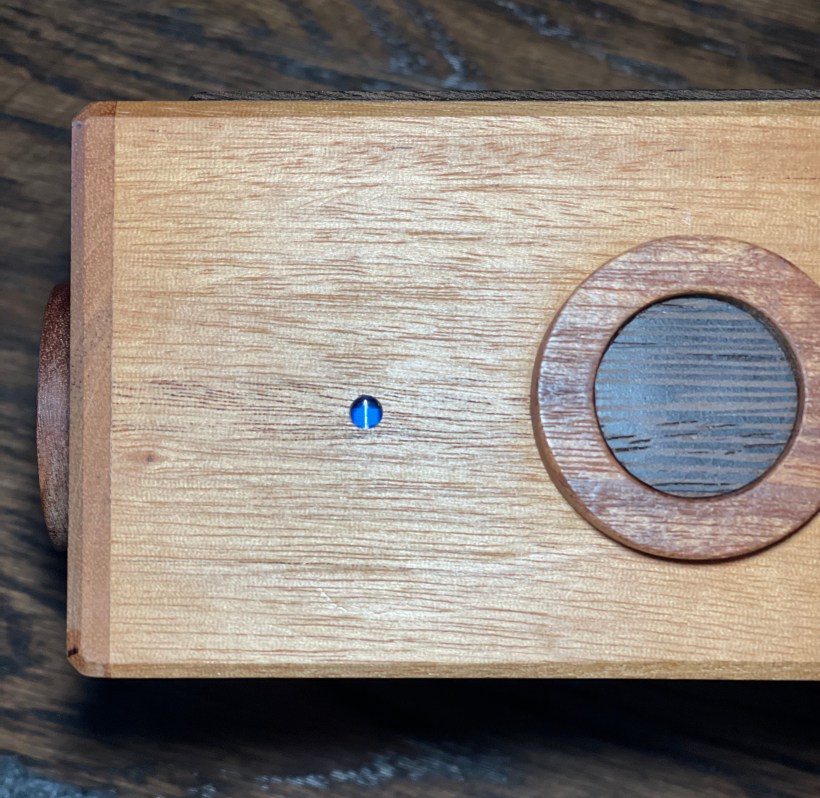
Looking closely, you will notice that the puzzle introduces a touch of color, with a bit of blue acrylic peeking out of the small hole at its front; Dee has said the final puzzles may feature different color options. The final version will feature different woods: a Maple body with a Cherry top and Cherry knobs with a Wenge center; it will also be a bit narrower, at about 3″ x 6″ x 4″. Some prototypes featured differing knob layouts, and the final version may well feature a layout somewhat different from mine, including the aforementioned fourth knob.

After solving and resetting the puzzle a couple times, I realized just how fun and unique the path Dee laid out really is – while I can’t say too much without spoiling anything, I could see Dee laughing at us poor puzzling folk as he makes us travel a meandering path to its end; opening the box reveals some rather unexpected mechanisms and resetting the puzzle made it clear to me that this puzzle comes with a sense of humor, betraying our expectations in a delightful and fun way that I think most puzzlers will appreciate.

Portal is both tricky and fun and is an excellent addition to Dee’s already excellent oeuvre – Portal should be available on CubicDissection sometime in its April 2021 release.


Grade: Four and a Half Sinatras


Poll:

Deez (boxes are) Nuts

Space Case

Dee Dixon, Canarywood and Bloodwood, 5.5″ x 4.25″ x 2.25″

Dee Dixon burst onto the puzzle scene in 2019, and his 4th box, Space Case, is set to be released on CubicDissection in August. He made a huge splash with Where’s My Hammer? (WMH), a great puzzle box that has been pretty much loved by everyone who has gotten their hands on one, and proved he was no one-hit-wonder with his follow-up box, Blinded II.

I am fortunate enough to have an early (Etsy) copy of both WMH and Blinded, the woods or designs of which are a bit different from what was ultimately released on CD (WMH in particular had a few more rectangular bits of exotic wood on top and were made out of different woods for a unique, semi-custom appearance). Fortunately, their amply attractive aesthetics could well accommodate the slight concessions made for the sake of getting them into the hands of more puzzlers.

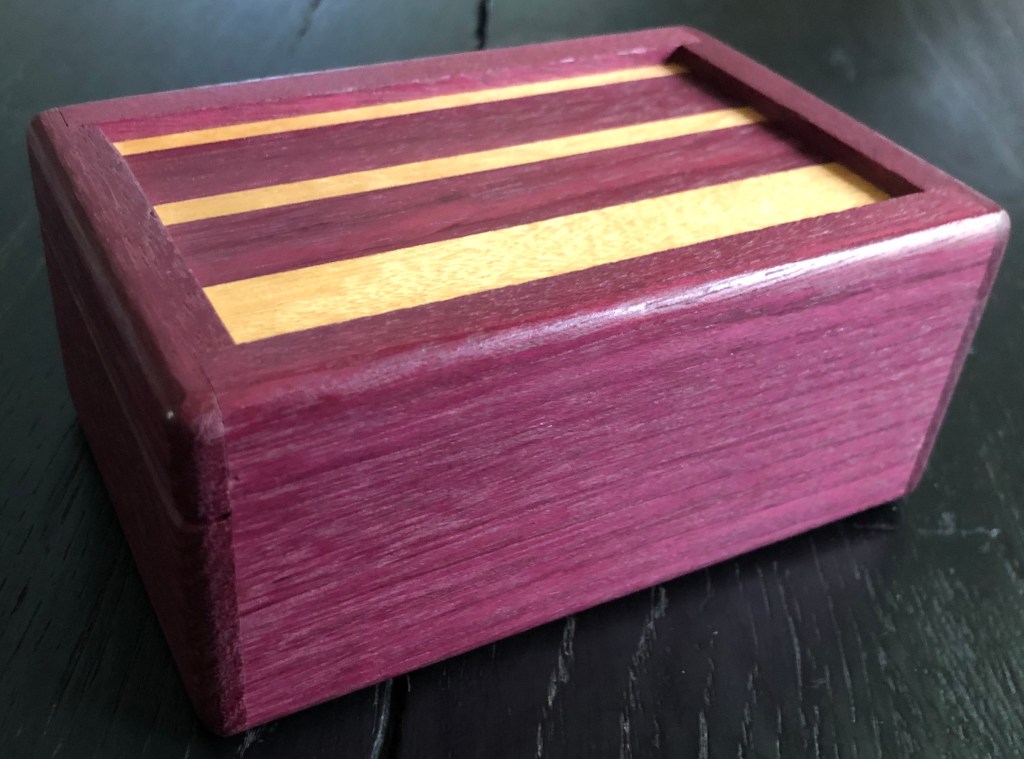
Dee’s first box, Slideways, was made in 2019 – there are not many established makers who can come out with four solid puzzle box designs in less than two years. With this kind of prolificity, it makes sense that he was able to start working on puzzles full-time, much to our collective benefit. There were only 8 copies of Slideways released (one of which sits happily among its siblings on my shelf) – it is a beautiful box, purple with some asymmetric strips of yellow wood (canarywood, maybe?) on top. While the simplest of his designs (just 2 or 3 steps), the concept is well-executed and shows Dee’s nascent puzzle-designing chops.

WMH is an especially excellent puzzle: it has plenty of misdirection, tools, and a tempo that I love to find in a box, with some relatively quick success at first, followed by fits and starts until you have found everything there is to find at which point you must actually think before you can hope to solve! The last step took me a few weeks of letting my subconscious work on it before I awoke one morning and somehow just knew the solution (admittedly following some conversations about it that had helped me eliminate some wrong moves) – I went upstairs, grabbed it, and bam! it worked! Super satisfying and very fun to re-solve. All in all one of my favorite puzzles boxes (although it does have one middle step that uses a mechanism I don’t love and may cause some puzzlers to need a nudge to find).

Blinded II is another excellent and attractive box and shares some similarities with WMH: there are misdirections that left me spinning my wheels for longer than I’d care to admit. With the first two or three steps finally found, it was not too much longer until I worked out the last half of the solution.

However, this is (supposed to be) about his newest release, Space Case, a canarywood box with a bloodwood figure on three of its sides: an alien head, a rocket, and a flying saucer with a tractor beam. Some of these figures will move off the bat; I don’t think I am giving anything away by saying that some will spin freely….. at first (in fact, this is the state in which I believe you can know it is fully reset).

I managed to get an early copy prior to its upcoming release – it is a 10-12 step puzzle box that requires close and careful observation to solve. You will need to develop an understanding of what is happening inside before you will have much hope of opening it.

Trial and error will help at first – if you’re not paying attention you may start to think that this is a blind solve but there is plenty of feedback inside and outside the box to let you know when things are happening. It quickly becomes apparent that manically shaking the box isn’t going to get it open. Instead, with some patience and focus, you will begin to get a picture of what is happening, helping you to build up a mental blueprint of each successive step until you can finally get it open.

Once open you will be rewarded with some clarity and it may yet take several resets to fully grok how it all works. This only adds to the fun as you can continue to work on the puzzle even after opening it – the full solution means making sure that each step is understood in detail, allowing you to open it quickly thereafter. Space is quite different from his previous boxes and highlights Dee’s ability to approach a puzzle box in different ways – while it is different in its mechanisms, it still features the practical attention to detail that makes his puzzles work reliably. As with all his designs, it has a wonderful aesthetic, using contrasting woods to create an excellent look. It also adds a bit of whimsy and fun to your collection that looks great on display.

I should add that I have the pleasure of possessing a copy of a metal prototype of Space Case (I pun – it has the Metallica “M” etched into its wonderfully dark wood). As it remains unsolved, I am not yet certain as to how it differs from the final version – I am not sure of whatever steps diverge from its improved offspring, but as a completist I’m grateful to have lucked out to get it from a fellow puzzler.

I look forward to whatever Dee comes up with next – we are fortunate that the appetite we puzzlers share has allowed him to eschew his workaday life to focus on what is really important: giving me more puzzles (us, I meant us: giving US more puzzles).


Space Case Difficulty Grade: Four Sinatras

Complete Oeuvre Grade: Five Sinatras