Hitting the Jackpot: Bandit by MW Puzzles

Bandit

MW Puzzles; 350 copies
2.5 lbs; 7.5″ x 3.75″ x 4.25″
Metal, Walnut, Acrylic
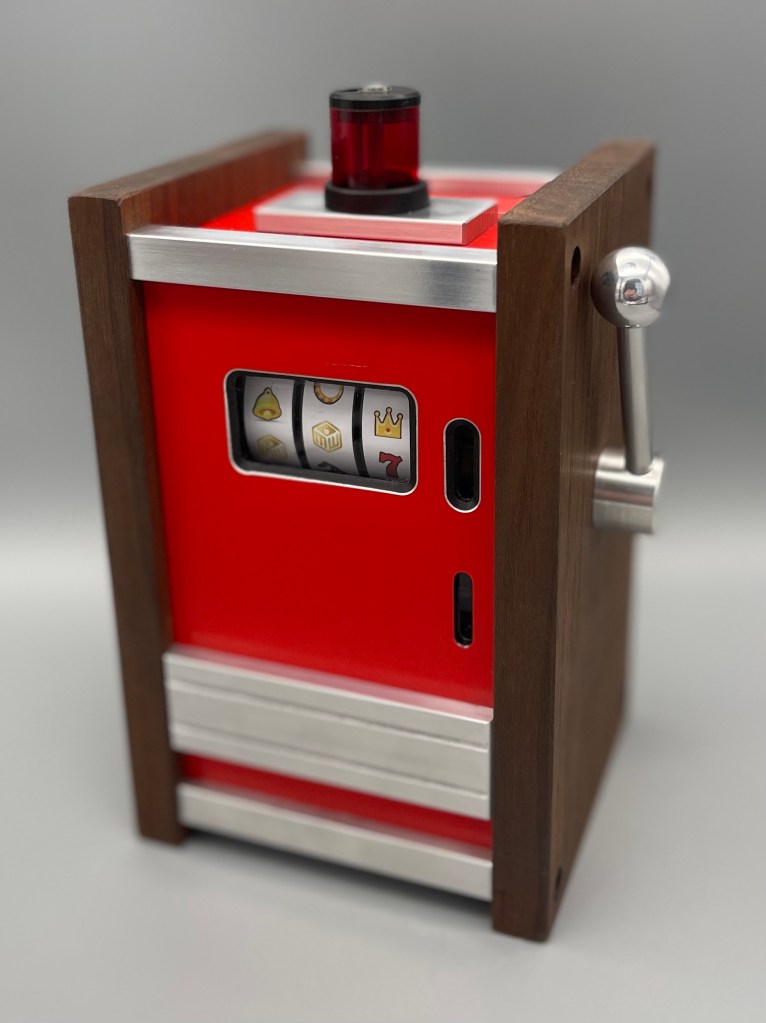
When I was a kid, I had a miniature slot machine with tiny tokens that would make the wheels spin; hitting a jackpot would release whatever tiny tokens had been inserted thus far. While entertaining to my nascent mind, there wasn’t all that much to it – pull the arm, spin the wheels, lose and repeat until you win.

MW Puzzles has taken the classic one-armed bandit and made something fun, tricky and unique, something instantly recognizable, such that the ultimate goal is clear from the start even as the path to it is not.

This makes for something that demands to be picked up, sure to catch the eye of puzzlers and non-puzzlers alike. It begs to be handled; at 7.5″ x 3.75″ x 4.25″ and 2.5 lbs (that’s just over 1 kilo for you metric weirdos), it fits perfectly in two hands, a necessity for all the exploration it will require.

When you first sit down with MW Puzzles’ Bandit, you will almost certainly do what comes most naturally: pull the Bandit’s one-arm… and you will find it does nothing but rotate freely: the wheels don’t spin and a jackpot is most definitely not in the cards. This is sure to reel you in and pique the puzzling mind in the way that a good puzzle does, spinning you around while sucking you in so you just want to try one more thing, just like the real thing catches you with just one more quarter; the difference is that you can actually win with Bandit, should you put in the thought and effort – the payoff is in the cards, to mix casino metaphors.
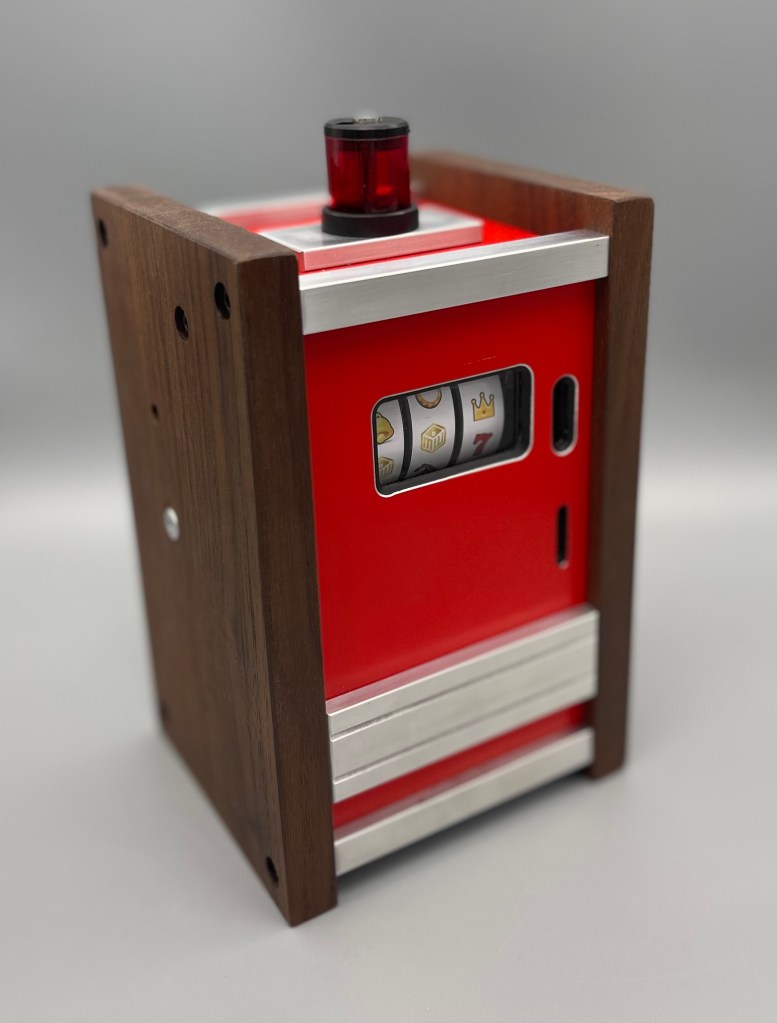
So begins a sequential discovery journey that rewards experimentation and patience, teasing you with a partial view of its inner workings through a semi-opaque acrylic back, framed by lovely walnut sides and a glistening metal frame that comes in one of four colors.
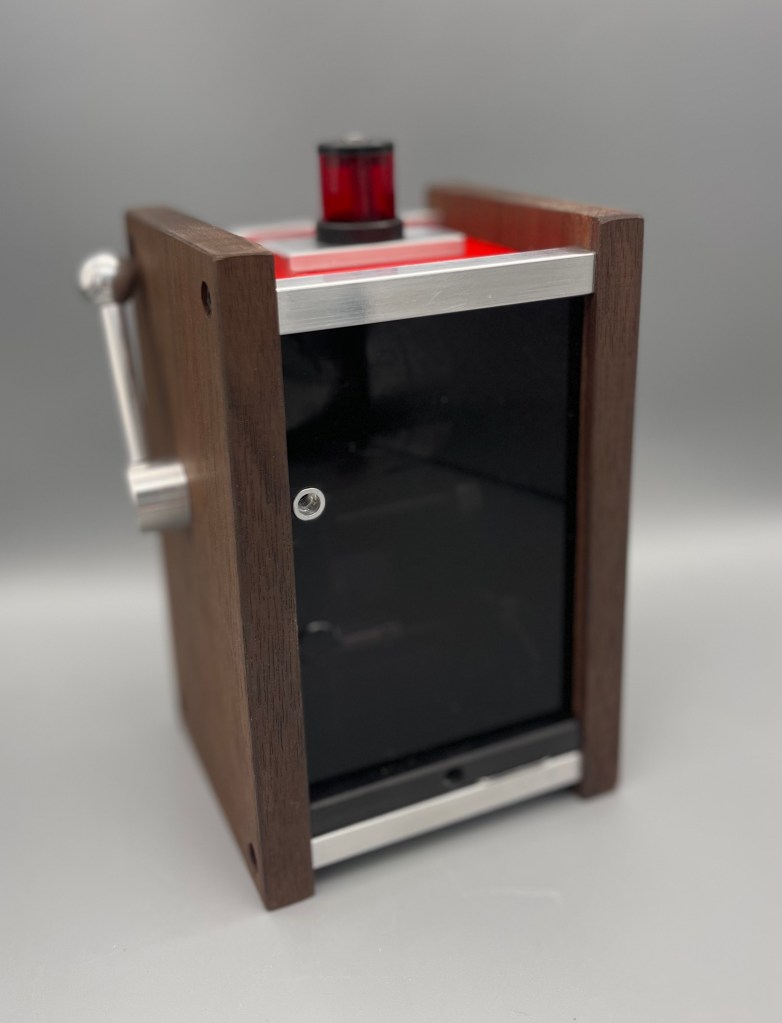
I had the welcome opportunity to test a late prototype and to compare it to the final version, getting a glimpse into the careful planning and patient meticulousness of the puzzle’s creator. This is not a hastily thrown together puzzle but is instead the result of ample thought and cast-aside proto’s – there were a few changes following even this late prototype that proved to me that MW is a puzzle maker who takes this art seriously; in seeking to entertain, it will be done with pride in a well-made product.

I shouldn’t be surprised after solving MW’s previous trilogy of metal puzzles, all reflecting their excellent craftsmanship and puzzling prowess; Bandit is a larger evolution of MW’s puzzle oeuvre that secures its place as a puzzlemaker to be followed.

Crafting a puzzle that actually looks like something is not all that easy – other than Karakuri, most makers shy away from the innate restrictions imposed by holding oneself to an existing aesthetic but MW leans into it, using the well-known game of chance to inform and obfuscate its puzzling mechanisms, with multiple tools (some quite well hidden) and a progressive puzzling journey whose finale provides the payoff one hopes for. MW has made something that is as aesthetically pleasing as it is recognizable, with puzzling that does not disappoint.

The goal is not so much to “fix” a “broken” slot machine but to discover how this strange cousin functions instead, achieving a jackpot through skill rather than stumbling upon it by luck: this is no game of chance but rather one that requires thought to understand and conquer.

MW began taking pre-orders for the initial run of Bandit a couple weeks ago; pre-orders appear to currently be closed at this time but I would reach out via discord or the website if interested, as interest seems to (unsurprisingly) be high. Bandit will be limited to 350 copies, 75 of each color with an initial run of 300 and plans for a final 50 down the line.
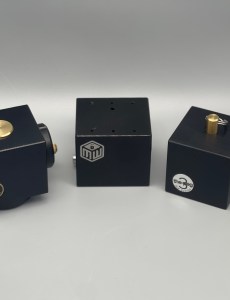

Three Little Puzzle Cubes Are We: MW Puzzles

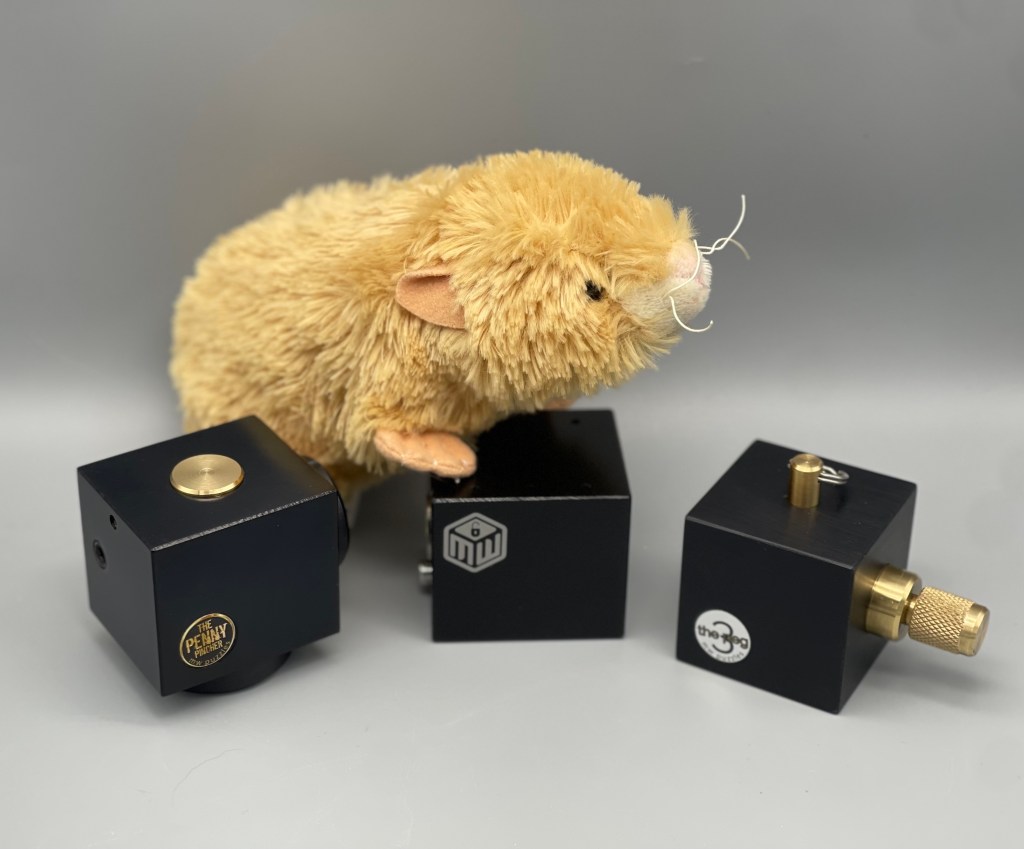
3 the Peg, Penny Pincher and Lib Orb Rate

MW Puzzles, Approx. 2″

Some months ago, MW puzzles appeared on the scene with 3 the Peg, a smallish black metal cube with enough holes and protrusions to tempt most puzzlers. I didn’t know anything about the maker but when has that stopped me from trying a new puzzle…

Peg and its two siblings make for a trilogy of puzzles that share an aesthetic, making for an extremely collectible group – I do love puzzles in a series that manage to have a consistent style at the same time as containing distinct mechanisms. The black metal cubes have slightly varied dimensions (more or less 2″) and the distinct protrusions and holes across their faces send a clear signal that these are wholly different from one another. The amount of puzzling contained within these relatively small footprints (particularly in the second and third in the series) reminds me of the trio of printed puzzles by Alan Lunsford (aka Layer by Layer on Etsy): Unsafe Deposit, Bolt Action & Mighty Pin, all of which offer absolutely excellent puzzling at a particularly good value. A good designer can fit a lot of puzzling into a small frame and MW’s use of metal makes for a very high quality example of this puzzling axiom.

3 the Peg

When 3 the Peg arrived, I was first taken with the overall quality of the build – there is some serious machining skills on display, with every piece placed perfectly in prime puzzle position such that pretty much any puzzler can appreciate the sleek appearance and solid feel of the puzzle.

3 the Peg is the first and the simplest of the three puzzles released by MW – this is not to subtract from the elegance of the solve which relies on a well-hidden trick that could certainly keep a puzzler stuck. I managed to solve it fairly quickly but this could at least partly be due to luck (one of my early guesses proved correct), although I would venture to guess that more experienced solvers may have a similar experience. Having found the main trick, it was not terribly difficult for me to work out the remainder of the solve. I think this is a particularly great puzzle to hand to non-puzzlers as it it not too long a solve and can show how one’s basic assumptions about the workings of a puzzle must be discarded; further, the extremely well made parts will show any non-puzzler the level of craftsmanship we tend to expect from our makers.

Penny Pincher

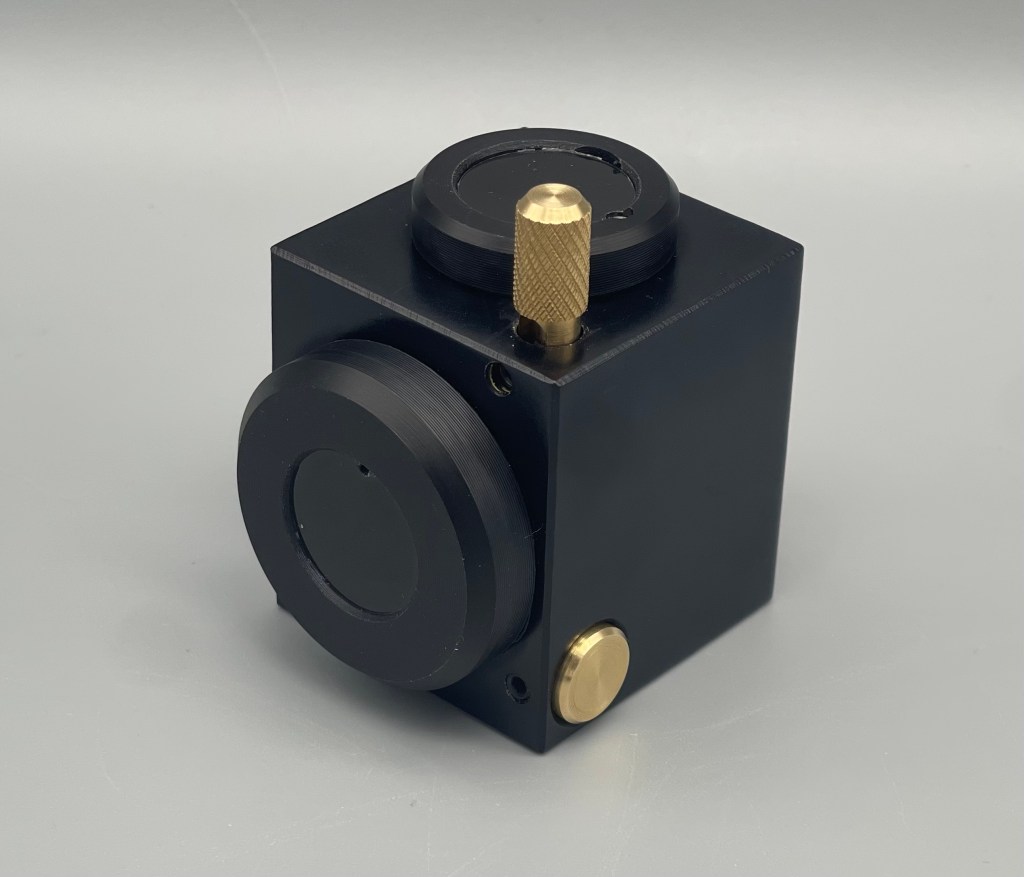
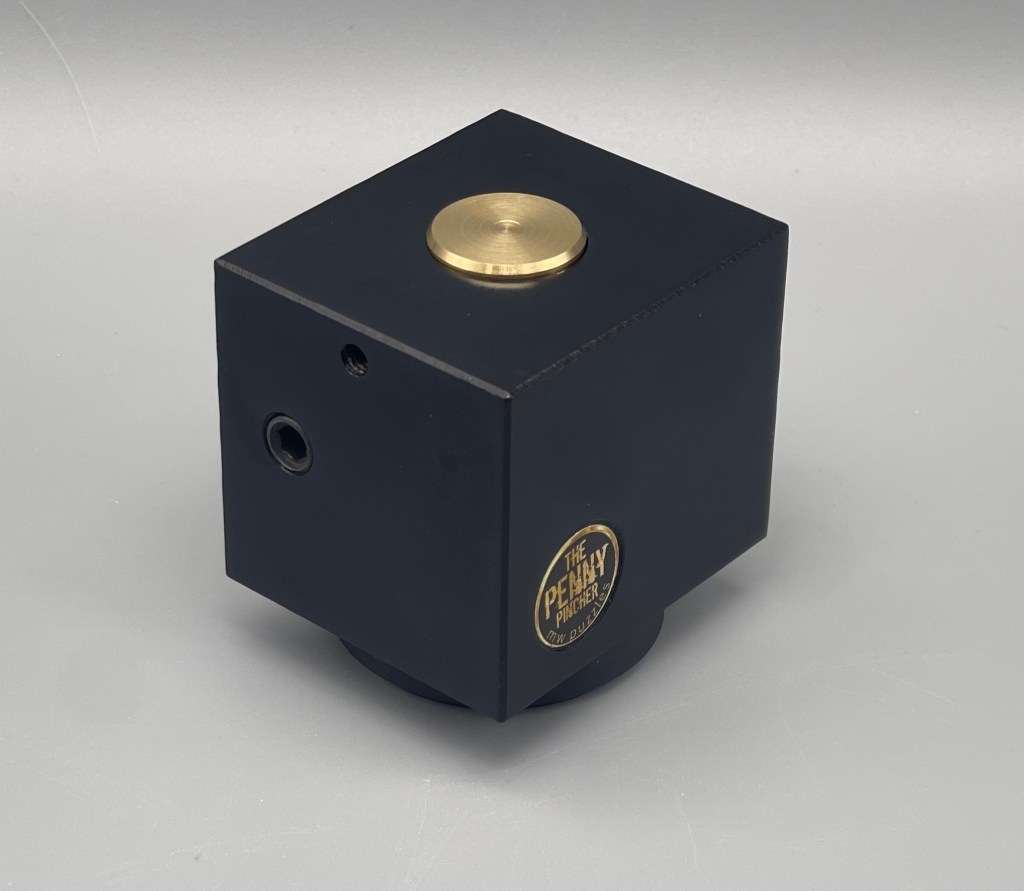
I missed out on buying this one on release and gratefully solved a loaner copy from a fellow Discord puzzler- and I am glad I did! This one really steps things up in terms of complexity and difficulty, with a pretty long and involved series of steps and discrete mechanisms to get through before the titular penny is released. Luck will not get you very far and even experimentation is somewhat limited as I needed to have a good sense of what I was trying to do to avoid going in circles. PP is a bit crazier looking, with plastic rings on two of its faces, almost resembling camera lenses. These bits help to create the impression that there is a lot to work with, helping to lead me down some rabbit holes at more than one point in the puzzle; one early section in particular had me smiling once I fully grokked how it works. Construction of the puzzle is still quite good, although I did have an issue with a couple bits falling off (easily fixed) but the instructions tell us that these don’t do anything, which was good to know.

Several legit aha! moments await you as you get through the sd solve, more than one of which is likely to earn a guffaw or two. While Penny may not be the prettiest of the three puzzles, it may be my favorite: the mechanisms are smart and tricky, making for a fun and satisfying challenge that rivals the next puzzle in this MW trilogy.

Lib Orb Rate

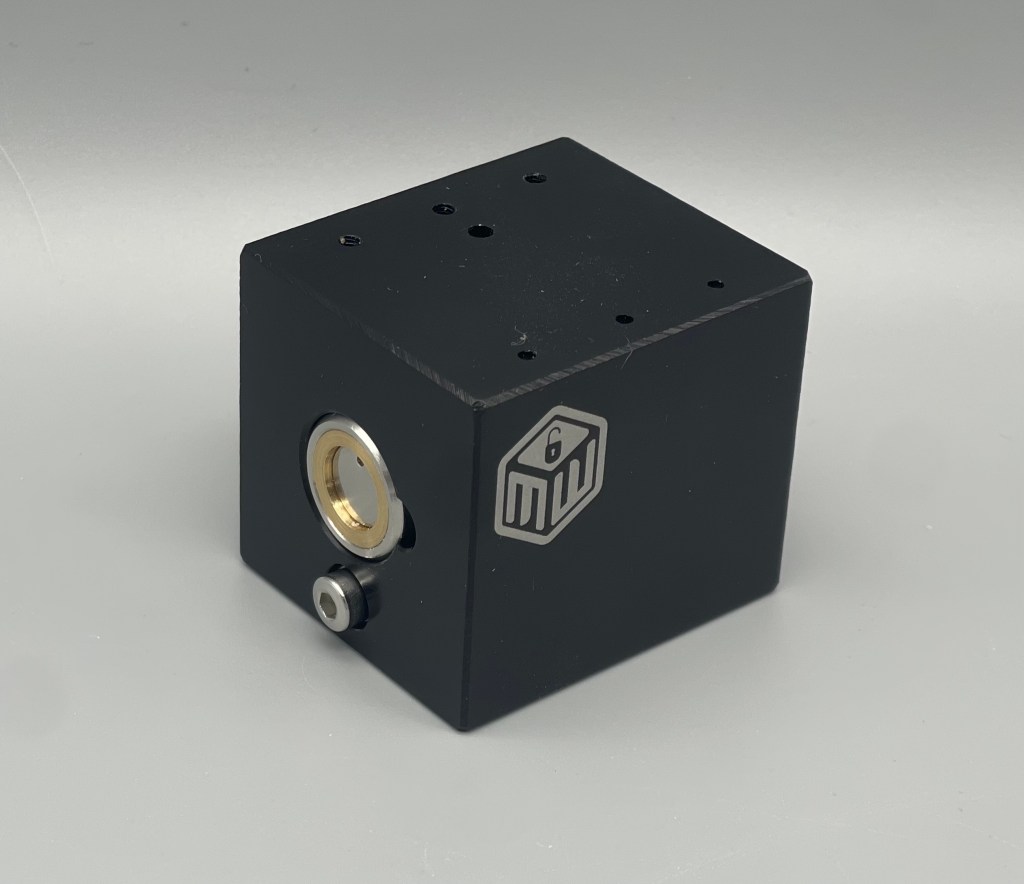
Lib Orb Rate is the newest of the three puzzles they have released and it really is a darn fine puzzle. They once again pack a lot of puzzling into a small footprint, for a multi-phase sd solve that poses a solid challenge and works smoothly. I hit a wall early on and got nudged in the right direction – I was sure that there was some blind muckery about and my own assumptions and faulty deductions were tempting frustration … until I realized everything I needed was there for me to work with. They don’t hold up a sign to focus on what that might be but the information is mostly available after some close observation and trial & error to see what’s what making it sometimes semi-blind (but totally fair).

Passing through this first phase, I moved on through the puzzle in a pretty clear, but not at all simple, progression: I never felt lost even when stuck and I eventually worked my way through the rest all by myself (golly gee). Stupidly, I forgot that the name of the puzzle tells you what you’re trying to do and briefly believed I may have solved it – it would have been an ok puzzle if it stopped at that point and I was pleased to find that it continues on to a cool mechanism that is executed quite well, with some small details that must be precisely followed, particularly on the reset. While this final section was perhaps not necessarily 100% new to me, the other puzzle that shares a somewhat similar section is rare enough that many if not most puzzlers playing today may well have missed out. Regardless, it is executed differently (and perhaps more reliably, if I’m being totally honest) and is as worthy an aha! as in that other solve, particularly as it adds additional subtle trickery. All in all, Lib is another great puzzle from MW with a solid challenge and satisfying solve.


These three quality builds from MW Puzzles has me eagerly anticipating whatever follow up they might have in store – they are a welcome designer to the puzzling world and well worth watching for whatever they will come up with next. According to the designer, it may be a while before these three are re-released, if at all but, perhaps more importantly, there will be a smaller “key ring puzzle” in time for the holidays and a major release coming in the New Year – I am looking forward to it!